
Illuminated push button daylight visibility must be checked from the intended operating position under the bright ambient conditions the panel will actually encounter. An LED being energized does not establish that an operator can distinguish its state, read its function or avoid confusing a reflection with an illuminated indication. Define the viewing task, lighting direction, panel surroundings and exact button construction before accepting a sunlight-readable claim. For the LEMA PBS family, optional LED availability is documented, but the available family information does not establish daylight contrast, viewing-angle performance or a sunlight qualification for a particular model.
Separate locating the button from reading its state
A visibility review contains several tasks. The operator may need to find the correct control, read its marking, distinguish an illuminated state and understand what that state means. Passing one task does not prove the others. A yellow cap can remain easy to locate while its energized and unenergized appearances become hard to distinguish. Conversely, a conspicuous bright point may be visible while the adjacent legend is unreadable.
Write the tasks in the same terms used by the equipment instructions. Is the indication showing power availability, a command, a selected mode or confirmed equipment feedback? The illuminated push button planning guide covers that wider logic question. Here, focus on whether the intended information remains visually distinguishable in daylight. Do not turn a lamp into a safety confirmation simply by making it brighter.
Confirm the exact PBS construction
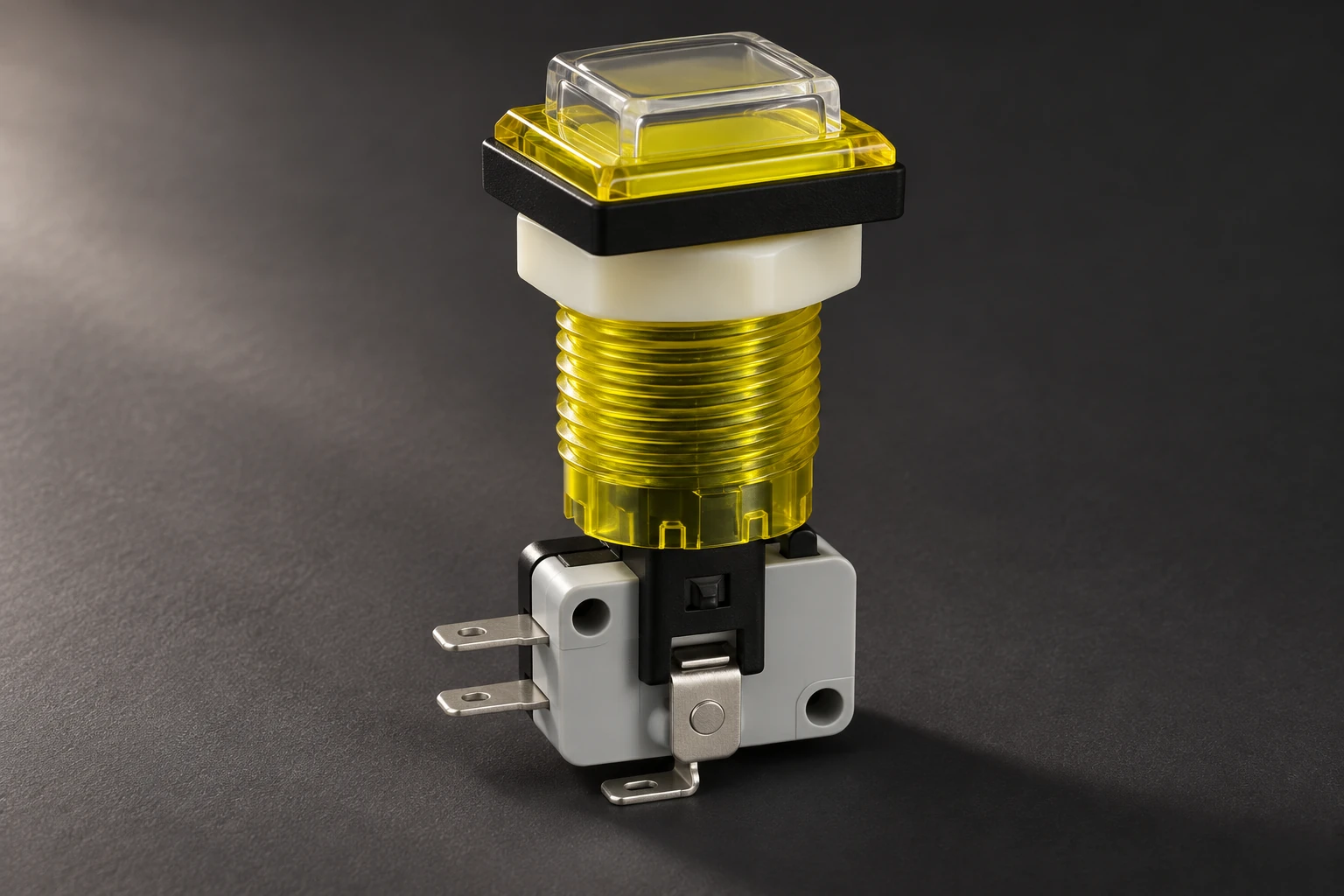
El PBS push button family includes an optional LED designation, but a family description is not a complete optical specification. Identify the exact cap, lens, color, LED option, electrical supply requirement and marking arrangement for the proposed order. Ask whether the sample represents the production construction. A photograph of a translucent cap does not prove that the sample contains an LED or that its illuminated state has been tested.
Keep product selection and panel design connected. The surrounding surface, protective cover, operator position and label can change what is visible. If the product is mounted behind an additional window or used with a shroud, include that feature in the review. Do not infer compatibility with outdoor exposure, ultraviolet radiation or weather from a daylight-viewing discussion. Those are separate application requirements requiring their own evidence.
Understand why brightness alone is incomplete
Ambient light and reflections can change the appearance of both the lit area and its surroundings. A gloss highlight can attract attention without conveying the intended state. A brighter panel background can make an indication less distinct, while a changed viewing direction can move a reflection across the cap. These effects explain why a dark-room photograph is weak evidence for a daylight task.
CCOHS lighting survey guidance discusses glare, poor contrast and the importance of the normal working position. It provides workplace lighting background rather than a push button acceptance standard. Use that distinction when planning a panel review: identify the troubling view and light source, then investigate changes under controlled conditions. Do not import a general workplace lighting value as a universal sunlight-readable button requirement.
Describe the real daylight conditions
State whether the installation receives direct sun, diffuse daylight through a window, changing shadows or bright reflections from nearby surfaces. Record where the light comes from relative to the panel and the operator. A morning view and an afternoon view can present different conditions even when the same button is installed. If a station moves, consider how its orientation changes during intended use.
Define representative operating positions, distances and viewing directions. Include the approved working posture and any required eye protection rather than asking a reviewer to lean unusually close. Describe the expected transition between bright surroundings and the panel. The review should reflect the actual task and its consequences, not whichever position makes the sample look best. Avoid exposing people to machine hazards merely to reproduce a viewing condition.
A useful record includes the date, location, panel orientation, lighting arrangement and sample identity. Photographs can help explain the layout, but cameras may change exposure or process highlights. A photograph that looks clear on a phone is not a substitute for the agreed task assessment or optical measurement. Record the method and its limitations so the next reviewer understands what was actually demonstrated.
Use research as context, not product certification
The University of North Texas record for the 2004 thesis Sunlight readability and luminance characteristics of light-emitting diode push button switches describes a study of switches from four manufacturers and several lighting-quality attributes. It is relevant background showing that LED illumination quality can be examined through more than one attribute. It does not identify PBS performance or provide a current acceptance certificate for a LEMA product.
Keep the scope of any offered report equally explicit. Ask which construction, supply condition, environment, viewing geometry and measurement method it covers. Distinguish emitted-light data from evidence of state recognition against ambient light. An LED component data sheet and a complete button test can answer different questions. A complete button test and a final panel assessment can also differ because the installed surroundings have changed.
Organize a representative review
The table below is a qualitative planning aid. It contains no universal illuminance, contrast ratio, viewing angle or recognition-time threshold. Agree the requirements with the equipment reviewer and supplier before accepting a sample. The HSE introduction to machinery safety reinforces the need for clearly marked control functions and appropriate placement. It does not certify a particular indication or replace applicable machinery requirements.
| Elemento de revisión | Define or record | Pregunta para responder |
|---|---|---|
| Tarea | Locate control, read function, identify state | Which information must remain distinguishable? |
| Producto | Exact cap, color, LED and marking option | Does evidence cover the ordered construction? |
| Lighting | Direction, daylight type and reflections | Which representative conditions are difficult? |
| View | Posture, distance and viewing direction | Can the task be completed from the intended position? |
| Comparación | Known lit and unlit states in the same view | Can reflection be confused with illumination? |
| Cierre | Final panel configuration and assessment record | What changes require another review? |
Compare lit and unlit states without changing the view
Use a controlled, approved setup in which the sample state can be established independently of appearance. Compare lit and unlit conditions from the same intended viewing position, with lighting and surroundings recorded. If a reviewer already knows which state is being shown, a casual observation may be less informative than a planned identification task. The responsible review should decide how the demonstration will avoid that ambiguity.
Record more than a yes or no. Note whether a reflection resembles the energized state, whether the cap can be found but the legend cannot be read, and whether an adjacent indicator changes the interpretation. Keep identification errors tied to the actual condition. Do not quietly remove a difficult angle or close a blind and then report the original daylight condition as passed.
Where a problem appears only with one light direction, inspect the source and reflecting surfaces before changing the LED supply. Electrical changes must remain within the exact product’s documented requirements and the equipment design. Increasing voltage as an informal brightness fix can introduce another unresolved problem. Likewise, adding a film, coating or home-made shade may affect operation, materials, access or maintenance and needs review.
Consider two illustrative panel outcomes
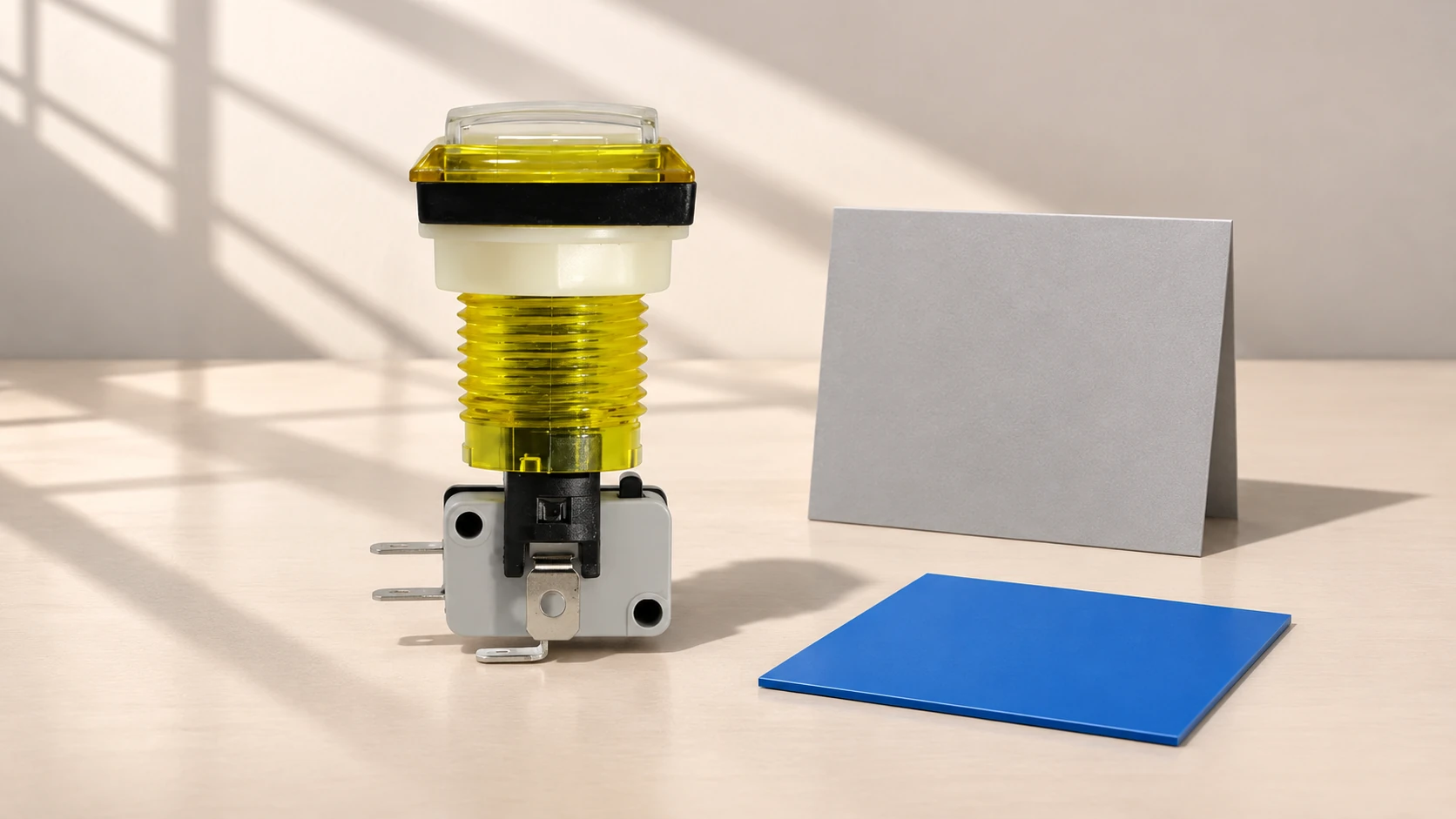
Imagine a panel positioned near a large window. The button is distinguishable indoors, but a particular daytime view places a window reflection across its clear cap. This is an illustrative scenario, not a PBS test result. The reviewer separately checks whether the control can be located, its function understood and its indication distinguished. The complaint should be described in those terms rather than reduced to the statement that the LED is weak.
One possible correction is an approved change to the panel orientation or surrounding reflection source. Another is a different documented indication arrangement selected through the design process. Neither is automatically preferable without considering the operating task. A shade that improves one view may obstruct access or hide a label from another position. After a change, repeat the affected checks on the complete arrangement rather than accepting an isolated attractive photograph.
El cap color batch-consistency article addresses matching deliveries under agreed comparison conditions. It does not establish daylight readability. Similarly, the color vision deficiency guide addresses distinguishing functions beyond cap color. These are complementary reviews: improving ambient-light visibility does not remove the need for understandable markings and an appropriate indication design.
Put the optical question into the RFQ
Send the supplier the exact button option, panel context, viewing task and expected light exposure. Ask for available optical evidence, its method and its scope. Request sample identity and construction revision so an evaluated sample can be connected with the purchase order. If the supplier has no sunlight data, keep that as an unresolved application question and agree a representative review; do not replace missing evidence with a marketing adjective.
Clarify whether the acceptance concerns locating the control, reading a legend, identifying state, or all of those tasks. Record any required supply and environmental conditions separately. Ask which changes to cap material, color, LED, label or protective cover need further review. This makes the purchasing question concrete without asking for a generic brightness number that may have little connection to the installed task.
Keep the accepted viewing arrangement traceable
Close the review with the sample identity, installed configuration, conditions assessed, results, unresolved limitations and release decision. Make the retained record understandable to maintenance and purchasing personnel. If the panel moves, lighting changes, a cover is added or the button option is substituted, review whether the earlier evidence still applies. Daylight visibility belongs to a defined viewing arrangement, not simply to the fact that a button contains an LED.
Reflection background video
Khan Academy: Specular and diffuse reflection | Geometric optics | Physics | Khan Academy

Watch Specular and diffuse reflection | Geometric optics | Physics | Khan Academy.
Khan Academy explains specular and diffuse reflection. The lesson helps explain why a glossy surface and a changed viewing direction can produce different appearances. It does not test PBS illumination, establish a daylight limit or approve a panel design.
Preguntas frecuentes
¿Una opción de LED garantiza la legibilidad a la luz del día?
No. La disponibilidad opcional de LED no establece contraste ni reconocimiento de estado bajo la luz ambiental prevista.
¿Una fotografía clara demuestra que el panel es legible?
El número de exposición y procesamiento de la cámara puede cambiar la apariencia. Utilice el método de evaluación y medición de tareas acordado.
¿Puedo aumentar el voltaje para mejorar la visibilidad?
Do not exceed documented product requirements or improvise an electrical change. Review the complete indication design.
Does this article certify PBS sunlight performance?
No. It defines application questions and review records; exact product and installed-view evidence are still required.