
Power inlet accessibility test finger evidence should describe the protection offered by the finished equipment, using the probe and conditions required by the applicable product standard. A recessed connector opening, a current rating or a photograph does not establish that hazardous parts are inaccessible. For an OEM review, identify the inlet, its mounting and the equipment configuration before requesting a laboratory assessment. This guide explains what to ask and how to read the result. It does not prescribe a universal probe, test force or pass criterion for the Lemaele IPZ series, and it is not an instruction to insert objects into energized equipment.
Begin with the equipment requirement
Accessibility is a question about a person or object reaching a defined hazard through a particular opening. Start by identifying the finished product, intended users and applicable assessment requirements with the responsible compliance team. A mains connector mounted in one enclosure may present a different access path from the same connector mounted in another. The relevant assessment cannot be selected from the appearance of the inlet alone.
El oficial IEC 61032 scope page describes probes used to verify enclosure protection against access to hazardous parts and entry of solid objects. That public summary identifies the subject of the standard; it does not provide the complete application rules for an IPZ installation. Obtain the applicable product standard and its referenced method through the team or laboratory responsible for the equipment assessment.
Identify the supplied IPZ configuration
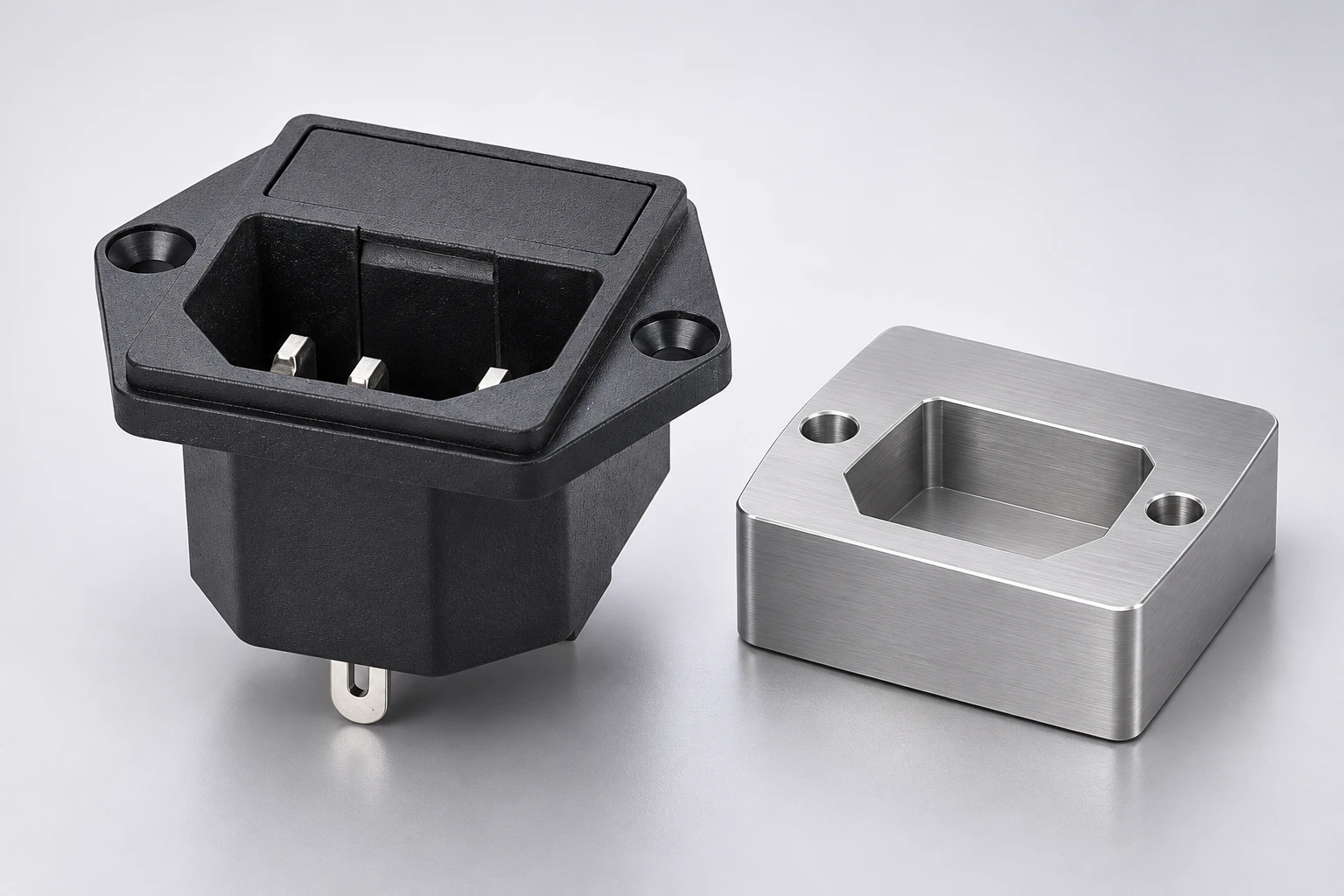
El Lemaele IPZ series AC power socket is the product reference for this enquiry. Its family information and electrical characteristics do not establish a completed equipment accessibility result. Confirm the exact ordering code, mounting style, drawing revision and supplied terminals. Do not assume the flanged and snap-in versions are interchangeable for the equipment review simply because their front openings look similar.
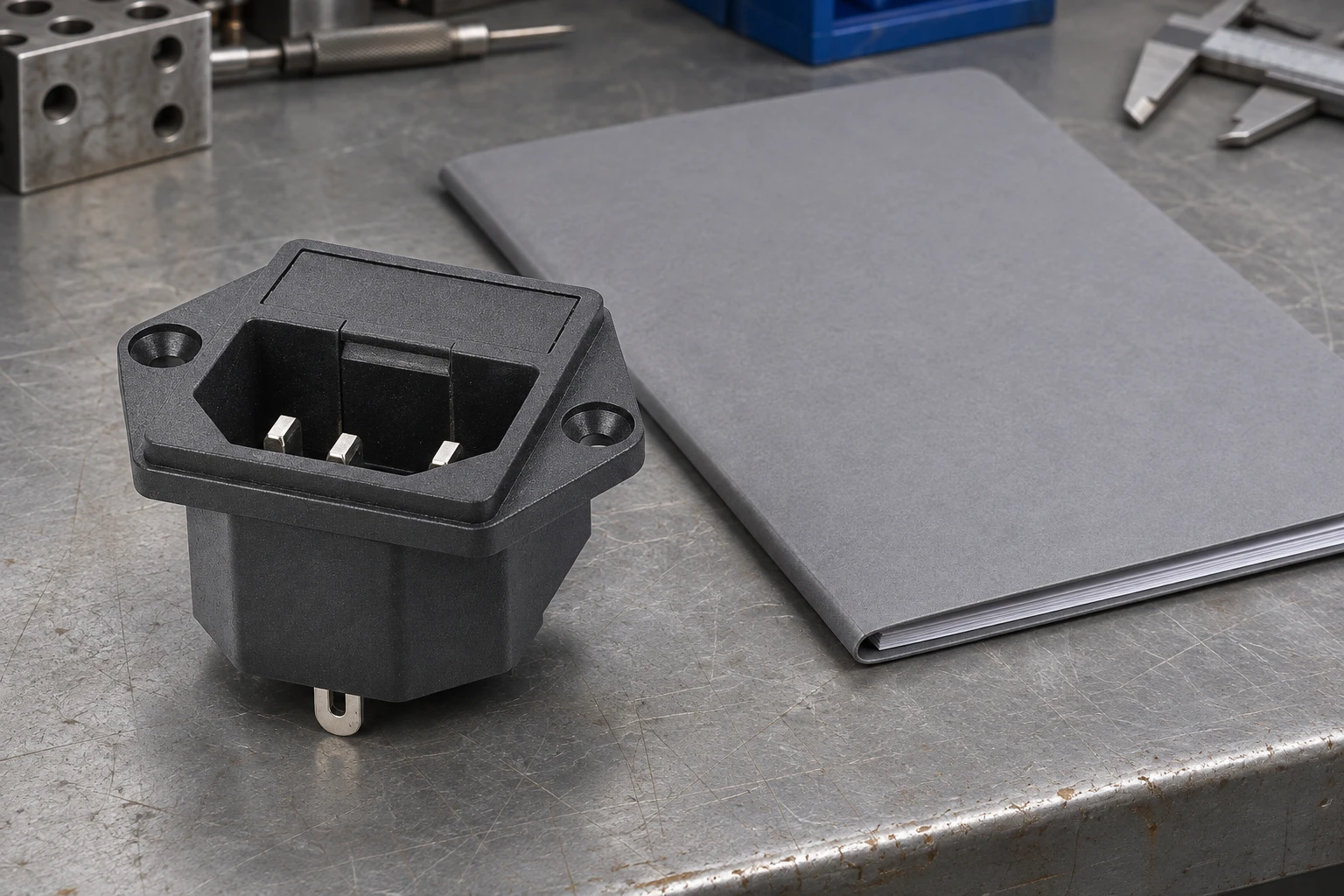
Keep a record of the sample as installed, including the panel thickness, cutout, retention parts and rear enclosure. Identify any protective cover or barrier that is part of the approved design. A loose inlet on a desk is not the same specimen as an inlet secured in a production enclosure. Where the test uses a representative assembly, document why it represents the final product and what variations remain outside its scope.
Separate the connector opening from other access paths
The review should identify which openings and equipment states the applicable method addresses. The connector mouth, a gap beside the mounting flange and a rear service opening are different paths. Whether each path is evaluated, and under what conditions, must come from the applicable requirements. A result for one path should not be described as a blanket approval of every exposed surface or servicing condition.
Keep related electrical questions separate. The creepage and clearance review concerns insulation spacing; it is not a substitute for an access probe result. Likewise, the power socket grounding guide addresses protective connections. A successful grounding check does not demonstrate that an opening prevents access, and an access result does not establish the quality of the protective connection.
What the laboratory request should contain
| Request item | Información a suministrar | Reason for including it |
|---|---|---|
| Equipment identity | Product model, intended use and assessment route | Establishes which requirements must be selected |
| Identidad del componente | IPZ code, drawing and terminal configuration | Connects the test specimen to the purchased inlet |
| Installed construction | Panel, cutout, enclosure and protective parts | Defines the actual paths that may be accessible |
| Equipment states | Configurations required by the applicable method | Prevents an undefined test arrangement |
| Method reference | Standard edition, clause and selected probe | Makes the result technically traceable |
| Decision record | Observed result, criteria and deviations | Shows what the test does and does not support |
This table proposes a document checklist rather than a testing procedure. Have the laboratory confirm the appropriate configuration and required sample preparation. Do not supply a guessed force or probe code to fill an empty form. If a requirement appears ambiguous, resolve the interpretation before the test rather than choosing whichever arrangement gives the most favorable result.
Agree who provides representative specimens and who controls their assembly. Record whether samples include production panel tolerances and retention hardware. If the laboratory receives only an inlet, make that limitation explicit in its report. A component observation can be useful, but the report should not imply that it evaluated an enclosure which was never supplied.
Read the report beyond its conclusion page
Check the model number, sample photographs, method reference and installation description before relying on a pass statement. Compare the test specimen with the current drawing. A report may cover a specific panel or barrier arrangement rather than the full range of products on a sales page. If the sample was modified for the test, identify the modification and whether production will include it.
Review the stated observations and any deviations or excluded configurations. Ask how contact with the defined hazard was assessed under the selected method. The answer should be in the laboratory’s controlled record; it should not be reconstructed from an informal video. Keep the complete report with the equipment release file so a later reviewer can see the basis for the decision.
A test report and a product certificate are also different records. Verify the scope of any certificate rather than assuming it includes the assembled equipment. A logo on a component image is insufficient evidence of the particular accessibility requirement. Request a document identifier and the covered configuration, then have the responsible team determine its relevance to the intended market and equipment.
Control design changes that can alter access
A larger panel cutout, thinner panel, different retention feature or changed rear cover can alter the installed construction. Record these changes and ask whether the existing assessment remains applicable. Do not automatically extend an old result to a new enclosure because the inlet ordering code is unchanged. The component identity is only one part of the configuration.
During replacement work, use the equipment power inlet replacement guide to review the broader interface. Match the approved mechanical and electrical arrangement and retain required protective parts. If damage prevents the inlet from seating correctly, resolve that condition through the equipment manufacturer’s process. A replacement should not be released merely because the connector can still accept a mating plug.
Keep inspection and electrical work safe
Accessibility verification belongs in a controlled assessment carried out by qualified personnel using the appropriate equipment and work practices. Do not improvise a probe from wire, a screwdriver or a finger. Do not energize a bench sample to see whether a tool can touch a contact. Follow the equipment isolation procedure and the laboratory’s approved method for any evaluation.
CDC/NIOSH’s electrical safety overview identifies contact with energized parts as a source of electric shock and burns. This provides safety context, not an IPZ-specific test procedure or a substitute for the finished product’s applicable standard. Keep workplace inspection and product qualification records distinct, and have the responsible personnel select the requirements that apply.
Keep receiving checks within their evidence
At receipt, compare the part code, flange or retention features, terminals and supplied accessories with the approved record. Check for shipping damage and preserve the packaging identification when a lot needs investigation. These checks help confirm that the expected component arrived. They do not reproduce an accessibility assessment, and an inspector should not invent a probe test at the receiving desk. If a visible difference is found, separate the affected lot and ask the technical owner whether the difference is an approved variation. Keep the answer with the receipt record so the same question is not resolved differently on the next delivery.
Prepare the purchasing decision
Before release, collect the approved inlet drawing, equipment assembly drawing, method reference and applicable test record. List open questions explicitly: an unconfirmed probe method, missing enclosure configuration or unassessed design variation should remain an open item. Assign an owner to obtain the evidence. A clear unresolved entry is more useful than treating a generic family datasheet as proof.
For ongoing supply, agree which changes require notification and whether the supplier can identify lots to the approved configuration. Receiving inspection can then check the correct part and visible construction, while the equipment team retains responsibility for the assessment. The objective is a traceable connection between the purchased component, the installed arrangement and the evidence supporting the release.
Video: isolation before equipment inspection
Work Safe Queensland’s “Isolating machinery when not in production” explains the importance of isolation. It provides safety background for planning equipment inspection. It does not demonstrate an access probe test or certify the IPZ series.

Preguntas frecuentes
Does a recessed power inlet prove finger protection?
No. The installed equipment requires assessment using the applicable method, configuration and acceptance criteria.
Does IEC 61032 alone select the test for every inlet?
No. Its public scope describes probes. The applicable product requirements determine which method and conditions are relevant.
Can a component report automatically cover a different enclosure?
No. Compare the specimen and installation with the final design and obtain a technical assessment of any differences.
Should an installer improvise a probe on energized equipment?
No. Use qualified personnel, approved work practices and the controlled assessment method. Do not insert improvised objects into energized equipment.