
Limit switch housing coating adhesion evidence should identify the actual substrate, coating system, test specimen and method before a buyer accepts a result. A good-looking finish does not prove attachment, and a tape-test rating does not establish corrosion life or enclosure sealing. For an LZ1 series inquiry, confirm the selected housing finish and the requirement that the evidence must answer. This guide helps OEM buyers request interpretable coating records without damaging installed equipment or borrowing unrelated acceptance limits. It establishes no Lemaele coating chemistry, mandatory adhesion class, test approval or environmental performance claim.
Confirm which housing and finish the report covers
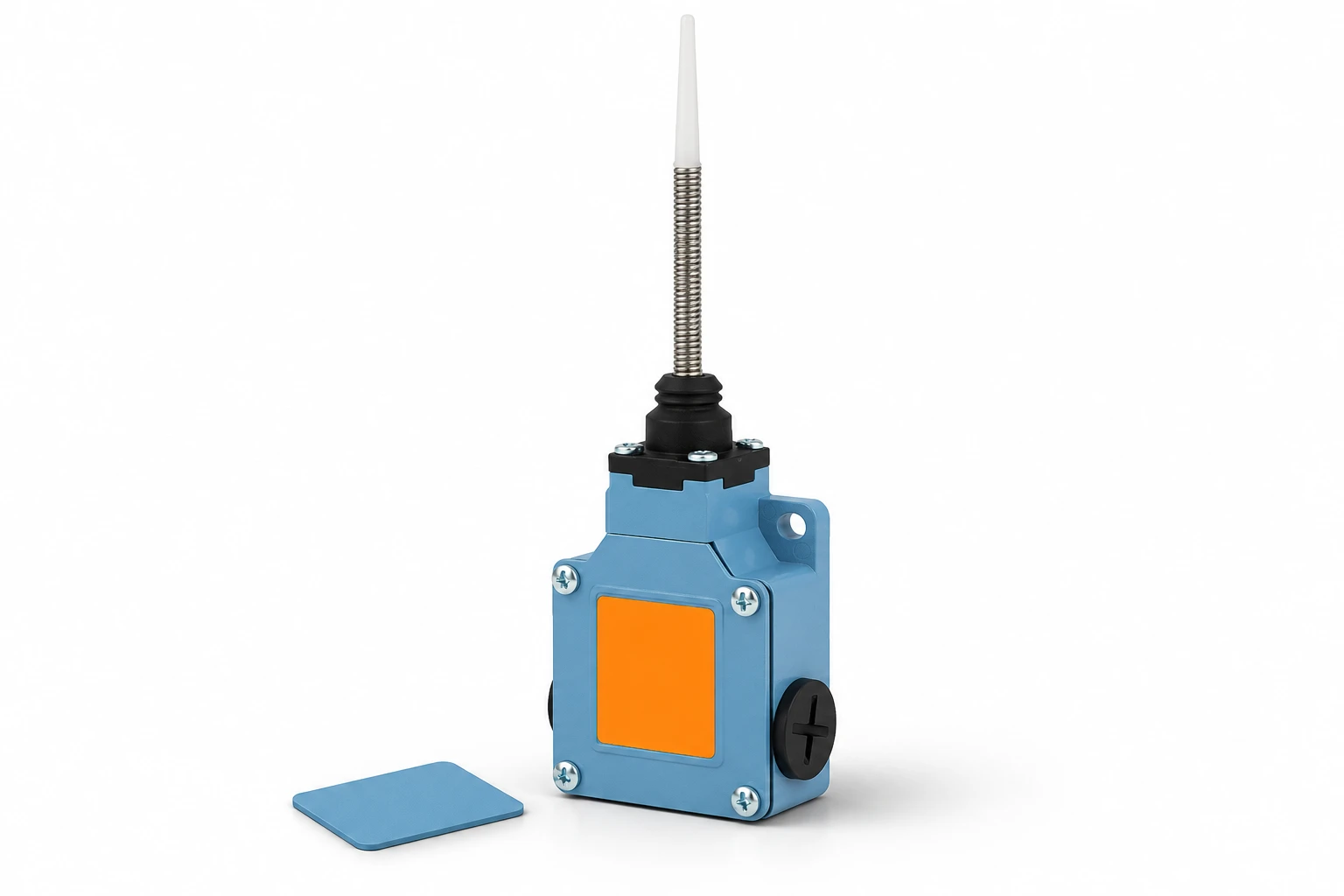
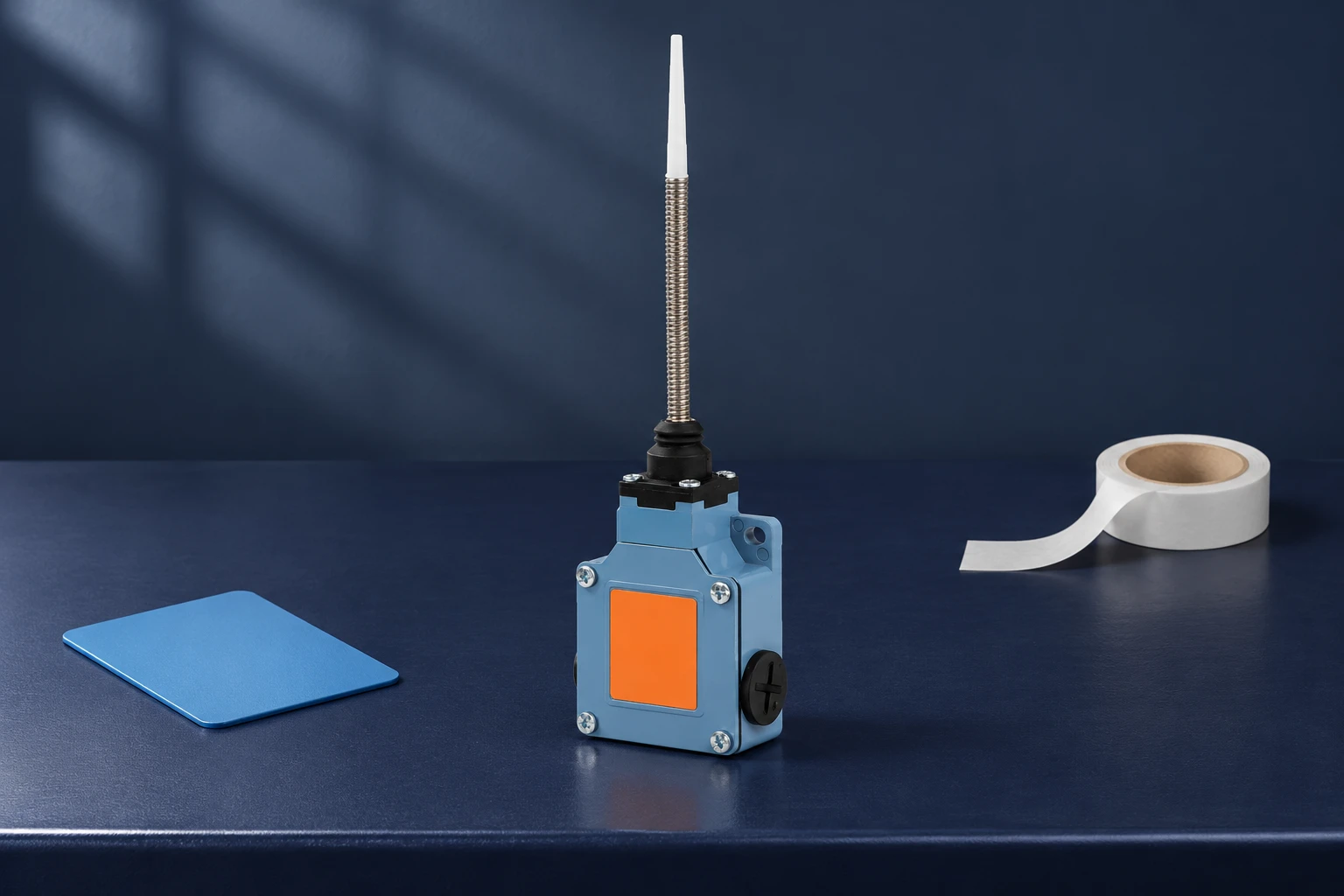
Utiliza el LZ1 series limit switch product page to identify the relevant product family, then confirm the ordered version and drawing with the supplier. A blue housing in a photograph does not identify the coating chemistry, preparation process or layer structure. Request the controlled finish description for the actual order before choosing a test method.
Identify the surface of interest. The main enclosure, removable cover, mounting ears, screws and actuator assembly may not share one finish or substrate. A result from one of those surfaces should not be relabelled as a result for every exposed part. Mark the location on a drawing or photograph and retain the connection between that location and the reported specimen.
El heavy-duty limit switch selection guide covers the broader sourcing decision. Keep actuator arrangement, electrical configuration, mounting and operating environment in the specification. Coating attachment is a useful quality question within that decision. It cannot replace evidence that the selected switch version meets the functional and installation requirements of the machine.
Separate visible condition from adhesion evidence
Inspect and photograph the as-received finish before any destructive work. Record chips, scratches, exposed edges or areas where the finish has lifted. Describe the location and appearance without declaring a cause. Damage from handling, contact during mounting and a coating-system issue are different investigation possibilities; an isolated photograph rarely distinguishes them reliably.
Compare identified samples under consistent lighting and handling conditions. Keep colour and gloss observations separate from evidence about attachment. A uniform colour does not prove a sound coating bond, while a scratch does not automatically show a production adhesion failure. Ask which further evidence would resolve the concern, rather than assigning a pass or fail based on appearance alone.
Do not make cuts through the finish of a switch that remains installed or energized. Testing can expose the substrate and leave an item unsuitable for service. Arrange identified sacrificial samples or approved representative specimens with the supplier and laboratory. Equipment isolation and replacement belong to the authorized maintenance process, not an improvised incoming-quality demonstration on operating machinery.
| Evidence item | Qué verificar | Decision supported |
|---|---|---|
| Finish identity | Confirm substrate, finish and ordered version | Choose a relevant method |
| Specimen | Document housing or panel and production link | Bound the evidence |
| Método | Record procedure, suitability and departures | Interpret the test correctly |
| Observación | Retain photographs and separation location | Support investigation |
| Acceptance | Agree criteria and disposition owner | Avoid borrowed limits |
Understand what a tape test can establish
The public ASTM D3359 scope and significance statement describes an empirical assessment using tape over cuts in coating on metal. It distinguishes that assessment from an absolute bond-breaking force. The practical lesson is to identify the method and report its actual outcome, rather than translating a rating into an unsupported strength or service-life claim.
The standard information also makes clear that the method has limits in distinguishing adhesion levels. Ask the test provider which method is suitable for the actual coating, thickness, surface and specimen. A test name alone does not establish that a small enclosure has a suitable inspection area. The responsible laboratory should address the geometry and any departure from the controlled procedure.
Keep ratings in the notation of the selected method. Do not average unlike classification systems or convert them into a percentage of expected life. If the purchase agreement requires a particular criterion, state that criterion and the method together. This article provides neither a default LZ1 rating nor permission to import another organization’s acceptance threshold into a Lemaele order.
Decide whether to test a housing or a representative panel
A sacrificial finished housing can show the response of an actual surface when the method is suitable. A separately prepared panel can support production-control evidence when its relationship to the order is documented. Neither choice should be hidden in a report. Request a specimen photograph and a clear statement of what was prepared and what was actually tested.
El Caltrans coating-adherence method provides one public example of linking specimens to the preparation of purchased material. It is an agency procedure for its own procurement context. Its useful lesson here is specimen traceability; its acceptance criteria do not become the acceptance criteria for an LZ1 housing.
For a representative panel, ask whether substrate, preparation, coating application and relevant processing conditions represent the supplied housing finish. Record the production relationship and the reason a panel was used. A convenient painted coupon with no traceable relationship can demonstrate a laboratory technique while answering nothing about the delivered switch. Keep that distinction visible when comparing supplier documents.
Review the report beyond the final classification
Look for the sample identity, test location, selected method and edition, surface condition and reported coating information. Ask for the observations and photographs supporting the classification. Record who performed the test and when. Where a result is presented as compliance with a specification, ensure the specification is identified and actually applies to the order under review.
Ask the provider to document the tape, cutting arrangement and conditions required by the selected method, including any relevant preparation or conditioning. Operator technique can influence the observation, so an informal demonstration should not be presented as a controlled laboratory result. Missing details are a reason to seek clarification, rather than a reason to fill the gaps with assumptions.
Where layers separate, ask which interface failed and what evidence supports that interpretation. In a multilayer system, separation between layers does not automatically characterize attachment of the whole system to the metal. A classification without a failure-location description may be insufficient for the engineering question. Request an appropriately bounded interpretation from the laboratory instead of diagnosing the coating stack from a thumbnail.
Keep adhesion distinct from corrosion and enclosure protection
El limit switch galvanic corrosion guide addresses a different environmental mechanism. A satisfactory attachment result does not prove compatibility between dissimilar metals, resistance to a corrosive atmosphere or a particular field life. Ask for evidence aligned with the actual exposure. Do not relabel a coating-adhesion report as a comprehensive corrosion qualification.
Utiliza el mounting witness-mark guide when damage appears around fasteners or installation interfaces. The location and service history matter. Record mounting contact, surrounding parts and any known handling event as investigation inputs. Do not conclude that all marks around a fastener originate in poor adhesion, or that a passing coupon test explains damage on every installed unit.
Enclosure sealing also requires its own evidence for the selected assembled configuration. A test performed on a coating panel cannot prove ingress protection. If a housing has been cut or otherwise damaged for inspection, keep it clearly identified as a test specimen and obtain an authorized disposition. Cosmetic repair alone does not demonstrate restoration of the original enclosure performance.
Investigate a failed result with controlled comparisons
Retain the original specimen and report before requesting repeats. Document the reason for another test and any change in preparation, location, method or operator. Repeating a test until a preferred classification appears destroys the clarity of the investigation. A useful repeat distinguishes a plausible explanation and remains connected to the original result, even when the conclusion changes.
Compare traceable samples from the relevant production groups when that information is available. Ask the supplier which finish records can be linked to the delivery and what additional inspection is appropriate. Keep a suspected preparation issue, handling damage and a method-suitability problem as separate hypotheses until evidence resolves them. Avoid instructing a coating-process change solely from an unexplained classification.
If rework is proposed, obtain the controlled method and the checks required afterward. Stripping, sanding or repainting may affect markings, interfaces or assembled components. Those consequences require review by the responsible supplier and equipment engineer. Do not improvise touch-up work to obtain an attractive surface and then treat the original report as evidence for the reworked condition.
Write an RFQ that produces comparable evidence
Give suppliers the same selected housing version, application environment and finish requirement. State whether you need a production record, a representative-panel test or evidence from sacrificial finished housings. Ask the laboratory or supplier to explain method suitability. This prevents quotations from appearing equivalent when they actually offer different specimens and different levels of traceability.
Agree the acceptance criterion with the responsible engineer and test provider before production. Include the method, specimen relationship, report fields and process for borderline results. State how changes to the finish system will be reviewed. Keep any delivery-specific concession attached to that delivery so it does not silently replace the permanent requirement for later orders.
Close the inquiry with a recorded decision and the documents that support it. For Lemaele, provide the LZ1 configuration and ask what finish and inspection evidence can be supplied for that order. Keep the approved report with the product specification and relevant installation records. The result should be an understandable purchasing decision with clear limits, rather than a test label that promises more than it measures.
Formación continua
This nptelhrd lecture from IIT Kharagpur explains assessment of coating adhesion. It provides educational context for choosing and interpreting evidence, not an LZ1 test result or acceptance specification.
Preguntas frecuentes
Does good appearance prove coating adhesion?
No. Appearance and attachment are different questions and may require different evidence.
Does a tape-test rating predict corrosion life?
No. The result does not establish a particular service life or replace exposure-specific qualification.
Can any painted panel represent the housing?
No. Its substrate, preparation and coating relationship to the actual production must be documented.
Should a tested housing go back into service?
Obtain an authorized disposition. Cutting through the coating can leave damage that needs review before any service use.