
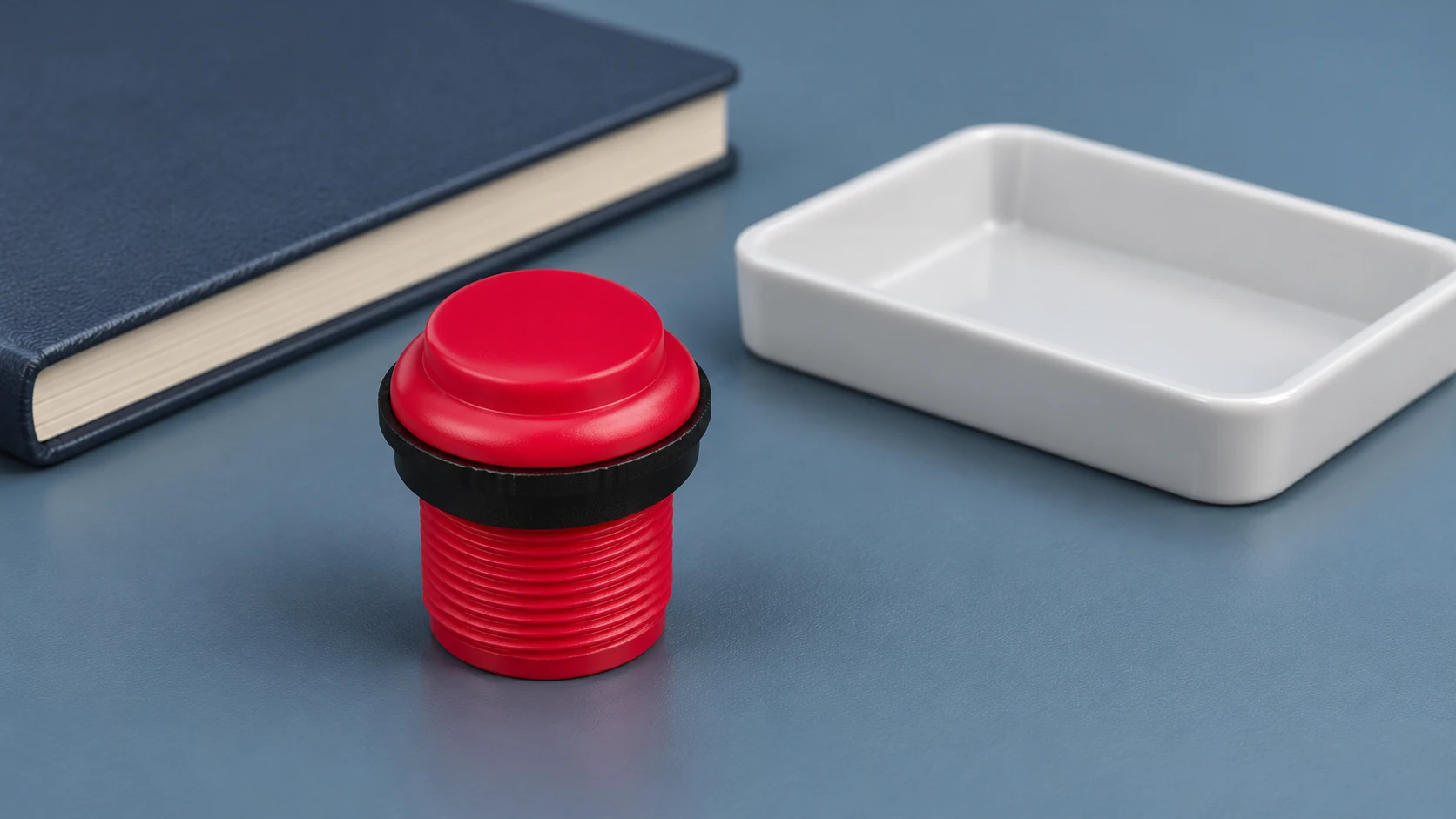
Push button cap retention evidence starts with the attachment design, not a pull-force number. Confirm whether the visible operator has a separate serviceable cap, a permanently assembled head or another construction. Then agree what attachment must remain secure, under which conditions, and how a test will apply and measure the relevant load. A product photograph or an operating-force measurement cannot answer those questions on its own.
El interruptor de botón pulsador de la serie PBS offers different operator forms and options. The catalog presentation does not establish a removable cap or a universal pull-off requirement for every PBS model. This guide is an engineering and purchasing checklist for requesting evidence about the exact assembly, not an instruction to pull apart a supplied button.
Identify which part is supposed to remain attached
Use the exact model designation, approved drawing and a labeled assembly photograph to define the interface. A buyer may use cap to mean a colored surface, a lens, a complete operator or a replaceable accessory. Those descriptions can refer to different parts and different service boundaries. Resolve the terminology with the supplier before specifying a test or treating a detached item as an expected maintenance action.
Ask which items may be removed in service and which require replacement as a complete assembly. Request the intended assembly method and relevant handling instructions without inferring a snap fit from appearance. If the product is not designed for cap removal, an exploratory pull test can be destructive. Keep that work on authorized evaluation specimens, and keep the tested specimens out of production until their disposition has been decided.
Separate cap retention from operating force and panel mounting
Operating force concerns the input needed to actuate the control. Retention concerns an attachment remaining secure under a defined load or exposure. Panel mounting concerns the operator’s connection to the panel. A report addressing one does not establish the other two. State explicitly which assembly interface is being evaluated and what constitutes an unacceptable change.
For broader panel integration, use the Guía de selección de botones industriales. El panel cutout guide addresses fit and mounting, while the push button replacement guide covers replacement decisions. Keep their mounting and electrical checks separate from a cap attachment requirement so that purchasing does not approve the wrong characteristic by mistake.
Describe the actual task that creates the concern
Document why retention is being reviewed. Is there a returned assembly with a loose operator surface, a cleaning task that contacts the head, a handling concern during transport, or a planned qualification requirement? Include photographs and the sequence of events. A theoretical pull in an arbitrary direction may not represent the task. Conversely, a normal pressing demonstration may never load the attachment that caused the original concern.
Describe foreseeable handling using the equipment’s intended use and maintenance instructions. Do not invent a destructive misuse requirement simply because a force gauge is available. Engineering should decide which loads and exposures are relevant, which belong to a separate impact or environmental test, and what compliance requirements apply. The resulting test proposal should explain the relationship between the chosen loading arrangement and the actual interface being assessed.

Agree a test method before comparing supplier numbers
A retention result needs a defined fixture, load direction, loading sequence and endpoint. The assembly must be supported in a way that allows the intended interface to be evaluated. If a fixture squeezes the cap, braces the attachment or damages the head while gripping it, the measured result can describe the fixture interaction rather than the product characteristic. Ask for setup photographs or a drawing alongside the report.
Specify whether the test applies a prescribed load for an agreed duration, measures a peak during separation, or evaluates another defined event. These are different questions. Avoid mixing their results in a supplier comparison table. Agree the loading rate, alignment and specimen condition as part of the method. This article establishes no numerical load, rate or duration; those values must come from an applicable requirement and an approved engineering plan.
Check the complete force measurement system
NIST’s force-transducer calibration explanation describes relating applied force to instrument response and distinguishes calibration arrangements involving a transducer and its readout. For a retention report, identify the sensor, readout and calibration configuration actually used. A calibration certificate should be relevant to the measurement range and configuration, not merely show that some device in the laboratory has been calibrated.
Ask how the laboratory handles zeroing, resolution, alignment, uncertainty and the chosen measurement range. Those details should be appropriate to the test, but a small displayed increment alone does not establish accuracy. Do not turn a transducer calibration statement into a claim that the entire fixture or test method is approved. The supporting evidence should connect the reported force to the equipment and conditions that generated it.
Request a traceable result, not only a pass label
NIST’s guidance on metrological traceability provides background on connecting measurement results to references through documented calibrations. In a purchasing review, ask the supplier to identify the result, its measurement basis and the applicable decision rule. A general statement that a laboratory uses traceable equipment does not tell you which specimens were tested or which attachment was evaluated.
Keep the relevant requirement beside the result. A report marked pass without the acceptance basis cannot establish compliance with your drawing. Where the result is close to a limit, ask how measurement uncertainty and the agreed decision rule affect acceptance. Do not select an arbitrary margin after seeing the measurements. Resolve the method and decision basis before qualification so that different laboratories can evaluate the same question consistently.
Use a retention evidence review table
The following table is a report-review checklist. It does not establish a PBS retention specification, a sampling plan or permission to disassemble any operator. Use it to identify missing information before commissioning a test or approving a supplied report.
| Report item | Request | Avoid assuming |
|---|---|---|
| Assembly identity | Exact variant, drawing and specimen lot | One family photo covers every operator |
| Service boundary | Confirmation of removable or permanent construction | A colored surface is a detachable cap |
| Test interface | Fixture drawing and load direction | Operating force measures retention |
| Método | Loading sequence, rate, conditions and endpoint | Different test types give interchangeable results |
| Measurement | Sensor, readout, range and calibration configuration | Display resolution establishes accuracy |
| Decisión | Applicable requirement and agreed decision rule | An unexplained pass label establishes compliance |
A useful record makes it possible to reconstruct what was tested without relying on a verbal explanation. Include the exact product variant, supply identity, specimen preparation and any previous loading. If the assembly contains optional illumination, state whether the evaluated configuration includes it. Do not assume that a result for a different cap shape or accessory applies to all colors, body sizes and illumination arrangements in the family.
Retain specimen history and failure observations
Record whether specimens are new, previously operated, exposed to cleaning materials or recovered from service. Environmental conditioning can be relevant, but only when its scope and sequence are agreed. A result on a new assembly cannot automatically establish retention after an unspecified service period. Keep pre-test photographs and inspection notes with each specimen identity so that later damage can be distinguished from its original condition.
After testing, document where movement or separation occurred. A fixture slipping, a mounting connection loosening and an attachment separating are different outcomes. Retain the force record where the method produces one, together with post-test photographs and observations of cracks, displacement or other changes. If the equipment reached its capacity without the intended endpoint, report that limitation accurately rather than inventing a measured separation force.
Treat returned loose parts as an investigation first
When a customer reports a loose head or colored surface, preserve the assembly and its history before choosing a new attachment requirement. Ask what cleaning, handling, maintenance or impact preceded the event and whether anyone attempted repair. Record the exact variant and installation context. A newly created pull test may help investigate the issue, but it cannot reconstruct the original event without supporting evidence.
Avoid field glue repairs unless the responsible supplier and equipment engineering team explicitly approve the material and process for that exact assembly. A repair can affect movement, illumination, serviceability or nearby components. This guide recommends no adhesive or mechanical modification for PBS. Where the structure or service boundary is uncertain, request an authorized replacement decision rather than treating a detached surface as an interchangeable cap.
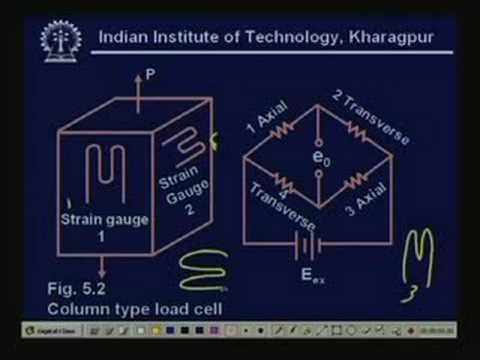
Educational video: understand the load cell in the report
NPTEL’s industrial instrumentation lecture on load cells explains the measurement component behind many force-test systems. It supports the section on sensor and readout evidence. It does not specify a push button retention test, validate a fixture or establish an acceptance load. The product-specific method remains the responsibility of the agreed engineering and laboratory review.
nptelhrd: Lecture -5 Load cell
Build the RFQ around the exact attachment question
Send the supplier the model, assembly drawing, task description and the particular interface of concern. Ask whether the cap or lens is separately serviceable, what documentation defines its attachment, and what evidence is available for the proposed use. Request the test method, specimen conditions, measurement configuration, acceptance basis and report scope together. That is more actionable than asking for strong caps or a certificate with an unexplained force value.
For the wider configuration inquiry, use the lista de verificación personalizada de pedidos de botones de presión. Keep cosmetic color consistency, operator recognition and electrical performance as distinct requirements. A satisfactory attachment report does not establish those characteristics. The final purchasing record should identify which requirement was resolved and which configuration or application questions remain open.
Preguntas frecuentes
¿Tiene PBS una tapa removible?
Esta guía no establece construcción removible. Confirme el modelo exacto y las instrucciones de servicio con el proveedor.
¿La fuerza de operación es la misma que la retención de la tapa?
No. La entrada de accionamiento y la seguridad de la fijación son características diferentes y requieren pruebas distintas.
Is there one required pull-off force for every push button?
No universal value is established here. Use the applicable agreed requirement for the exact assembly.
Does a calibrated gauge validate the whole test?
No. Fixture, method, specimen condition and decision basis also need review.