
Foot switch cable conductor strand verification starts with the approved cable construction, not with how flexible the finished cord feels. Match the ordered cable part number and revision to supplier records, identify the conductor material and declared stranding, and use a traceable sacrificial sample when a physical examination is required. Record which conductor was examined and how the sample was prepared. A continuity reading can support an electrical check, but it does not identify the number or condition of individual strands. Keep construction acceptance separate from bend-life qualification, terminal approval and the safety assessment of the finished machine.
Define the cable being purchased before counting strands
A purchasing description such as “flexible black cable” leaves important questions unanswered. Request the cable manufacturer or controlled supplier code, conductor count, nominal conductor size, insulation and jacket identification, and the drawing revision supplied with the foot switch. If stranding matters to the design, ask for the declared construction and its permitted variation. Do not infer these details from an outer diameter, a photograph or a general product family name.
Das Lemaele LF series product page describes customizable wiring. It does not establish one universal strand count or cable compound for every delivered configuration. Use the selected LF ordering record to connect the approved cable to the actual pedal assembly. This article concerns that identification task; the foot switch selection guide covers the wider application review.
Separate the individual conductor from the complete cable. A multicore cable can contain several insulated conductors, each containing multiple metal strands. A braid or shield is another construction feature and should not be counted as a power conductor. Photograph the sample with identifiers that make this distinction clear, especially when a supplier uses similar names for different cable variants.
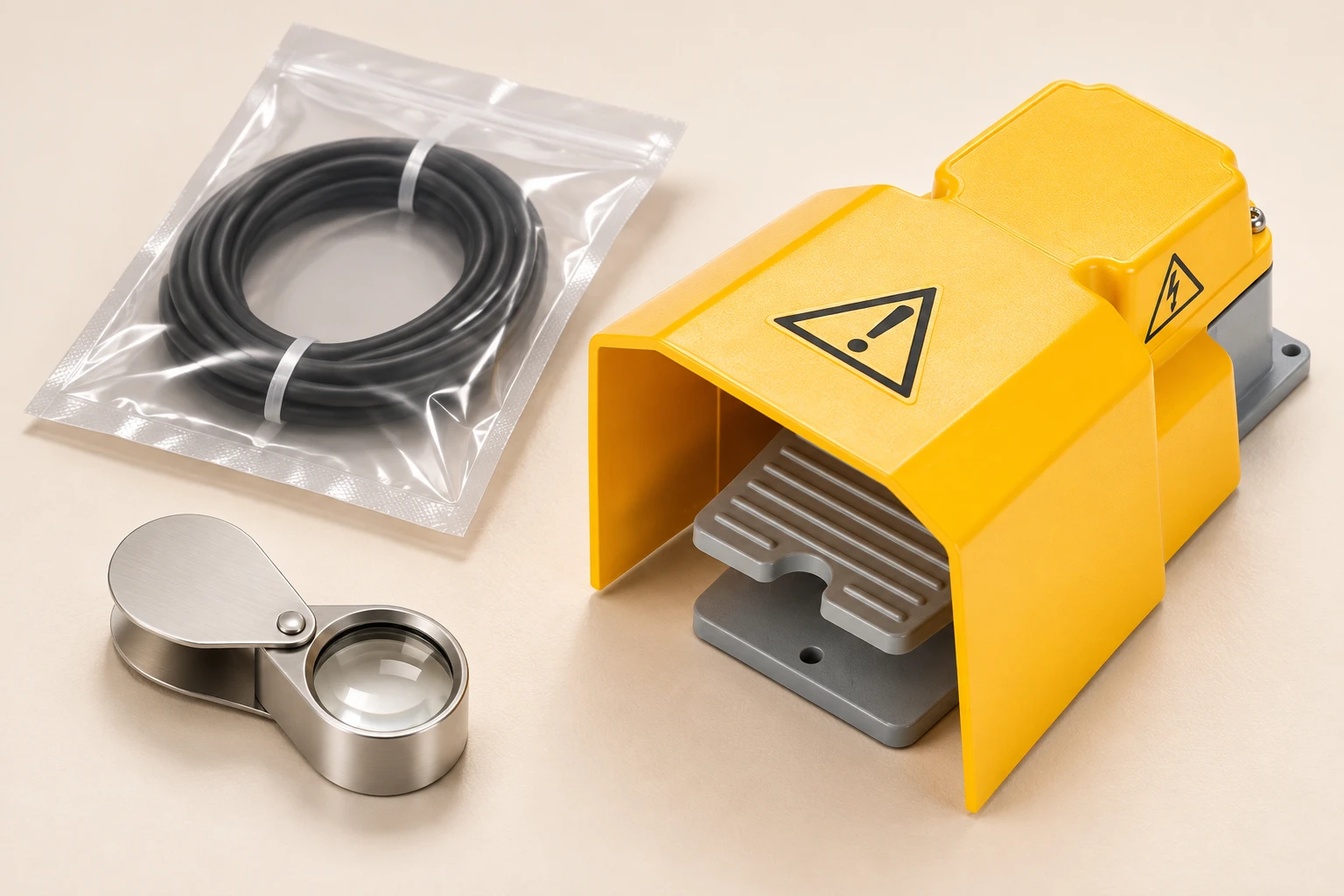
Build an evidence packet that can be checked again
Use three linked records: the approved design requirement, the supplier declaration for the delivered lot, and the inspection result. The first states what was ordered. The second states what the supplier says was supplied. The third records what was observed on a particular sample. Agreement between all three supports acceptance more effectively than a loose photograph without a lot number.
NASA’s workmanship program treats materials, assembly processes and inspection as connected controls for interconnections. This is useful background for organizing a cable review. It is not evidence that an industrial foot switch is built or qualified for NASA missions. The applicable purchase specification and equipment requirements still govern the order.
Before sampling, decide who is authorized to prepare the specimen, what preparation is allowed, and whether the sample is representative of delivered production. A preproduction loose wire may help develop the method, but it does not establish the construction of a later delivery. Retain the sample identity and its relationship to the actual order in the acceptance record.
| Evidence item | Was zu überprüfen ist | Decision supported |
|---|---|---|
| Cable identity | Supplier code, drawing revision and lot match the foot switch order | The paperwork concerns the delivered configuration |
| Conductor identity | Core marking, size and declared metal construction are recorded | The correct core is being assessed |
| Sample preparation | Preparation method and visible damage are documented | Observed strand condition can be interpreted |
| Physical observation | Images and counts refer to one identified specimen | A result can be reviewed independently |
| Terminal interface | Approved termination covers that conductor construction | Construction approval does not hide a termination mismatch |
| Änderungsmanagement | Substitutions have a documented engineering disposition | A replacement cable is not silently treated as equivalent |
Prepare a representative sample without creating the defect
Construction examination can be destructive. Use a separate approved sample or a specifically designated sacrificial assembly. Do not strip a cable that will return to service merely to satisfy curiosity. Work on isolated, de-energized material under the organization’s authorized procedure, and keep the examined sample out of usable stock if its protective layers or conductor have been disturbed.
A cut strand can be a preparation artifact rather than proof of a production defect. Document the stripping tool, the preparation sequence, magnification used and any uncertainty about damage. Photograph the initial cut end before spreading strands. If preparation damage obscures the result, prepare another controlled sample rather than averaging away an unclear finding.
The current NASA cable and harness workmanship standard record explains the scope of its own interconnecting-cable requirements. Consult the applicable controlled document when a contract invokes it; do not copy isolated aerospace rejection criteria into an unrelated LF order. For an ordinary industrial purchase, agree the actual inspection criteria with the responsible engineer and supplier.
Distinguish construction checks from electrical measurements
A meter that indicates continuity answers a limited question about the tested electrical path. It does not count strands, identify their material or confirm that a cable matches a controlled construction drawing. Likewise, an apparently normal outer jacket cannot establish the condition of every conductor hidden inside it. Record the purpose of each check so that one acceptable result does not replace unrelated evidence.
If conductor resistance is part of acceptance, define the measurement length, connections, temperature handling and applicable specification before comparing results. Lead and connection effects can matter for low resistance measurements. This article provides no resistance threshold or test voltage for LF assemblies. Those values must come from the selected cable and equipment requirements, with the test performed by qualified personnel.
Terminal compatibility is another separate decision. A conductor that matches its cable drawing may still be unsuitable for a particular termination. Confirm the terminal’s accepted conductor construction, preparation and tooling. The connector types guide helps frame the interface discussion; it does not authorize a ferrule, solder treatment or crimp substitution for an undocumented terminal.
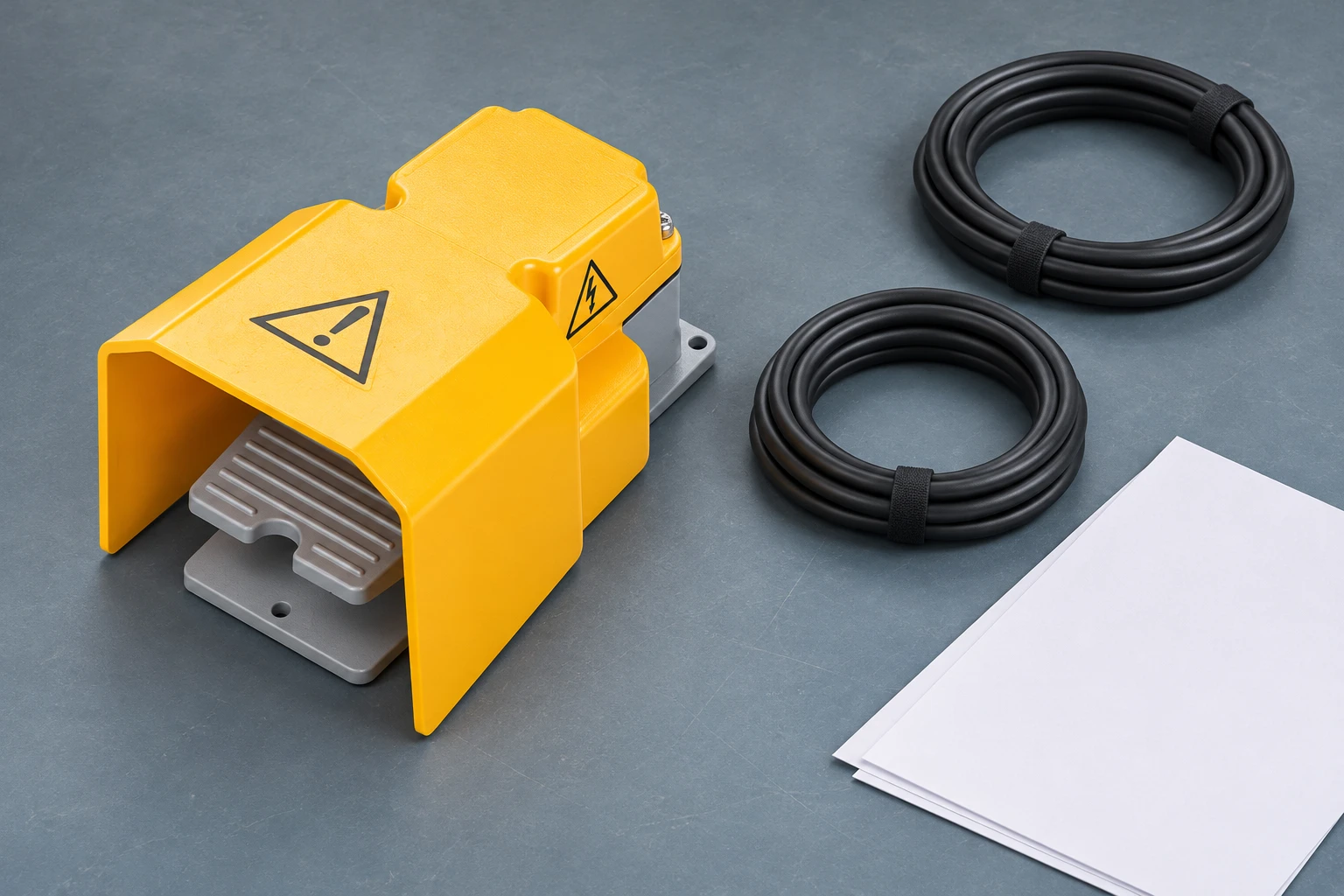
Resolve discrepancies before approving a substitution
Suppose an incoming sample appears to contain a different strand arrangement from an earlier approved sample. First verify that both records identify the same cable revision and conductor size. Then ask the supplier whether there was a cable-source change, a drawing change or an alternative permitted by the specification. A visual difference is a reason to investigate; it is not a complete diagnosis of performance.
Keep questioned material identifiable while the decision is made. A useful discrepancy report contains the order number, assembly and cable identifiers, affected quantity, sample preparation method, photographs, declared construction and observed difference. Request a written disposition linked to those records. If the design requirement is unclear, resolve the requirement before using an improvised acceptance rule.
Do not approve a cable substitution only because the replacement has the same nominal cross-sectional area. Construction identity, termination fit and application qualification answer different questions. For moving installations, consult the separate cable flex-life review und cable torsion qualification guide when the changed construction could affect the approved motion envelope.
Give purchasing a short, actionable request
Ask for the selected LF assembly code, cable manufacturer or controlled equivalent, cable drawing revision, core identification, nominal conductor size, declared stranding, jacket and insulation descriptions, and lot traceability. Attach the intended termination and application information. Ask which items are confirmed for the quoted configuration and which require engineering review. This makes missing evidence visible before the order is placed.
For repeat orders, retain the approved specimen record and the supplier’s change-notification agreement. State whether a source substitution requires notice, supporting documentation or requalification. An acceptance packet should let the next reviewer answer a practical question: is this the same approved construction, or has something changed that needs a decision? It should not require the reviewer to reconstruct the order from informal messages.
Define a repeatable sampling decision
For a new cable source, agree whether the first delivery needs a retained construction sample and how later lots will be checked. The sampling plan should reflect the purchase requirement and the consequences of a substitution; this guide does not invent a sample quantity. Distinguish a pilot sample used to develop the inspection from a production sample used for acceptance. Label both clearly and retain the link to the relevant order. If several conductor colors are used, identify which cores were examined and whether they share the same declared construction. A result from one unidentified core should not be generalized silently to every core in a cable.
Weiterbildung
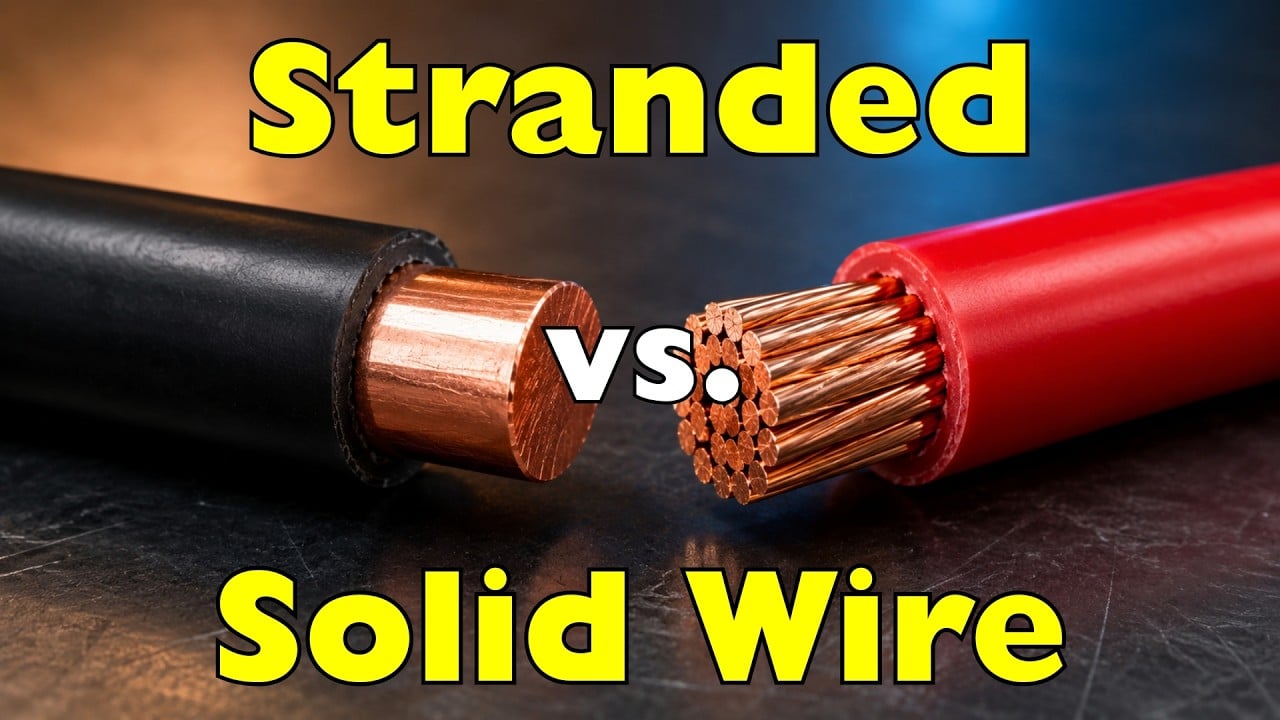
This neutral explainer from History of Simple Things introduces solid and stranded conductor construction. Use it for visual orientation before reviewing the supplier’s actual cable evidence. It does not establish a test method, strand count or acceptance decision for an LF foot switch.
Häufig gestellte Fragen
Can I identify strand count from the cable diameter?
No. Overall diameter includes insulation, jacket and construction spaces. Obtain the declared conductor construction and inspect a representative approved sample when needed.
Does continuity prove every strand is intact?
No. Continuity is a check of the measured electrical path. It does not establish individual strand condition or conformity to the specified construction.
Should the installed foot switch cable be opened for inspection?
Use an authorized sacrificial sample or approved inspection procedure. Do not return a destructively examined cable to service without an approved disposition.
Does the LF product page specify one cable construction?
No universal strand construction is established by the public family page. Confirm the wiring configuration, drawing revision and cable evidence for the actual order.