
Micro switch sample approval should establish whether an identified component and assembly meet a defined OEM requirement. It is not simply a request for a few parts that look similar to an existing switch. Freeze the intended function, interfaces, circuit and operating conditions, identify the submitted samples, and agree the evidence needed before making a release decision. A successful hand-operated continuity check is a useful observation, not a complete design qualification.
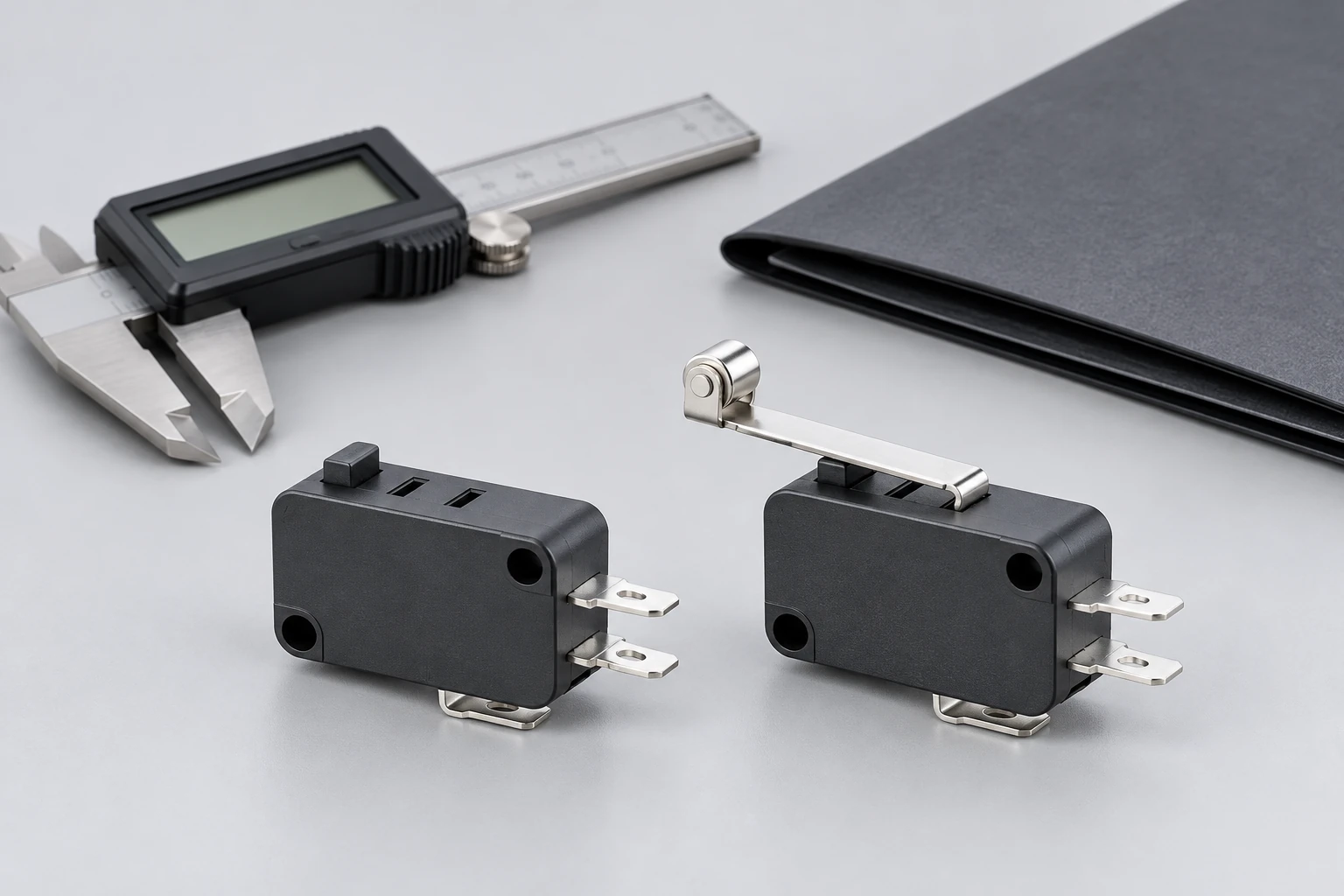
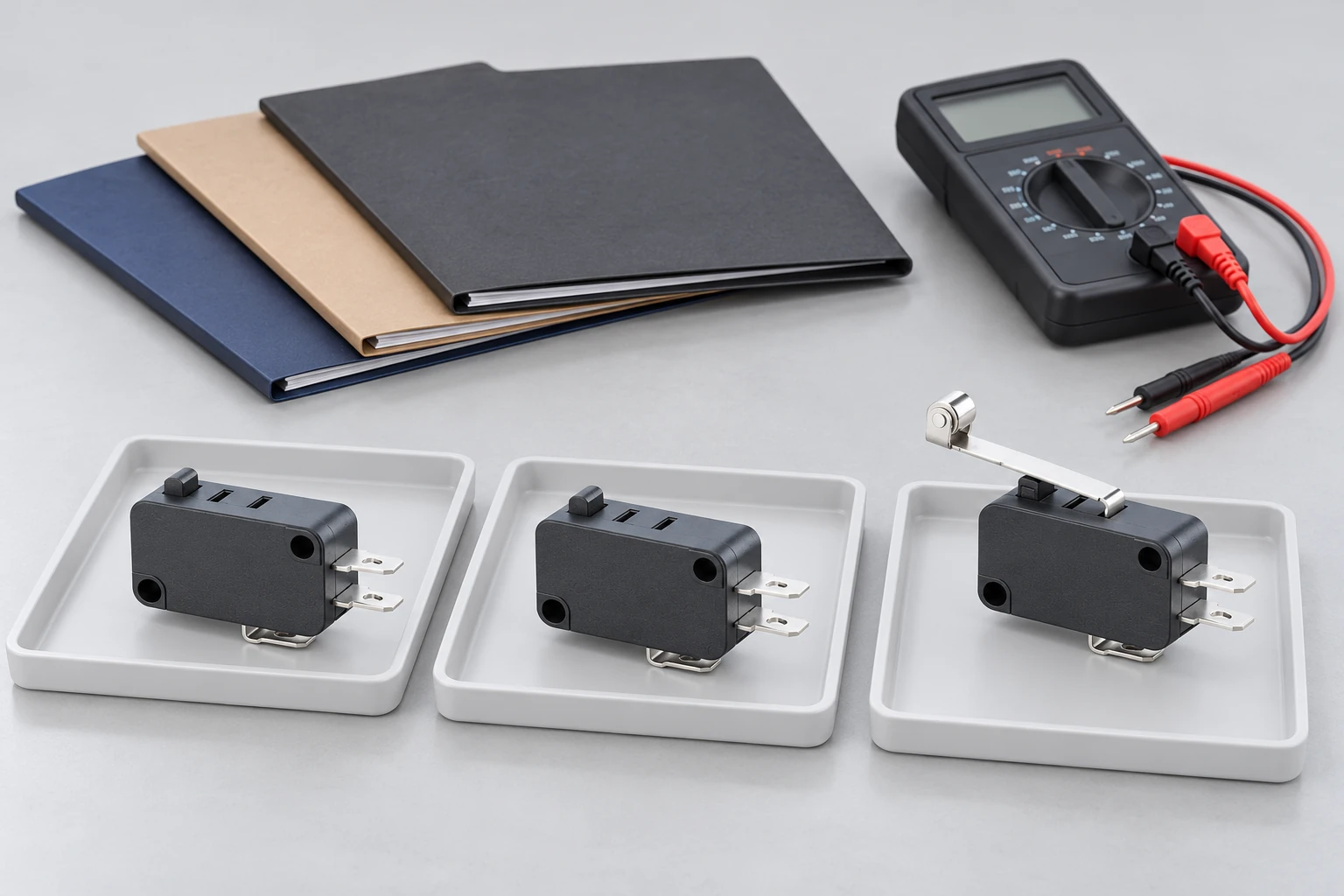
Das LEMA KW7 family provides the product reference for organizing actuator, terminal and force options. The samples pictured here are illustrative specimens, not certified approval samples or evidence of a completed OEM qualification. Use the exact proposed order code and current controlled documents.
Begin with the requirement the sample must answer
Write down the equipment function and the reason for evaluating the candidate. Is it a new design, a form-and-fit alternative, a different actuator or an interface to a particular controller input? A sample plan should answer that decision rather than collect measurements without a purpose.
Identify the required contact function, electrical duty, mounting references, available travel, force constraints, environmental exposure and expected operating sequence. Mark unknown fields explicitly. Do not let a sample’s convenient availability silently define the final equipment requirement.
Das custom OEM inquiry guide supports the initial communication. Sample approval turns that inquiry into a controlled comparison between the stated requirement and the actual submitted configuration.
Freeze the candidate identity before testing
Record the full order code, drawing revision, actuator, terminal type, contact arrangement and relevant rating option. Link the samples to the supplier’s submission and any available lot or production identification. A family name alone is insufficient when several visible or internal variants can exist.
Keep the proposed configuration separate from comparison parts. Do not mix a successful old sample with newly supplied material and assume that one result applies to both. If the identity of a specimen is uncertain, resolve it before including its measurements in the approval record.
Photographs can support identification but cannot prove every internal feature or rating. Obtain the supplier’s controlled information and clarify ambiguous markings. The approval must name the part that was actually evaluated, not an inferred variant selected afterward.
Separate document review from physical checks
Review the drawing, specification, applicable approval documents and supplier statements before planning tests. Confirm which requirements those documents address and whether they apply to the complete candidate code. A general catalogue statement is not a substitute for variant-specific evidence where that distinction matters.
Das IEC 61058-1 catalogue entry identifies general appliance-switch requirements. It does not approve a submitted LEMA sample or establish its suitability for a particular machine. Use the actual product and equipment evidence to decide the relevant compliance boundary.
Physical checks then confirm the features the plan requires: dimensions, mounting, actuator arrangement, terminals, markings and condition. Keep a document discrepancy visible rather than accepting a visually similar sample and promising to resolve the paperwork later.
Plan mechanical and electrical evaluations separately
Mechanical checks should address the real mounting, target movement, force, working travel and release clearance. A loose switch operated by hand does not reproduce a bracket, cover or linkage in the finished equipment. Identify the representative fixture and assembly extremes.
Electrical checks should address the actual circuit and duty. Contact-state identification, low-level input behavior, loaded operation and endurance answer different questions. Do not use one favorable continuity reading to approve every electrical requirement.
Das release-force review illustrates a mechanical acceptance question that can be missed by a simple actuation demonstration. Include only the tests justified by the application, but make their purpose and limits explicit.
Define pass criteria before collecting results
Write the acceptance criteria beside each planned check, with its source and applicable conditions. Distinguish a minimum, maximum, nominal value and an informational observation. Where a criterion is missing, obtain the necessary engineering or supplier decision rather than selecting a convenient limit after seeing the data.
Record the measurement location, instrument, setup and sequence. A result measured at a lever tip should not be compared with a plunger criterion without a supported relationship. Likewise, a dimension taken from an undefined surface may not represent the drawing reference.
For exploratory work, label the result as exploratory. An early prototype investigation can guide the final plan without being misrepresented as formal qualification. Preserve the difference between learning about the design and releasing it for production.
Choose samples for the decision being made
Explain how many samples are being used and what variation they represent. Consider the proposed configuration, manufacturing source and the relevant assembly conditions. Do not invent a statistically justified sample size from a small convenient shipment.
Das NIST acceptance-sampling overview explains a different decision: whether to accept a defined lot under a specified plan. Initial design-sample qualification and routine incoming lot acceptance must not be treated as the same activity.
If the qualification requires multiple conditions, destructive tests or longer-duration operation, identify which specimens are assigned to each part. Retain untested comparison material where the plan requires it and preserve specimen identity through the sequence.
| Approval stage | Required question | Aufnehmen |
|---|---|---|
| Requirements | What equipment function must the part meet | Frozen interfaces circuit and operating conditions |
| Identity | Which configuration was actually submitted | Order code revision and specimen identifiers |
| Evaluation | What does each check establish | Method criterion instrument and representative setup |
| Deviation | Which requirement remains unmet or conditional | Authorized disposition and closure conditions |
| Freigabe | Can later supply reproduce the evaluated configuration | Approved documents reference sample and change controls |
Test the interface in the intended assembly
Install the candidate using the approved method and representative surrounding parts. Review mounting access, conductor support, actuator clearance and the complete target path. A part that fits in an empty panel may conflict with the final harness or cover.
Record the equipment response as well as the component observation. A contact can change state while the controller misses the intended event. Conversely, a control filter can conceal repeated mechanical operations. The plan should demonstrate the requirement that matters to the equipment.
Das replacement guide is useful for a candidate replacing an existing part, but a new design still needs its own requirements. Similarity to an old installation is evidence to review, not automatic approval of an unknown duty.
Handle failures and deviations transparently
Keep failed specimens and the associated records. Establish whether the issue concerns the component, fixture, assembly, test procedure or an incomplete requirement. Do not repeatedly adjust a sample until it passes without recording the changes.
A deviation should identify what was not met, the affected configuration, the responsible decision and any permitted limitation. A temporary allowance is not the same as unconditional production approval. Define its quantity, duration or closure condition where applicable.
If a revised sample is submitted, connect it to the earlier finding and identify what changed. Do not combine the best results from different revisions into one apparently complete qualification package without explaining the configuration differences.
Release a reproducible approved configuration
The final record should name the component code, documents, tested assembly revision, methods, results, limitations and authorized decision. Update the equipment bill of materials and inspection references to the accepted configuration. Preserve the approved sample or reference artifacts as required by the quality system.
Das incoming inspection guide then supports routine receiving controls for the released part. Those controls confirm selected characteristics of later supply; they do not replace the original design evidence.
Plan how future changes will be reviewed. The supplier-change guide addresses that later lifecycle decision. A clear baseline makes it possible to determine whether changed material is still represented by the original qualification.
Send a complete sample request
Provide the intended application, full candidate description, drawing references, circuit, target mechanism and the questions the samples must answer. State the documents and identification needed with the shipment. Ask for clarification before assigning unsupported tests or criteria.
Benutzen Sie LEMA contact page to organize that discussion. A useful sample program ends with a traceable engineering decision and a reproducible production specification, rather than an informal statement that the samples seemed satisfactory.
Further learning: sample decisions and their limits
NPTEL IIT Kharagpur: Lecture 54: Acceptance Sampling: Key Concepts. NPTEL explains acceptance sampling. Use it to understand why a lot decision differs from initial design qualification; the lecture does not approve the candidate samples or prescribe the complete OEM test plan.
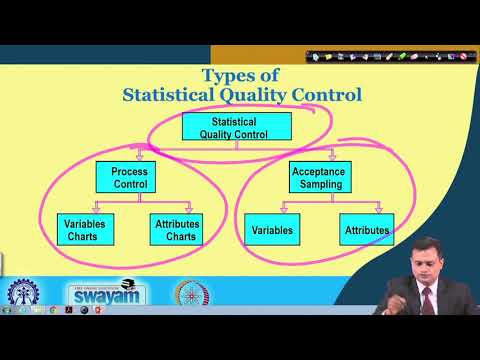
Watch Lecture 54: Acceptance Sampling: Key Concepts.
Häufig gestellte Fragen
Does a working hand sample prove production suitability?
No. It establishes only the observations made under that setup. Initial approval must address the defined equipment requirements, exact candidate identity and representative mechanical, electrical and environmental conditions through an agreed plan.
Is incoming sampling the same as sample qualification?
No. Lot acceptance under a sampling plan is different from demonstrating that a design configuration meets its application requirements. Keep the two decisions and their evidence separate, then link receiving controls to the approved baseline.
Can I choose acceptance limits after seeing the results?
That undermines the purpose of qualification. Define the criteria and their sources before the formal evaluation. Exploratory measurements can inform a later plan, but label them as exploratory instead of presenting them as a pre-agreed pass.
What should the final approval identify?
Record the complete component code, controlled documents, tested assembly revision, methods, results, limitations and authorized decision. Connect those records to production and receiving instructions so later supply can be checked against the evaluated configuration.