
Micro switch vacuum compatibility must be assessed for the complete installed assembly at its actual pressure, temperature and electrical duty. A normal ambient-temperature rating, an ingress rating or a successful atmospheric endurance test does not qualify a switch for a vacuum chamber. Before choosing a component, establish whether its materials, lubricant, electrical insulation and heat paths have supporting evidence under the intended conditions. For OEM buyers considering a conventional mechanical microswitch, the useful first step is an evidence request tied to a specific part and application, followed by a controlled engineering decision about placement and qualification.
Define which side of the chamber contains the switch
A microswitch outside the vacuum boundary and a microswitch inside the chamber present different purchasing problems. An external switch may detect a mechanism through a suitable mechanical arrangement while remaining at atmospheric pressure. An internal switch exposes its housing, actuator, terminals, attachment materials and nearby wiring to the chamber environment. Describe that boundary on the assembly drawing before comparing quotations. A phrase such as vacuum machine switch can otherwise mean either an ordinary external control or a specially evaluated internal component.
Record the operating pressure range, pump-down sequence, venting method, temperature profile, required cycles and electrical circuit. Include the time spent at pressure and whether contacts change state during evacuation. Specify what the chamber protects: a general handling process, an optical surface, a deposition process or another contamination-sensitive operation. These details affect evidence requirements. Do not copy a spaceflight specification into an industrial machine simply because both applications use reduced pressure; select criteria that the responsible engineering team can justify.
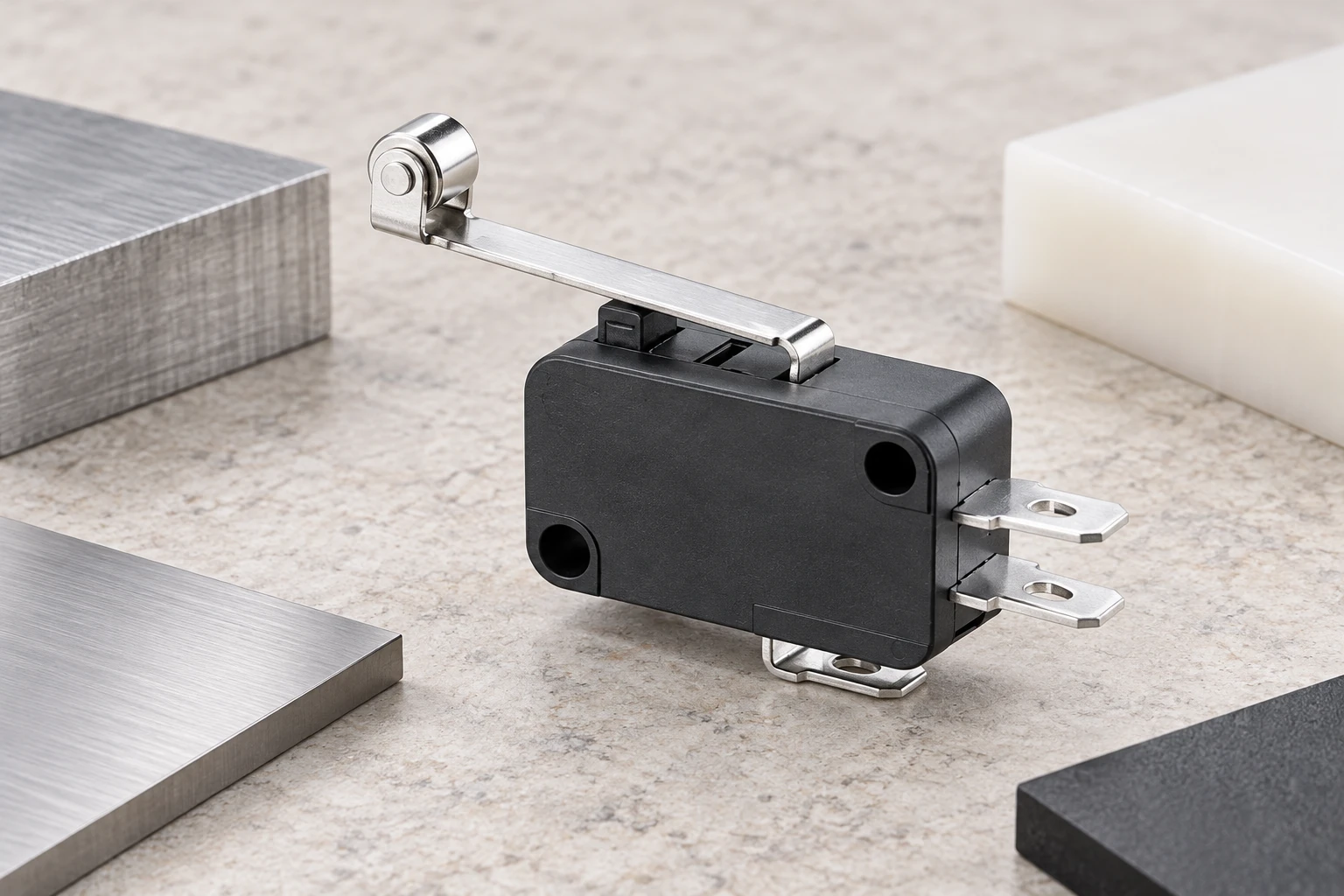
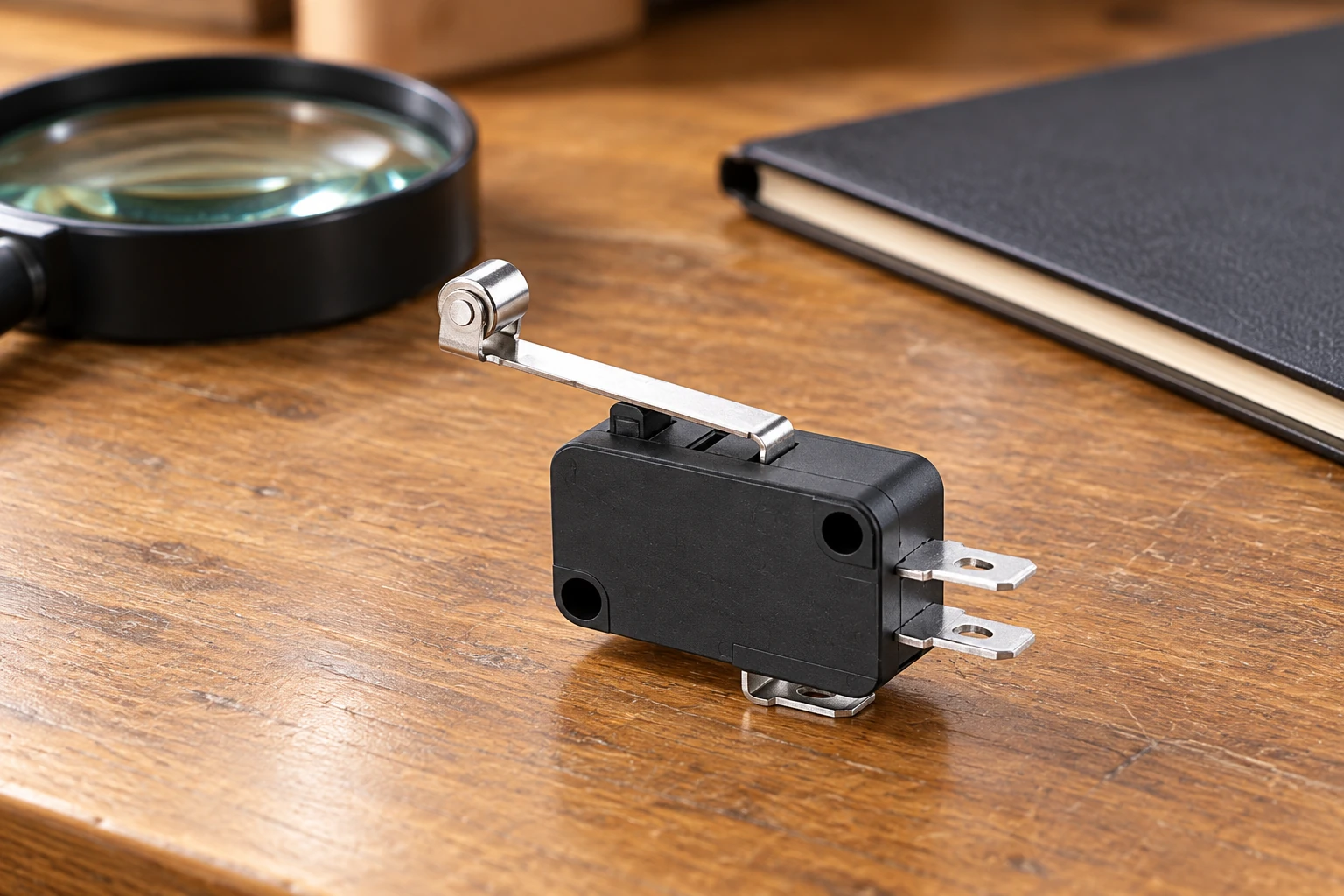
Das Mikroschalter der Serie KW7 supplies a useful reference for mechanical packaging and available actuator arrangements. Its published family description is not a vacuum qualification. Confirm the exact quoted variant and ask what environmental evidence exists before proposing it inside a chamber. An unsupported response should lead to another placement or component strategy, rather than an assumption that a small plastic housing creates a negligible risk.
Separate material outgassing from switch operation
Material outgassing concerns substances released into a vacuum environment. Functional qualification concerns whether the installed switch continues to meet its required mechanical and electrical behavior. Passing one assessment does not automatically satisfy the other. A material coupon can inform contamination review while leaving actuator return, contact behavior, assembly cleanliness and installed heat transfer untested. Conversely, a switch that changes continuity successfully during a brief chamber trial can still introduce an unacceptable contamination load.
NASA’s vacuum outgassing database overview describes material testing and the purpose of recorded mass-loss and condensable-material information. Use such resources to understand the evidence category. A database entry for a named polymer or adhesive does not identify every commercial formulation using a similar trade description, and it does not certify an assembled Lemaele switch. Material identity, processing history and applicable test conditions must be traceable.
Ask the supplier which nonmetallic materials and process aids can be identified for engineering review. Relevant items may include the housing formulation, actuator components, wire insulation, cable jacket, seals, adhesive and lubricant. Request information at a level appropriate to the project and any confidentiality arrangement. If composition cannot be disclosed, ask whether applicable independent test evidence or a controlled alternative can support the decision. Record unresolved items explicitly in the qualification plan.
Review heat transfer without reusing an atmospheric limit
At reduced pressure, heat transfer can differ from the conditions used for an ordinary component rating. The installed thermal path depends on contact loading, conductors, mounting features, surrounding surfaces and the chamber temperature. A switch may remain mechanically operable while a loaded connection reaches an unacceptable temperature. An unloaded continuity check therefore cannot establish the allowable current for the final installation.
NASA’s thermal-control overview explains thermal-management considerations in space systems. It provides background for thinking about heat paths, rather than a current-derating rule for a commercial microswitch. The responsible engineer should define the assembly conditions and determine the evidence needed for the proposed load. No universal percentage reduction is assigned in this guide.
Prepare a circuit record that distinguishes steady current, inrush, switching duty and nearby heat sources. Define measurement locations and how temperature will be observed without altering the heat path excessively. Include mounting and conductor details in the report so another engineer can interpret the result. Where evidence is unavailable, consider keeping the switching device outside the chamber boundary or choosing a component with documented suitability for the actual environment.
Treat electrical insulation as a separate review
Pressure is relevant to an electrical assessment, but a single statement that vacuum improves insulation is not an acceptance method. The assembly passes through changing pressure during evacuation and venting; geometry, voltage, contamination and materials also matter. A component’s atmospheric insulation or dielectric-strength specification does not establish the behavior of the installed circuit throughout that sequence. Qualified personnel should select the applicable evaluation and safeguards.
For procurement, capture the maximum working voltage, circuit reference, conductor arrangement and switching sequence. Identify whether the switch is energized during pump-down, operation and venting. Request the evidence that covers those defined conditions rather than asking only for a generic high-voltage test certificate. Keep environmental qualification separate from the existing Leitungsisolationswiderstand und dielektrische Festigkeit, which explains those measurements without qualifying a vacuum installation.
Do not attempt to resolve missing evidence with improvised energized chamber experiments. The test owner must control electrical hazards, chamber hazards, instrumentation and acceptance criteria. A failed or ambiguous trial should remain in the record, with the cause investigated before a repeat. Repeating until one sample passes obscures information that the design review needs.
Build an evidence matrix before requesting samples
| Prüfungselement | Evidence requested | Decision boundary |
|---|---|---|
| Vacuum location | Drawing showing component inside or outside boundary | External placement evidence does not cover internal exposure |
| Nonmetallic materials | Exact formulation or applicable test report | Material result does not qualify complete assembly |
| Temperature and load | Installed thermal assessment at intended conditions | No universal atmospheric-current derating assumed |
| Electrical operation | Voltage, pressure sequence and applicable evaluation | Atmospheric dielectric data is not a chamber qualification |
| Mechanical return | Target and actuator evaluation under defined sequence | Free-switch operation does not prove installed behavior |
The matrix is a purchasing aid, not a universal laboratory method. Replace broad entries with the actual part revision, configuration and agreed acceptance criteria. If a required row lacks evidence, assign an owner and an action before approving the sample. A response such as suitable for industrial use does not close a pressure-specific or contamination-specific question.
Check the installed mechanical travel window
Vacuum compatibility includes the mechanism around the switch. Mounting distortion, thermal movement, venting behavior and changes in lubrication conditions can affect an assembly even when the switch body looks unchanged. Define the target approach, actuator loading and return path. Verify that the mechanism has enough travel to operate the intended contact and enough release margin to return reliably, without forcing the actuator beyond its allowed movement.
Benutzen Sie micro switch travel guide to structure the mechanical questions, then apply the actual drawing and supplier data. A long lever that fits an atmospheric prototype may behave differently when the supporting mechanism changes temperature or when its friction condition changes. The appropriate qualification observes the installed assembly under the relevant operating sequence, rather than treating a free switch on a bench as a complete substitute.
Document the before-and-after observations and any intermediate checks required by the test plan. Useful records can include operating position, release behavior, contact state and visible condition, with measurement methods defined in advance. A basic multimeter can help identify contact states in an isolated circuit, but it cannot establish outgassing, low-pressure electrical suitability or loaded thermal performance. Avoid expanding the meaning of a simple observation beyond what was measured.
Keep bakeout and cleaning decisions under change control
Do not bake a conventional switch merely because a material database contains baked samples. A cleaning or heating process can change housings, springs, lubricants, labels and internal interfaces. It may also leave a configuration different from the one originally quoted. The approved process must be supported for the exact assembly, and any resulting performance evidence must refer to that processed state.
Describe packaging, storage, handling and time between processing and installation. Contamination control can be lost after a test if the part is handled with unsuitable materials or mixed with unqualified supplies. Tie the sample identity to its processing record and retain that relationship for production deliveries. For broader procurement organization, the custom OEM micro switch RFQ provides a starting point for supplier discussions; add the chamber-specific requirements rather than relying on a general request.
A material substitution, lubricant change, cable revision or different cleaning agent can require renewed review. Establish notification responsibilities before ordering a production quantity. If a supplier cannot maintain the required configuration, the purchasing team needs to know while alternatives are still practical. Traceability is useful only when the controlled information includes the properties that made the original qualification meaningful.
Understand what chamber testing can demonstrate
The following NASA educational video illustrates environmental testing at spacecraft scale. Its value here is the relationship between a defined environment, an assembled test article and documented engineering evaluation. It does not provide a microswitch test method, endorse the KW7 series or transfer spacecraft qualification to industrial components. Use it as background when discussing why an atmospheric catalog rating cannot answer every chamber question.
NASA Goddard: NASA’s IMAP Endures Extreme Conditions During Pre-Launch Testing
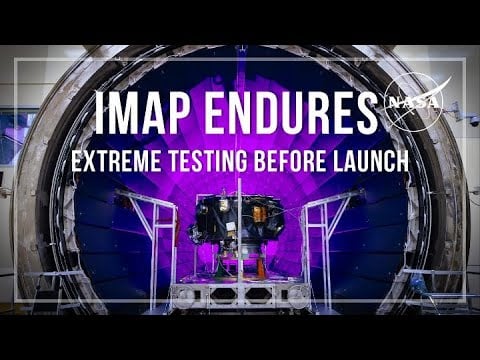
Watch NASA’s IMAP Endures Extreme Conditions During Pre-Launch Testing.
Release a documented decision
A practical release package connects the approved drawing, exact supplier part, material evidence, test configuration and unresolved limitations. State where the switch is permitted to operate and what changes require another review. If the evidence supports only external chamber placement, record that boundary clearly so a later machine revision does not move the component inside without reassessment.
Before placing a repeat order, confirm that the quotation and delivered identification match the approved configuration. Preserve test failures and deviations alongside successful results. An honest decision may be to select a different device, relocate the switch or seek more evidence. That is more useful than a broad vacuum-compatible label that leaves the actual pressure, temperature, contamination and electrical questions unanswered.
Häufig gestellte Fragen
Does an IP rating prove vacuum compatibility?
No. Ingress protection does not establish outgassing, reduced-pressure electrical behavior, thermal performance or actuator behavior in the intended chamber.
Can NASA database material results qualify a whole microswitch?
No. Material data must match the actual material and conditions, and complete-assembly functional and contamination requirements still need assessment.
Can a conventional microswitch be baked before installation?
Only a process supported for the exact assembly and approved by the responsible engineering team can be used. Do not infer permission from unrelated material tests.
Is the KW7 series claimed to be vacuum qualified here?
No. The KW7 is a product-construction reference. Obtain applicable evidence for the exact variant or evaluate another component or external placement.