
Power inlet terminal coating porosity evidence should identify the terminal, the coating and substrate system, the inspected surface, and the test method before it reports a result. A plating thickness certificate alone cannot answer whether a coating has discontinuities. A clean photograph also cannot prove that microscopic pores are absent. For buyers of assembled inlets, the practical task is to connect suitable supplier or laboratory evidence to the actual ordered terminal variant and lot. Do not select a chemical test from a general guide and apply it to an assembled electrical component without an approved method and responsible laboratory.
Identify the IPZ inlet and the terminal under review
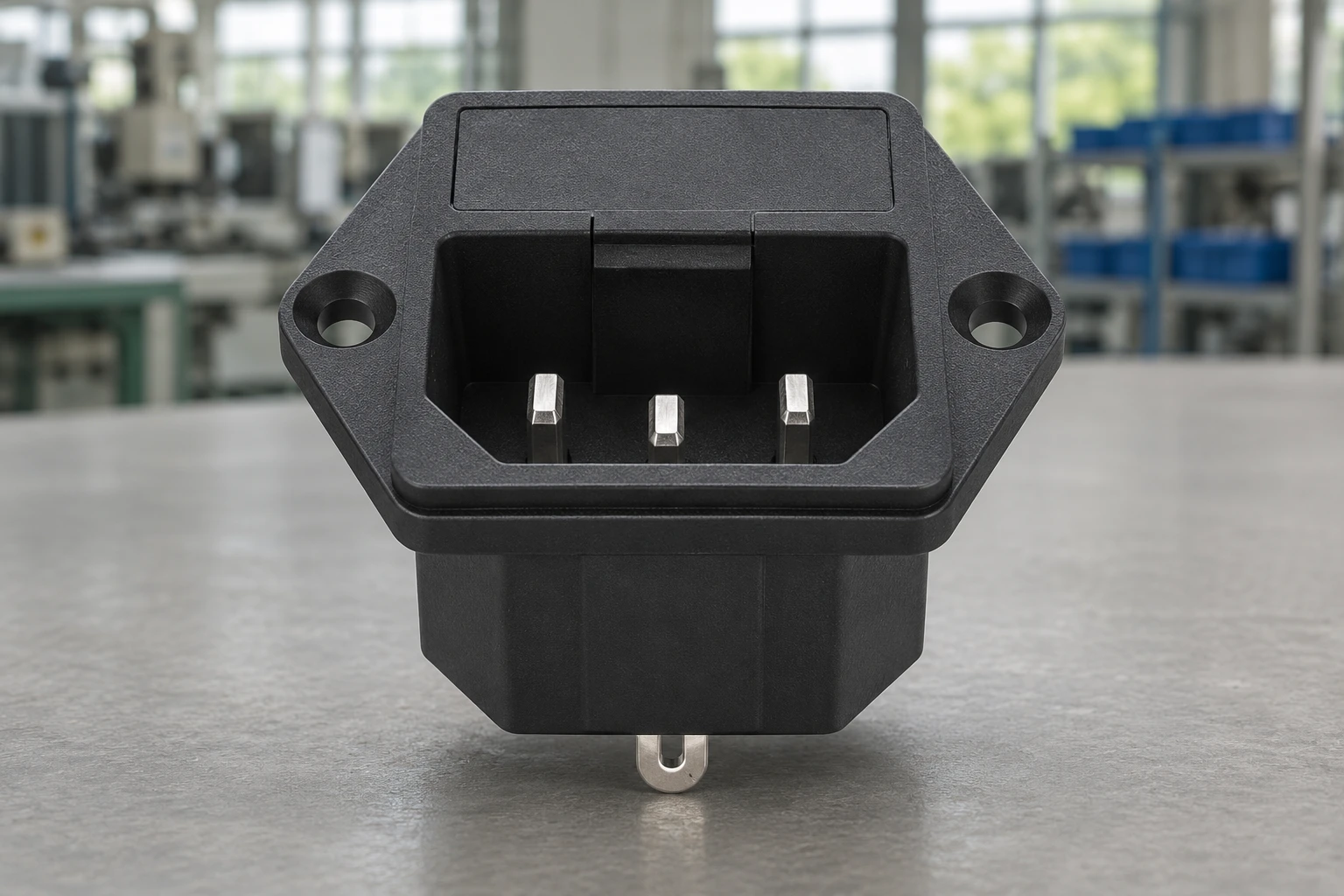
Das Wechselstrom-Steckdose der IPZ-Serie reference shows black inlet bodies with recessed metal contacts and different mounting arrangements. It establishes a real product family to discuss. It does not identify the terminal alloy, deposited metal, underlayer, finish thickness, or coating process. A silver appearance cannot resolve those unknowns. Ask for the drawing and material or finish designation for the precise variant on the purchase order before requesting a porosity report.
Name the terminal surface relevant to your question. The recessed mating region, exposed rear connection region, and any formed edge may have different geometry or manufacturing history. A report needs to identify the region actually examined. For complete inlet replacement and equipment compatibility questions, use the equipment power inlet replacement guide. This article addresses evidence for a coating characteristic; it does not establish electrical suitability or permission to substitute one inlet for another.
Define porosity separately from thickness and damage
A coating can have a measured thickness at a selected location while another location contains a discontinuity. Likewise, a scratch caused during handling is not automatically the same phenomenon as intrinsic porosity. Record what the investigation is trying to establish: coating coverage, gross damage, or another characteristic. An undefined request for good plating lets different parties answer different questions, even when every document looks complete.
Der öffentlich zugängliche Anwendungsbereich von ASTM B765 distinguishes porosity and gross defect testing for certain electrodeposited and related metallic coatings. It also limits which coating processes the guide covers. That public scope helps frame a laboratory inquiry; it is not a complete test procedure or evidence that B765 is suitable for the IPZ terminal. Read the separate terminal plating thickness evidence guide when the purchasing question concerns layer thickness.
| Evidence item | Was zu überprüfen ist | Decision supported |
|---|---|---|
| Terminalidentität. | Variant, drawing and significant surface | Shows what the evidence concerns |
| Material system | Confirmed substrate, coating and underlayers | Allows method suitability review |
| Sample representation | Actual terminal or documented process coupon | Sets the production inference boundary |
| Method and observation | Edition, preparation, images and result definition | Makes the laboratory conclusion interpretable |
| Acceptance basis | Order requirement and lot-linked disposition | Supports a bounded receiving decision |
Match the method to the confirmed coating system
Before selecting a method, obtain the coating designation, substrate, any intermediate layers, and the intended significant surface. The laboratory should explain why the method is appropriate to that combination and to the terminal geometry. Ask whether the method detects exposed substrate, an underlayer, or another reaction product. Without that information, a count or an image can be difficult to interpret and may not answer the buyer’s original concern.
The NIST surface engineering measurement guide provides background on different coating measurements and their applications. Its historical method summaries should not replace the currently specified procedure. Use them to ask better questions about scope and limitations. No test chemistry, exposure duration, or acceptance count from an unrelated material system should be transferred to an IPZ terminal merely because both surfaces look metallic.
Check whether the sample represents production terminals
A test coupon may make a coating process easier to evaluate, but it is not automatically equivalent to a small formed terminal. Request the coupon material, preparation, position in the process, and relationship to the production batch. If actual terminals were tested, identify the variant, forming condition, and whether the sampled surface was accessible. The report should explain which evidence comes from a coupon and which comes from the component itself.
Ask when the tested coating experienced cutting, bending, assembly, or handling relative to the test. An earlier process sample may not address later damage. That does not make the earlier report useless; it defines the question it can answer. Preserve this distinction when purchasing assembled inlets. Evidence of controlled deposition and evidence of final component condition can support one another, but they should remain clearly identified rather than being merged into a single unsupported all-surfaces claim.
Require traceable images, observations, and result definitions
A useful report names the test method and edition, sample identity, preparation, inspected region, observations, and any departures from the procedure. Images should be connected to individual specimens and show how the region was located. If magnification or image processing affects interpretation, the laboratory should record it. Ask what the reported number means: an observed indication count, an area-related measure, or a qualitative result under an agreed rule.
A zero in a report means little without the test conditions and detection limitations. It should not be restated as zero pores under every possible measurement method. Similarly, an image showing no obvious surface damage does not establish coating continuity at smaller scales. Keep the laboratory’s stated result and limitations together in the receiving record. If a summary certificate omits those details, request the underlying report before deciding that the evidence satisfies the order.
Protect the assembled inlet during investigation
Coating porosity investigations can involve methods that change or consume samples. Do not introduce chemicals, abrasive preparation, or cutting into an assembled inlet simply to obtain a quick visual answer. Have the responsible laboratory decide whether loose terminals, sacrificial components, or qualified process samples are appropriate. Identify these as test specimens and keep them outside stock intended for installation unless a documented disposition explicitly permits otherwise.
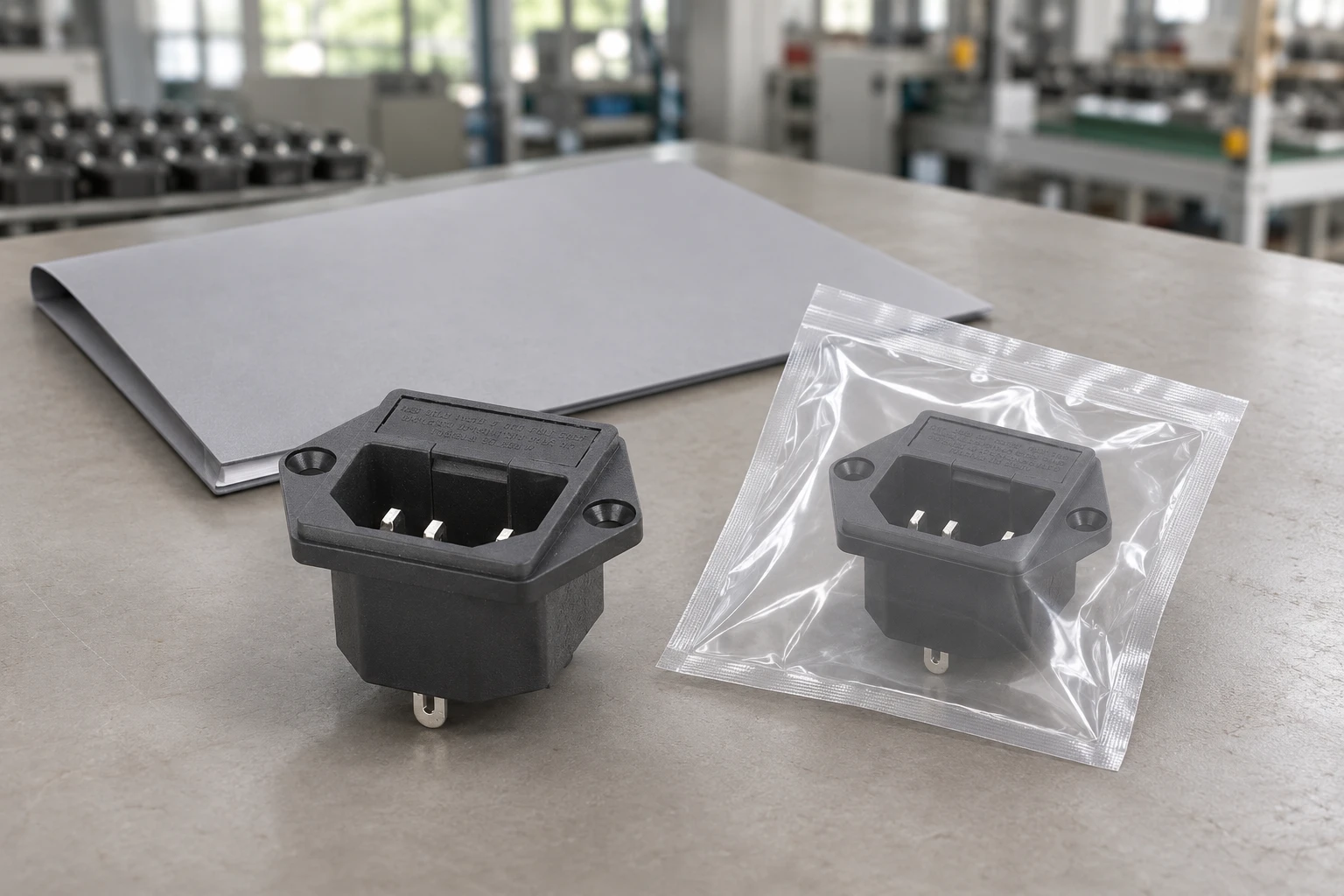
Use unpowered samples for handling and documentation. If a field-returned inlet is involved, the equipment owner’s isolation and access procedure comes first. Record its service and handling history because corrosion, contamination, and mechanical marks may have developed after delivery. A laboratory finding on a returned specimen should not silently be attributed to the original coating process. Preserve packaging and as-found photographs so the investigation can consider alternative explanations without erasing evidence.
Do not turn a porosity result into a lifetime guarantee
The current public ASTM guide warns that test reaction products and service environments can differ. A purchasing team should therefore avoid converting an accelerated laboratory observation into an unsupported field-life prediction. If service correlation is needed, ask the responsible engineer what evidence establishes it. The same caution applies when a supplier offers an attractive result from a different finish or a flat coupon instead of the ordered terminal.
Keep coating evidence separate from contact resistance, temperature rise, retention, insulation, and equipment safety assessments. None is a substitute for the others. An inlet can need several kinds of documentation because each addresses a different property or use condition. If the actual commercial concern is intermittent connection or damage during mating, describe that concern directly. A narrowly scoped porosity test may contribute to the investigation without resolving its full electrical or mechanical cause.
Use a decision record that exposes missing evidence
For lot acceptance, list the ordered terminal variant, finish designation, lot linkage, method suitability, significant surface, and agreed acceptance requirement. Mark each item confirmed, missing, or outside the report scope. An unverified finish designation is a reason to seek clarification, not a reason to guess the most common plating. Where a report is suitable but not linked to the delivery, request the linkage and retain the supplier response.
Your supplier query should ask a specific question, such as whether a named report covers the recessed mating region on a specified delivered variant. Attach the purchase reference and sample identifiers rather than requesting a generic compliance letter. Use the incoming lot acceptance guide for the broader receiving plan. Final disposition should state exactly what was accepted and on what evidence, while preserving any unresolved limits for engineering review.
Weiterbildung
The Royal Society of Chemistry introduces electrolysis, including its role in depositing metal. This is background for understanding electroplating; it does not identify the IPZ finish or demonstrate a porosity test.

Häufig gestellte Fragen
Beweist ein Galvanikdickenbericht eine geringe Porosität?
Nr. Dicke- und Beschichtungsunterbrechungen sind unterschiedliche Eigenschaften. Fordern Sie Nachweise an, die zum tatsächlichen Beschichtungssystem und der bedeutenden Anschlussfläche passen.
Can the IPZ terminal plating be identified by its silver appearance?
No. The product photograph does not establish the coating metal, substrate or underlayers. Confirm the finish designation for the ordered variant with the supplier.
Can an inspector test the assembled inlet with chemicals?
Do not improvise a chemical test on an assembled inlet. Have a qualified laboratory select a suitable procedure and specimen arrangement under an approved investigation plan.
Does a porosity report establish inlet service life?
A laboratory result applies to its method, specimens and conditions. It is not a field-life guarantee or a substitute for the electrical and mechanical evidence required by the equipment application.