
RoHS and REACH compliance for switches should be reviewed as two separate substance-management questions. A RoHS statement does not automatically answer every REACH question, and an electrical safety approval does not replace either review. For an OEM purchase, define the destination market, the equipment application, the exact switch configuration and the evidence date. Then ask the supplier for statements that identify their scope and supporting basis. A useful response explains which ordered parts are covered and which questions still require assessment by the equipment manufacturer or importer.
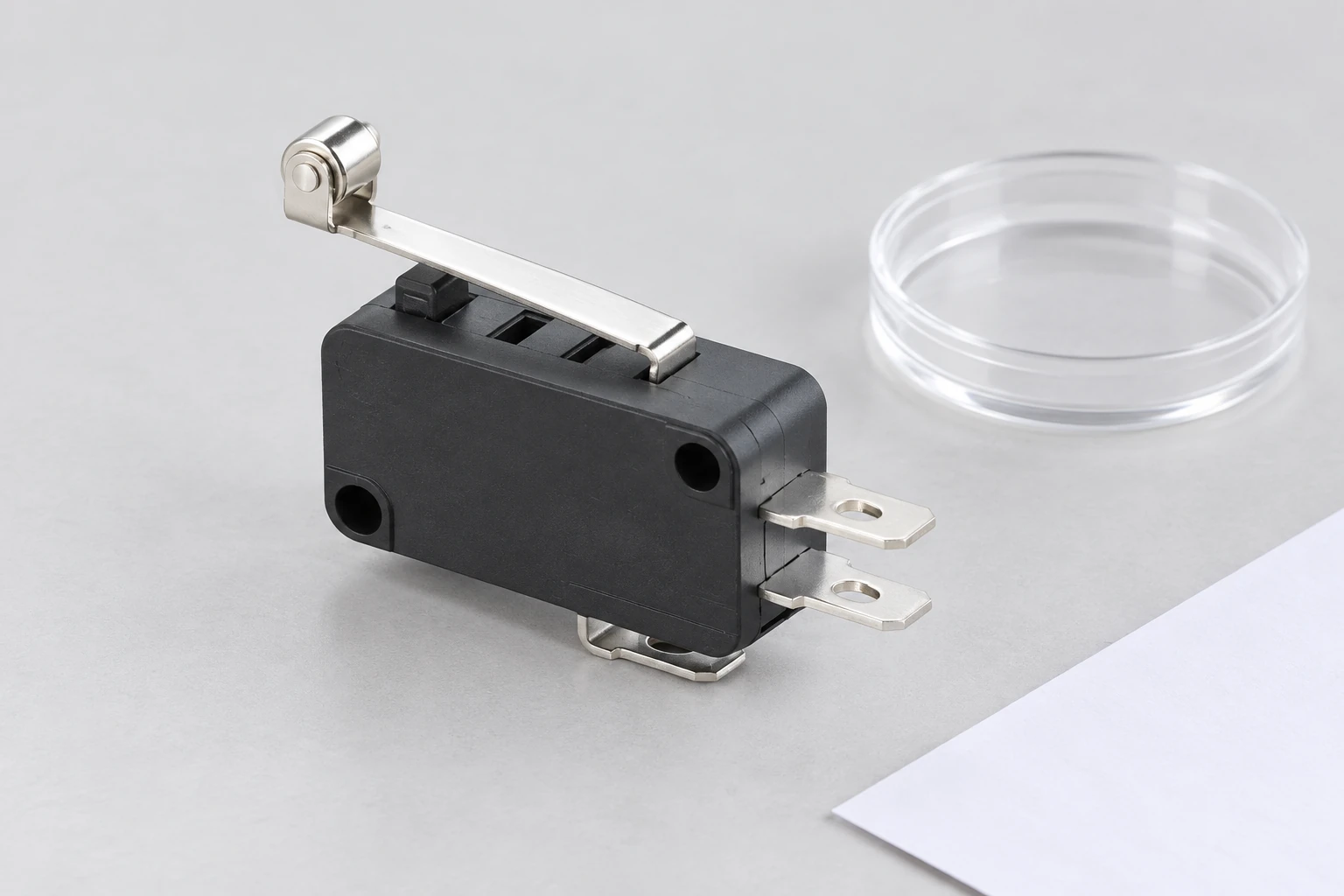
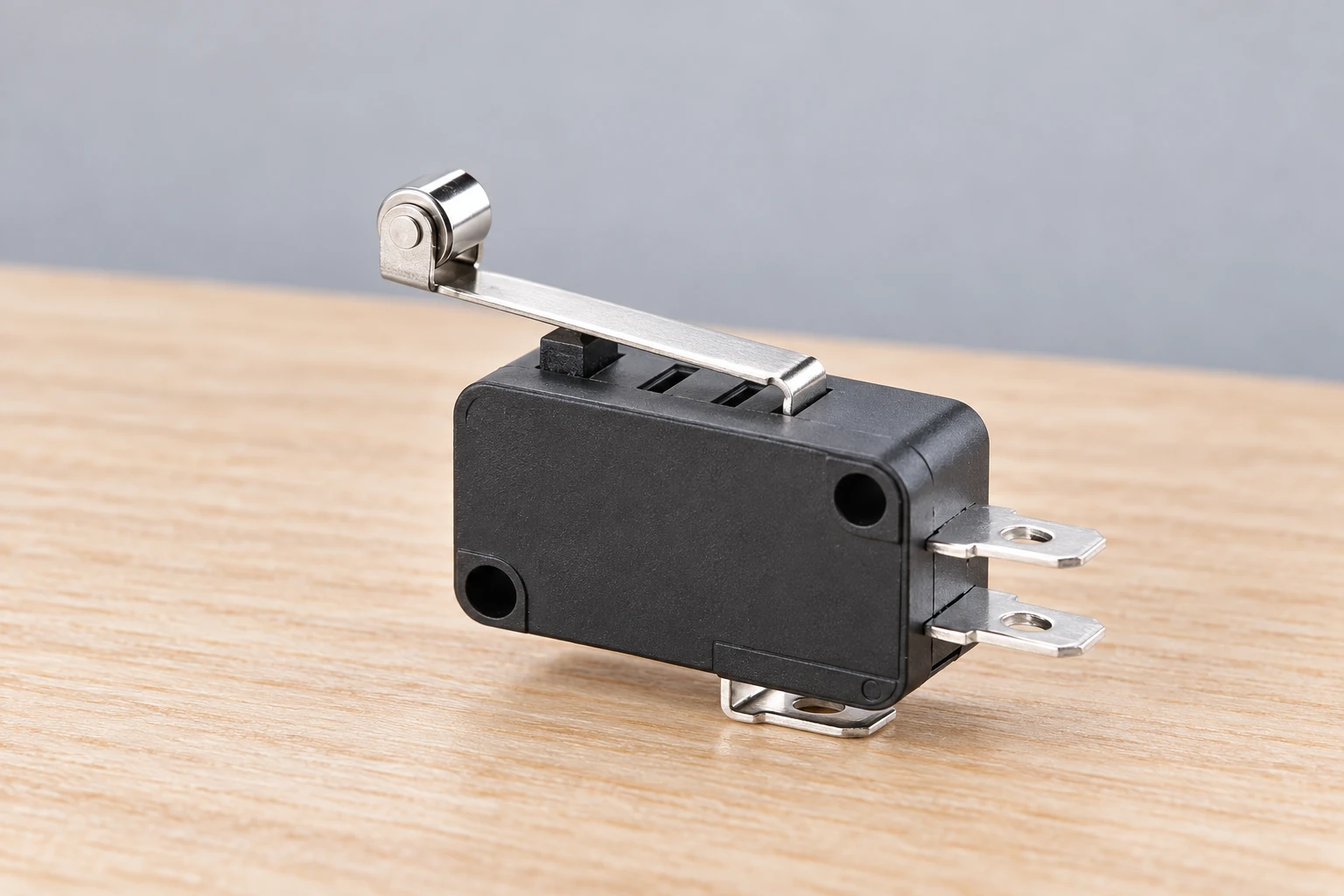
Das LEMA KW7 micro switch is the product example in this guide. The housing, metal terminals and actuator can help identify a sample, but appearance cannot reveal its material composition or establish regulatory compliance. Request current evidence for the exact order code. This article does not declare a particular KW7 configuration RoHS compliant, REACH compliant or free of any named substance without the relevant supplier documentation.
Begin with the question the document must answer
A buyer often receives a single green-compliance file during quotation. Before accepting it, write down what your organization needs to decide. Is the request about restricted substances in equipment, information on substances present in supplied articles, a customer declaration format, or all of these? Assign the review to someone who understands the applicable market and product scope.
Das European Commission’s RoHS overview describes restrictions on hazardous substances in electrical and electronic equipment. Its scope and exemptions need to be considered for the actual application. A component supplier’s response supports the equipment assessment; it should not be presented as a universal approval for every finished product into which the switch might be installed.
Keep RoHS and REACH evidence separate
Das European Commission’s REACH overview addresses a broader framework for chemicals. Do not reduce the difference to two interchangeable badges on a catalogue. Ask your compliance reviewer which substance information and supply-chain obligations apply to the ordered article and the finished equipment. Keep the response date and stated reference basis visible.
It is also important to distinguish absence of information from confirmation of absence. A supplier might have a current RoHS statement while a separate REACH information request is still under review. Record those as different statuses. Marking both as complete because one attachment arrived creates a gap that may remain hidden until a customer asks a more specific question.
Identify the complete purchased configuration
Match the request to a complete order code, a drawing revision and the supplier entity responsible for the statement. The micro switch sourcing checklist helps define the mechanical and electrical configuration. Use the same identity in the environmental evidence request rather than starting a second, loosely named product record.
Options matter because a family can include different contacts, terminations, leads or other materials. Ask whether the statement covers the selected variant and any custom additions. If the response lists a range of models, obtain a clear mapping to your item. Do not assume that a description such as miniature switch includes a modified assembly simply because its exterior housing is familiar.
Compare document scope before comparing the conclusion
| Document field | Zu klärende Frage | Useful follow-up |
|---|---|---|
| Product identity | Does the statement cover the complete ordered item? | Map family names and custom options to the order code |
| RoHS scope | Which application and assessment basis are stated? | Ask the reviewer to confirm scope and any exemption references |
| REACH information | Which requirements and reference date were reviewed? | Request the relevant substance information rather than a generic badge |
| Supporting evidence | How do records relate to current production materials? | Clarify sample identity and uncovered options |
| Änderungsmanagement | What happens when materials or suppliers change? | Set notification and review responsibilities before release |
The table is an internal review checklist, not a substitute for the applicable regulations. It deliberately avoids treating a supplier’s signature, a test report and a complete compliance conclusion as the same thing. Each can contribute evidence, but each answers a different question. Ask the reviewer to explain how the collected records support the particular decision being made.
A date printed recently does not guarantee that every supporting record was recently assessed. Ask whether the supplier has reviewed the stated product configuration against the referenced requirements. If an older report remains relevant, identify the link between its sample and the current materials. Keep that rationale so a later audit does not depend on an unsupported assumption that all historical evidence has expired or all historical evidence remains valid.
Request the basis without inventing a universal test requirement
The appropriate evidence can depend on the product, material knowledge, supply-chain information and the customer’s assessment process. Ask what supports the supplier statement and what limitations apply. Avoid demanding an arbitrary laboratory test package merely because another buyer used it for a different component. Equally, do not accept a claim without enough information to understand its basis.
When a test report is supplied, review the sample description, the material or part tested, the method and the reported scope. Do not transfer the result to untested options automatically. A report about one plastic specimen cannot by itself describe the metal terminals, solder, plating and added cable of a complete switch assembly. Ask the supplier or qualified reviewer how the evidence relates to the item you are purchasing.
Treat exemptions and substance disclosures as explicit fields
An exemption reference needs a defined application and a current assessment of its relevance. Do not remove the reference from the purchase record to make a summary look simpler. Ask which part of the supplied configuration it concerns, which application is being assessed and who is responsible for reviewing its continued applicability. Avoid publishing a blanket statement about exemption validity without checking the current rules.
Likewise, a substance disclosure should be handled as information requiring the appropriate downstream assessment. It is not automatically proof that every sale is prohibited, and it is not a reason to hide the disclosure from the customer. Record the information accurately and refer the actual obligation or restriction question to the responsible compliance reviewer. Purchasing should preserve the evidence instead of rewriting the legal conclusion.
Maintain traceability through supplier and material changes
A useful record connects the statement to the item that arrived. Retain the manufacturer identification, accepted order code and applicable revision with the delivery records. Where your system uses lot references, link them to the purchasing and technical files. The switch lot traceability guide covers identity management; the environmental review adds the question of which material evidence supports that identity.
Define which changes trigger another request. An alternate resin, plating source, added cable or terminal treatment may need review even if the outside dimensions stay unchanged. Use the supplier change-notification process to keep those questions visible. Ask the supplier to explain what changed and which declarations need to be updated, rather than assuming an old approval silently follows a new construction.
Resolve incomplete responses without approving unknowns
Suppose the supplier sends a family-level declaration, while the order includes a custom lead assembly. The practical next step is a focused clarification: identify the complete assembly and ask whether it falls within the statement. If not, request the missing evidence or a clearly limited response that your reviewer can assess. Do not edit the supplier’s document to insert your preferred model designation.
Use a short exception record when information is unresolved. State the missing field, the affected part and the purchasing consequence. If an organization permits a conditional evaluation sample, label that status clearly and prevent it from becoming an unrestricted production release. Separate technical evaluation from commercial acceptance so a delivery deadline does not erase an unresolved materials question.
Further learning: communicating substance information
The following ECHA educational video explains communication about substances in articles. It supports the distinction between substance information and a vague compliance slogan. Use current official requirements and the documented product assessment for decisions about a specific order; the video does not certify a LEMA switch or determine the obligations of every possible importer.
EUchemicals: Communicating about substances in articles – what you need to know

Watch Communicating about substances in articles – what you need to know.
Häufig gestellte Fragen
Does a RoHS statement automatically answer REACH questions?
No. Review the two requests separately against the applicable product, market and current requirements. A supplier may have adequate evidence for one request while information for the other remains incomplete.
Can I determine substance compliance from a product photograph?
No. A photograph can support physical identification, but it does not establish material composition. Obtain documentation that applies to the exact order code and have its scope assessed by the responsible reviewer.
Is a laboratory report the same as a complete compliance conclusion?
A report describes the sample, methods and results within its stated scope. The reviewer must determine how it supports the supplied configuration and the relevant requirements. Do not extend a result to unrelated materials or options.
When should an OEM request updated supplier evidence?
Define review triggers around relevant requirement updates, material changes, alternate suppliers, revised configurations and customer needs. Keep the assessment basis and date recorded instead of assuming every old document is either automatically valid or automatically expired.