
Push button acoustic feedback is the sound an operator uses to recognize an action, such as a mechanical click or a deliberately generated confirmation tone. Specify what the sound means before specifying how loud it should be. A click can accompany mechanism movement without proving that the controller accepted the command or that the machine completed it. Evaluate audibility in the real workplace, with required hearing protection, and provide suitable state information through the equipment interface. A quiet office demonstration cannot establish reliable feedback on a running production line.
This guide uses the LEMA PBS push button family as a construction reference. The product page describes button options and optional illumination; it does not publish a guaranteed acoustic output, sound spectrum or recognition performance. No sound rating is assigned here. Ask for exact-variant evidence and assess the finished panel before making an audible-feedback claim.
Define which event needs confirmation
A button press can involve several events: the operator moves the actuator, the contacts transfer, the input circuit detects the transition, the controller accepts a command, and the machine reaches a requested state. These events are related but not interchangeable. Write down which event the operator needs to know about and what action should follow if confirmation is absent.
For example, an operator may need to know that a selection was registered while looking at a workpiece. Another task may require confirmation that a process has finished. The first can justify a short input-acceptance cue; the second requires evidence about the process state. Using the same undifferentiated beep for both can create uncertainty. Establish the meaning in the control specification before choosing a button or adding a sounder.
Separate a mechanical click from electronic feedback
A mechanical click is produced by physical action in the assembly. Its apparent level can change with the mechanism, panel, enclosure, mounting and listening position. Electronic feedback is generated by the control system and can be tied to a defined event if the design implements that relationship. Neither should be described as proof of machine state without reviewing where the information originates.
O Guia de seleção de botões industriais covers the broader contact, environment and operating requirements. Keep those decisions alongside the feedback review. A button that sounds reassuring can still have unsuitable electrical characteristics, while a quieter button can function correctly. Acoustic preference is one requirement within the complete interface, not a substitute for electrical selection or system validation.
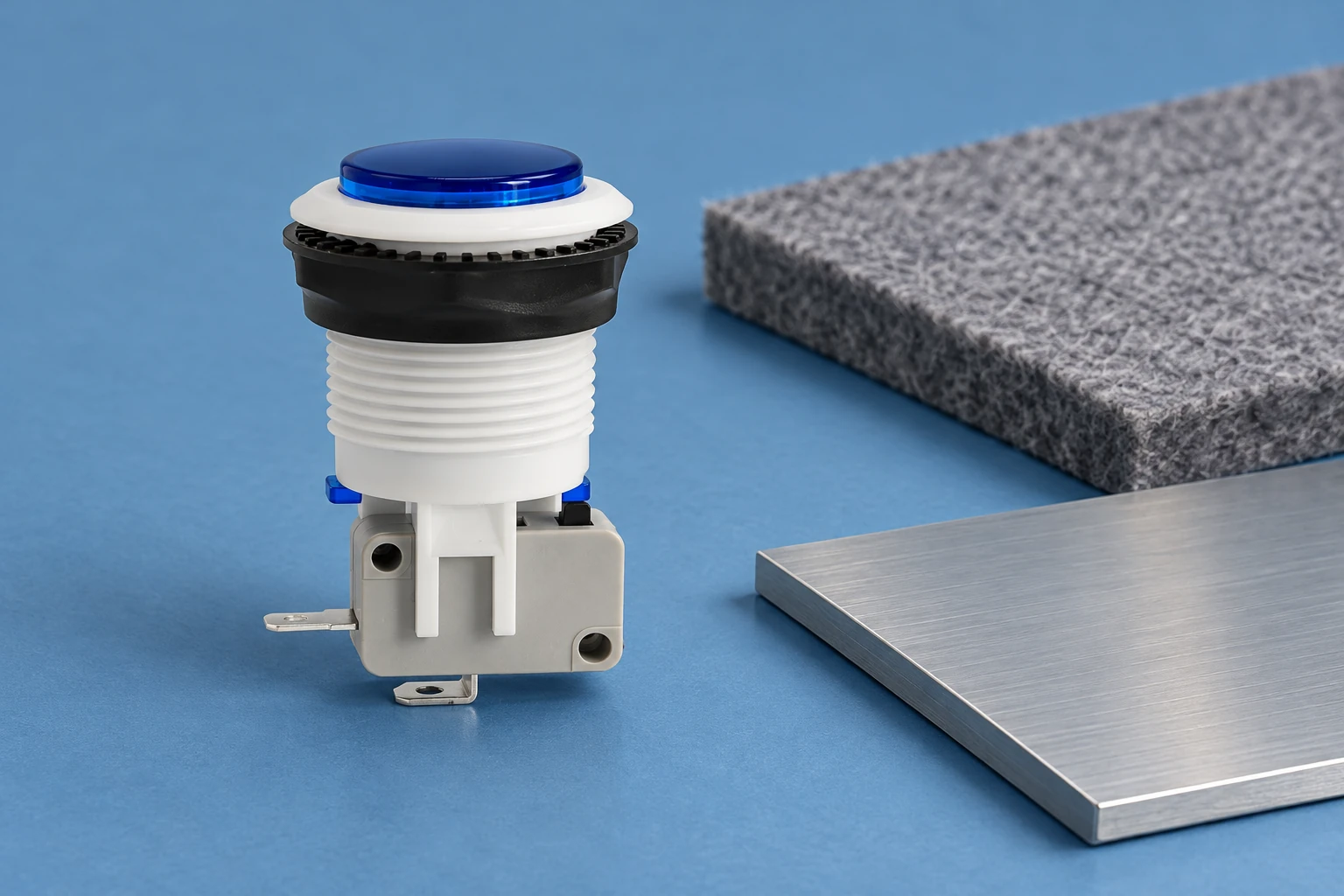
Evaluate the installed panel rather than a loose sample
Compare samples in a fixture that represents the intended panel material, thickness, enclosure and mounting arrangement. A loose part held in a hand can sound different from the same part installed in a cabinet. Record whether the enclosure is open or closed and whether neighboring components or covers are present. These details affect the repeatability of an acoustic comparison.
Keep the operating method controlled. Actuation speed, contact location and the force used after the switching point can add unrelated impact sounds. Ask operators to use the intended action rather than strike the cap to make it audible. If a test uses a microphone, identify its position, orientation, recording settings and background conditions. An automatically adjusted phone recording is useful for notes but is not automatically a calibrated sound measurement.
Understand masking and the listening position
A sound heard clearly at a supplier’s desk may be masked by fans, pneumatic equipment, conversation or neighboring machinery. Masking depends on the sound characteristics and listening conditions, not only an overall noise reading. Assess the operator’s normal location and head orientation, including tasks where attention is directed away from the control panel.
Include representative operating conditions without exposing participants to avoidable hazards. If field trials cannot be performed safely, use an appropriate controlled evaluation and document its limits. Do not simply increase confirmation volume until it dominates the workplace. The design has to preserve communication, avoid confusion with warnings and remain compatible with the site’s noise-control arrangements. Where acoustics cannot provide dependable recognition, another feedback method may be more suitable.
Include required hearing protection and diverse users
O NIOSH hearing-protector selection guidance identifies communication and awareness as considerations when selecting protection. For a button-feedback review, test with the hearing protection already required for the workplace. Do not ask operators to loosen or remove it so that a click becomes easier to hear. Any change to protection belongs in the workplace assessment, not an informal button trial.
Recruit participants who represent the intended users and work practices. Record whether they detect the sound, understand its meaning and respond correctly, rather than asking only whether they like it. Hearing abilities and preferences differ. A design should avoid depending on one engineer’s hearing as the acceptance standard. Where alternative visual or tactile feedback is needed, define how it conveys the same operational information.
Create a feedback decision matrix
| Feedback event | What must be defined | Verification question |
|---|---|---|
| Mechanical operation | Exact button and mounted panel | Can intended users recognize the operation under defined conditions? |
| Input acceptance | Controller event that triggers confirmation | Does the cue correspond to an accepted command? |
| Processing | Meaning of busy or delayed response | Does the interface discourage unintended repeated commands? |
| Completed state | Actual source of state information | Is completion established independently of the click? |
| Warning or fault | Applicable equipment information requirements | Can routine feedback be distinguished from warnings? |
This qualitative matrix separates feedback events and verification questions. It does not prescribe an alarm standard, permissible noise level or required response time. The HSE control-room design guidance emphasizes understandable relationships between controls and displays. Its human-factors principles support reviewing the operator’s information needs; the equipment’s actual requirements still determine the implementation and acceptance criteria.
Distinguish confirmation sounds from alarms
Routine confirmation should not be confused with a fault, emergency or process warning. Review the site’s existing sounds and the consequences of a mistaken interpretation. Include simultaneous events, several operators and nearby workstations where the same tone might be heard. A sound that makes sense at one panel can become ambiguous when another machine uses it for a different purpose.
Document the expected operator response. If no action is required, a repeated intrusive cue may add unnecessary workload. If action is required, the cue needs the accompanying information needed to identify the source and appropriate response. Do not convert a mechanical button sound into a safety-warning function through labeling alone. Any safety-related information path requires the applicable equipment assessment and supporting evidence.
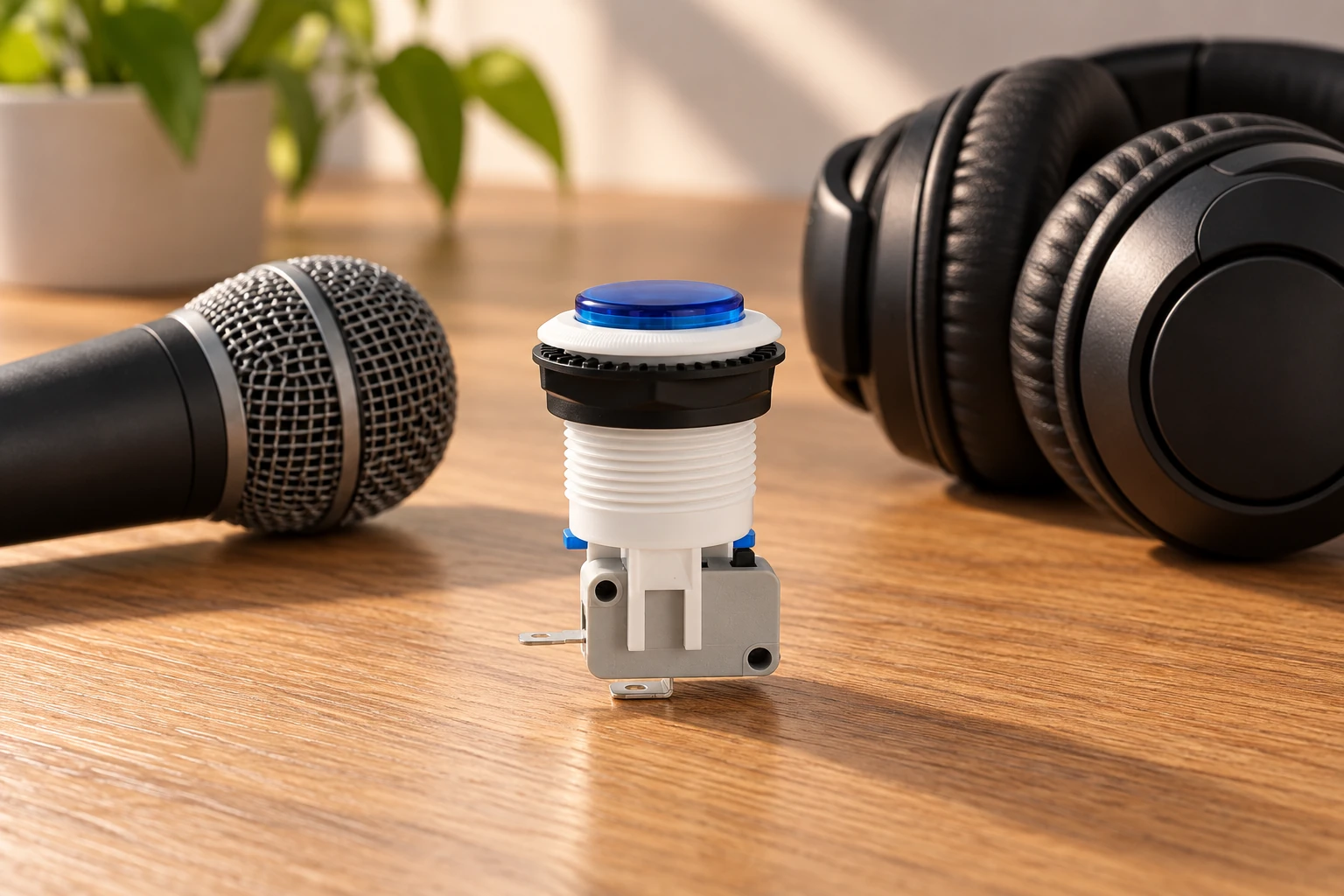
Check repeated presses and delayed responses
An operator who does not recognize confirmation may press again. Examine how the equipment handles a second press, held actuation and delayed processing. The desired feedback should help the operator understand whether the input was received and whether the system is busy, rather than encouraging repeated commands. Define the behavior through the complete control sequence, including rejected inputs.
Electrical contact bounce is a separate issue. The Guia de debounce do botão de pressão addresses how input transitions are interpreted. An audible click does not establish that a receiving circuit detected one clean event, and an electronic beep can be generated even when the actual process has not started. Review the source of each cue and verify its relationship to the event it is intended to represent.
Write a repeatable acceptance procedure
Define the sample identity, mounting configuration, operating sequence, listening positions and background conditions. Separate objective measurements from user observations. For measured sound, the responsible acoustics team should define the instrument, calibration, frequency treatment and relevant time behavior. A brief click and a sustained tone require appropriate methods; a single unexplained decibel figure is an incomplete specification.
For user evaluation, define the task and success criteria before collecting results. Record missed cues, incorrect interpretations, repeated presses and any reliance on unintended clues such as a test operator’s hand movement. Compare configurations under consistent conditions. Keep a clear record of exclusions and uncertainty so that an encouraging prototype demonstration is not later treated as proof of performance in every enclosure or environment.
Investigate a changed sound without guessing
A change in click sound can justify inspection, but it does not diagnose the fault by itself. A loose panel, changed mounting condition, damaged actuator or neighboring vibration may alter the sound. Follow the equipment’s safe isolation procedure and compare the assembly against its approved condition. Avoid opening a sealed mechanism or adding lubricant just to restore a preferred sound.
O isolated push button testing guide explains contact-state checks. Use electrical observations and mechanical observations together, while preserving their different meanings. A continuity buzzer is also a sound, but it represents the instrument’s detection behavior rather than the button’s acoustic output. Document what each observation actually establishes before deciding whether replacement or further analysis is needed.
Give the supplier a usable acoustic requirement
Send the exact button variant, panel drawing and feedback purpose. Describe the installation, typical background sound, operator position and required protective equipment. Ask whether the supplier has controlled acoustic data for that configuration, how samples were mounted and what manufacturing variation the evidence covers. If no such data exists, request samples for an agreed evaluation instead of assuming a standard click level.
Keep the approved sample and evaluation record linked to production purchasing. Changes to the microswitch mechanism, cap, panel material or mounting stack may require acoustic review even if the nominal contact function is unchanged. Conversely, do not reject an electrically compliant delivery solely because an informal recording sounds different; investigate through the agreed method. This makes acoustic feedback a defined, useful product requirement rather than an impression based on the loudest sample.
Further learning: why one sound masks another
The university lecture below explains auditory masking. It supports understanding why a brief control sound can be difficult to hear in a workplace. It does not provide a PBS sound rating, a finished-equipment acceptance limit or a replacement for an operator-task assessment.
Audio Information Processing, TUM, Bernhard Seeber: Psychoacoustics – Masking Part 1
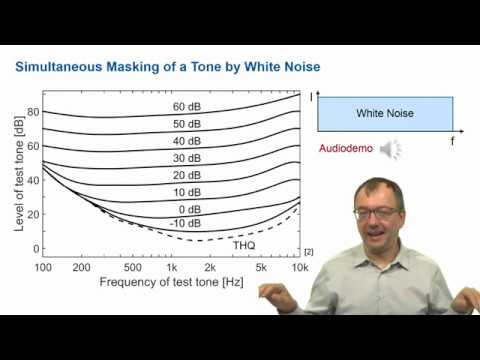
Watch Psychoacoustics – Masking Part 1.
Perguntas frequentes
Does a push button click prove the machine received a command?
No. A mechanical click does not establish contact quality, input detection, command acceptance or the resulting machine state.
Can a loose sample establish installed sound performance?
No. Panel, enclosure, mounting, operating method, listening position and background conditions need to represent the intended use.
Should operators remove hearing protection to hear a button?
No. Evaluate feedback with the required protection and resolve unsuitable feedback through the equipment and workplace assessment.
Is a guaranteed acoustic rating assigned to PBS here?
No. Request applicable exact-variant data or evaluate samples in an agreed representative assembly. No universal sound level is claimed.