
Micro switch altitude derating requires separate reviews of insulation, contact switching and heat in the installed equipment. A current and voltage marking alone does not establish suitability at a mountain site or in a reduced-pressure enclosure. Ask the supplier for the exact variant’s environmental limits, then assess the assembly under its applicable equipment standard. Do not borrow a correction factor from a motor, breaker or unrelated switch. For the LEMA KW7 series, this article provides an application-review workflow; it does not assign a new altitude rating or establish that any particular version has passed reduced-pressure testing.
Why altitude belongs in the equipment specification
A machine originally built for a low-elevation factory may later be ordered for a mountain installation. Its drawing can remain identical while the environment changes. Altitude affects atmospheric conditions, and pressure matters when reviewing electrical paths through air. The local air temperature, enclosure ventilation and operating load also deserve attention. These influences must be described together rather than compressed into a single unexplained percentage.
O NASA atmosphere model illustrates how pressure, temperature and density vary with height in a simplified atmosphere. It explains the physical background, not the rating of an electrical component. Actual equipment can have a different internal temperature or pressure from the surrounding weather. Record whether the switch is inside an unpressurized cabinet, a controlled enclosure or another defined environment before choosing the assessment conditions.
An altitude requirement should travel with the purchase specification. If it appears only in a late installation email, the component supplier may never have considered it. The practical first step is to add the maximum intended operating elevation, the relevant pressure conditions where known, and the enclosure arrangement to the controlled equipment requirements.
Separate three questions before applying any correction
The insulation question concerns the relevant conductive paths, working conditions and required withstand performance. Air clearance and surface creepage are different paths. The IEC 60664-1 publication description identifies low-voltage insulation coordination as its subject and states that it provides guidance for higher-altitude use. The applicable end-product requirements and the current standard must determine the actual assessment; this guide supplies no universal spacing or correction table.
The contact-duty question concerns what the switch makes, carries and breaks. A small signal input and a directly switched load do not impose the same stresses. AC and DC use, load type, inrush and the switching sequence belong in the request. Evidence that an assembly passes an insulation assessment does not automatically establish the electrical endurance of its moving contacts at the intended pressure.
The thermal question concerns the temperature of the assembled current path and surrounding material under representative conditions. A catalog ambient limit does not describe every internal hot spot. Terminal connections, wire size, nearby heat sources and ventilation can change the result. Keep this review distinct from insulation coordination so that a satisfactory result for one mechanism does not silently close another question.
Build an altitude application review record
| Rever item | Required input | Acceptance boundary |
|---|---|---|
| Ambiente | Operating elevation, pressure context and enclosure arrangement | Transport history alone does not establish operating suitability |
| Insulation | Applicable requirements and exact component evidence | No borrowed correction factor or universal spacing |
| Serviço de piquete | Voltage, load type and switching sequence | Carry current and interruption are different duties |
| Thermal behavior | Representative load and assembly conditions | Room-pressure bench evidence has a defined limit |
| Configuração | Part code, terminals, mounting and revision | Changes reopen the relevant assumptions |
The table is a qualitative request checklist, not a set of permissible operating values. Attach the source documents behind each answer. An answer such as “industrial grade” does not identify an altitude envelope, test method or accepted configuration. If the supplier has no published altitude information, preserve that uncertainty and ask what evidence can support the intended application. Do not convert a missing limit into an unlimited rating.
For a first review, nominate an owner for each open item. The equipment designer normally knows the installation environment; purchasing controls the ordered identity; the supplier can clarify component documentation; the responsible evaluator determines whether the evidence meets the equipment requirements. Keeping these roles explicit prevents a salesperson’s informal observation from becoming an engineering acceptance criterion.
Start with the exact switch and installation boundary
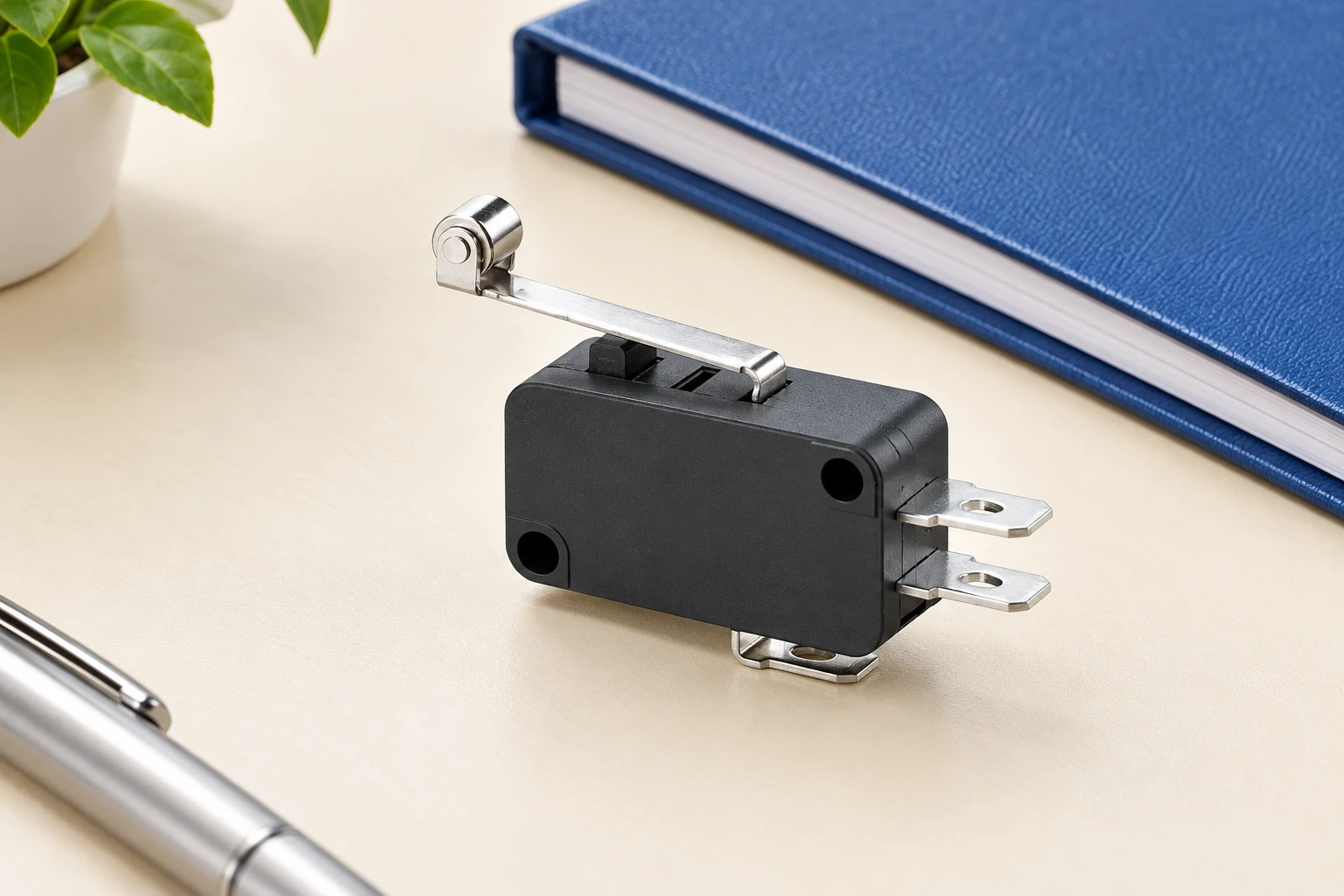
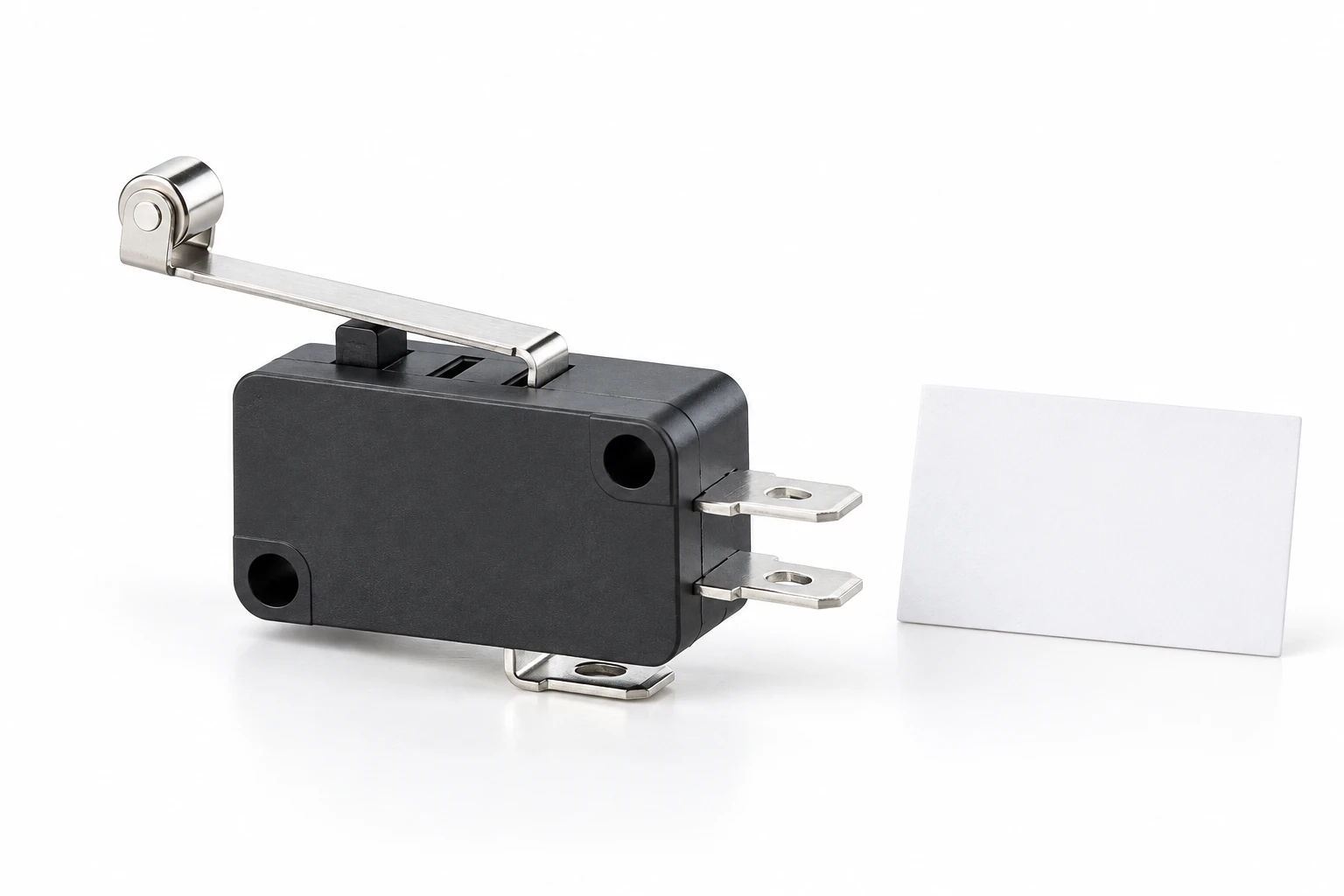
Use the complete ordering code, actuator option, terminals and relevant drawing revision. The KW7 product guide helps organize a family-level inquiry, but a family photograph does not identify every delivered variant. A roller lever and a plain plunger also interact differently with the mechanism even when their housings look similar. Preserve the approved actuator and mounting details while reviewing a new environmental condition.
Describe all conductive parts near the switch. Mounting screws, brackets, terminal insulation and routed wires can influence the finished assembly. The component boundary is only part of the review. If a qualified configuration depends on terminal covers or a particular arrangement, those details must become controlled assembly requirements rather than optional shop-floor choices.
Document whether a replacement changes the pressure exposure. Moving the switch from a controlled compartment to an open mechanism changes the application even if the electrical schematic remains unchanged. Treat that move as a design change requiring review, not merely a purchasing substitution based on matching hole centers.
Define the electrical duty without hiding the difficult cases
State normal operating voltage and current, the load characteristic, switching frequency and the relevant transient conditions known to the equipment designer. Distinguish a contact that carries current after another device switches the load from one that directly interrupts it. Avoid describing both duties with the same single current value. The Guia de vida elétrica versus mecânica explains why unloaded cycling cannot replace evidence for loaded switching.
If the proposed solution moves the power load to another device and uses the switch only for a control input, reassess that input as well. Lower current can introduce its own compatibility questions. Changing the circuit can solve one problem while creating a different contact-duty requirement. Record the complete revised design and its acceptance evidence rather than declaring that every low-current application is automatically easier.
Protective components must also be reviewed in their own right. Adding a suppression network is not a published altitude rating for the switch. Its voltage limits, connection arrangement and effects on the signal or load require a separate design review. Keep this article’s environmental checklist connected to the actual circuit instead of treating altitude as an isolated catalog filter.
Plan verification around representative conditions
Before ordering tests, write what each test is intended to establish. The procedure should identify sample configuration, conditioning, pressure or altitude representation, electrical duty, observation points and acceptance criteria. A chamber run with an unpowered switch cannot by itself establish loaded endurance. A room-pressure temperature measurement likewise does not automatically represent the intended environment.
Select measurement methods suitable for the question and the test facility. Hazardous electrical tests belong with qualified personnel using controlled equipment procedures. This article is not a high-voltage test recipe. Ask the responsible evaluator how laboratory conditions relate to service conditions and which combinations must be demonstrated. Preserve the method and its limits alongside the results.
For heating concerns, compare the complete approved assembly rather than an isolated component on an open bench. The temperature-rise review covers connections and observation points as separate evidence questions. Record any differences between the tested build and production. A favorable result loses much of its value if the shipped wire, terminal or enclosure arrangement changes without review.
Avoid misleading shortcuts in supplier comparisons
Two suppliers may quote different altitude limits because their evidence addresses different conditions. One might publish an equipment-level statement while another gives only component insulation information. Compare the scope before comparing the numbers. Ask whether the limit covers operation, storage or transport, and whether the quoted electrical duty matches the proposed application.
Do not transplant a correction factor from an unrelated technology merely because its table is easy to find. Search results for altitude derating often discuss generators, drives or switchgear. Those examples can explain why environmental conditions matter, but they are not permission to calculate a new KW7 rating. Use documentation and requirements applicable to the exact component and equipment.
A lower current selection alone is also incomplete. It does not identify air-clearance suitability, switching behavior or the accepted temperature envelope. If a supplier recommends a different variant, request the documented basis for that recommendation and reassess the changed interface. The purchase decision should leave a clear explanation of what was accepted and what remains conditional.
Prepare an inquiry that can receive a useful answer
Send the site conditions, equipment standard, complete switch code, circuit duty, enclosure description and required evidence together. Include a drawing or photographs showing the installed terminal region when permitted. Identify the decision deadline and distinguish mandatory evidence from information that would simply be helpful. This gives the supplier a specific technical question instead of an open-ended request for a “high altitude switch.”
Keep the accepted response with the OEM sample approval record and link it to production controls. If an answer is conditional on an enclosure or circuit change, include that condition in the released documentation. A supplier email stored separately from the approved design can easily be missed during replacement or purchasing.
Finally, define when the review must reopen. A new installation elevation, a changed load, different terminal hardware or an altered ventilation arrangement can invalidate an assumption. The useful deliverable is a traceable application decision with evidence and limits, not a homemade derating label added to a familiar part number.
Atmospheric pressure background video
Cognito: GCSE Physics – Atmospheric Pressure

Watch GCSE Physics – Atmospheric Pressure.
Cognito’s atmospheric-pressure lesson explains why pressure changes with altitude. It supports the environmental background only. It does not demonstrate switch insulation performance, establish electrical ratings or replace the component and equipment verification described above.
Perguntas frequentes
Can I apply a breaker altitude factor to a micro switch?
No. A factor published for a different device or standard does not establish a rating for the selected switch. Request evidence for the exact variant and assess the finished equipment under its applicable requirements.
Does a lower current solve every high-altitude concern?
No. Insulation, loaded switching and temperature are separate questions. A lower selected current does not by itself establish suitability for the pressure or installation conditions.
Does this guide approve KW7 operation at a particular elevation?
No. No altitude rating is assigned here. Identify the exact variant and obtain supplier documentation and the equipment-level assessment needed for the intended environment.
What should be included in a supplier inquiry?
Include the complete order code, operating elevation or pressure context, enclosure arrangement, electrical duty, applicable equipment requirements and the evidence you need for acceptance.