
Push button legend marking durability means that the control’s identification remains readable, correctly associated with the button and usable after the expected handling and cleaning exposure. A label that looks sharp on delivery can still be unsuitable if it lifts, loses contrast or becomes ambiguous in service. Specify the actual marking construction, panel surface, cleaning method and inspection criteria before ordering. This guide proposes a verification workflow for equipment buyers and designers; it does not claim a particular marking lifetime, a standardized abrasion result or a marking option for every LEMA PBS variant.
Separate meaning from durability
The first question is what the legend communicates. The second is whether it continues to communicate that message after use. Approving the wording does not approve the adhesive, substrate or printing process. Likewise, an intact label may still identify the wrong function after a control change. Keep the content approval and the physical durability approval linked but separately visible in the project record.
For symbol interpretation, use the push button symbol guide. For the present review, identify the exact label position, legend revision and intended association with the physical control. A decision about an electrical schematic symbol does not establish the suitability of an external panel marking. A replacement label must match the approved function as well as the required physical construction.
Define where the identification is carried
A marking may be on the button cap, a separate legend plate, the surrounding panel or another approved surface. These arrangements face different handling and replacement conditions. A cap may receive direct finger contact. A surrounding plate may receive repeated cleaning without direct actuation. A panel marking may remain in place when the button is changed, creating an opportunity for a mismatch if the replacement performs a different function.
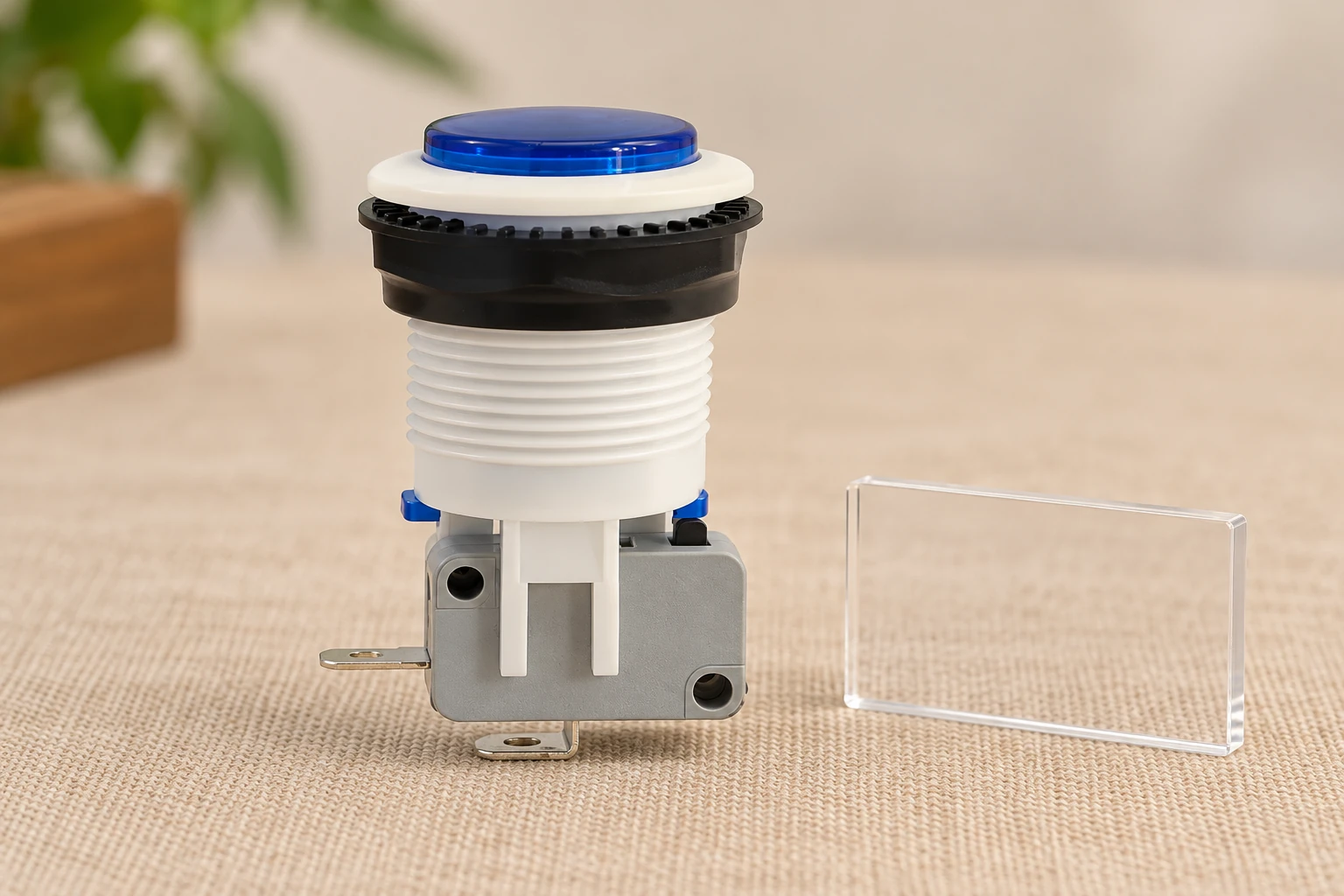
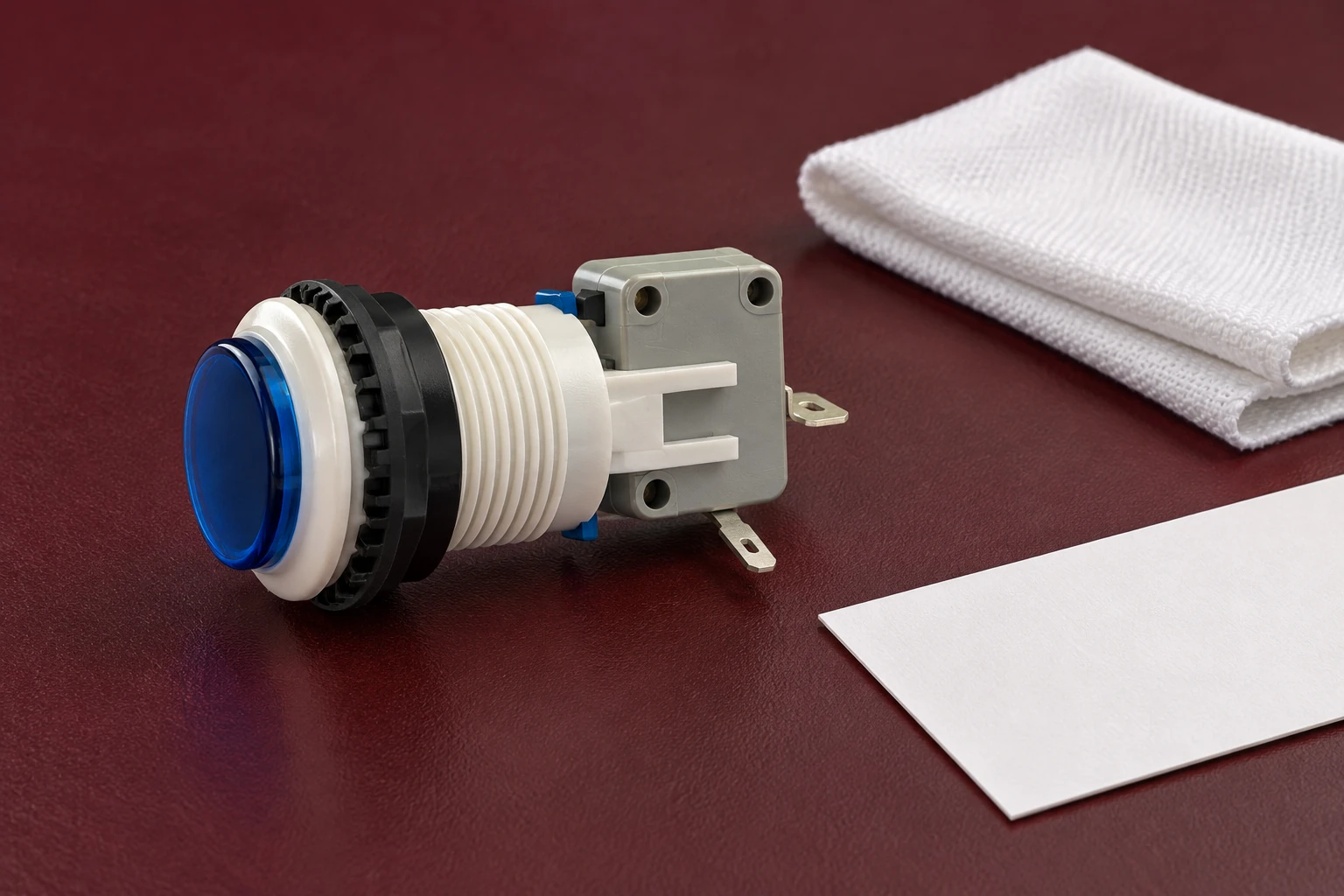
Record the actual surface and supplier responsible for each part. Do not assume a push button supplier also supplies the panel engraving or the legend plate. When purchasing the LEMA PBS series, confirm available marking arrangements for the exact configuration rather than interpreting a product photograph as an engraving specification. The family page describes color and optional illumination; it is not a general certificate for custom legends, adhesives or cleaning resistance.
Establish the service exposure before choosing a process
List the materials expected to contact the marking: hands or gloves, permitted cleaning products, wiping materials and incidental process contamination. Record how cleaning is performed, including whether the surface is wiped while warm and whether residues remain. If a proposed cleaner or process is not defined, leave it as an open input. A statement such as industrial use is too broad to support a meaningful durability decision.
Ask about exposure changes during assembly and shipping as well as normal operation. Protective films, packing materials and temporary labels can leave residue or obscure identification. Include outdoor light or other environmental exposure only when it belongs to the actual installation. An ink, plate or adhesive should be evaluated as part of its specific application; there is no justified universal choice based only on a marketing word such as permanent.
Make the acceptance criteria observable
Create separate criteria for legibility, attachment, correct location and correct meaning. Define the viewing position, normal lighting and condition of the surface during assessment. Note whether the operator can see the label before selecting the control and whether a hand conceals it during the action. A photograph from directly above may be useful evidence but does not replace the ordinary viewing position.
NASA’s crew-interface guidance discusses labeling and control association within a broader human-interface system. It is a useful design reference, not a durability test specification for an industrial panel. Use the principle to ask whether the identification remains clear in context. Do not borrow an aerospace dimension, material rule or qualification claim and present it as the acceptance criterion for PBS products.
Use a construction and evidence matrix
| Construction detail | Evidência a solicitar | Check on the finished panel |
|---|---|---|
| Marked cap | Exact cap material and marking process | Legibility after the agreed handling exposure |
| Separate plate | Plate construction, surface finish and fixing method | Secure attachment and unambiguous button association |
| Adhesive label | Label, adhesive and actual panel substrate | Edge condition, readability and permitted cleaning response |
| Panel marking | Approved artwork and production process | Correct location, contrast and revision |
| Protective layer | Exact layer, application and compatibility evidence | Glare, interference and access after installation |
This matrix organizes supplier questions; it does not rank marking technologies universally. Ask for evidence that names the actual substrate, printing or engraving process, coating and attachment method where relevant. If the supplier provides a test report, check that its sample construction matches the proposed supply. A result for another adhesive or surface finish may be a research lead but is not automatically transferable.
Request the complete conditions behind any claimed resistance. A result without the cleaning agent, contact procedure, sample conditioning and assessment method gives little basis for comparison. Keep commercial descriptions separate from observed results. If a standardized method is required by the equipment specification, use the applicable method and a competent provider rather than inventing equivalent rub counts in the purchasing document.
Plan a representative sample evaluation
Prepare the proposed panel material and finish with the intended production method. Identify the label or marked component lot, application process and any specified conditioning before assessment. Keep an unexposed reference sample when useful. Photograph the starting appearance and record the approved legend text. These records help distinguish an application defect from later wear or an incorrect artwork file.
Set the exposure sequence with the responsible designer and material supplier. Use representative cleaning and contact conditions, controlled so that comparisons are meaningful. Do not mix unknown cleaners or improvise solvent challenges on installed equipment. Separate the physical sample work from any energized machine operation. This article is a planning checklist, not a chemical compatibility recipe or a procedure authorizing the use of a cleaning agent.
After each defined stage, examine readability, attachment, surface condition and association with the button. Record lifting edges, detached fragments, smearing, contrast change and changes to tactile or visual cues. Retain unfavorable samples and notes. Avoid reporting only the best surviving sample or describing cosmetic survival as proof of a long service lifetime. The result applies to the specified construction and exposure that were actually evaluated.
Inspect the whole interface after cleaning
Cleanliness and identification need separate checks. A surface may look clean while the legend has become harder to read. A new clear cover may preserve the artwork yet introduce glare, hide the button edge or interfere with the intended press. Evaluate any proposed protective treatment on the complete control arrangement. Keep access to the button and its normal return movement in the assessment.
Color and illumination can support identification, but neither guarantees that a missing legend is acceptable. Use the push button color guide for the distinct question of color meaning. Assess lamp state separately: the illuminated push button guide covers indicator and circuit inputs. A lit cap should not be treated as an all-purpose substitute for a readable function description.
Keep the regulatory context clear
For equipment used in Great Britain, PUWER regulation 17 addresses control visibility and identification, including marking where necessary. That requirement is not a named ink specification or a universal abrasion count. The dutyholder must assess the actual equipment and applicable requirements. Other jurisdictions and equipment types may have different provisions, so do not treat one cited rule as a complete compliance checklist.
O HSE PUWER overview places identification within the broader responsibilities for work equipment. Use the relevant context when deciding how to inspect and maintain the panel. This article does not certify a finished machine or prescribe a legal conclusion for a specific installation. The practical purchasing aim is to make the marking construction and continuing identification visible in the release record.
Write a useful marking inquiry
Send the legend artwork revision, language, intended location and panel finish together with the button order code. Add the expected handling and approved cleaning exposure, attachment preference if already established and the evidence required for acceptance. Ask the supplier to identify which elements are included in its quotation and which belong to another panel or label manufacturer. This avoids approving a button while leaving the actual marking unspecified.
Define how production changes are controlled. A change to ink, laminate, adhesive or panel finish can affect an earlier sample decision even when the wording remains identical. Keep the accepted sample or adequate reference photographs with the release package. Include an inspection approach for delivered parts and a way to trace the legend revision to the equipment build. The supplier should flag proposed substitutions before they become routine production changes.
Make replacement preserve identification
A maintenance replacement should restore the approved function and its identification together. Record how labels are removed without damaging the surrounding surface and how the replacement is checked against the equipment drawing. Do not print a new legend from an old photograph if the machine function has changed. Where a label is no longer reliably readable, use the equipment’s controlled maintenance process rather than relying on operator memory.
Choose review intervals from the actual exposure, maintenance experience and equipment assessment. This guide provides no fixed daily, monthly or annual interval. Record observed deterioration so the next material decision can use real evidence. If labels repeatedly fail under the permitted cleaning process, investigate the material and application combination instead of repeatedly replacing the same construction without addressing the cause.
Further learning: identification and human factors
The Health and Safety Authority animation below introduces the relationship between people, tasks and the working environment. It supports the reason for assessing a legend from the operator’s perspective. It does not demonstrate a marking endurance test, approve an artwork file or prove that a PBS configuration meets a particular standard. The article’s sample and purchasing records remain necessary for the physical durability decision.
Health and Safety Authority: Human Factors and Safety At Work | Health and Safety Authority

Watch Human Factors and Safety At Work | Health and Safety Authority.
Perguntas frequentes
Is permanent marking a sufficient purchasing specification?
No. Identify the actual material, marking process, substrate, expected exposure and acceptance method. A general description does not establish durability for the proposed panel and cleaning practice.
Does an abrasion test prove resistance to every cleaner?
No. Mechanical wear and chemical exposure are different conditions. Review the actual construction and test conditions against the intended service instead of transferring an unspecified result.
Can illumination replace a missing push button legend?
Do not assume that it can. An indicator and a function label communicate different information. The equipment assessment must establish clear identification in the intended operating conditions.
Does the PBS product page guarantee a custom engraving process?
No. Confirm marking availability and responsibility for the exact quoted configuration. The family description is not a specification or qualification for all cap, plate or panel marking options.