
Micro switch radiation exposure requires evidence for the exact switch construction, exposure conditions and function expected during and after exposure. An ordinary current rating, temperature range or ingress-protection designation does not establish resistance to ionizing radiation. Before specifying a microswitch for an irradiated location, define the environment with the responsible specialist, identify the materials and assembly, and obtain applicable qualification evidence. If that evidence is missing, consider a documented alternative, including moving the sensing function outside the exposure area where the equipment design permits. Do not convert a general catalog description into a radiation rating.
Specify what radiation means in this application
The word radiation can refer to very different environments. Sunlight weathering, radio-frequency interference and ionizing radiation are separate engineering questions. Begin the inquiry with the actual source and the responsible facility’s description rather than the phrase “radiation resistant.” Include the location of the switch relative to the source, expected shielding and the conditions during operation, shutdown and maintenance. The equipment owner should establish which environmental description applies at that position.
Do not ask a switch supplier to infer an exposure from the name of a machine or industry. A control outside an enclosure may have a different environment from a component inside it, while a cable route may cross both. Record what is known, how it was established and which uncertainties remain. If the project cannot yet define the exposure, the next step is an environmental assessment, rather than selecting a part on the basis of an unsupported compatibility statement.
Distinguish a mechanical microswitch from electronic switches
Search results for switch radiation resistance frequently concern semiconductor load switches, RF devices or spacecraft electronics. Their specifications describe those devices and test conditions. A snap-action microswitch has different construction and functions, so those numbers cannot be assigned to it. Likewise, evidence that a metal part remains intact does not automatically qualify the polymers, insulation, actuator system or complete electrical interface in the same assembly.
Keep the question tied to the delivered item. For a mechanical switch, identify the exact actuator, housing, terminals and any attached cable or accessory. Ask which materials and processes are controlled by the part designation and whether relevant changes are communicated. A report on a component with a similar appearance is a research lead, not equivalent evidence. The micro switch replacement guide provides the broader form, fit and function context for this identification work.
Treat material evidence as one part of the decision
A NASA investigation of radiation effects on polymer materials discusses changes in materials and the need for suitable assessment methods within its specific research scope. It illustrates why a generic material name or a visual inspection may be insufficient. Its samples and conclusions do not qualify a KW7 switch, and a polymer test result cannot be transferred without reviewing formulation, processing and exposure relevance.
For a supplier inquiry, separate material identity from demonstrated performance. Request available information at the level needed by the project and make confidentiality arrangements if necessary. If the supplier cannot provide the information or an applicable report, record the limitation explicitly. Do not fill the gap with a compatibility chart for an unspecified plastic. The responsible qualification team must decide what additional evidence, testing or alternative construction would be necessary.
Build an exposure-and-evidence matrix
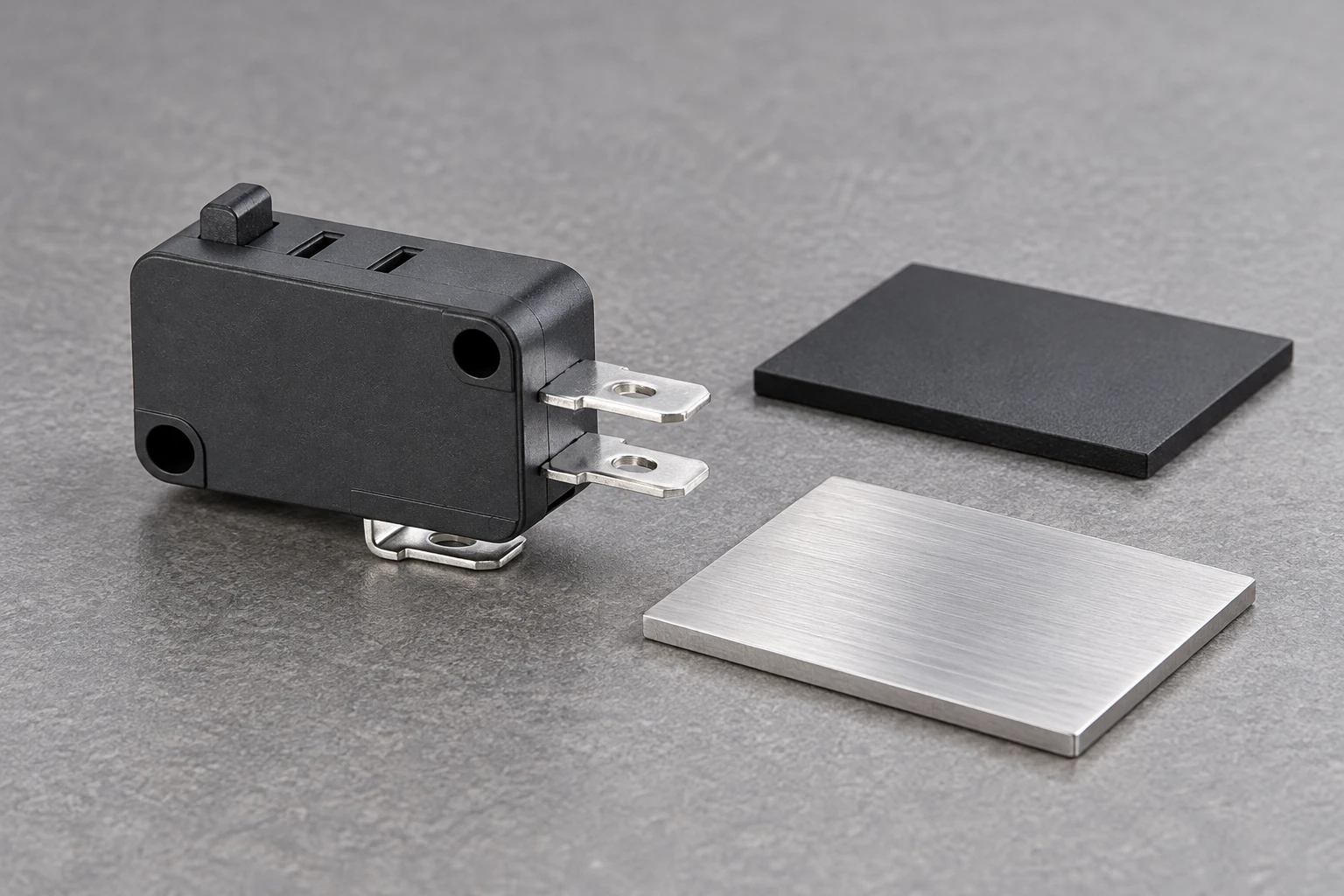
The following table organizes the questions before sample selection. It deliberately omits universal dose limits, exposure times and acceptance thresholds because none has been established here for LEMA microswitches. Use the facility’s requirements and qualified engineering review to supply the actual values and measurement references.
| Evidence field | Information required | Boundary to check |
|---|---|---|
| Exposure | Source type and facility-defined conditions at switch position | Generic radiation wording is insufficient |
| Construction | Exact switch, actuator, terminals, cable and material references | Similar appearance does not establish equivalence |
| Function | Required response during and after exposure | Mechanical movement alone may not cover the requirement |
| Qualification | Sample identity, test configuration, monitoring and criteria | Material or semiconductor results do not qualify a mechanical assembly |
| Production control | Drawing revision, lot records and change process | Later substitutions may fall outside the evidence |
Add a clear scope statement to every submitted report. It should identify the tested construction, exposure method, configuration, monitored functions and acceptance criteria. When one of those fields differs from the intended assembly, record the difference and the reviewer responsible for evaluating it. A qualification file is useful only when the reader can determine what claim it supports and where that claim ends.
Define required function during and after exposure
A switch that only needs to remain mechanically recognizable is a different requirement from one that must change a monitored input reliably throughout exposure. Define whether the component is actuated, electrically loaded or idle, and what the equipment expects at each relevant stage. State whether post-exposure storage, maintenance access or later operation is part of the requirement. These decisions shape the test plan and prevent a convenient measurement from becoming the entire acceptance criterion.
Identify the consequence of an uncertain signal. A general-purpose microswitch should not acquire a safety classification because it is installed in a demanding location. If the switch participates in a protection function, the equipment assessment must establish the applicable architecture, components and validation. This article offers an evidence-review workflow; it does not prescribe a radiation-protection system, authorize a facility procedure or establish a safety function for a commercial component.
Keep environmental effects separate in the review
Radiation may be only one part of the installed environment. Include temperature, atmosphere, humidity, mechanical duty and electrical load where relevant. Do not assume that a test addressing one variable covers all combinations. Conversely, do not import every aerospace environmental concern into an ordinary industrial project without a reason. The review should identify which conditions actually occur and which interactions require investigation for the intended function.
The micro switch insulation-resistance and dielectric-strength guide explains why those electrical checks answer different questions. Neither measurement alone is a complete radiation qualification. The micro switch vacuum-compatibility article addresses another distinct environment. Link the relevant evidence files when conditions coexist, but keep the scope of each result clear rather than treating several unrelated catalog properties as a combined approval.
Agree a qualification plan before sending samples
The European Space Agency overview of radiation testing introduces specialized testing of electrical, electronic and electromechanical components for space. It provides context for matching the assessment to the environment. It is not a commercial microswitch test procedure or a recommendation to reproduce an irradiation experiment independently. The actual program belongs with the authorized facility and the qualified personnel responsible for the application.
Agree sample identity, exposure definition, dosimetry references, configuration, functional monitoring, sequence and acceptance criteria before testing begins. Include suitable comparison samples and a method for recording deviations. Establish who can authorize changes to the plan and how unexpected results will be investigated. A report that states only that a switch “still clicks” after exposure does not answer all the material, electrical or system questions that the application may require.
Preserve traceability across the tested and delivered parts
Match the report to the intended procurement specification. Record part number, drawing revision, relevant materials information, lot or batch identification and any assembly processes that influence the qualified construction. If an attached cable, connector or protective enclosure is part of the tested arrangement, retain its identity as well. A later substitution should trigger the applicable review instead of inheriting approval merely because the replacement fits the same mounting holes.
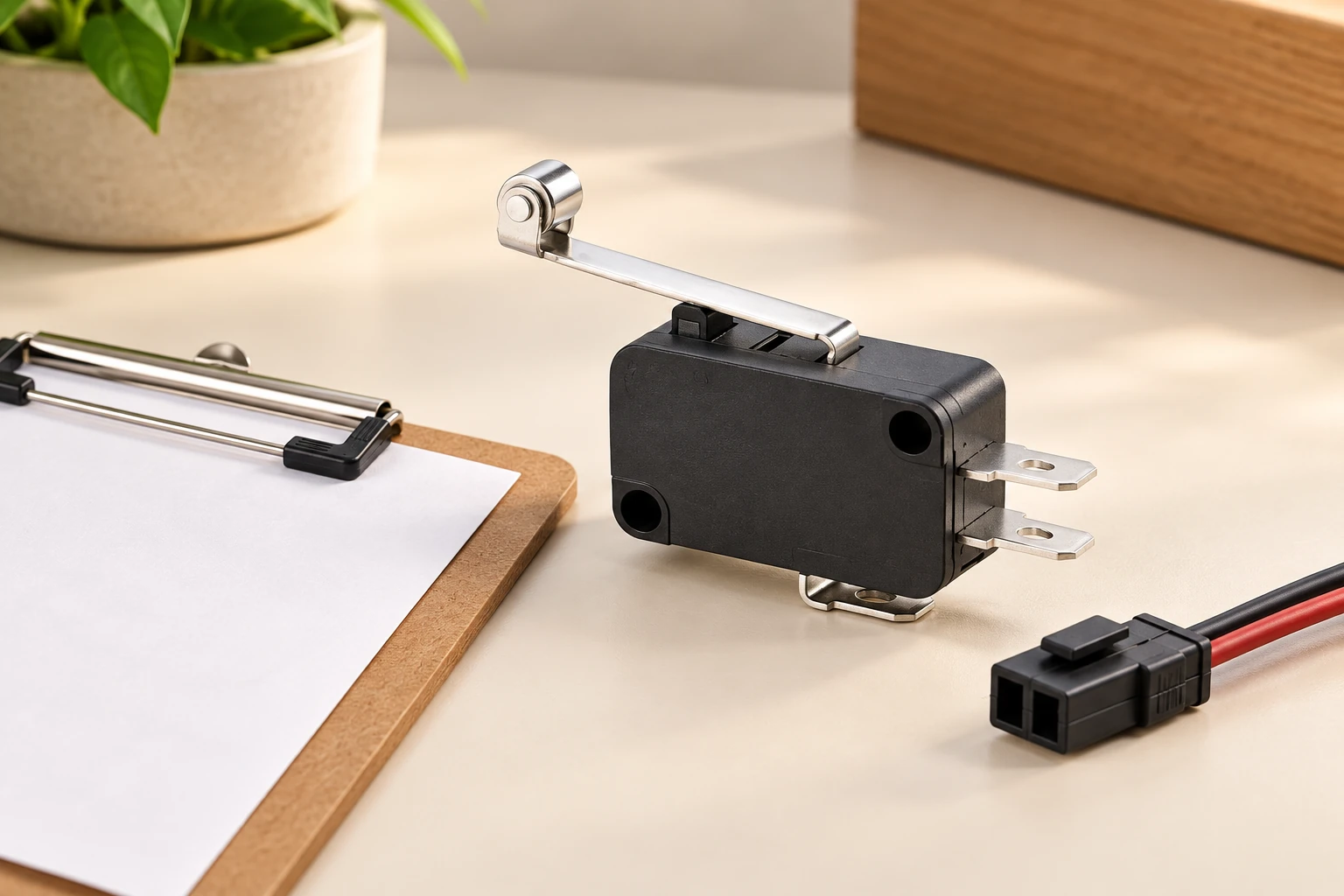
Review the delivered documentation before release. Ask whether the qualification covers a design, a particular sample population or a defined production configuration, and how production changes are handled. The KW7 product page supplies an actual LEMA family reference for an inquiry. It does not establish that the family or every variant is radiation qualified. Obtain exact-variant evidence, or keep the proposed application unresolved until the responsible team approves another route.
Consider relocation and alternatives with the equipment designer
If suitable component evidence is unavailable, the design may permit the switch to remain outside the exposure zone while the required mechanical information is transferred by an approved arrangement. That possibility needs its own review of motion, travel, alignment, access and the complete environmental boundary. It is not a universal fix, and a linkage can introduce new failure modes. Compare the alternative against the original function and maintenance requirements.
Another route may be a component with documented suitability for the specified conditions. Evaluate the actual evidence rather than a promotional “rugged” or “industrial” label. Record the selection decision, remaining limitations and approved operating envelope. The purchasing request should make clear that unverified radiation resistance is not an acceptable substitution. This keeps the supplier conversation focused on demonstrable requirements and prevents an ordinary sample approval from being mistaken for specialized environmental qualification.
Further learning: specialized radiation testing
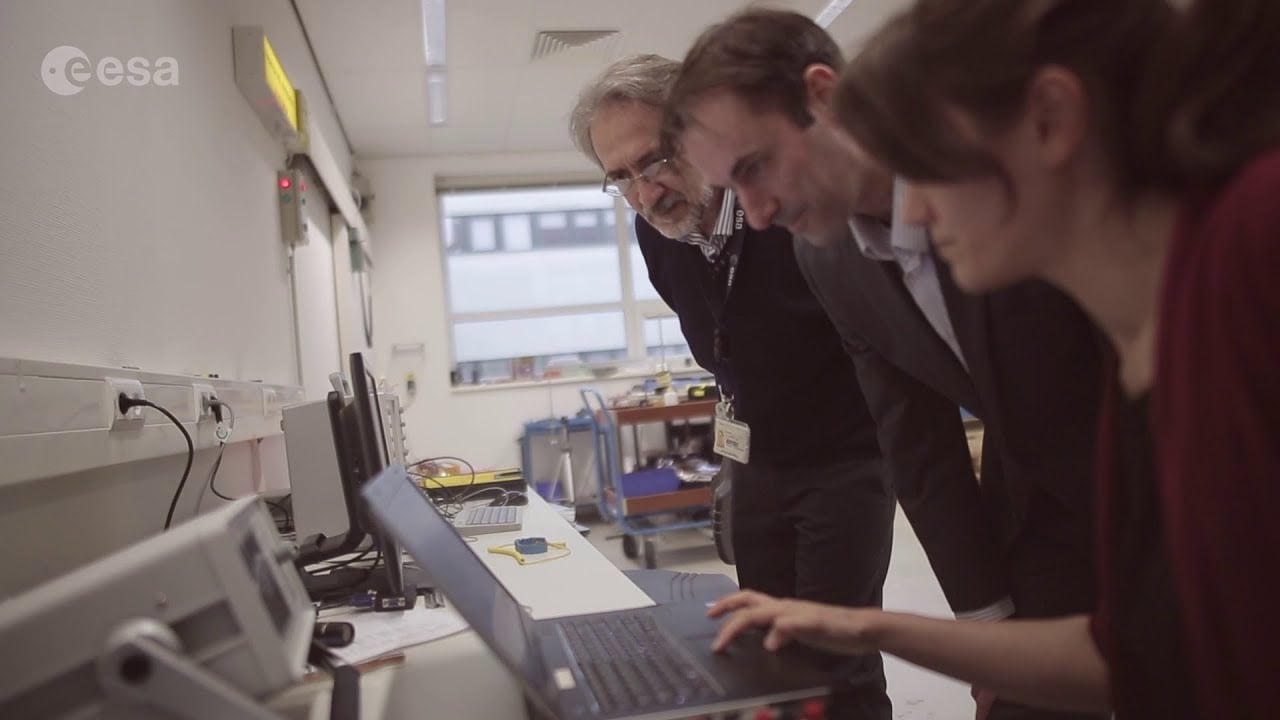
The ESA video below explains why radiation testing of components uses specialized facilities and an environment-specific approach. It helps place the evidence request in context. It does not show a LEMA microswitch test, establish a dose rating for the pictured product or replace the equipment’s qualification program.
European Space Agency, ESA: Radiation testing for space
Watch Radiation testing for space.
Frequently asked questions
Does a current or temperature rating establish radiation resistance?
No. Those ratings do not establish suitability for a specified ionizing-radiation environment.
Can a semiconductor load-switch report qualify a microswitch?
No. Review evidence for the exact mechanical construction and intended function; electronic switch data describe different devices.
Does a polymer compatibility result qualify the whole switch?
No. The complete assembly and required performance still need an applicable assessment, including material and exposure relevance.
Is the LEMA KW7 described as radiation qualified here?
No. It is an actual product reference for a documentation inquiry. Obtain exact-variant evidence or evaluate an approved alternative.