
Push button clear cap abrasion haze is a surface and visibility issue that should be assessed separately from electrical switching life. Repeated contact, abrasive contamination or an unsuitable cleaning process may change the appearance of a transparent part, but a cloudy photograph alone does not identify the cause. For an OEM purchase, define the actual cap material and finish, the exposure to be evaluated, and the visibility requirement in the installed panel. This guide explains how to request and review evidence without inventing a universal haze limit, cleaning approval or abrasion rating for the Lemaele PBS series.
Define the part and the visual task
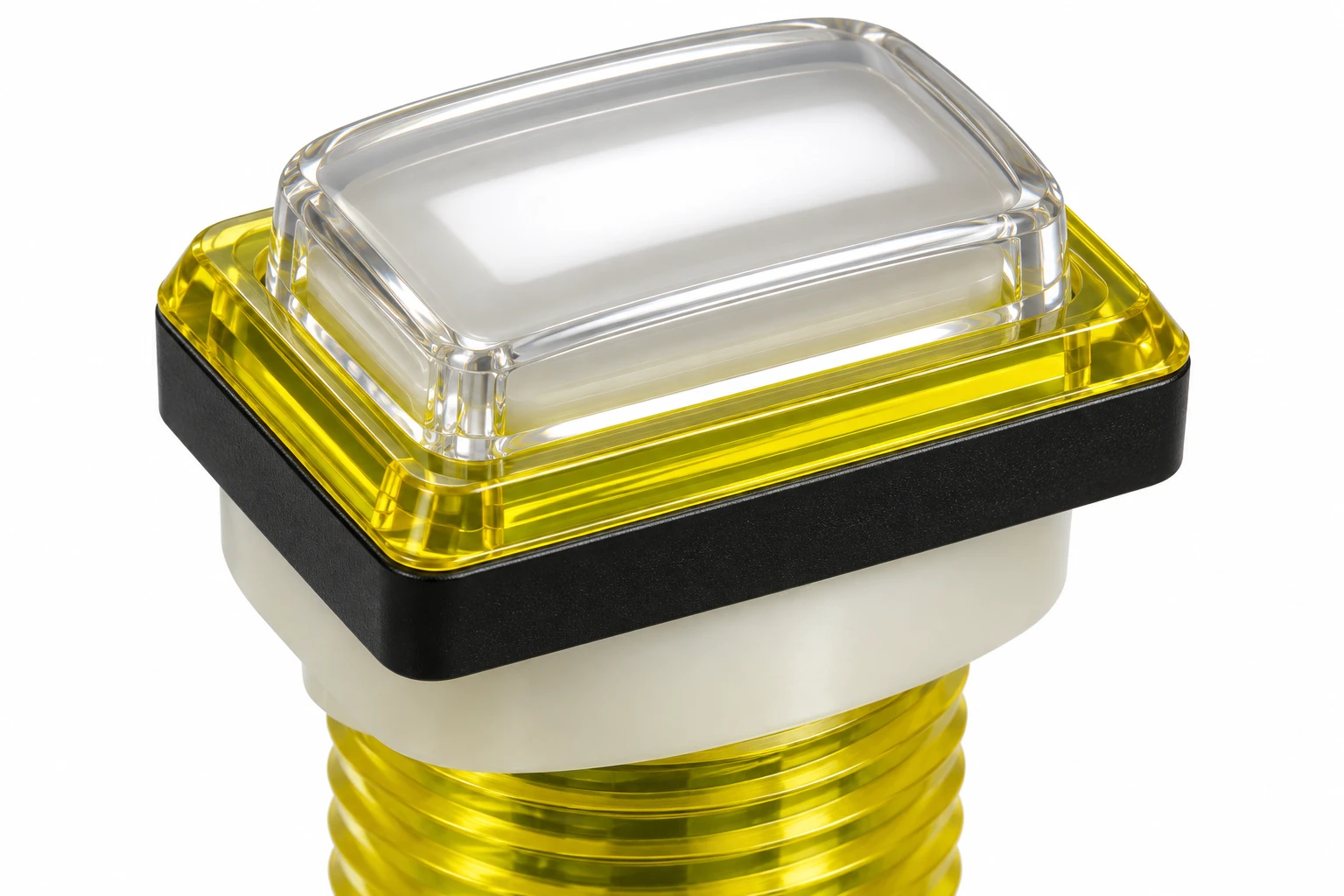
Start with the exact button configuration and its drawing. The Lemaele PBS series push button page is the product reference, and the selected product image shows a transparent top on a yellow assembly. That appearance does not establish its resin, coating or abrasion resistance. Confirm those characteristics for the ordered version instead of assigning a material from its color or clarity.
Describe what the operator must see through or on the cap. The task may involve identifying a legend, distinguishing a state or recognizing the control among neighboring buttons. These tasks do not all impose the same visual requirement. Record the intended viewing distance and panel arrangement in the equipment review. If the control is illuminated, assess that configuration rather than assuming that an unlit cap sample represents it.
Keep haze, scratches, dirt and color differences distinct
Document the observed condition before naming the mechanism. A surface can look cloudy because of deposits, distributed fine damage or other changes requiring investigation. A distinct scratch is a different observation from a broad loss of clarity. Color variation is another question again. Use the cap color batch consistency guide when the issue is a color difference between supplies rather than a change associated with wear.
Record whether the appearance changed before installation, after cleaning or after service. Keep an unaffected sample from the same configuration where possible. Comparison photographs should use consistent lighting and exposure, since reflection can make an intact surface look very different. A photograph is useful documentation, but it is not automatically a calibrated haze measurement or proof that abrasion occurred.
Understand what an abrasion report measures
The public scope of ASTM D1044 describes assessing one kind of abrasion resistance in transparent plastics through a change in optical properties. It is not a declaration that every wiping action or every molded button can be represented by that test. A supplier report must identify the specimen and method actually used before its result can be connected to the intended cap.
The public scope of ASTM D1003 addresses haze and luminous transmittance of transparent plastics. The complete methods were not reproduced here. Have the laboratory determine whether a particular cap’s shape and optical construction can be assessed directly, whether a representative specimen is needed, and what limitation that introduces. A resin plaque result is not automatically a finished control result.
Ask for the actual initial and final observations, test settings and specimen preparation in the controlled report. Do not compare two suppliers using the reported change alone when their methods or samples differ. A favorable result under one exposure does not establish scratch resistance against every tool, particle or cleaning cloth. Define the question that the evidence is intended to answer.
Build an exposure and evidence checklist
| Review item | What to record | What it prevents |
|---|---|---|
| Cap identity | Part code, material and surface finish where verified | Applying a result to an unconfirmed version |
| Exposure | Approved test or representative use scenario | Treating unrelated wear processes as equivalent |
| Specimen | Finished cap or identified representative material | Confusing material evidence with assembled performance |
| Optical method | Instrument, geometry and reporting basis | Comparing measurements with incompatible meanings |
| Installed task | Legend or status recognition in the final panel | Accepting a number that does not support usability |
| Acceptance | Agreed criteria and disposition of deviations | Inventing a limit after seeing the results |
This checklist is an enquiry framework, not a PBS test specification. Agree the sample quantity and selection with the responsible quality team. Preserve the reason for the chosen exposure and the distinction between accelerated testing and expected service. Do not convert a laboratory cycle count into years of field use without an appropriate validated basis.
If several cap colors or finishes are purchased, identify which variants the evidence covers. A report on a transparent part should not silently approve an opaque part, and a result for one surface treatment should not be extended to another without review. Connect each approved configuration to its supporting record and note the variants that still require evidence.
Review cleaning as part of the actual use
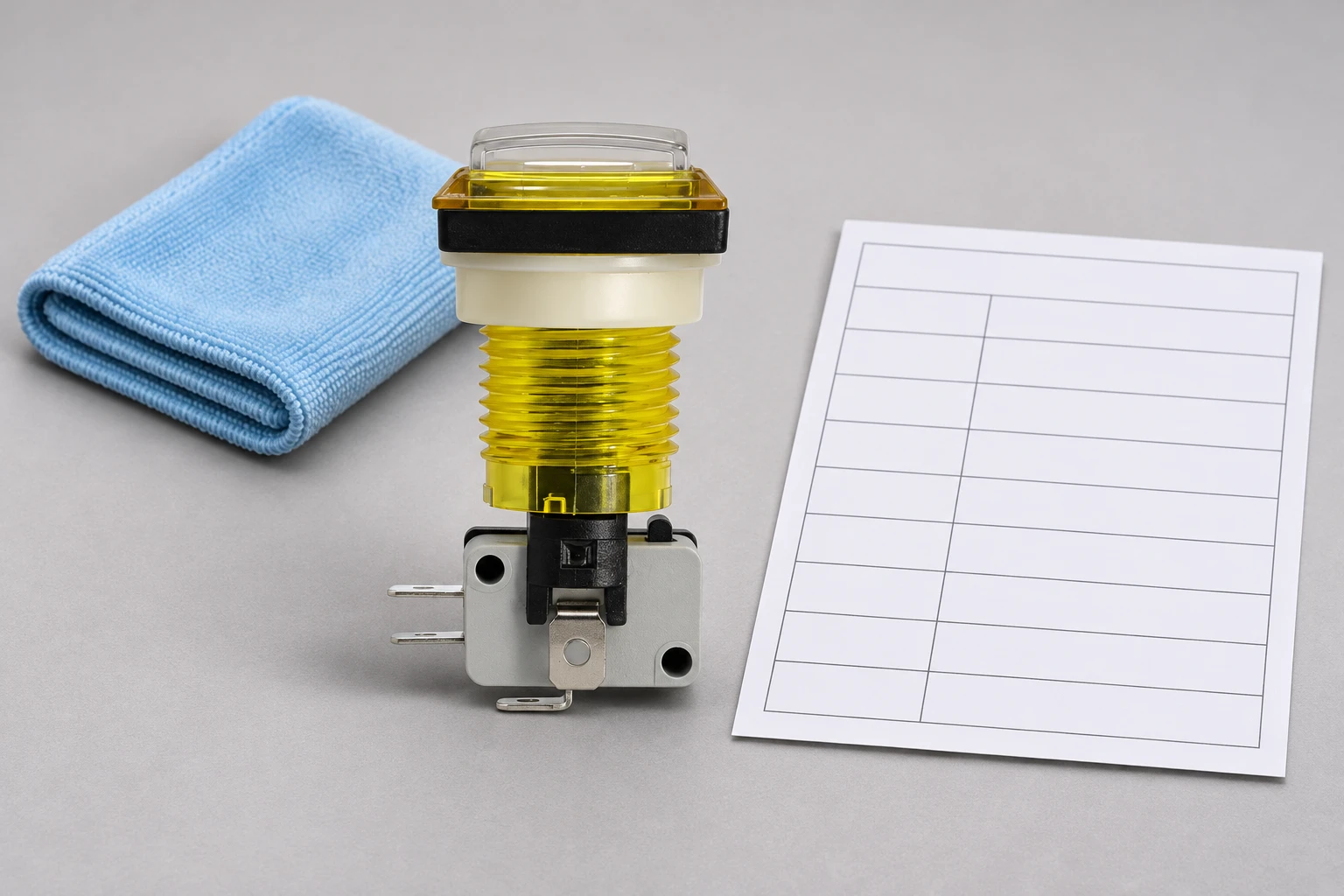
Request the manufacturer’s approved cleaning instructions for the exact assembly. Include the process used by the customer or maintenance team in the enquiry. A cloth shown in an editorial image is not a cleaning approval, and the word plastic does not establish compatibility with a solvent. Do not polish a cap or apply a chemical to remove haze without approved instructions.
Keep any cleaning evaluation separate from a standard abrasion result unless the agreed method explicitly combines them. Document the cloth, contamination and cleaning process where the procedure requires it. If the surface changes after cleaning, preserve the affected sample and the process record. Repeatedly trying different chemicals on the same cap can obscure the original condition and create additional uncertainty.
Check usability in the installed panel
After the agreed exposure, evaluate the actual visual task under the equipment’s intended conditions. Compare the same panel position and viewing direction before and after the evaluation. Record whether a legend can still be identified or a required indication can still be distinguished. Do not rely solely on a close-up bench photograph if the operator normally views the control from farther away.
The daylight visibility review addresses ambient light and installed indication. That is complementary to surface wear: a cap can have good initial visibility yet still need durability evidence. Conversely, an abrasion number alone does not describe whether the final indication remains understandable. Keep both requirements in the equipment design review when they matter to the task.
For legends, also distinguish damage to the transparent cap from deterioration of the marking itself. The legend marking durability guide covers that separate interface. A cap may remain transparent while its marking changes, or a marking may remain intact while surface condition affects its view. Record which feature failed the agreed task instead of using one general label for every appearance concern.
Investigate a field finding before replacing parts
If an operator reports a cloudy button, make the equipment safe and record the installed condition under its maintenance procedure. Collect the part identification, service history and known cleaning or contamination events. Describe the extent and location of the change. Ask whether similar neighboring controls are affected, while avoiding conclusions that a common appearance proves a common material defect.
Use the approved service decision to determine whether the complete assembly or an authorized replaceable part should be changed. Do not assume the transparent top can be removed because it looks like a separate cap. The push button replacement guide supports the broader electrical and mechanical review. Preserve the original sample if the cause needs investigation.
When retaining comparison photographs, keep the original files and note the lighting arrangement, camera position and sample orientation. Avoid editing contrast differently between the before and after images. If an optical instrument was used, store its reported result separately from photographs so a later reviewer can distinguish a measured change from an appearance impression. Both records can be useful when their limits are clear.
Make the purchase requirement reviewable
A useful enquiry links the cap code to the surface specification, the intended task and the requested evidence. State which claims require confirmation: resin identity, coating, approved cleaning, test applicability or acceptance criteria. If those items are unconfirmed, leave them open rather than relying on the product’s general durability description. A documented gap can be resolved before production begins.
Agree how changes to material, surface treatment or cap tooling will be reviewed. Keep incoming reference samples and test records identified by revision. When a later lot looks different, compare it with the approved basis before deciding whether the difference matters. This creates a practical acceptance process without making unsupported promises that a button is scratch-proof or permanently clear.
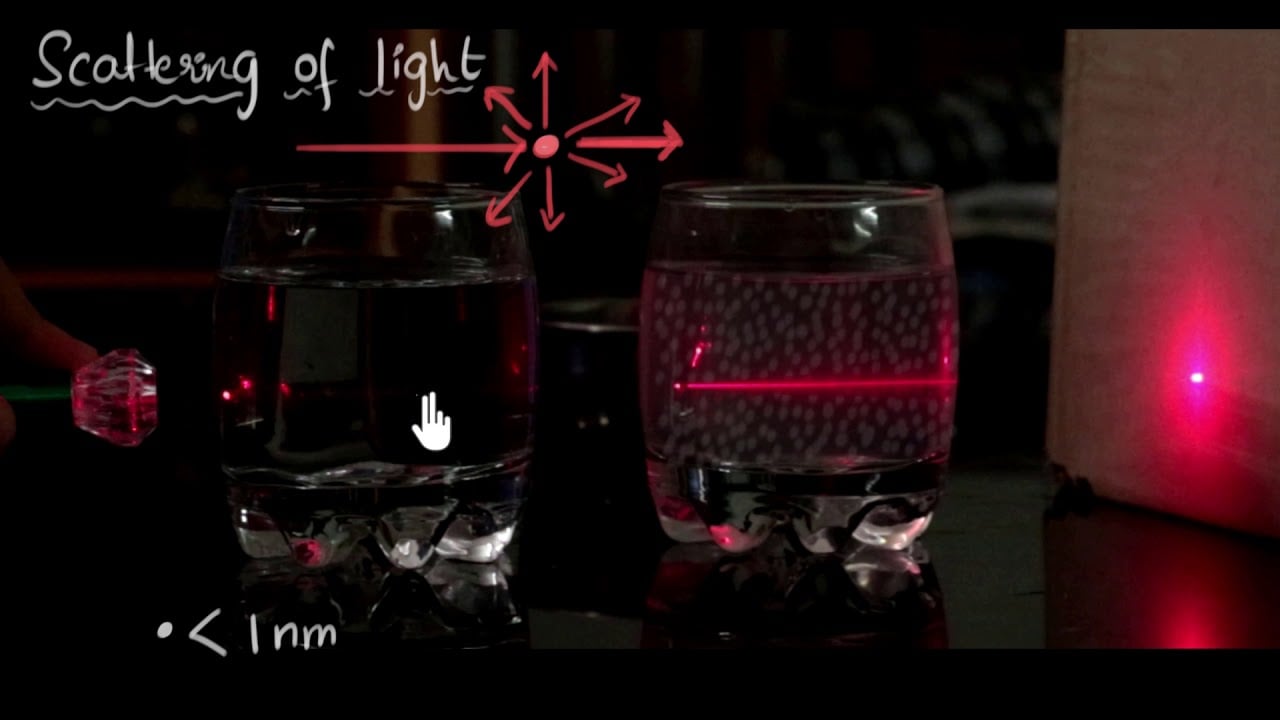
Video: background on light scattering
Khan Academy’s “Scattering of light & Tyndall effect” introduces scattering using a liquid demonstration. It helps explain the general optical idea, but it is not a cap haze measurement, an abrasion method or a PBS performance test.
Frequently asked questions
Does electrical operating life prove a clear cap’s abrasion resistance?
No. Switching endurance and transparent surface appearance are different characteristics requiring relevant evidence.
Can the PBS cap material be identified from its photograph?
No. Confirm the resin, finish and version through the approved product documentation.
Can a material plaque test automatically approve the finished button?
No. Review specimen identity, method applicability and the installed visual task before extending the result.
Should a cloudy cap be polished or cleaned with a stronger solvent?
Use only the manufacturer’s approved process. Preserve an uncertain sample and investigate the condition before attempting an improvised remedy.