
Push button cap electrostatic dust attraction evidence requires more than a photograph of a dusty button. Record when particles appear, compare controlled handling conditions, and use an appropriate measurement method before assigning an electrostatic cause. Dust can also arrive through airflow, packaging, wiping, or surface residue. For a purchasing investigation, keep the cap identity and handling sequence traceable. Do not describe an ordinary cap as antistatic, conductive, or ESD safe without applicable material and test documentation. The practical goal is to identify a repeatable contamination problem and agree a compatible control, rather than to infer a material rating from appearance.
Separate visible contamination from an electrostatic claim
A particle count, a surface-field reading, and an electronic component’s ESD withstand rating answer different questions. Dust on a cap is an observation. A field reading under a defined setup supports a statement about that setup. Neither alone proves a switch failed an electrical immunity requirement. State which question the inspection is intended to answer before ordering tests, changing materials, or requesting corrective action from a supplier.
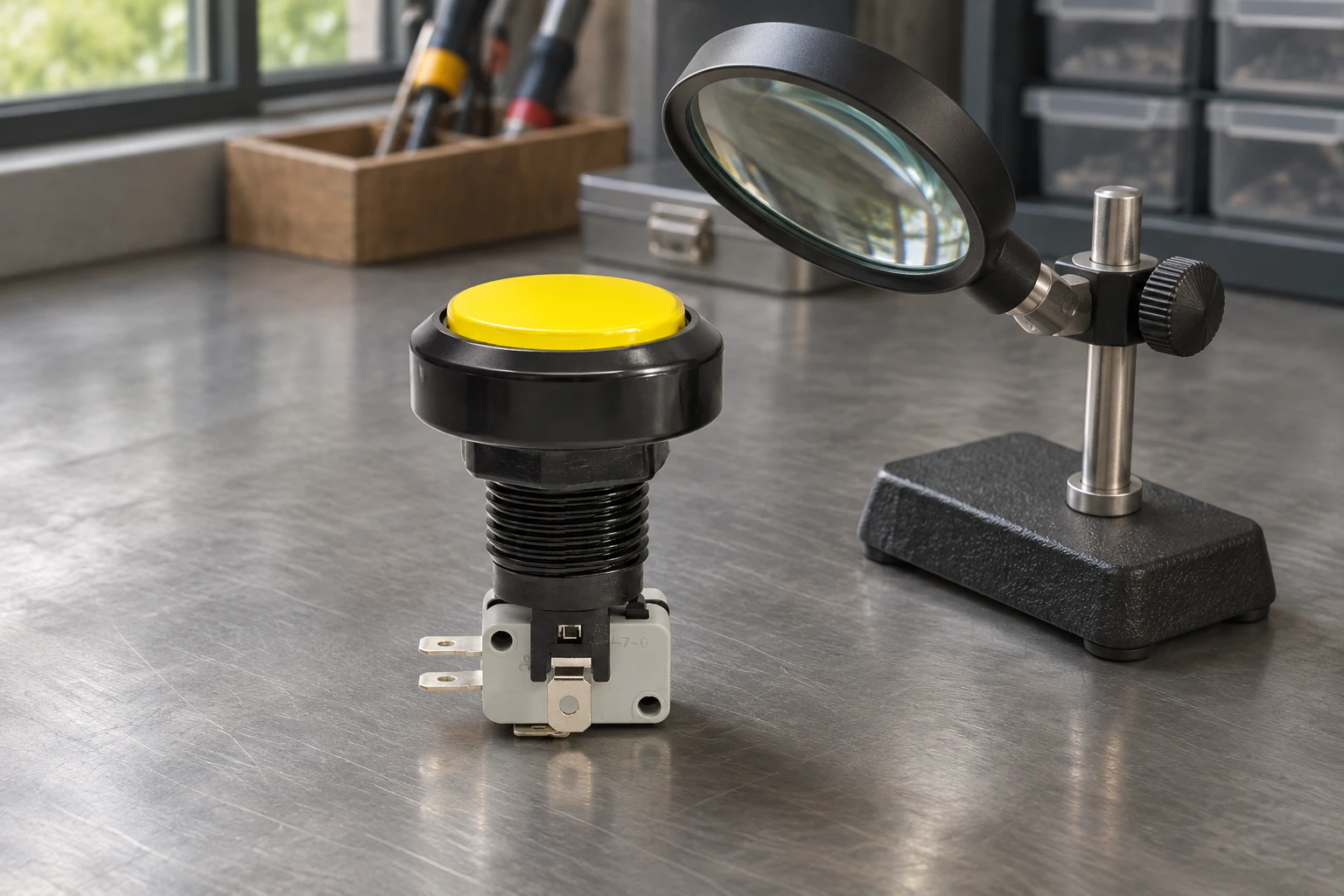
Le Lemaele PBS series includes color and illumination choices. The public product description does not establish a cap resin, surface resistance, low-charging classification, or contamination limit for every configuration. Record the actual ordered variant, including its cap and illumination option. A yellow cap in a reference photograph should not be treated as proof that every yellow industrial button has the same material or surface behavior.
Document where and when dust first appears
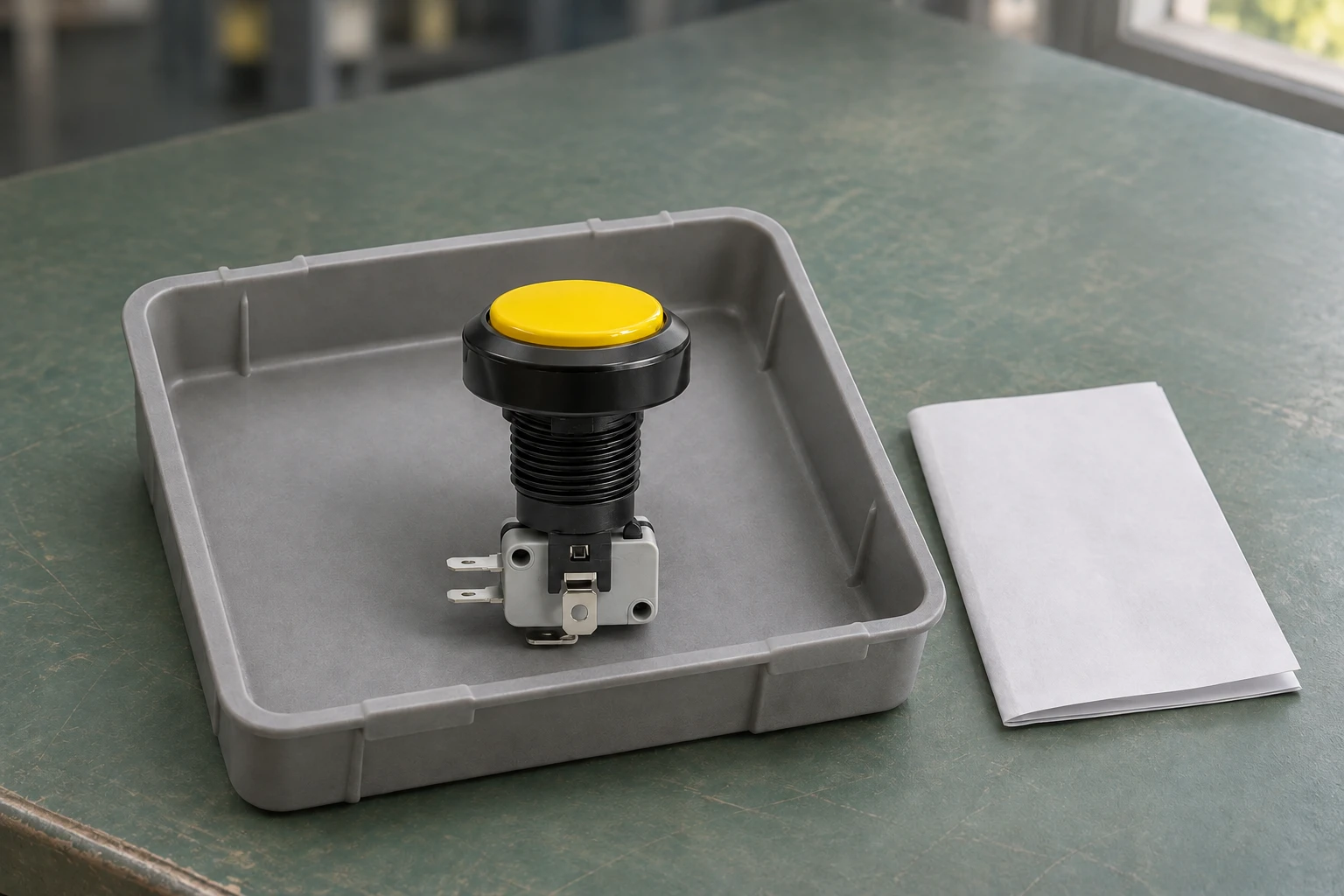
Use a simple process map: unopened packaging, unpacking, tray transfer, panel installation, cleaning, and final inspection. Assign photographs and observations to a step instead of collecting disconnected close-ups. Note the time between handling and inspection. If contamination is first seen after wiping, preserve the wipe identity and cleaning procedure as candidate variables; do not immediately conclude that wiping created charge or that the incoming cap was dirty.
Record whether particles sit mainly on the cap face, bezel, panel, or nearby reference surfaces. Include both close and wider photographs under repeatable lighting. A cap’s color and gloss can make particles easier to see without increasing the number deposited. Fix camera exposure and inspection area for comparisons. Distinguish a loose particle, a scratch, a molding feature, and a residue spot before using a photograph as a contamination count.
| Evidence item | Que vérifier | Decision supported |
|---|---|---|
| Visible particles | Same inspection area, lighting and exposure time | Establish a repeatable contamination observation |
| Handling sequence | Bag, glove, wipe, tray and time after each step | Identify a specific process comparison |
| Electrostatic result | Instrument quantity, geometry, surroundings and calibration | Support a setup-specific statement, not a cap material rating |
| Proposed control | Compatibility, repeat trial and agreed acceptance evidence | Approve a documented process change |
What established electrostatic guidance can explain
Le EOS/ESD Association introduction explains charge generation and the different behavior of insulating, conductive, and dissipative materials. It provides a physical basis for investigating static effects. It does not identify the PBS cap material or predict the charge generated by a particular glove, bag, or cleaning wipe. Treat a material list as background, not a ranking of the delivered assemblies.
The Association’s principles of ESD control explain why grounding does not remove charge effectively from ordinary insulators and why ionization can be relevant. That is a reason to ask the right engineering question, not an instruction to modify a button or add a ground wire to its cap. Any process control must suit the actual assembly and workplace.
Design a comparison that can be repeated
Write down a small comparison plan before starting. Use matched cap variants and keep the observation area, exposure duration, airflow, lighting, and storage arrangement consistent. Change one handling factor at a time where practical. For instance, compare the existing unpacking sequence with a documented alternative while using the same inspection method. Keep untouched reference units so a later reviewer can see the initial condition.
Avoid deliberately adding workshop dust to a production button. If a controlled contamination study is needed, use an approved laboratory procedure and separate test samples. Loose dust can create health, cleanliness, or process hazards, and a random sprinkle has no defined particle distribution. For routine incoming work, careful observation of the real process is often more useful than an uncontrolled demonstration that cannot be reproduced.
Define the measurement geometry and its limits
When electrostatic measurements are justified, have a competent specialist select an instrument and procedure suitable for small, curved, partly assembled parts. Record the instrument model, calibration status, standoff, orientation, nearby conductive objects, and grounding condition of the fixture. A reading from a flat reference plate is not automatically a measurement of a small cap in the same position. Keep raw values with their setup photographs.
Record environmental conditions and elapsed time after the relevant handling step. Do not compare a reading taken immediately after unpacking with another taken much later and label the difference a material improvement. Identify whether the instrument reports field, inferred surface potential, or another quantity. Do not convert between them using an assumed distance or capacitance without a validated model. A measurement log should remain interpretable even after the operator changes.
Investigate alternative explanations
Check packaging fibers, exposed cartons, nearby machining, panel cleaning, glove shedding, and residue transfer as separate possibilities. Compare the surrounding panel and an appropriate witness surface exposed at the same time. If both gather similar debris, the investigation may need to focus on the environment. If the cap differs, check inspection visibility and handling history before deciding that its surface has a unique attraction mechanism.
An apparent improvement after a cleaning or ionization step can involve several changed factors at once. Airflow may remove loose particles, a wipe may change residue, and a different tray may reduce exposure time. Log those changes. To test a causal explanation, repeat a controlled comparison with the responsible specialist rather than selecting the most persuasive photograph. Report observations and remaining uncertainties separately so purchasing can ask a focused follow-up question.
Choose controls without damaging the switch
Begin with process changes that have a clear verification plan: cleaner storage, covered transfers, reduced unnecessary rubbing, and consistent approved handling. If a cleaning change is proposed, ask for compatibility with the actual cap, bezel, printing, seals, and illumination components. Do not substitute an aggressive solvent because it makes the cap look clean. A visually successful treatment may still require durability and functional verification.
If ionization or alternative packaging is considered, define how it will be assessed in the real workstation. Confirm that any airflow does not redistribute contamination into other equipment. Do not claim a clean-looking cap is now ESD safe. A purchasing requirement for low charging, surface resistance, or compatibility needs a named method, sample condition, acceptance criterion, and supplier agreement. Those requirements should be set before a change is released into production.
Build an enquiry that leads to a usable answer
Provide the PBS ordering reference, lot, cap color, illumination option, photographs, handling map, cleaning materials, environment record, and available measurement results. Explain whether the issue is visual cleanliness, operator visibility, assembly contamination, or protection of nearby electronics. These are different acceptance questions. Ask what material documentation and process guidance can be supplied, and identify which facts remain unknown instead of requesting an unsupported antistatic certificate.
For overall product choice, review the industrial push button selection guide. Use the cap color consistency article when visibility differs between samples, and the clear-cap abrasion and haze article for permanent surface changes. Keeping these issues separate helps prevent a contamination enquiry from becoming an unsupported claim about optical damage or electrical performance.
Set a clear follow-up criterion
Before introducing a process change, define what a useful improvement would look like and who will judge it. Record the inspected area and exposure interval, the number of samples, and the procedure used to classify particles. Keep a control group under the existing process when a comparison is practical. If observations vary widely, investigate the measurement and handling sequence before declaring a material effect. Retain unsuccessful trials too: a record containing only the best image cannot show whether the proposed control works consistently across normal production conditions.
Further learning
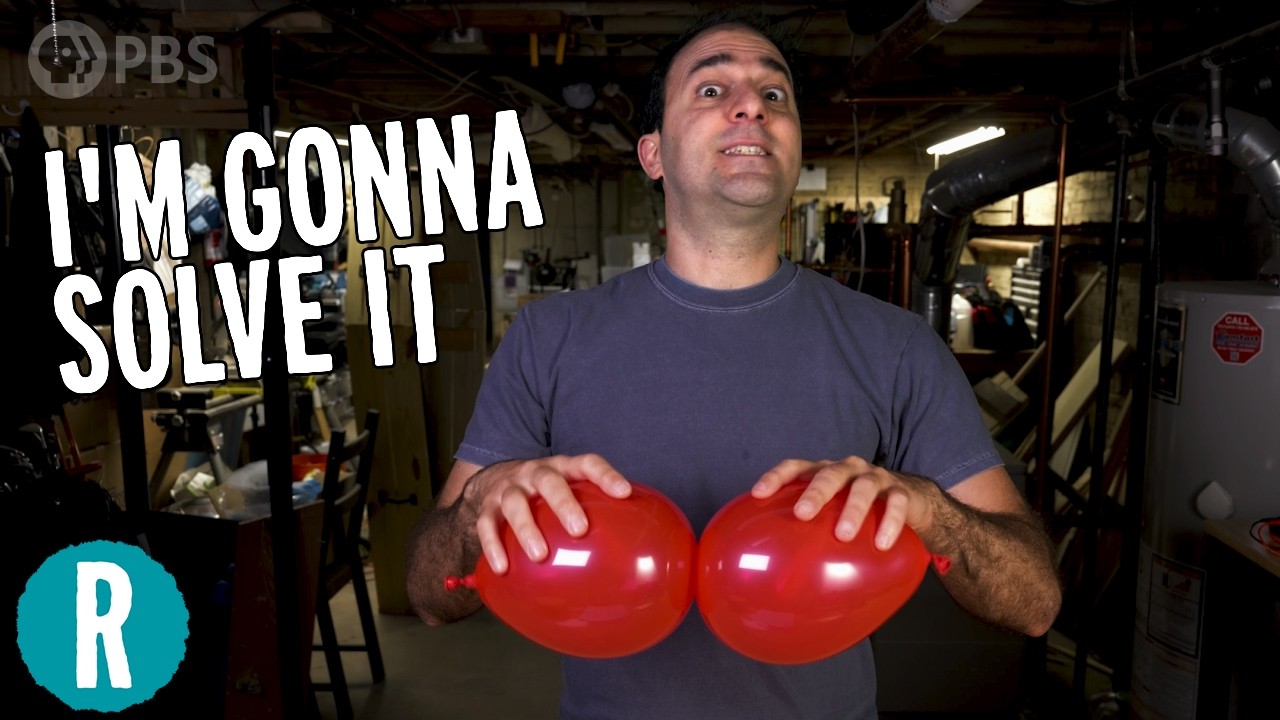
Reactions, the American Chemical Society science channel, explores the difficulty of explaining contact electrification. This is background science, not a test of PBS products or a qualification procedure. The inspection decisions above do not depend on the video.
Foire aux questions
La poussière sur un bouton prouve-t-elle qu'il est électrostatiquement chargé ?
Non. La poussière peut provenir de plusieurs sources. Une explication électrostatique nécessite une enquête définie et des mesures appropriées ainsi que des observations de contamination.
Le fait de mettre à la terre le panneau peut-il éliminer la charge du condensateur ?
La mise à la terre du panneau n'établit pas qu'un capuchon isolant a un chemin de décharge conducteur. Utilisez une évaluation technique appropriée plutôt que de modifier le capuchon.
Le capuchon PBS est-il antistatique ?
Les informations sur la série publique utilisées ici n'établissent pas cette classification. Demandez la documentation pour la capacité exacte commandée et la méthode de test requise.
What evidence should I send with a contamination enquiry?
Send the exact variant, lot, process step, matched photographs, handling and cleaning details, environmental conditions and any instrument results with their measurement setup.