
A halogen-free switch declaration needs an agreed definition, material boundary and evidence basis before it can support purchasing acceptance. The phrase alone does not identify which substances were considered, which parts were included or how the conclusion was established. For the LEMA KW7 family, request information for the complete ordered configuration and the customer’s actual requirement. This article does not claim that a KW7 variant is halogen free or supply a universal numerical threshold. It explains how to turn an ambiguous environmental request into a specific, reviewable evidence record.
Define the term before asking for compliance
Different documents and product sectors can use halogen-content terminology within different scopes. A procurement statement should therefore name the required definition and applicable document instead of relying on a familiar phrase. The IEC Guide 122 publication addresses consistent terminology related to halogen content in IEC standards. Its existence is a reason to clarify scope, not permission to assign one threshold to every electrical component.
Ask the customer whether the requirement concerns the complete switch, particular homogeneous materials, added cable or another defined boundary. Identify which elements or substance groups are covered by the requested claim and how the acceptance criteria are expressed. If the requirement comes from an internal purchasing specification, retain its revision and any customer interpretation that affects the scope.
Do not copy a threshold from a printed-circuit-board material standard into an unrelated switch request without an applicable basis. A rule can be valid for its stated subject while failing to answer a different procurement question. Have the responsible customer or equipment reviewer resolve the intended definition before asking a supplier to sign a broad statement.
Separate composition claims from other environmental statements
A RoHS declaration answers defined restricted-substance questions within its applicable scope. It should not automatically be relabeled as a halogen-free declaration. Likewise, a REACH communication or a generic environmental policy does not identify every halogen-content criterion a customer might require. Read each statement for the information it actually provides.
The RoHS and REACH switch guide explains those separate evidence boundaries. Keep the records together while preserving their names and conclusions. A procurement checklist can legitimately require several documents; the fact that one is available does not establish the result of the others.
A flame-retardant property is another distinct question. Material fire behavior and substance content are related only through the actual formulation and evidence, not through a simple label. Do not infer that a favorable flame test proves a halogen-content statement or that an environmental claim establishes electrical or fire safety. Each requirement needs its own support.
Define the complete product and material boundary
Use the full order code, actuator, terminals and relevant options. A switch with added leads, a connector or a protective accessory may contain materials outside the basic housing. If the requested statement includes those items, the supplier response must address them or identify the exclusions. A family-level letter may be insufficient when delivered configurations differ.
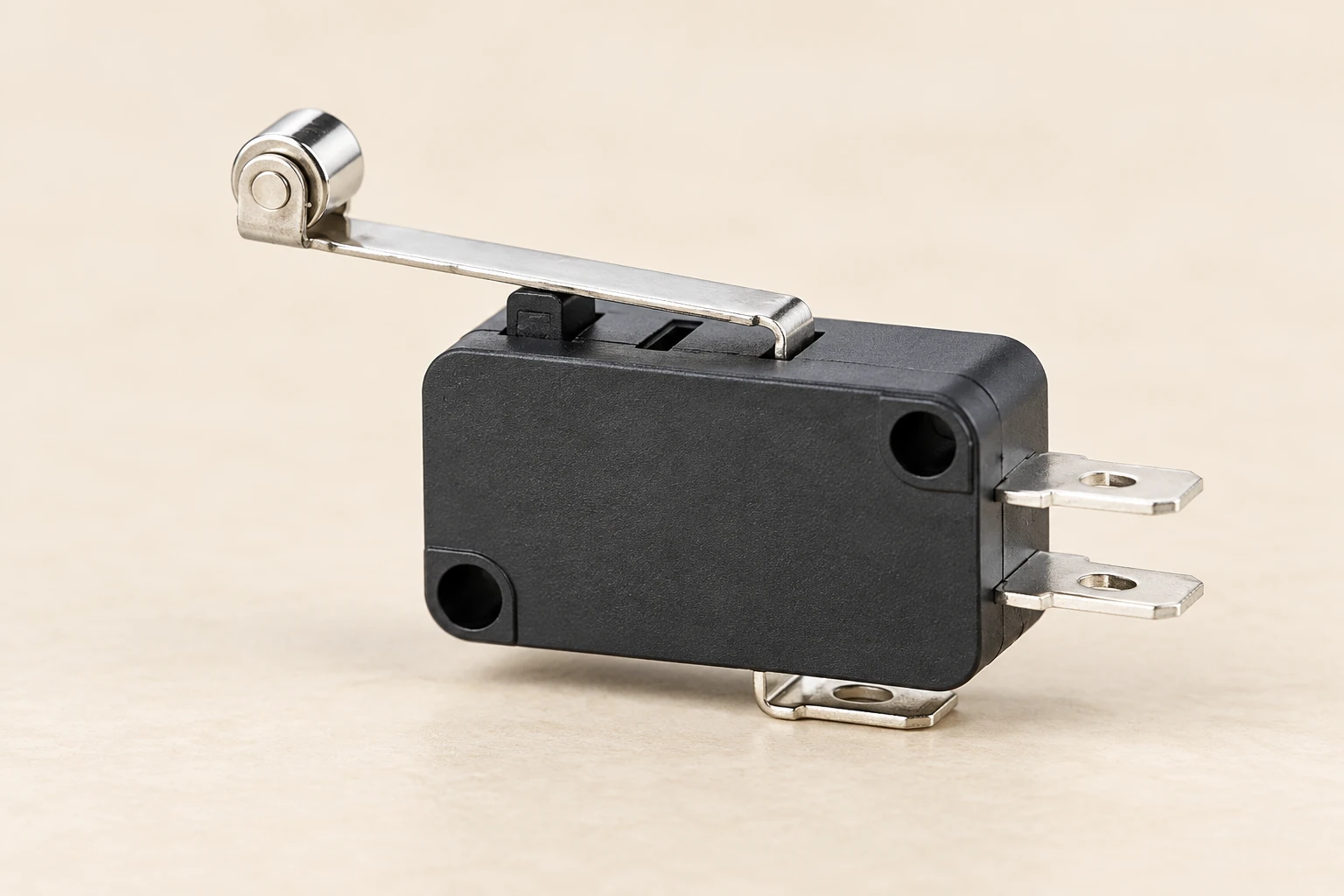
List the parts within the requested boundary and identify the available material information. A photograph can help distinguish configurations, but it cannot establish the composition of a black housing or an insulating sleeve. Supplier material assignments and appropriate evidence provide that connection. Preserve unknowns rather than treating an unlisted material as absent from the product.
If custom assemblies are involved, assign responsibility for the added materials. One supplier may provide the switch while another adds wire and a connector. A complete declaration requires a defined evidence chain across that assembly. Avoid asking the original switch supplier to make an unsupported statement about components it did not select or supply.
Build a declaration request that can be checked
| Request field | Agreement needed | Acceptance question |
|---|---|---|
| Definition | Named customer requirement and revision | What does the claim mean here? |
| Boundary | Complete part and included accessories | Which materials are included? |
| Evidence | Declaration and applicable supporting records | How was the conclusion established? |
| Identity | Sample-to-material-to-production connection | Does the evidence represent the delivered item? |
| Changes | Notification triggers and responsible owners | When must the conclusion be reviewed? |
The table organizes the agreement between the buyer and supplier. It does not prescribe a test threshold or establish a declaration result. The customer requirement should determine the applicable basis, and the supplier should clearly state what evidence supports its response. Missing information must stay visible until the responsible reviewer decides how to resolve it.
Use a controlled template only after the meaning of its fields is agreed. A form with a mandatory yes-or-no box can encourage overstatement if it offers no way to describe scope or uncertainty. Add a place for limitations and supporting document references so the completed form remains useful beyond the person who originally filled it out.
Review the analytical and documentary evidence separately
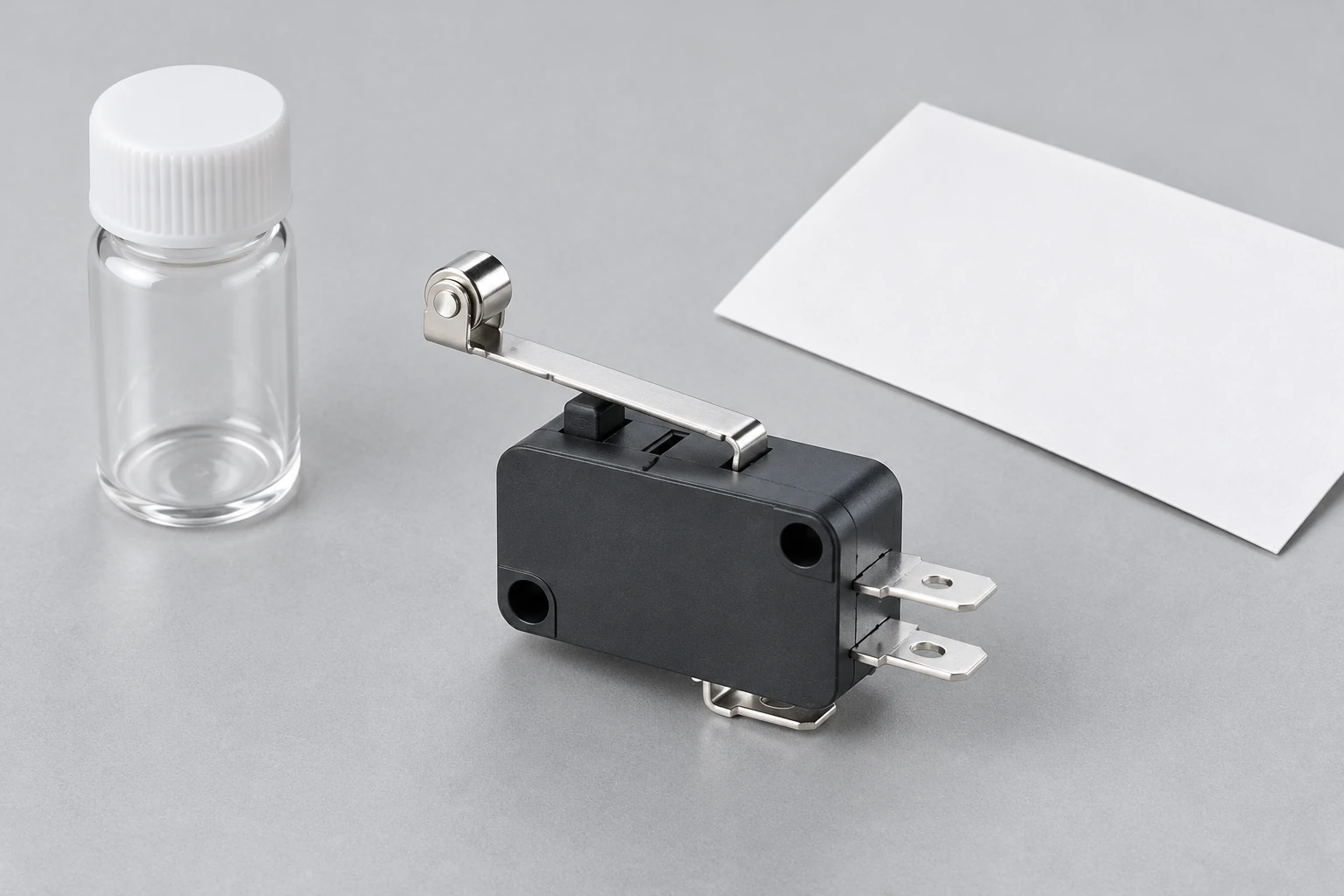
A laboratory report needs the sample identity, method, reported basis and relevant limits of the measurement. It should be connected to the material or component in the delivered product. A report for an unrelated resin sample cannot establish the composition of every molded part in a switch family. Ask how the tested material represents production.
A supplier declaration can connect information from multiple sources, but it should explain its basis. It may rely on material-supplier statements, analytical results or another documented approach accepted by the customer. Do not assume that every declaration implies a complete laboratory analysis of each production lot. Ask what was actually done and retain that distinction in the acceptance record.
The IEC material declaration activity provides background on exchanging substance information in the electrical sector. Data exchange helps communicate evidence; it does not make an unsupported value true. The OEM switch inquiry guide helps define the information required before requesting a supplier response.
Check whether the result covers the customer’s question
Compare the required scope with the supplier’s stated scope before reading the conclusion. A declaration limited to a housing cannot automatically close a complete-assembly requirement. A result expressed on one material basis may not answer a criterion defined on another. Resolve the mismatch explicitly instead of assuming that a favorable word has the same meaning in both documents.
Review report dates and revisions for relevance rather than applying an arbitrary freshness rule. The key question is whether the evidence still represents the current configuration and requirement. A new document can be incomplete, while an older report may remain relevant if the material and accepted basis are unchanged. The responsible reviewer should document that decision.
Check for exclusions and qualified statements. Phrases such as “to the best of our knowledge” or a list of unassessed accessories affect the scope of the evidence. They are not automatically unacceptable, but they must be compared with what the customer requires. Do not delete the qualification when copying a conclusion into a purchasing system.
Handle gaps without inventing a negative result
If the supplier lacks sufficient information, describe the missing material, method or connection. An unknown is not proof of failure, but it is also not a basis for declaring compliance. Ask whether additional documentation, a clarified requirement or targeted testing can resolve the specific gap. This keeps the next action proportionate to the actual uncertainty.
Avoid testing everything indiscriminately before defining the question. An analytical program needs a meaningful scope and a way to connect the result to production. Otherwise it can generate expensive data that still cannot support the requested statement. A clear specification often resolves ambiguity before laboratory work begins.
Where a customer requirement cannot be met, preserve the limitation and consider a separately documented configuration through the normal design process. Do not substitute a different material based only on a supplier’s favorable environmental claim. Mechanical, electrical, thermal and manufacturing suitability remain part of approving the revised switch.
Preserve the declaration through production changes
Link the accepted statement to the exact part code and revision. Define which changes require notification, including relevant material, cable, connector or accessory substitutions. The supplier change-notification guide helps organize that request. A statement remains useful only while its assumptions continue to match the delivered item.
Keep the customer specification, supplier response and supporting records together. Purchasing, engineering and quality should be able to reconstruct why the item was accepted. If one department stores only a yes-or-no result, preserve a link to the full scope and qualifications. This prevents a narrow conclusion from expanding as it moves between systems.
The final claim should use the agreed terminology and identify its boundary. Where appropriate, describe exactly which configuration and evidence support it. The aim is a reliable procurement decision, not a broad environmental slogan that later users may interpret more generously than the underlying documents allow.
Supply-chain substance information video
EUchemicals: How to track hazardous substances in the supply chain – Kevin Pollard, ECHA

Watch How to track hazardous substances in the supply chain – Kevin Pollard, ECHA.
ECHA’s educational presentation explains tracking substance information through a supply chain. It supports the evidence-chain discussion. It does not define the customer’s halogen-content threshold, analyze a KW7 switch or replace the product-specific scope and documentation requested above.
Frequently asked questions
Does RoHS compliance automatically mean halogen free?
No. The statements address different defined questions. Compare the customer halogen-content requirement with evidence that actually covers its substances, scope and basis.
Can a housing-only statement cover added cables and connectors?
Not automatically. Define whether those materials are included and obtain evidence from the responsible suppliers for the complete delivered configuration.
Is there one universal halogen-free threshold for every switch?
This article supplies no universal threshold. Agree the applicable terminology, requirement and material basis with the customer before accepting a supplier statement.
Does this article declare KW7 halogen free?
No. No composition or compliance conclusion is assigned here. Product-specific supplier documentation and an accepted evidence basis are still required.