
A 16A 250V marking is a rated point, not a blanket permission. The numbers hold under the load type, switching rate, and temperature the maker tested. Read the marking as the beginning of verification, then prove the real circuit against the model document.
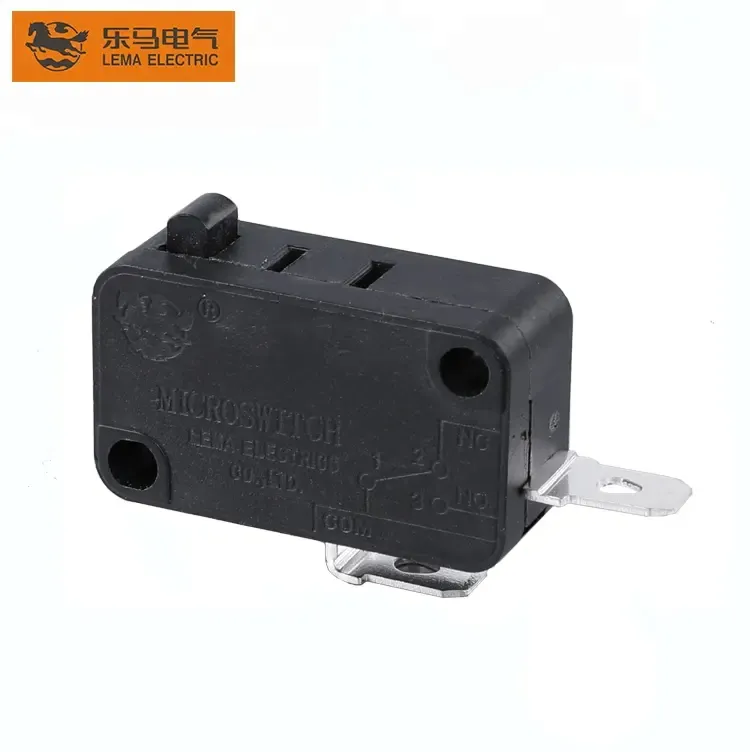
Part 1. What does a 16A 250V marking actually state?
Ratings are condition statements. The same contact that carries a resistive current comfortably can erode quickly on an inductive or lamp load at the identical ampere value.
| Marking element | What it usually covers | What it leaves open |
|---|---|---|
| 16A figure | Rated current under stated conditions | Your load type and duty |
| 250V figure | Rated switching voltage class | Actual circuit transients |
| Marking together | A tested combination | Inrush, rate, and ambient |
Pull the full condition set from the series documentation in the LEMA Micro Switch product line rather than stopping at the housing print.
Part 2. Which load types stress the contact differently?
Load character decides contact stress. Heaters draw close to their steady value, motors multiply it at start, and capacitive or lamp loads spike hardest of all in the first milliseconds.
Panel-level context for these load classes appears in the industrial panel selection guide; the rating question here is the same one, asked at the contact.
Part 3. How should inrush and switching rate be verified?
Measure or calculate the inrush the contact actually breaks and makes. A clamp trace at the switch, not at the supply, captures what the contact sees.
- Record steady current and the inrush multiple with its duration.
- Count operations per hour, since rate drives cumulative arc energy.
- Note whether the switch breaks the load or only makes it.
- Compare each figure against the documented rating conditions.
Part 4. Why does thermal rise need an installed test?
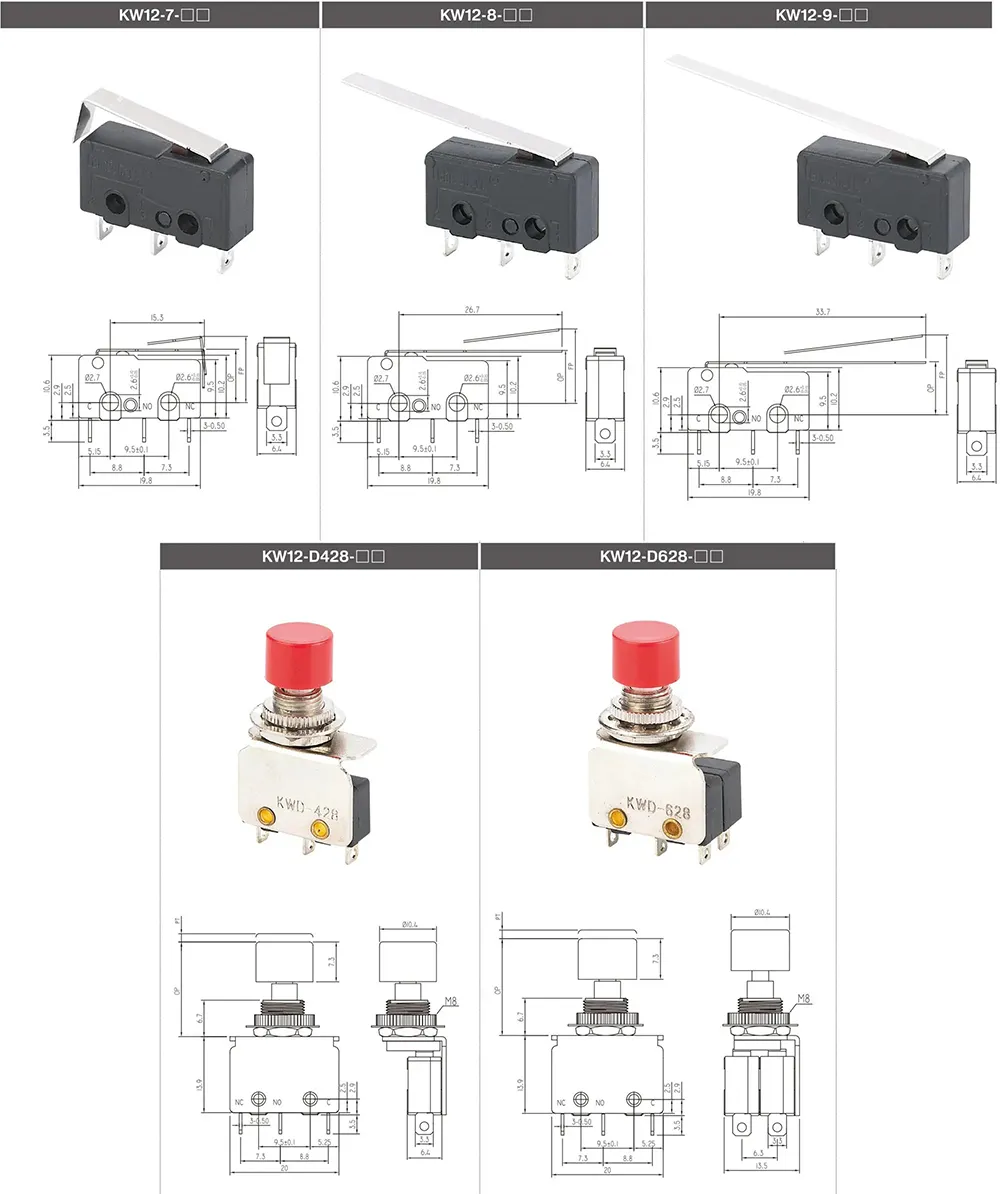
Terminal temperature is the quiet failure path. Contact resistance, conductor size, and crimp quality add heat at the terminals that no catalog table can predict for a specific build.
| Thermal input | Effect | Verification |
|---|---|---|
| Conductor cross-section | Heat conduction away from the terminal | Temperature rise at rated load |
| Crimp or solder quality | Local resistance heating | Millivolt drop across joints |
| Enclosure airflow | Ambient around the switch | In-cabinet measurement, not room ambient |
Run the rise test on the installed assembly with production conductors and the real duty cycle.
Part 5. Which wiring details protect the rating?
Wiring practice protects whatever margin the selection created. Undersized conductors, long unsupported leads, and loose quick-connects convert a compliant selection into a hot terminal.
The mechanical side of that discipline, from terminal styles to strain relief, is covered in the terminal wiring review.
Part 6. What belongs in the RFQ and Fit Boundary?
RFQ input checklist
- Voltage, steady current, and measured or calculated inrush
- Load type and whether the contact breaks or only makes it
- Switching rate, expected operations, and ambient in the enclosure
- Conductor size, terminal style, and crimp process
- Volume and sample timing
Fit Boundary
This guide verifies a rating class against a real circuit. It does not issue approvals, derating tables, or thermal certificates; the model document and installed testing own those.
Part 7. How can LEMA support a rating inquiry?
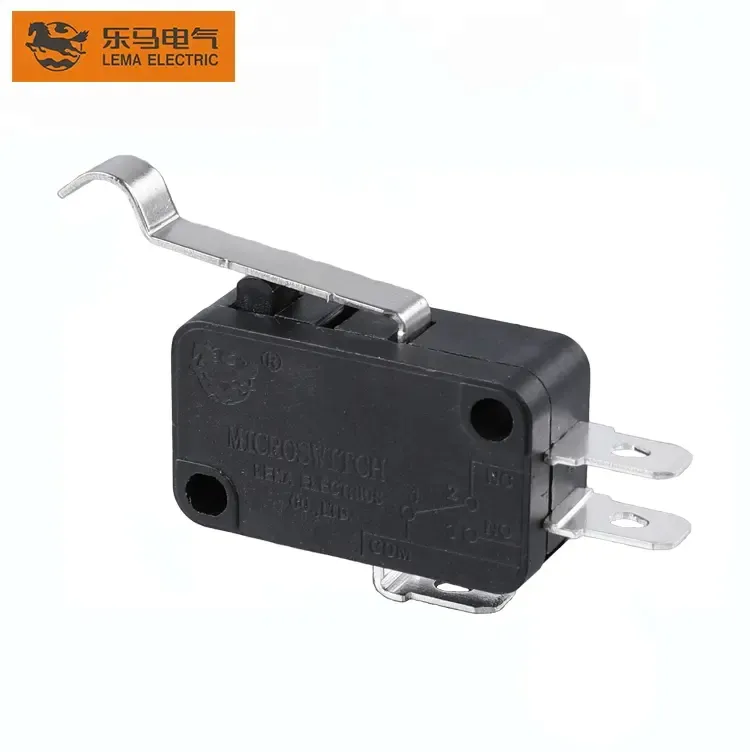
Power-class requirements deserve a documented family review. The KW7 series micro switch page is a public LEMA route for raising a 16A-class inquiry.
Product recommendation: attach the measured load profile to the inquiry and ask for the rating conditions that apply. Buying on the marking alone leaves inrush and duty unexamined.
Send an OEM switch RFQ with the load profile attached.
FAQs
What does 16A 250V mean on a micro switch?
It marks a rated current and voltage combination tested under specific conditions such as load type and switching rate, stated in the model document.
Can a 16A rated switch run a motor load at 16A?
Not automatically. Motor inrush multiplies the steady current, so the documented inductive or motor rating decides, not the headline figure.
Why does my switch terminal run hot below the rated current?
Terminal heat usually comes from conductor size, crimp quality, or enclosure ambient; verify millivolt drop and temperature rise on the installed assembly.
Does switching rate change the effective rating?
Yes. Frequent operations accumulate arc energy and heat, so the rate belongs in the verification alongside current and load type.
Is 250V the maximum voltage the switch can ever see?
It is the rated switching class; circuit transients and application standards still need review against the model documentation.
What should a rating verification RFQ include?
Include voltage, steady current, inrush, load type, switching rate, ambient, conductor plan, expected operations, volume, and sample timing.