
A double pole micro switch changes two separate circuits with one snap action. That single mechanical event can open line and neutral together, or drive a load and its indicator in step. Wire it from a two-circuit drawing, never from terminal appearance.
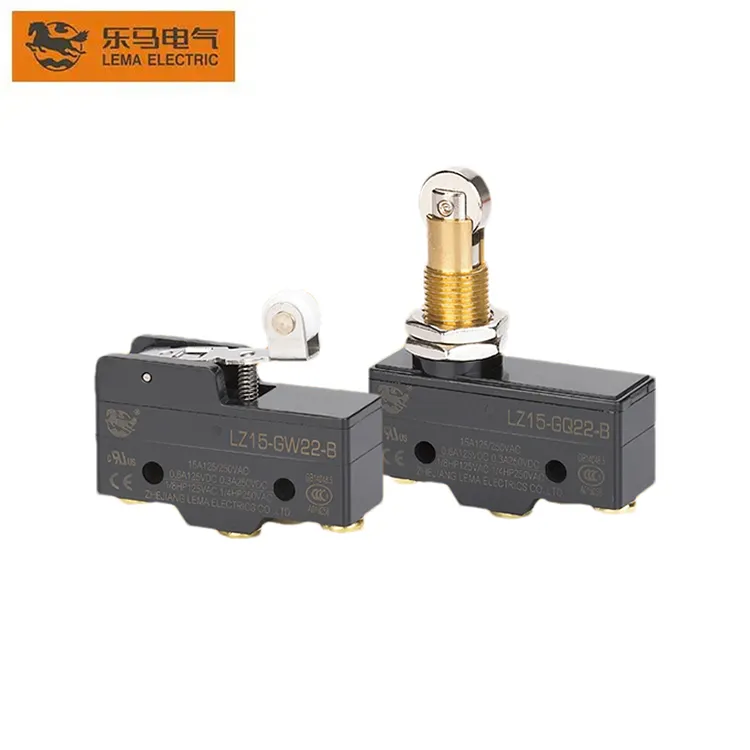
Part 1. What does double pole mean in a micro switch?
Double pole construction places two contact sets on one common actuator. Each pole keeps its own terminals and its own circuit, while the mechanism forces both to change state in the same actuation.
| Configuration | Poles | Typical use |
|---|---|---|
| SPST / SPDT | One | Single sensing or control path |
| DPST | Two, on-off | Switching two conductors together |
| DPDT | Two, changeover | Two circuits that each need NO and NC paths |
Confirm the configuration code against the LEMA Micro Switch product line documentation for the series in question, since families differ in which poles they offer.
Part 2. Which appliance scenarios need two switched circuits?
Appliance control creates the common cases. A door interlock may need to cut power and signal the controller in one motion, while a heating product may switch the element circuit and a status lamp together.
Single-circuit examples of the same discipline appear in the refrigerator door switch guide, where one pole handles the sensing task alone.
Part 3. How should both circuits be drawn before wiring?
Draw each circuit end to end before touching terminals: source, load, protection, and the required state in both the free and operated positions. Label the poles distinctly so the schematic and the work instruction use the same names.
Basic terminal identification habits carry over from single pole work; the terminal wiring review covers continuity checks that apply to each pole here.
Part 4. Which terminal and simultaneity checks matter?
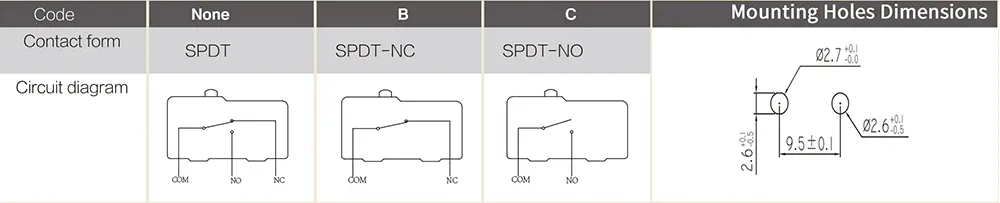
Terminal maps on double pole bodies are compact, and two circuits double the consequence of a swapped conductor. Verify each pole separately with a continuity test in both actuator positions before releasing the harness drawing.
| Check | Method | Failure it prevents |
|---|---|---|
| Pole identity | Continuity per pole, free and operated | Crossed circuits |
| State mapping | Compare against the schematic states | Inverted control logic |
| Simultaneity | Observe both circuits through actuation | Sequence-sensitive faults |
| Clearance | Inspect conductor routing at the terminals | Tracking between circuits |
Where the function depends on both poles changing within a narrow window, record that expectation explicitly and test it on production-intent samples.
Part 5. How does load per pole change the review?
Each pole carries its own electrical duty. A pole feeding a heater sees very different stress from a pole feeding a controller input, even inside one housing.
- Record voltage, current, load type, and inrush per pole.
- Check the model rating for each contact set, not just the housing label.
- Keep low-energy signal poles inside the documented minimum load.
- Note any pole left unused, and terminate it safely.
Part 6. What belongs in the RFQ and Fit Boundary?
RFQ input checklist
- Both circuit diagrams with required states per pole
- Voltage, current, load type, and inrush for each circuit
- Terminal style, harness plan, and actuator detail
- Mounting drawing, environment, and validation expectations
- Volume and sample timing
Fit Boundary
This guide plans two-circuit switching from one actuation. It does not establish isolation ratings, disconnection categories, or approvals; the model document and applicable product standard own those.
Part 7. How can LEMA support a double pole inquiry?
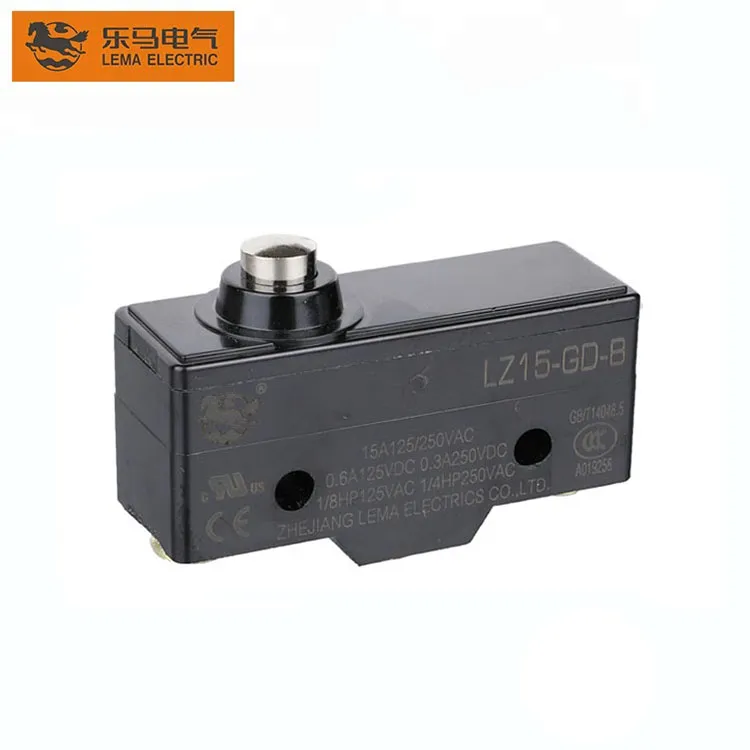
Bring the two-circuit requirement to a documented family. The LZ15 series micro switch page is a public LEMA route for reviewing pole configurations against an appliance control task.
Product recommendation: request a configuration review with both circuits documented. Selecting a double pole body while only one circuit is defined leaves the second pole unverified.
Send an OEM switch RFQ with the two-circuit package attached.
FAQs
What is a double pole micro switch used for?
One actuation switches two electrically separate circuits, such as cutting a load and signaling a controller in the same motion.
Is DPST the same as DPDT?
No. DPST gives two on-off poles, while DPDT gives two changeover poles that each offer NO and NC paths.
Do both poles switch at exactly the same time?
Poles change state in the same actuation, but designs that depend on tight timing between poles must state and test that requirement.
Can the two poles carry different loads?
Yes, provided each pole stays inside the documented rating for its own circuit, including inrush and minimum load.
Can I use only one pole of a double pole switch?
Yes. Terminate the unused pole safely and note it on the drawing so later revisions do not misread the wiring.
What should a double pole RFQ include?
Include both circuit diagrams, per-pole loads, terminal style, actuator and mounting detail, environment, volume, and sample timing.