
Limit switch seismic qualification evidence must connect the exact switch, its mounting and required function to an applicable equipment assessment. A general vibration rating, an impact value or an ingress protection code does not establish earthquake performance. Before an OEM accepts a seismic claim, identify the installed configuration, the demand defined by the project and the function that must be preserved. This guide provides a report review framework for an LZ1 enquiry. It does not claim that the Lemaele LZ1 series is seismically qualified, suitable for nuclear service or approved to a particular seismic standard.
Define what must work and when
Begin with the equipment function rather than a request for the strongest switch. Does the application require a position indication during an event, a functioning control after an event, or another specifically defined behavior? Have the responsible system engineer state the requirement. Physical survival and functional performance are different questions. A housing that remains attached does not by itself demonstrate the intended electrical state or actuator relationship.
Record the role of the switch in the control system and any associated acceptance criteria. If the function has a safety significance, its suitability needs the project’s complete assessment and approved equipment selection process. Do not infer a safety function from the presence of normally closed contacts or from the general term limit switch. Keep component marketing descriptions separate from the system’s documented requirements.
Establish the actual LZ1 configuration
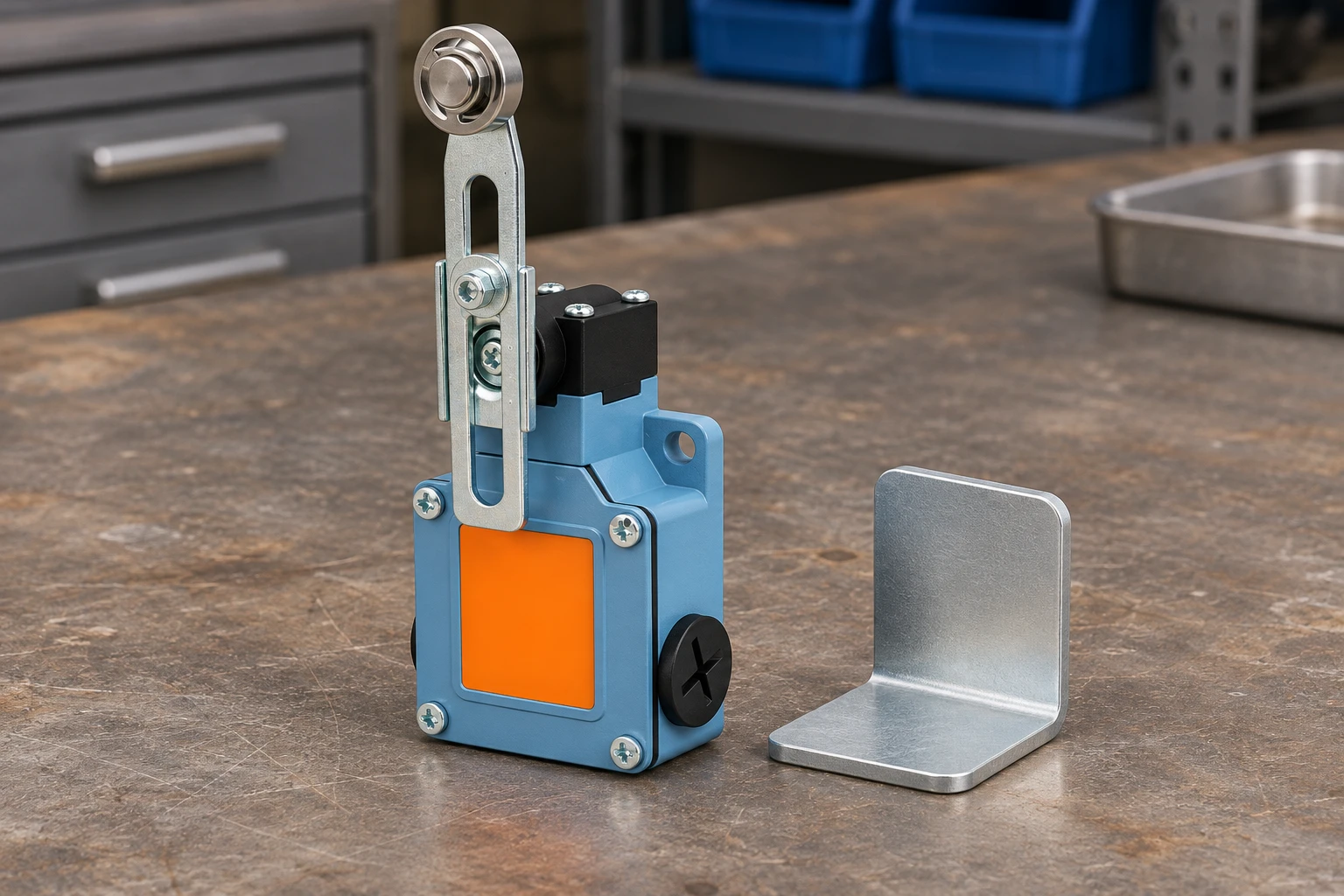
The Lemaele LZ1 series limit switch page describes the family, including operating and environmental characteristics. It is a starting point for component identification, not a seismic qualification report. Confirm the ordering code, actuator head, roller arm setting, terminal arrangement and drawing revision. A different arm position or mounting arrangement should not be treated as covered without review.
Describe the host equipment and the path through which movement reaches the switch. Include the bracket, fixing arrangement and the target or cam that operates it. Identify cable support and nearby objects that could interact with the assembly. The review should be specific enough that another engineer can recognize the configuration being assessed without relying on a generic catalogue photograph.
Read general ratings within their limits
A component datasheet may list vibration or shock conditions. Read them with their method, specimen configuration and performance criteria. Do not turn a single acceleration figure into a statement that the switch can withstand any earthquake of that magnitude. Different input histories and mounting conditions cannot be assumed equivalent. If the source documentation is incomplete, ask the supplier to clarify it rather than building a qualification claim from a table entry.
Likewise, an IP rating concerns a different characteristic from seismic performance. A metal housing or robust appearance is not a qualification method. The heavy duty limit switch selection guide addresses the broader component review. Treat that selection work as preparation for a project-specific decision, not as a replacement for evidence addressing the required event and function.
What a meaningful test record should show
The University of Bristol’s seismic testing overview describes specifying required motion, representing the installed mounting and reporting measured response and observed degradation. This supports asking for the complete test configuration and results. It does not establish which test is required for an LZ1 application or provide an LZ1 result.
| Evidence item | What to identify | Review question |
|---|---|---|
| Specimen | Switch code, actuator, revision and sample record | Does the report cover the proposed component? |
| Installation | Host, bracket, fasteners and actuator setting | Does the test represent the installed arrangement? |
| Demand | Project requirement and achieved test input | Was the required exposure actually addressed? |
| Function | Required state and defined monitoring | What performance was evaluated during and after exposure? |
| Findings | Measurements, observations and deviations | What changed and how was it assessed? |
| Applicability | Covered variants and technical justification | Which proposed configurations remain outside the evidence? |
This checklist is a purchasing review aid, not a seismic test procedure. Let the project engineer and qualified assessment provider select the method, severity, specimen preparation and decision rules. A test arranged without those inputs can produce data that do not answer the equipment’s real acceptance question. Agree the intended conclusion before deciding what samples to supply.
Keep the full record rather than only a certificate image or a video clip. The laboratory report should allow the reviewer to identify the tested item, the configuration and the basis of the conclusion. Where the evidence is an engineering assessment instead of a new test, identify its author, input records and limits. Different forms of evidence should be described accurately instead of all being called tested.
Check the relationship between the switch and its host
A component mounted in a cabinet or machine can experience movement influenced by that supporting structure. The host and bracket therefore belong in the configuration review. Ask whether the assessment considers the location and attachment of the switch rather than merely the component in isolation. Do not assume that a host report includes every later-added accessory or relocated switch.
The IAEA guidance on seismic safety evaluation discusses device model, attachment and interaction when reviewing certain sensitive equipment. Its scope is nuclear installations, so it is specialist background rather than an instruction for an ordinary industrial machine. It provides no approval of the LZ1 series or permission to use it in nuclear equipment.
For the actual project, record the host interface and obtain the responsible engineer’s applicability decision. If the bracket, fixing locations or support stiffness changes, ask whether the previous evidence still applies. Do not use a visual resemblance between two brackets as the technical justification. Keep the drawings that were reviewed with the final decision.
Describe functional monitoring clearly
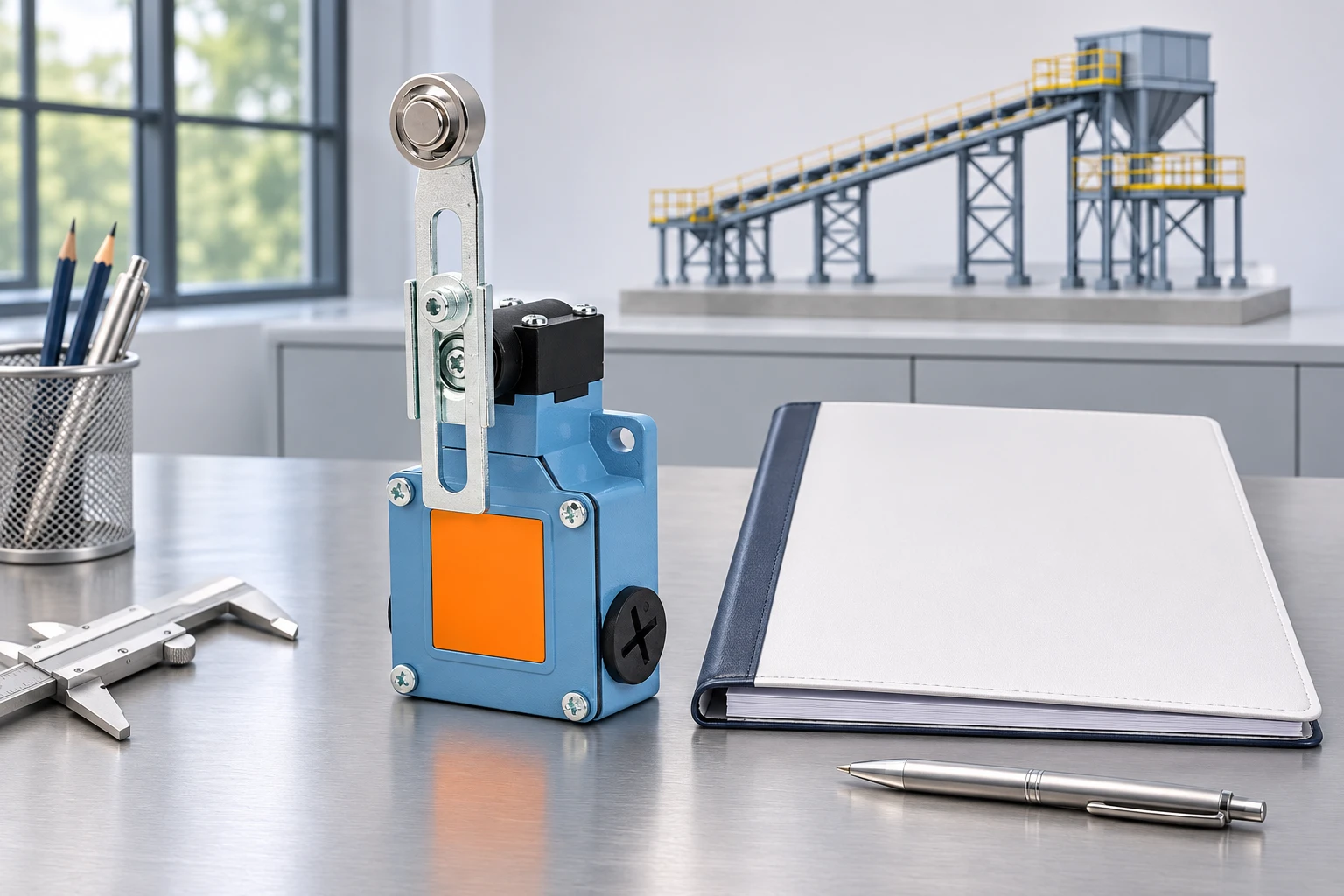
If the required function involves a contact state, specify how that state is evaluated and at what stage of the assessment. Distinguish a deliberate actuator operation from a temporary electrical indication or an interrupted connection elsewhere in the circuit. The monitoring arrangement must be designed by the qualified assessment team to answer the agreed question. A handheld meter reading before and after an event cannot establish every possible behavior during it.
Also record the actuator’s initial relationship to its target. A roller against a cam, a lever clear of a target and a switch already actuated are different configurations. Ask which conditions are required and represented in the evidence. Avoid applying an observed result to every lever position or target arrangement unless the assessment explicitly supports that extension.
Keep mounting deterioration separate from qualification
Qualification evidence assumes an identified configuration, but the installed condition can change during service. Inspect and maintain the assembly under the equipment’s approved program. The mounting hole elongation inspection guide addresses deterioration that can affect position retention. The mounting witness mark guide addresses observation records. Neither establishes seismic capacity.
If equipment has experienced an event, use the owner’s inspection and release process before returning it to service. A switch that still clicks may need a broader assessment of the target, bracket, cable and system behavior. Do not improvise a shake test, add reinforcing parts or move the actuator as a substitute for the required review. Preserve the condition and event record where investigation is needed.
Review replacements and modifications before release
A replacement part with the same contact rating may differ in actuator mass, travel, mounting geometry or terminal configuration. Use the limit switch replacement guide for basic matching, then separately review whether the seismic evidence remains applicable. Do not copy an old qualification statement into a new purchase order without checking the covered configuration.
For an OEM enquiry, provide the system function, site or project requirement, host drawing, mounting details and desired evidence. Ask Lemaele which exact product information is available and which claims require additional assessment. If no applicable report exists, record that gap honestly and arrange a technically justified assessment or select a component with suitable evidence. A general product page cannot close a project-specific qualification requirement.
Track open questions in the release file
Separate missing component information from missing project information. For example, a supplier can identify the actuator version while the equipment owner must supply the required event demand. Assign each question to the party able to answer it and retain the response with its drawing or report revision. When the evidence is complete, have the designated technical authority state the configuration and function being accepted. This avoids a procurement note such as seismic capable being interpreted later as a wider approval than the review actually established.
Video: how a shake table produces controlled motion
UC San Diego’s tour of its outdoor earthquake simulator explains the purpose and operation of a shake table. It provides background on controlled earthquake simulation. It is not a test of an LZ1 switch and does not demonstrate the qualification of any Lemaele assembly.

Frequently asked questions
Does the LZ1 vibration rating prove seismic qualification?
No. Review the applicable project requirement and evidence for the actual switch, mounting and required function.
Does an IP66 rating describe earthquake performance?
No. Ingress protection and seismic performance are different characteristics.
Can a host equipment report cover a later switch relocation?
Do not assume so. Have the responsible engineer assess the changed location, attachment and configuration against the existing evidence.
Does citing IAEA guidance make LZ1 suitable for nuclear service?
No. The guidance is specialist background and provides no LZ1 qualification or nuclear application approval.