
A toggle switch tamper-evident seal is an inspection aid intended to reveal a defined disturbance, such as opening a control cover or changing a protected setting. It does not automatically prevent operation, lock out energy, or prove that a setting remained unchanged. Start by defining the access event, the surfaces a seal would join, the inspection method and the authorized replacement process. Then verify that the arrangement leaves the switch functional wherever operation is required. A seal placed across a moving lever can create a new problem instead of a useful record.
For equipment buyers, the central question is what evidence an intact seal can support. A sticker on a convenient flat surface may look reassuring while leaving the relevant access path completely open. Conversely, a poorly positioned seal may tear during normal cleaning or panel movement. A useful specification links the component, panel construction, inspection task and service procedure. This guide addresses that specification; it does not assign a security approval or a built-in sealing provision to a LEMA switch.
Define the event before choosing the seal
Write one sentence describing the event to be detected. Examples include opening a separate settings enclosure, removing a panel that provides access to terminals, or lifting a cover over an infrequently adjusted control. These events need different arrangements. A seal across an enclosure seam may indicate that the seam was disturbed, but it does not necessarily indicate whether an exposed toggle was operated. Review every accessible path to the protected function before treating a sealed seam as meaningful evidence.
Separate an inspection objective from a prevention objective. If the equipment requires restricted operation, the engineering team must define appropriate access controls. If it requires energy isolation, use the equipment’s specified isolation arrangement. If it requires evidence of authorized adjustment, a seal register and controlled maintenance process may be relevant. One accessory should not silently inherit all three jobs. The toggle switch safety cover guide addresses a related physical-access question with a different purpose.
Understand identity, integrity and inspection
A useful seal inspection asks whether this is the expected seal, whether its condition is acceptable and whether the surrounding assembly still matches the recorded configuration. The European Commission’s Joint Research Centre discussion of sealing systems describes tamper indication in nuclear safeguards. That specialized application illustrates why seal identity and the protected enclosure matter together. It does not establish requirements or approval for an industrial toggle panel.
For an ordinary equipment project, document the seal location with an overview photograph and a close view after application. Record the identifier when identifiers are used, the equipment identity, the date, the responsible person and the authorized configuration. Without a baseline, an inspector may recognize damage but cannot reliably distinguish an approved replacement from an unexplained change. Keep access to unused seals and replacement records under the organization’s defined control rather than leaving responsibility implicit.
Review the complete panel interface
Consider what a person could open, remove or operate while the proposed seal remained undisturbed. Review the panel, cover, fasteners and alternate access points together. This is a design review, not an instruction to defeat a protective system. If the only relevant access path does not cross the sealed joint, change the design or reduce the claim made for the seal. Documenting that limitation is more useful than adding more stickers without a clear purpose.
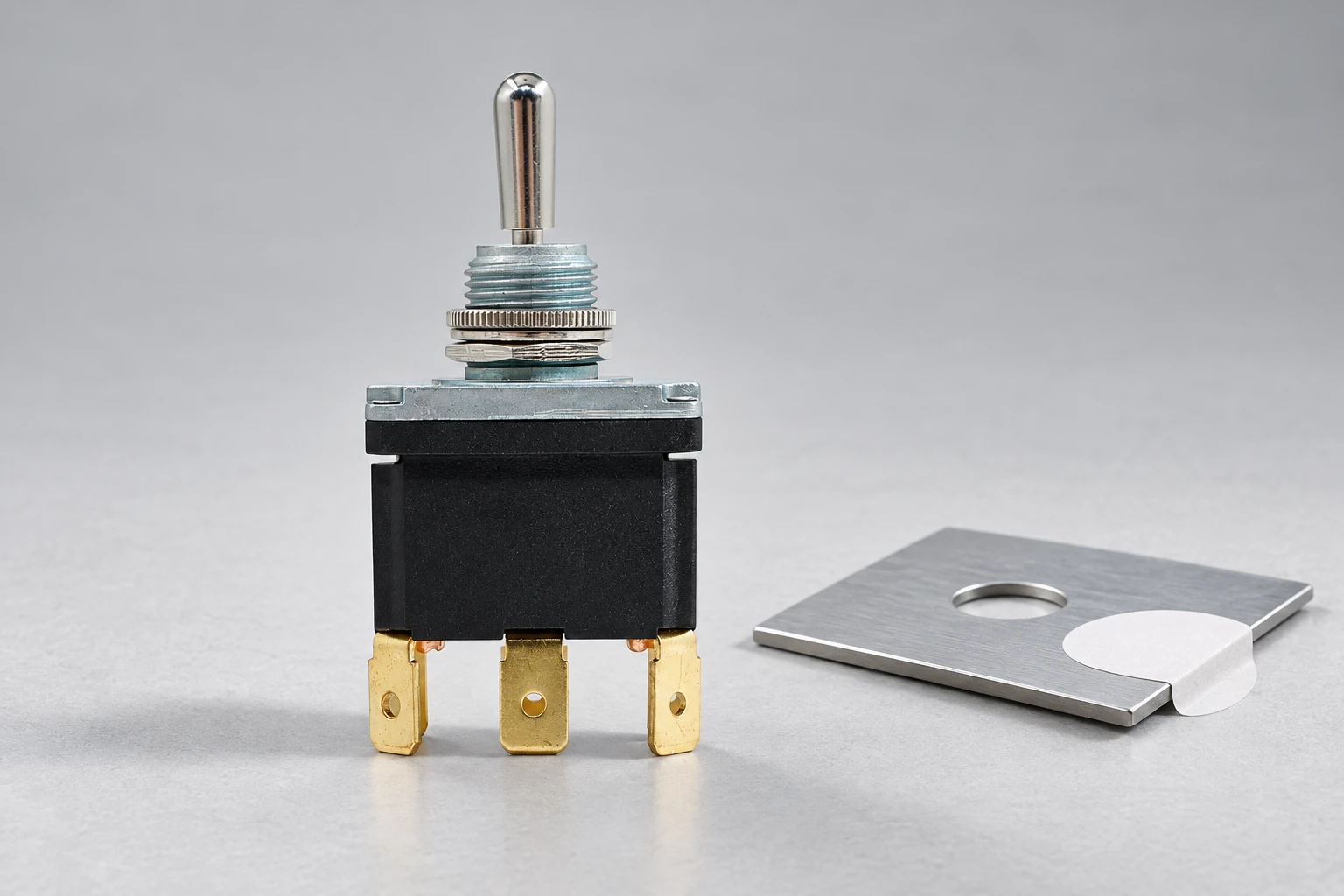
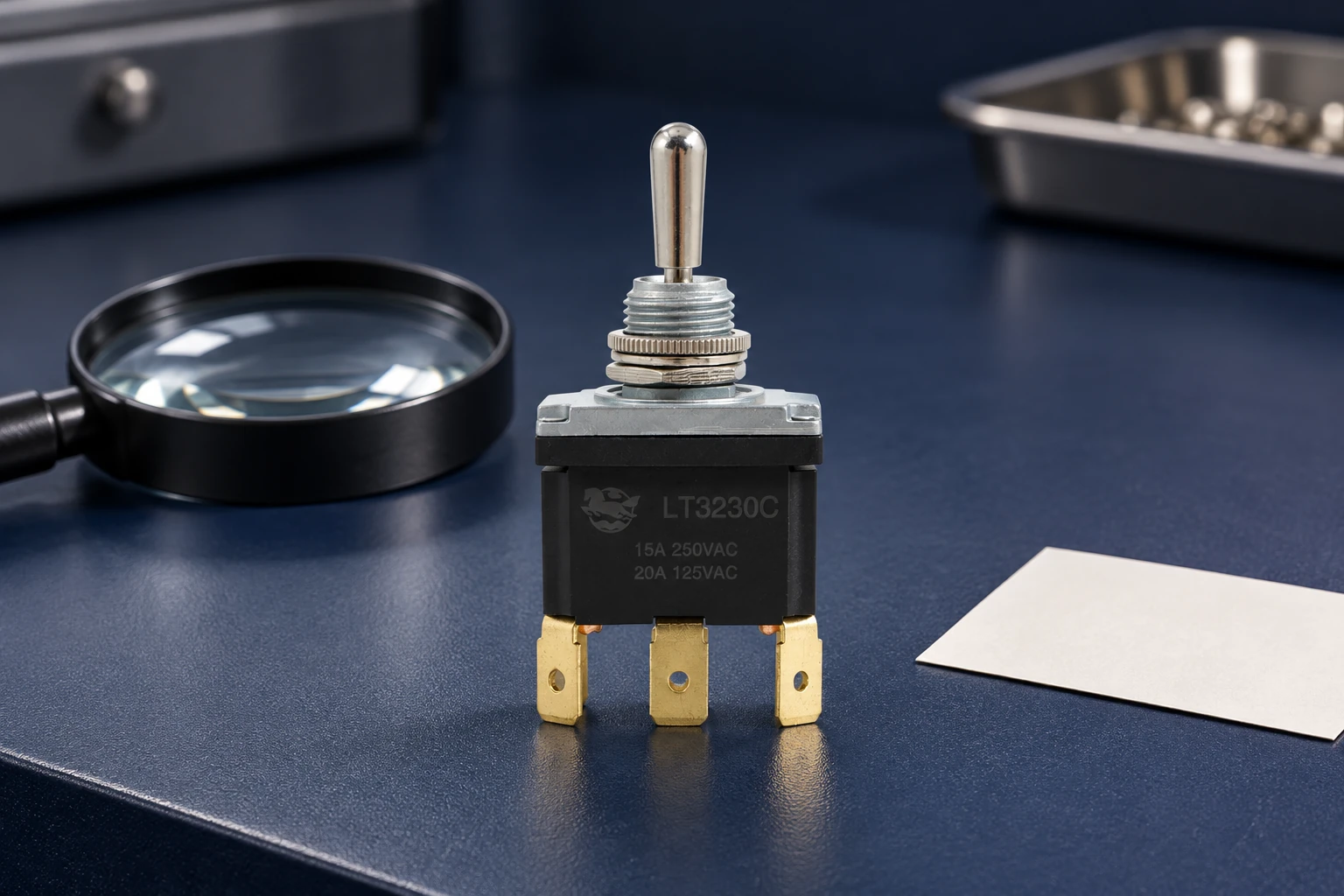
Le LT3230C spade-terminal toggle switch provides a concrete component reference for the review. Its visible metal lever, threaded mounting section, body and terminals help identify the boundaries between the switch and a separate panel accessory. Product appearance does not establish a factory tamper-seal feature. Obtain the applicable drawing and exact variant information before adding a cover, adhesive or mounting accessory. Do not drill the switch, alter its actuator or coat its terminals to create an undocumented sealing point.
Build a practical acceptance checklist
| Review item | Record required | Acceptance question |
|---|---|---|
| Protected event | Specific opening or setting-access event | Does this event disturb the reviewed seal? |
| Complete access path | Panel, cover and alternate openings | Can the claimed event occur outside that path? |
| Seal identity | Identifier and controlled baseline | Can the expected seal be recognized? |
| Normal service | Surface and representative exposure | Can routine handling be distinguished from disturbance? |
| Authorized access | Responsible person and replacement record | Is the new baseline traceable? |
The checklist is a project planning tool, not a claimed standard test sequence. The New Zealand Information Security Manual section on tamper-evident seals treats registers, inspection and reporting as parts of seal use in its own security context. Adapt the general recordkeeping questions to the equipment’s actual risks and maintenance needs. Do not import an agency inspection interval or compliance label into a product specification without establishing applicability.
Check surfaces and normal service conditions
Identify the actual surfaces: paint, bare metal, polymer, texture, curvature and any coating. Ask the seal supplier about preparation, application pressure, conditioning and compatibility for that combination. Do not copy a cleaning solvent from a different manufacturer’s instruction. A substance suitable for one label and coating may damage another surface or the switch. Keep preparation materials away from openings and electrical parts unless the component manufacturer explicitly allows the process.
Evaluate representative samples after the normal conditions that could affect inspection, including handling, cleaning and the equipment environment. Define acceptable appearance before starting. If routine service creates lifting, staining or abrasion that resembles disturbance, record that ambiguity and improve the location or procedure. Neither a neat initial photograph nor an undamaged sample stored on a desk establishes performance on a working panel. No universal adhesion value or environmental lifetime is assigned here.
Preserve access and required switch movement
A seal must not restrict a control that operators need to use during the intended task. Review the full lever movement, surrounding clearances, visibility of position and access by the intended users. Keep loose label edges, broken fragments and adhesive out of the actuator region. If a separate cover is used, verify the cover and seal arrangement together. A convenient label location can become unacceptable when the cover opens, the panel flexes or the operator wears gloves.
Mounting security is another separate issue. The toggle switch mounting-nut review explains why panel retention and rotation deserve their own checks. A label crossing a nut is not a substitute for the specified mounting arrangement. Similarly, a security label is not an environmental gasket. Use the sealing washer and O-ring guide for the distinct question of mounting-interface sealing evidence.
Explain the limits to inspectors
Inspectors need examples of acceptable condition and conditions requiring escalation. Include the seal itself and enough surrounding panel detail to recognize the location. Specify whether a partially lifted corner, unreadable identifier, missing record or unexpected replacement requires the equipment to be held for review. Avoid a rule that treats every intact-looking sticker as proof of an unchanged electrical configuration. The interpretation must remain limited to the event and inspection method the organization actually controls.
Do not ask ordinary operators to investigate suspected unauthorized changes by opening energized equipment. Define a reporting route and an authorized technical review. That review should consider whether the equipment configuration, control function or maintenance status needs verification before return to use. The response depends on the application; a cosmetic record discrepancy and an unexplained change to a critical setting can require very different actions. The article does not prescribe a universal release decision.
Control authorized opening and replacement
A planned service action should begin with the equipment’s applicable shutdown and isolation procedure, followed by authorization to access the protected area. Record the reason for opening and preserve the old seal information when the process requires it. After the work, verify the approved configuration and the relevant equipment checks before applying a replacement. A newly applied seal should close a documented service event, not conceal an unresolved fault or incomplete inspection.
Specify who may issue replacements and who may approve return to service. Keep the old and new identifiers linked where identifiers are used. Photograph the new baseline and update the register so the next inspector knows what to expect. If the seal cannot be reapplied without changing the panel or switch, stop and resolve that design issue. Improvised adhesive, wire or accessory substitutions can invalidate the reviewed arrangement even when the replacement looks similar.
Educational example: a seal is part of a system
The following IAEA video introduces a specialized safeguards seal and its verification context. It is useful for understanding why a seal has an identity, an application method and an inspection process. Its nuclear application is an educational example, not a recommendation to fit that seal to a toggle switch, and it provides no approval for LEMA equipment. Use the equipment-specific design review and supplier evidence to decide the actual panel arrangement.
IAEAvideo: IAEA launches new safeguards seal

Watch IAEA launches new safeguards seal.
Put the requirement into the purchase package
Send the supplier the exact switch variant, panel drawing, protected access event, proposed accessory and intended inspection conditions. Ask which details the switch manufacturer can confirm and which belong to the seal or equipment supplier. Request sample review before production release. Keep electrical rating, mounting, environmental sealing and tamper indication as explicit evidence requests so a statement about one feature does not get used to approve another.
The final deliverable should include the reviewed drawing, application instructions, acceptance examples, register fields and authorized service procedure. State clearly what an intact seal indicates and what it cannot establish. This makes future maintenance and supplier changes easier to assess. For component identity and replacement questions, begin with the toggle switch replacement guide and then evaluate the additional access-control arrangement at equipment level.
Foire aux questions
Un sceau intact prouve-t-il qu'un paramètre de basculement n'a jamais été modifié ?
Only the defined event and reviewed inspection method can be assessed. An intact-looking seal does not automatically prove an unchanged setting or electrical configuration.
Can a seal replace an isolation lock?
No. Tamper indication is not an energy-isolation function. Use the equipment-specific isolation procedure.
Should a label be placed across a moving lever?
Do not restrict required control movement. Any proposed accessory needs review for the exact switch, panel and operating task.
Does LT3230C include an approved tamper-seal feature?
No such feature or approval is established here. Obtain exact-variant documentation and review the separate panel and seal arrangement.