
Appliance platforms collect micro switch variants the way drawers collect cables. Each program adds one more lever, force, or terminal option until purchasing manages dozens of near-duplicates. Consolidation starts with an inventory, not with a favorite part number.
Part 1. Why do appliance platforms accumulate switch variants?
Variant growth is organic: separate design teams, separate launch dates, and separate suppliers each solve a local problem. Nobody chooses thirty part numbers; portfolios drift there.
| Growth driver | Typical result | Consolidation lever |
|---|---|---|
| Per-program sourcing | Same duty, different brands | Common series with option codes |
| Copy-paste with edits | Slightly different levers | Standard actuator menu |
| Terminal convenience | Mixed solder and quick-connect | Harness-level terminal standard |
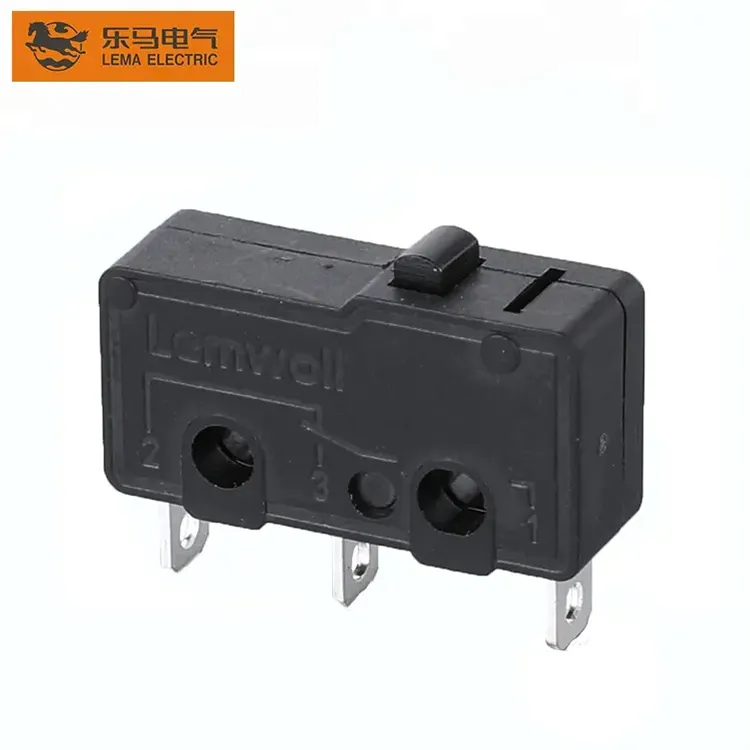
Anchor the exercise in a documented catalog such as the LEMA Micro Switch product line, where option codes make overlap visible.
Part 2. How should switch points be inventoried?
List every point across washers, dryers, ovens, dishwashers, and small appliances in one table: function, contact state, load, travel, environment, and annual volume. The inventory is the deliverable; opinions about similarity come later.
Two published examples show the level of detail worth capturing per point: the refrigerator door switch guide and the water heater interlock guide.
Part 3. How do duty profiles define consolidation groups?
Group by duty profile: signal-level sensing, lamp and indicator loads, motor and heater interlocks, and wet-area points. Products differ; duties repeat.
- Signal points share dry-circuit contact needs.
- Power interlocks share inrush and rating review.
- Wet or steam-adjacent points share sealing review.
- High-cycle doors share travel and overtravel control.
Part 4. Which actuator and terminal standards help most?
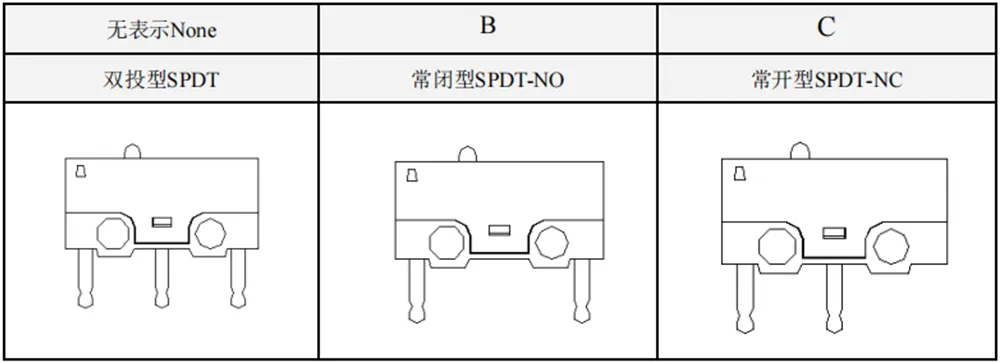
Standardizing the actuator menu and terminal style shrinks variants faster than any electrical change. Three lever options and one terminal system can often replace a dozen historical combinations.
| Standard | Scope | Payoff |
|---|---|---|
| Actuator menu | Plain lever, roller, plunger | Fewer brackets and drawings |
| Terminal system | One quick-connect size | Shared harness tooling |
| Mounting pattern | Common hole pitch | Reusable fixtures and jigs |
Part 5. How should validation cover a consolidation?
Validate once per group on the worst-case point in that group, then read across to the easier points with documented rationale. That plan keeps test cost proportional to real risk.
Changes ride the same rule afterward: a new load, travel, or environment moves a point to a different group, and the group’s validation status decides whether new testing is due.
Part 6. What belongs in the RFQ and Fit Boundary?
RFQ input checklist
- Switch point inventory with duty per point
- Proposed groups and the worst-case point in each
- Actuator menu and terminal standard preferences
- Environment ranges and sealing needs per group
- Per-line volumes and sample timing per group
Fit Boundary
This guide structures a consolidation program. It does not prove any single model covers all duties, and points with extreme or undocumented needs should remain separate parts.
Part 7. How can LEMA support a consolidation inquiry?
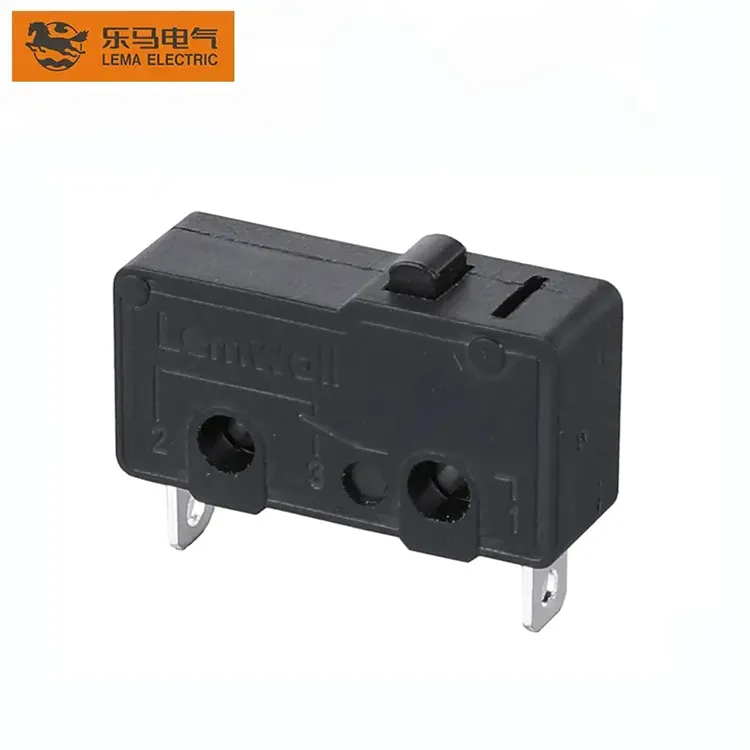
Bring the grouped inventory to one documented family first. The KW12 series micro switch page is a public LEMA route for testing how many groups one series can anchor.
Product recommendation: request an option-code mapping against the group table, then sample the worst-case point per group. Forcing every point onto one part number is the anti-pattern to avoid.
Send an OEM switch RFQ with the inventory and group proposal attached.
FAQs
What does switch consolidation mean for appliance OEMs?
It means reducing near-duplicate switch part numbers by grouping switch points with similar duties onto documented series options.
How many switch variants does a typical appliance range carry?
Portfolios commonly hold dozens of variants across lines, most differing only in lever, force, or terminal details.
Which switch points should not be consolidated?
Points with extreme sealing, temperature, geometry, or certified-function needs deserve their own parts and their own documentation.
Does consolidation require redesigning appliances?
Usually not. Grouping by duty and standardizing actuators and terminals works within existing mechanisms in most cases.
How is a consolidation validated efficiently?
Test the worst-case point in each duty group on production-intent assemblies, then read across to easier points with written rationale.
What should a consolidation RFQ include?
Include the point inventory, duty per point, proposed groups, volumes per line, and sample timing per group.