
A water heater micro switch is typically a snap-action safety interlock that confirms a mechanical or logical safety condition before heating is enabled—not a replacement for a bimetal thermostat or thermal cutoff. OEM teams should define the safety chain, contact rating, actuator interface, and reset behavior before selecting a micro switch for electric water heater programs.
Part 1. What role does a micro switch play in an electric water heater?
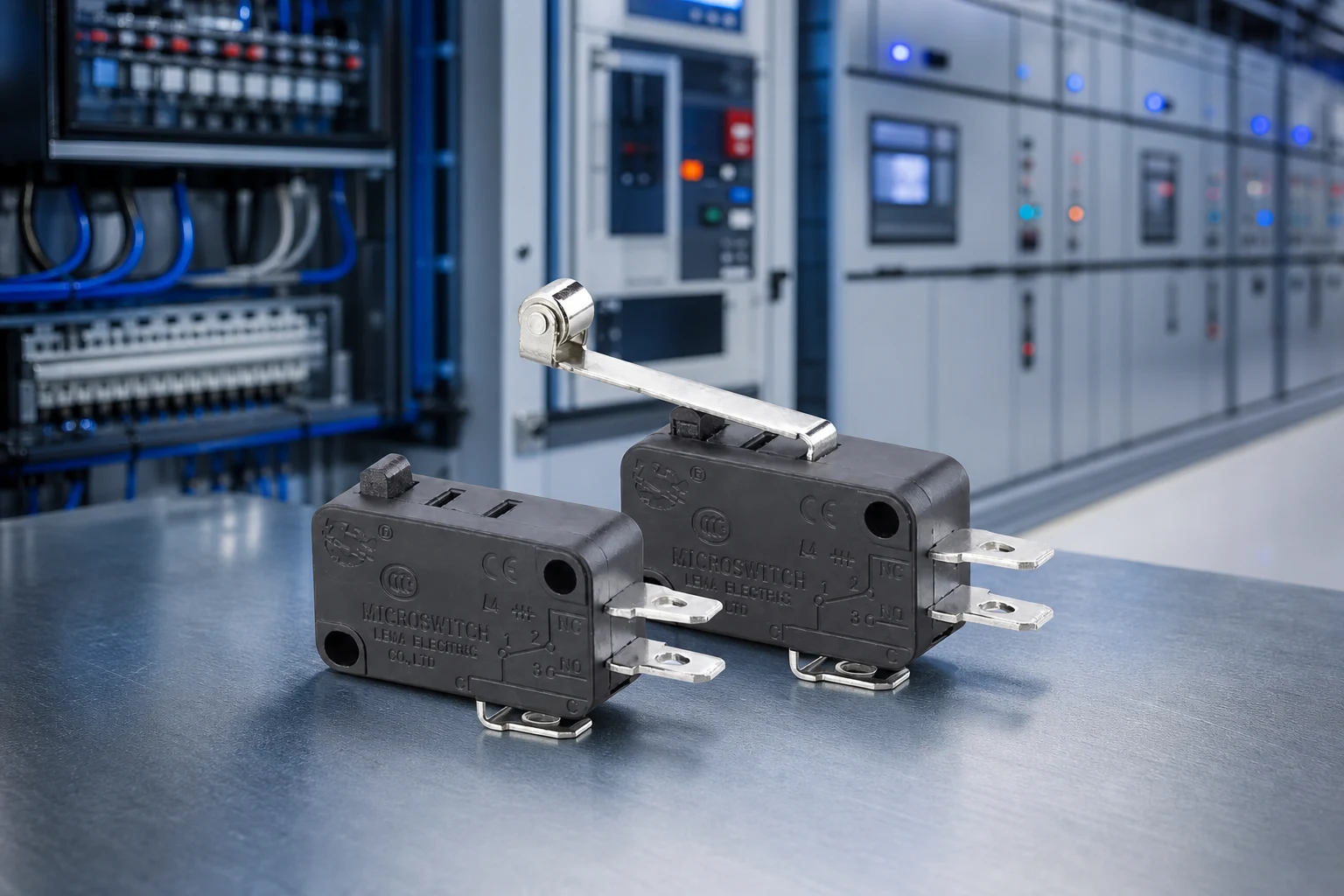
In many electric water heater designs, a micro switch provides fast make/break action in the control chain. A lever, button, or plunger actuator responds to a mechanical input—door/lid position, linkage travel, or an assembly probe—and toggles contacts that allow or block control signals to the heating circuit.
The switch itself does not measure water temperature. Instead, it answers a binary question: “Is the safety/mechanical condition satisfied?” When combined with thermostats, level sensors, or electronic control boards, micro interlocks help prevent unsafe states such as energizing heating elements when a service panel is open or when a required interlock is not closed.
Part 2. How is a micro switch different from a thermostat or thermal cutoff?
SERP results often mix three part classes. Keeping them separate avoids warranty and safety documentation errors.
| Component | Primary function | Typical output |
|---|---|---|
| Micro switch (snap action) | Mechanical position / interlock | Instant contact change at actuation point |
| Bimetal thermostat (e.g., KSD301 class) | Temperature regulation or limit | Opens/closes based on temperature setpoint |
| Thermal fuse / one-shot cutoff | Fail-safe over-temperature | Permanent open after trip |
A water heater may contain all three in different subsystems. Your BOM line item must match the function on the schematic—not the marketing keyword on a marketplace listing.
Part 3. Which safety functions commonly use micro interlocks?
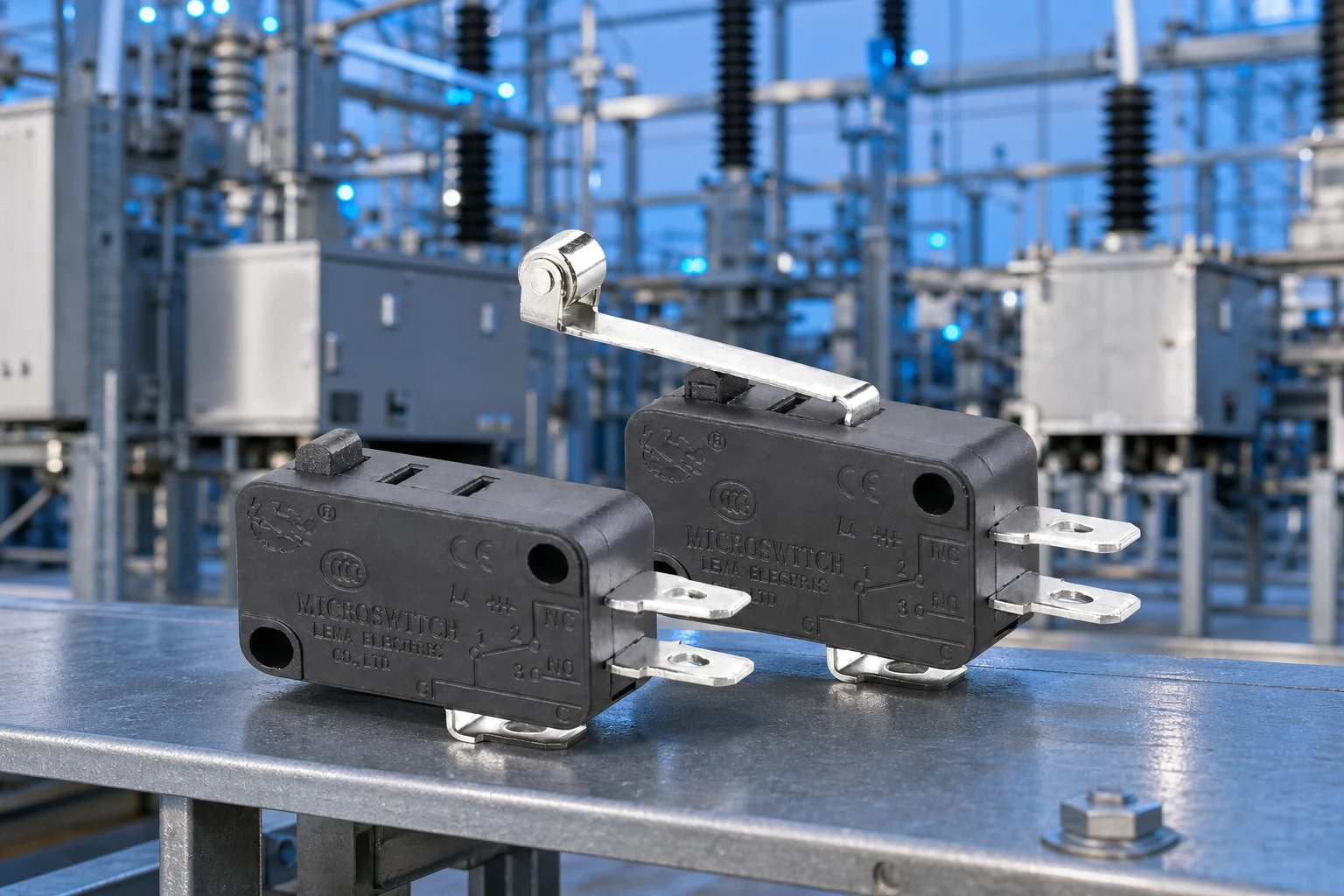
Common OEM uses include:
- Access panel interlocks that remove control voltage when a cover is removed.
- Linkage-proved states where a cam must reach a safe position before heat is requested.
- Auxiliary inputs to control boards that require a closed contact to start a sequence.
- Reset paths after a user clears a fault condition—distinct from a thermostat auto-reset cycle.
“Dry-fire prevention” usually depends on level/flow sensing plus control logic, not a micro switch alone. Document which sensor proves water presence and where the micro switch sits in that chain.
From the field: Installers often report “no heat” after a safety interlock fails to close following service—diagnosis should include mechanical travel and contact continuity before replacing the heating element ([industry service discussion pattern](https://www.microswitchsupplier.com/blog/understanding-how-a-micro-switch-works-in-water-heater-system.html)).
Part 4. What electrical and mechanical inputs belong in the spec sheet?
| Spec field | Design question | Risk if omitted |
|---|---|---|
| Contact form (NO/NC/SPDT) | Fail-safe state on loss of actuator force? | Heater stays energized when it should not |
| Voltage and current | Control circuit vs power switching? | Contact welding or early failure |
| Actuator type and operating force | Who provides overtravel? | Premature mechanical wear |
| Environmental sealing | Humid cabinet or splash exposure? | Corrosion at terminals |
| Reset behavior | Manual vs automatic after fault | User confusion and service calls |
Use the site’s general micro switch procurement checklist for supplier audit items, then add water-heater-specific safety-chain notes from your schematic.
Storage-tank and instant electric heaters often place the interlock in different mechanical locations: storage units may sense access-panel position near the control box, while instant models may tie the switch to flow-proving linkage or service-door travel. Document which subsystem owns reset behavior so firmware, thermostat, and interlock states stay aligned during fault recovery.
Part 5. How should OEM teams validate interlock logic on the bench?
Bench validation should mirror production tolerances:
- Cycle the actuator through minimum and maximum mechanical tolerance stacks.
- Measure contact transfer time and bounce at rated load where applicable.
- Confirm the control board sees the expected state under fault injections (open cover, blocked linkage).
- Temperature-cycle the assembly over the declared operating range and re-check actuation point drift.
- Document results against the appliance safety test plan—do not infer compliance from component datasheets alone.
Button-actuator behavior nuances are covered in the button actuator behavior article when your interlock uses a plunger/button interface.
Part 6. Which projects fit a micro interlock versus other switch types?
Fit Boundary
Suitable: Electric water heater OEM programs that need a compact snap-action interlock with defined mechanical travel, where load and environment match a verified micro switch datasheet.
Less suitable: Primary temperature regulation (use a thermostat), one-shot over-temperature protection (use a certified thermal cutoff), or high-current power switching without a contactor or relay—unless the switch is explicitly rated for that load.
Moisture inside the control compartment may push the design toward sealed variants; compare options in the moisture-resistant micro switch options guide before finalizing the series.
Part 7. Where do LEMA micro switch series fit appliance OEM programs?
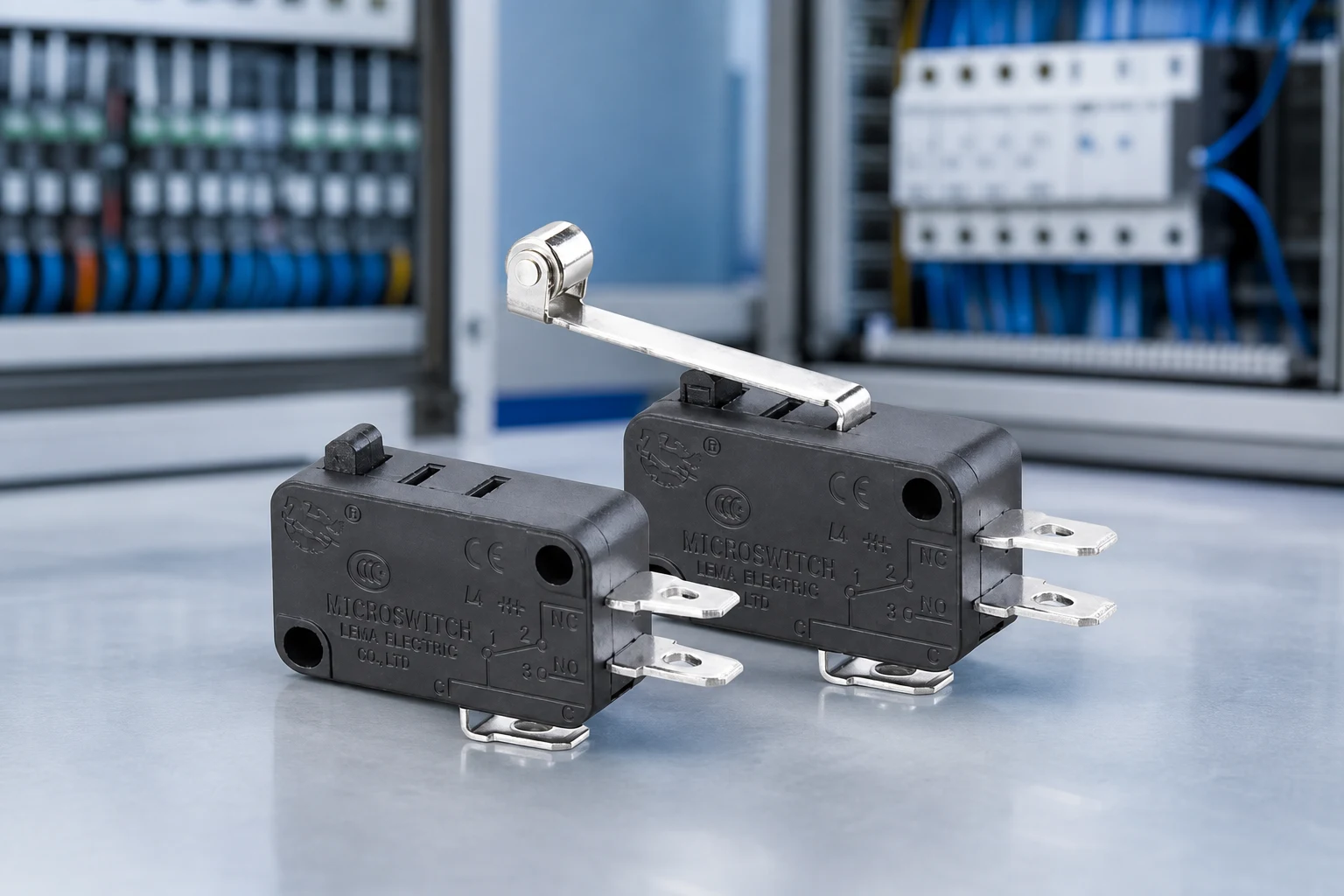
LEMA supplies micro switches for home appliance and industrial control markets. Begin with the KW7 series micro switch for compact control boxes; evaluate KW7F waterproof variants when the interlock mounts in a humid compartment.
Product recommendation: Share actuator travel diagram, required contact form, and control-circuit load with LEMA so engineers can map a series and request sample units for your safety-chain validation. LEMA is not a substitute for your appliance-level safety certification—component selection must stay within quoted ratings.
Review application context on the LEMA application page, browse the Micro Switch category, or submit an OEM RFQ with schematic and test plan summary.
FAQs
What does a micro switch do in a water heater?
It typically provides a snap-action contact change driven by a mechanical safety input—such as panel position or linkage state—that enables or blocks the control path to the heating circuit.
Is a micro switch the same as a water heater thermostat?
No. A thermostat regulates or limits temperature using a bimetal or electronic sensing element. A micro switch handles mechanical interlock or position sensing unless explicitly rated and designed for temperature control.
What happens when a water heater micro switch fails?
Failure modes include welded contacts (heat may not turn off), open contacts (heat may not turn on), or drifted actuation point (interlock trips early or late). Service should test continuity and mechanical travel before replacing downstream parts.
Can a micro switch prevent dry firing by itself?
Not reliably. Dry-fire protection requires proof of water presence or adequate flow—usually from level/pressure sensing and control logic—not a standalone micro switch without that system context.
What voltage and current rating is needed?
Match the switch to the circuit it actually switches—often control-level loads rather than full element current. Confirm with the supplier rating table; do not assume 16A marketing copy from unrelated listings applies to your SKU.
How do OEMs test safety interlocks?
Cycle tests at tolerance extremes, environmental conditioning, and fault-state injections documented in the appliance safety plan. Component samples should be evaluated in the final assembly, not only on a bench fixture.
When should teams choose a limit switch instead?
When travel exceeds micro switch overtravel limits or when industrial limit-switch actuators better match the motion profile—see limit switch guides for heavy-duty travel applications.