
An IP67 waterproof toggle switch is a sealing problem before it is a catalog label. Define the front-panel seal path, rear terminal exposure, washdown chemistry, mounting stack, and test method before requesting a model review. A stamped IP code does not describe an unfinished harness exit.
Important: IP67 marks a defined dust and temporary-immersion test envelope. It does not by itself prove continuous underwater operation or chemical washdown resistance. Source note: IEC 60529 publication scope; confirm seal path and test method in the selected model documentation.
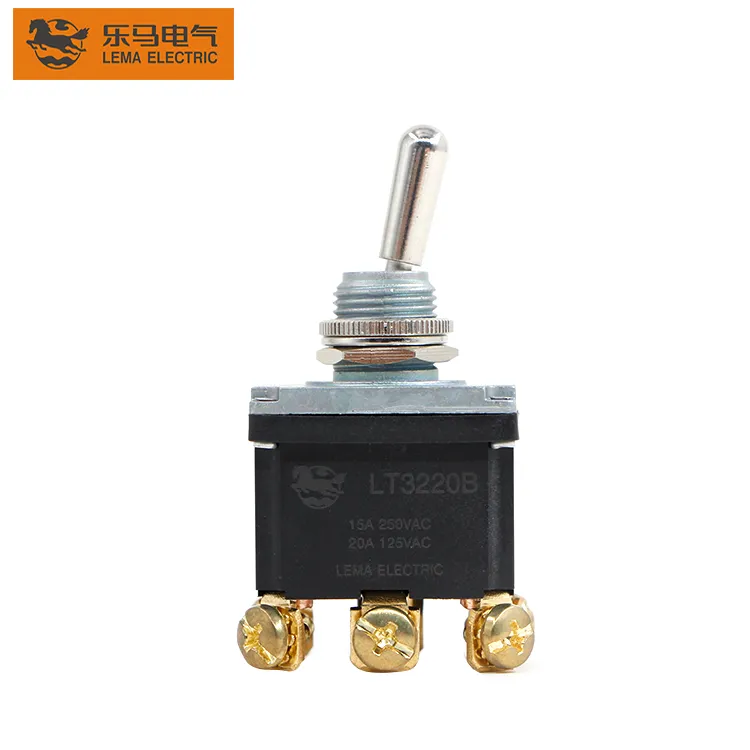
Part 1. What does an IP67 claim cover on a toggle?
IP67 is an enclosure test class for dust and temporary immersion under defined conditions. It is not a license for continuous underwater operation, and it does not automatically cover detergents, oils, or steam.
Write the exposure target and the test method the project will accept.
| Claim language | What to verify | Common overread |
|---|---|---|
| IP67 | Dust and temporary immersion envelope | “Works underwater forever” |
| Waterproof | Which surfaces are sealed | Whole product including open terminals |
| Washdown ready | Pressure, angle, chemistry | Equating water IP with chemical resistance |
Family options sit under the LEMA Toggle Switch product line; sealing still follows the selected model documentation.
Part 2. Which seal paths protect the front of the panel?
Front sealing usually combines a lever boot, bushing o-rings or washers, and a case-to-cover seal. Each interface is a leak path if the mounting stack is incomplete or the boot is omitted in production.
Dry 12V panel work without splash belongs in the 12V toggle panel guide; add sealing only when the exposure envelope requires it.
Part 3. How should rear terminals and harness exits be treated?
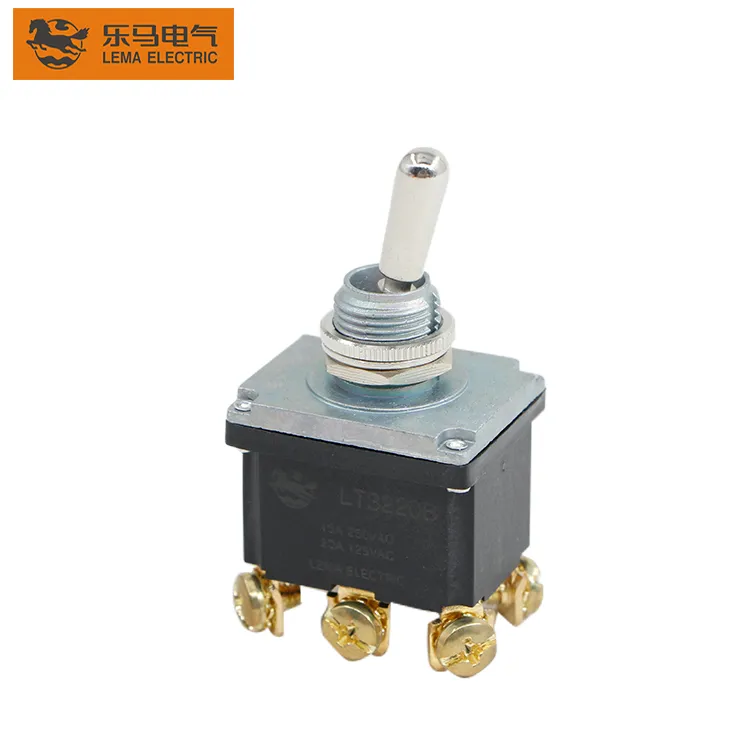
A sealed front does not protect open rear terminals in a wet cabinet. Document whether terminals are epoxy-sealed, wired leads, or open tabs behind a separate enclosure.
The assembly takes the weakest path in the chain.
- State rear exposure: dry cabinet, drip, splash, or washdown.
- Choose terminal or lead construction that matches that exposure.
- Protect cable exits from pull and abrasion that can open a seal.
- Do not assume a panel-front IP result covers the harness side.
Part 4. Why must washdown chemistry be listed separately?
IP water tests do not approve detergents, sanitizers, oils, or fuels. Elastomer boots and o-rings can swell or crack under chemistry that water alone never reveals.
List agents, concentration, temperature, and frequency in the RFQ.
Component-level sealing for snap-action devices is framed differently in the IP68 waterproof micro switch guide; do not mix those envelopes with a panel toggle bushing system.
Part 5. How does the mounting stack affect sealing?
Panel thickness, washer order, torque, and hole quality change compression on bushing seals. An oversized hole or missing external washer can open a path even when the switch itself is sealed.
| Mounting input | Effect on sealing | Check |
|---|---|---|
| Hole size | Seal compression | Model cutout drawing |
| Panel thickness | Thread engagement and washer stack | Maximum thickness limit |
| Washer / o-ring order | Front-face seal | Installation drawing |
| Torque | Under- or over-compression | Documented assembly value |
Part 6. How should sealing be validated before release?
Validate the production panel, mounting stack, harness exit, and cleaning process together. A bench sample with perfect hardware does not prove a line assembly that skips the boot or uses the wrong washer order.
| Buyer should provide | Why it matters | Common mistake |
|---|---|---|
| IP target and test method | Sets acceptance | Using “waterproof” with no method |
| Splash / washdown profile | Frames exposure | Assuming immersion from a splash need |
| Chemistry list | Protects elastomers | Water-only thinking |
| Rear terminal / harness plan | Closes the seal chain | Front seal only |
| Volume and sample timing | Sets quotation path | Sampling without a mounting drawing |
Fit Boundary: this guide plans sealing review for waterproof panel toggles. It does not certify an IP result, chemical resistance, or underwater operation for any model.
Part 7. How can LEMA support a waterproof toggle inquiry?
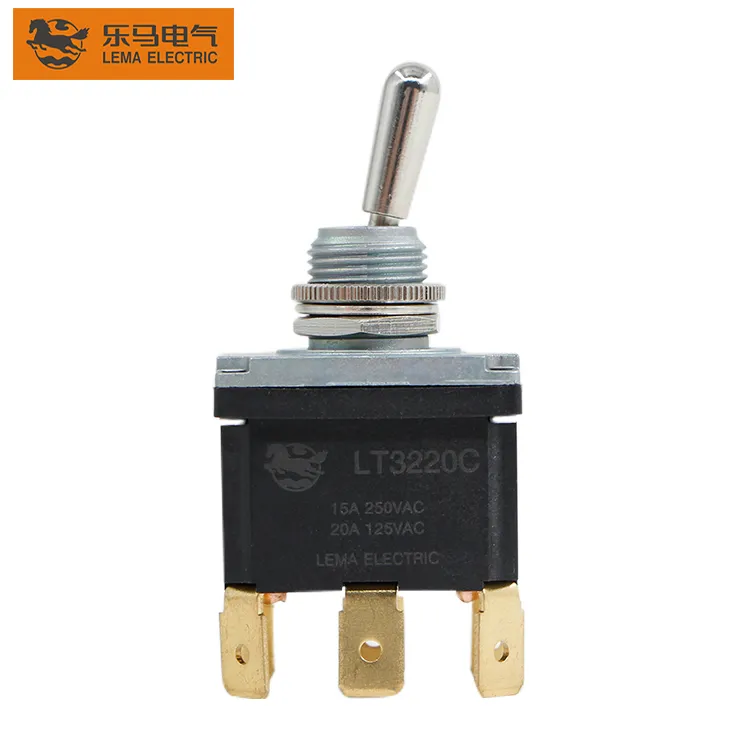
Use the LT3 series waterproof toggle switch page as a public starting point after the exposure envelope and mounting stack are written down.
Product recommendation: request a documented LEMA review against the seal path, chemistry list, and circuit duty. Do not approve a part from an IP logo alone.
Send a sealed-toggle RFQ with the mounting drawing, exposure notes, volume, and sample timing.
FAQs
What does IP67 mean on a toggle switch?
It marks a dust and temporary-immersion enclosure class under a defined test method; project acceptance still depends on the selected model documentation and the installed seal path.
Does IP67 mean the switch can operate underwater?
Not necessarily. Surviving a temporary immersion test and operating while submerged are different requirements and must be stated separately.
Where do sealed toggles usually leak?
At interfaces: lever boots, bushing seals, panel faces, and open rear terminals or cable exits.
Do cleaning chemicals affect an IP67 toggle?
Yes. Ingress classes cover water, not chemistry; detergents and sanitizers can degrade elastomers and need their own review.
Can any connector preserve an IP67 panel rating?
No. The assembly takes the lowest class in the chain, so the rear harness and enclosure must match the target exposure.
What should an IP67 toggle RFQ define?
Define the IP target and test method, washdown profile, chemistry, rear terminal plan, mounting stack, circuit duty, volume, and sample timing.