
ON-OFF and ON-OFF-ON are different maintained logics, not interchangeable lever labels. Lock the operator states and the wiring diagram first, then request a model review. A convenient handle that cannot express the required paths creates field swaps and miswired panels.
Important: Do not treat ON-OFF and ON-OFF-ON as interchangeable BOM labels. Confirm the printed circuit form against the wiring diagram before release. Source note: IEC 61058-1 publication scope and selected-model documentation.
– FAQs
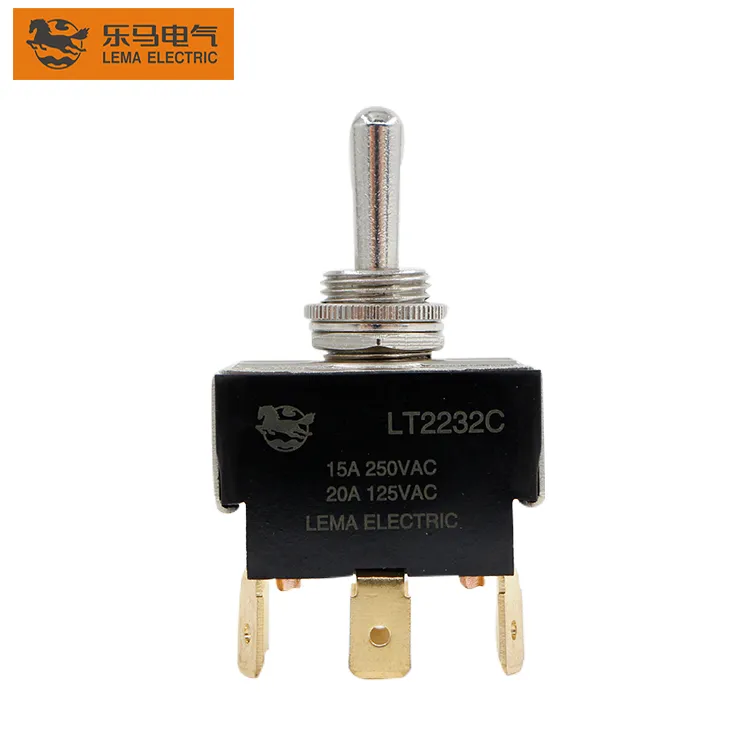
Part 1. What operator result must the toggle express?
Write the operator action and the electrical result before shopping by appearance. Note how many maintained live paths exist, whether a center rest is intentional, and what happens if the lever is left mid-travel.
| Decision field | Input to document | Send with quote |
|---|---|---|
| Circuit form | ON-OFF or ON-OFF-ON states | Yes — printed form on the drawing |
| Safe state | Default off or preferred live path | Yes — fail-safe note |
| Load | Voltage, current, inrush | Yes — duty summary |
| Panel | Cutout, thickness, clearance | Yes — mounting envelope |
Browse the LEMA Toggle Switch product line after the logic is written, not before.
Part 2. When is maintained ON-OFF the right circuit form?
Maintained ON-OFF suits a single live accessory path with a clear off position. The lever stays where the operator leaves it, so the wiring must treat that resting state as intentional.
Panel programs that only need one on state should avoid ON-OFF-ON hardware; extra maintained paths invite incorrect harness pinouts during service.
For 12V accessory framing, see the 12V OEM panel toggle planning guide.
Part 3. When does ON-OFF-ON become necessary?
ON-OFF-ON is required when the panel must choose between two maintained circuits, or when a defined center-off separates two directions. Center-off and three-position packaging often travel together; the 3-position center-off selection article covers that mechanical package.
Do not treat ON-OFF-ON as a “more flexible ON-OFF.” Extra poles and throws change the schematic and the operator training card.
Part 4. How should wiring and labeling prevent swaps?
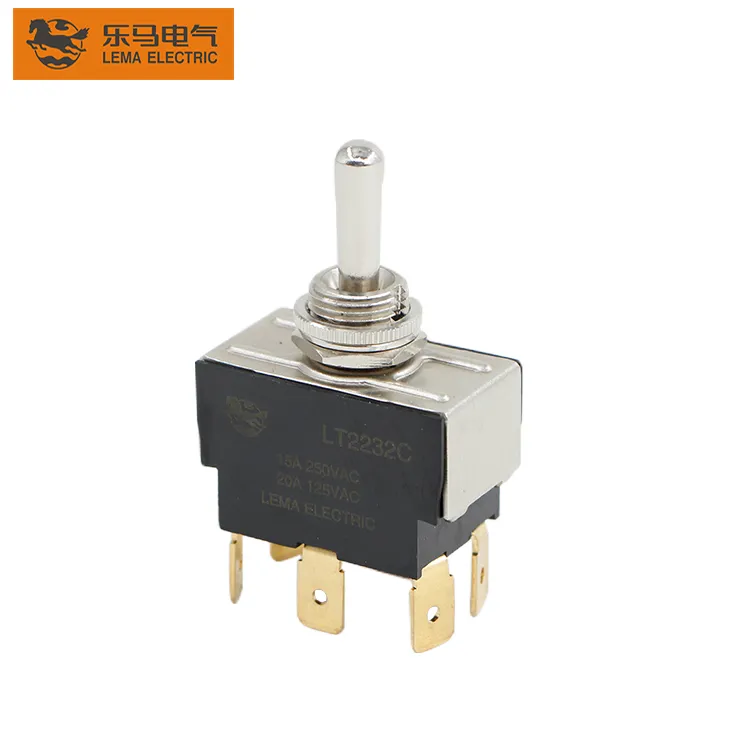
Mislabeling is the common failure mode. A BOM that says “toggle” without the circuit form lets purchasing substitute an ON-OFF-ON for an ON-OFF and ship panels that behave differently after a service swap.
- Print the circuit form on the schematic and the nameplate callout.
- Keep harness pin maps tied to each maintained path.
- Reject samples that arrive with an undocumented alternate form.
- Separate momentary spring-return needs; see the momentary spring-return selection guide.
Part 5. Which load and panel inputs still belong in the file?
Logic choice does not replace electrical and mechanical review. Record voltage class, steady current, inrush, cutout, panel thickness, rear clearance, and terminal style in the same package.
| Input | Why it still matters | Risk if omitted |
|---|---|---|
| Load type | Frames contact review | Early wear under inrush |
| Cutout | Controls bushing fit | Panel rework |
| Terminals | Matches harness process | Production bottlenecks |
Part 6. How should OEMs validate logic before release?
Validate the production wiring and the operator script together. Cycle each maintained state, confirm the off or center path, and verify labels match the harness.
Fit Boundary: this guide compares maintained toggle logics for OEM panel planning. It does not certify a model rating, establish a safety function, or prove ingress or life results.
Part 7. How can LEMA support a circuit-form inquiry?
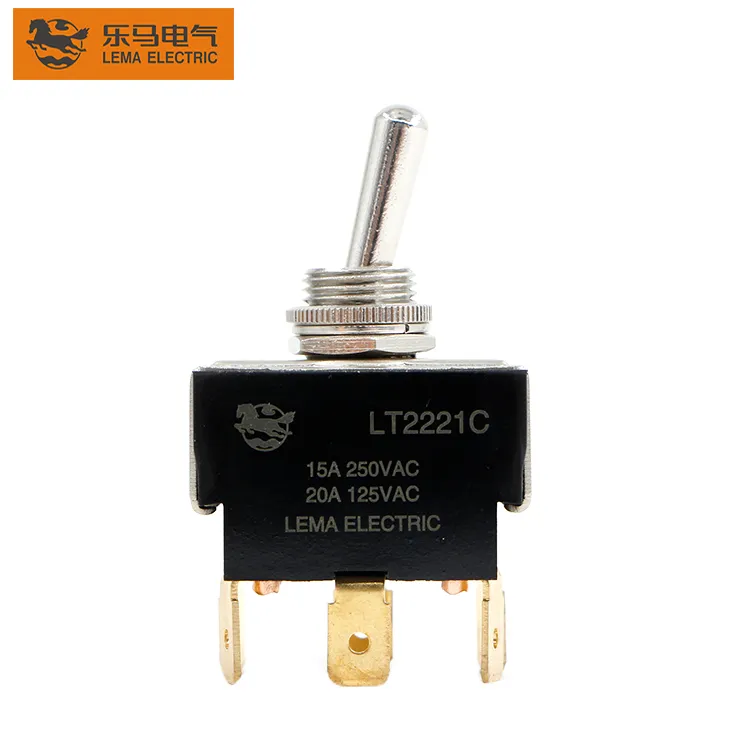
Use the LT1 series toggle switch page as a public starting point once the circuit form and mounting envelope are documented.
Send with the inquiry:
- Printed ON-OFF or ON-OFF-ON circuit form and safe-state note
- Voltage, steady current, load type, and inrush
- Cutout, panel thickness, and rear clearance
- Terminal style, volume, and sample timing
Product recommendation: request a documented LEMA review against the logic drawing. Do not approve a part from a lever photo alone.
Send a toggle-switch RFQ with the drawing, duty, volume, and sample timing.
## FAQs
Is ON-OFF the same as ON-OFF-ON?
No. ON-OFF is a two-state maintained path; ON-OFF-ON adds another maintained path or center-off logic and changes wiring and operator behavior.
When should an OEM choose ON-OFF-ON?
Choose it when the panel must select between two maintained circuits or needs a defined center-off between directions.
Can purchasing substitute circuit forms by appearance?
No. Lever look is not proof of contact logic; the printed circuit form on the drawing is the authority.
Does ON-OFF-ON always mean center-off?
Not always. Confirm whether the center is off or another maintained path against the selected model documentation.
How does momentary differ from ON-OFF?
Momentary positions spring back and are not maintained; they solve jog or test duties rather than steady on states.
What should an ON-OFF versus ON-OFF-ON RFQ include?
Include circuit form, safe state, load and inrush, cutout, terminals, environment, volume, and sample timing.
## References