
A custom foot-switch RFQ starts with the operator task and installed machine context. Document pedal behavior, circuit logic, mounting, cord routing, service access and sample checks before selecting a device.
Important: a pedal shape or a catalog image does not prove force, travel, rating, approval, ingress or life. Source note: verify the selected model documentation and the IEC 60947-5-1 publication scope before release.
– FAQ

Part 1. What belongs in a custom foot-switch RFQ?
Start with the operator task, machine function, circuit drawing, installation space and service plan. Those inputs make a request reviewable instead of relying on a product name.
| Input | Document | RFQ |
|---|---|---|
| Operator task | Actuation and release expectation | Yes |
| Circuit | Control logic and load context | Yes |
| Installation | Mounting, cord exit and access | Yes |
Use the manufacturer evaluation context for supplier-review questions.
Part 2. Which operator and pedal inputs should be captured?
Describe how the operator approaches the pedal, whether footwear or contamination changes access, the expected release behavior and any guarding or placement constraints. Record the installed task rather than a preferred appearance.
Part 3. How should circuit and cord requirements be recorded?
Supply the control drawing, required circuit state, cable exit direction, routing, strain-relief constraints and replacement access. A cord length or terminal description alone does not define the machine interface.
Part 4. Which mounting and service inputs matter?
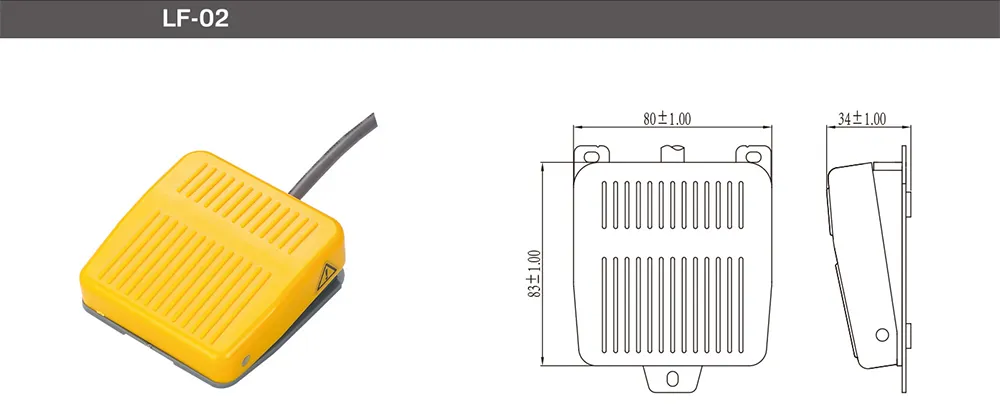
Review floor location, mounting interface, surrounding clearance, cleaning method, cable path and service removal. Treat the foot switch and its installed cord route as one review item.
Part 5. Why does a general guide not prove model suitability?
General RFQ guidance cannot establish a selected model’s force, travel, electrical duty, protection, approval or life. Confirm each required property from the selected documentation and system review.
Part 6. What should be checked on a sample?
Check a production-intent installation for operator access, release behavior, circuit response, cord routing, mounting and service removal. Keep the tested configuration with the release record.
Fit Boundary: this guide structures an inquiry and sample review; it does not certify a model or machine function.
Part 7. How can LEMA support an inquiry?

Use the Foot Switch product route after preparing the application and installation file.
Send a foot-switch RFQ with operator, circuit, mounting, cord and sample inputs.
## FAQ
What should a custom foot-switch RFQ include?
Include the operator task, circuit logic, mounting, cord route, service plan and sample requirements.
Does pedal appearance define the circuit?
No. The circuit drawing and selected device documentation define the intended behavior.
Which cord details matter?
Document exit direction, routing, strain relief, access and replacement constraints.
How should mounting be documented?
Provide the installed location, interface, surrounding clearance and removal path.
Can a general guide confirm ratings?
No. Required ratings and approvals must be confirmed from selected-model documentation.
What should be checked on a sample?
Check operator access, circuit response, cord routing, mounting and service removal.
## References