
Heating appliances rarely cook their switches at the headline cavity temperature. The component lives in a bracket zone warmed by conduction, convection, and duty cycling, and that local profile is the selection input. Measure it before shopping a maximum figure.
Part 1. Why is the switch ambient different from the cavity figure?
An oven cavity may run hot while the door switch position sits far cooler behind insulation, or a compact grill may soak its switch hotter than intuition suggests. Distance, insulation, and airflow decide, not the appliance’s rated cooking figure.
| Heat path | Mechanism | Design lever |
|---|---|---|
| Conduction | Bracket metal carries heat to the body | Isolating spacers and bracket material |
| Convection | Hot air pockets around the mount | Vent placement and orientation |
| Radiation | Line of sight to hot surfaces | Shields and gap design |
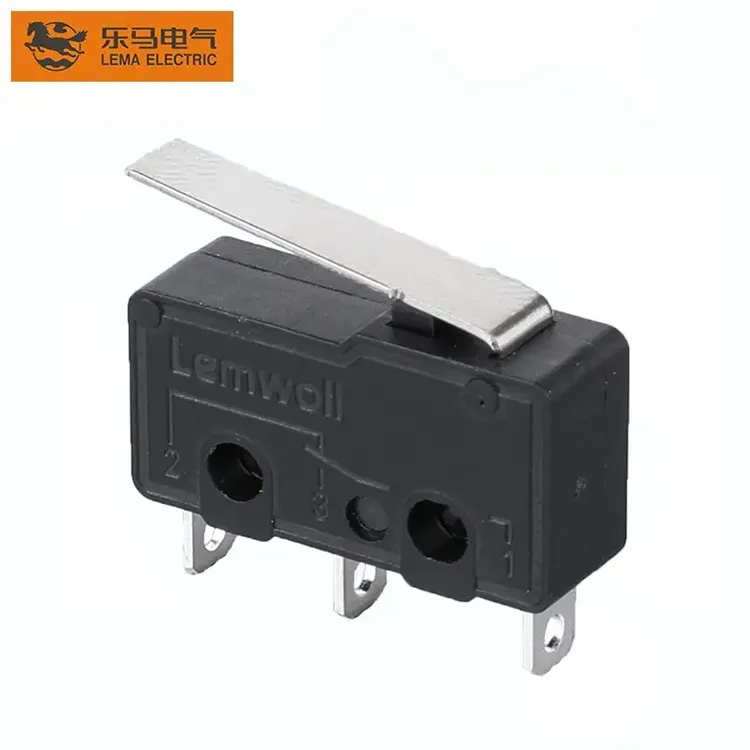
Families in the LEMA Micro Switch product line publish operating ranges per model, which only become useful once the local profile exists.
Part 2. How should the temperature profile be measured?
Instrument the actual switch position through the worst realistic cycle: preheat, full duty, and post-shutdown soak, when trapped heat often peaks. Log the profile rather than a single reading.
The interlock example in the water heater interlock guide shows how one appliance documented its duty conditions; the same record works for any heat-adjacent point.
Part 3. Which materials limit a switch at temperature?
Housings, seals, and internal parts age on Arrhenius time: hotter means faster. A thermoplastic body, an elastomer boot, and a lubricant each carry their own limit, and the assembly takes the lowest one.
- Check the housing material class against the measured peak.
- Treat boots and seals as the first parts to age at temperature.
- Ask how the operating range was established for the model.
- Plan replacement intervals where sustained heat is unavoidable.
Part 4. How do temperature and electrical load interact?
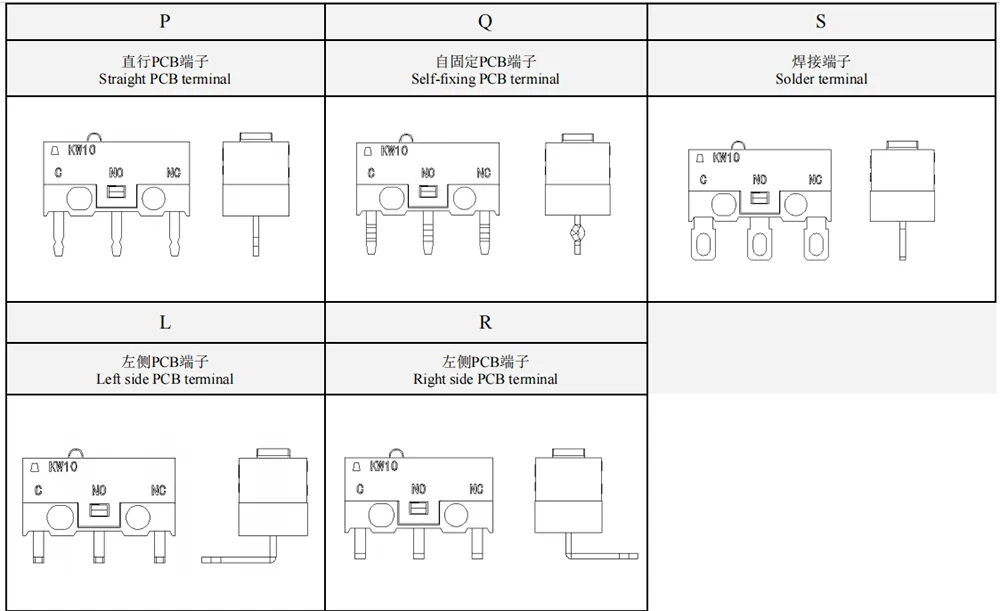
Electrical duty adds self-heating on top of ambient. A contact carrying meaningful current near its thermal ceiling has less margin than the same contact in a cool cabinet, so the two stresses must be reviewed together.
| Condition | Combined effect | Verification |
|---|---|---|
| High ambient, light signal load | Material aging dominates | Soak testing through duty cycles |
| High ambient, power load | Ambient plus self-heating stack | Terminal rise measured at temperature |
| Cycling extremes | Condensation and expansion stress | Cold-start and soak transitions |
Cold-side appliance points face the mirror problem; the refrigerator door switch guide handles condensation-driven selection.
Part 5. Which mounting choices manage the heat path?
Mounting design often buys more margin than a part change. Moving a bracket a short distance, adding a shield, or swapping bracket material can pull the local peak down meaningfully.
Keep the harness in the review: conductor insulation and strain relief share the same local ambient, and a heat-hardened wire jacket fails a product as surely as the switch.
Part 6. What belongs in the RFQ and Fit Boundary?
RFQ input checklist
- Measured or estimated switch-position temperature profile
- Duty cycle including post-shutdown soak behavior
- Load, inrush, and switching rate at temperature
- Mounting drawing with the heat path described
- Volume and sample timing
Fit Boundary
This guide selects against a measured temperature window. It does not prove a model’s limit, thermal endurance, or approval; model documentation and soak testing own those.
Part 7. How can LEMA support a high temperature inquiry?
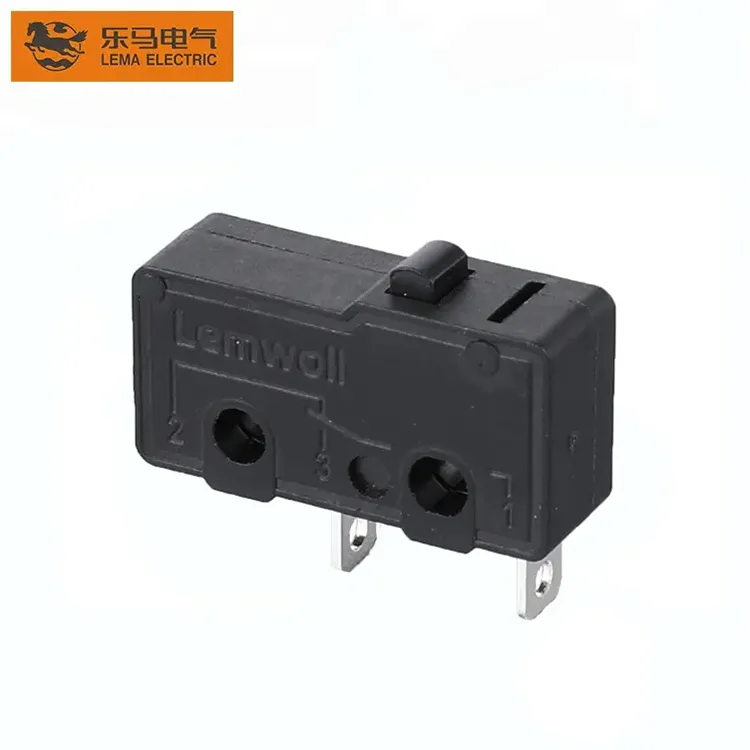
Raise the temperature window early in the inquiry. The KW12 series micro switch page is a public LEMA route for reviewing documented ranges against a measured profile.
Product recommendation: attach the temperature log and duty cycle so the response addresses the real window. Shopping a maximum figure without the local profile invites field aging surprises.
Send an OEM switch RFQ with the temperature profile attached.
FAQs
How hot does a switch position get in a heating appliance?
It depends on distance, insulation, and airflow rather than the cavity figure; instrumenting the actual position through a full duty cycle is the reliable answer.
Why does the peak often occur after shutdown?
Fans stop while stored heat keeps conducting outward, so bracket zones frequently see their maximum during the post-shutdown soak.
Which switch parts limit temperature capability?
Housing plastics, seal elastomers, and internal lubricants usually set the limit, and the assembly takes the lowest individual rating.
Does electrical load change the temperature question?
Yes. Self-heating from contact and terminal resistance stacks on ambient, so power loads need terminal rise checked at operating temperature.
Can mounting changes substitute for a higher rated switch?
Often. Isolating spacers, shields, and bracket material changes can reduce the local peak enough to keep a documented family in its window.
What should a high temperature RFQ include?
Include the temperature profile, duty cycle, load and inrush, mounting and heat path drawing, environment notes, volume, and sample timing.