ON-ON-ON Toggle Switch: Circuit Logic and Wiring
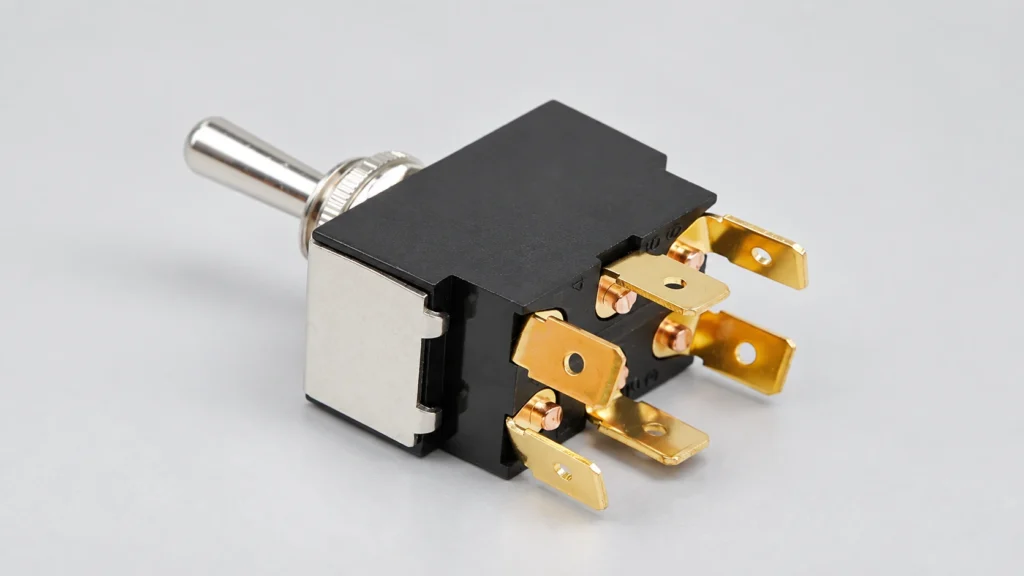
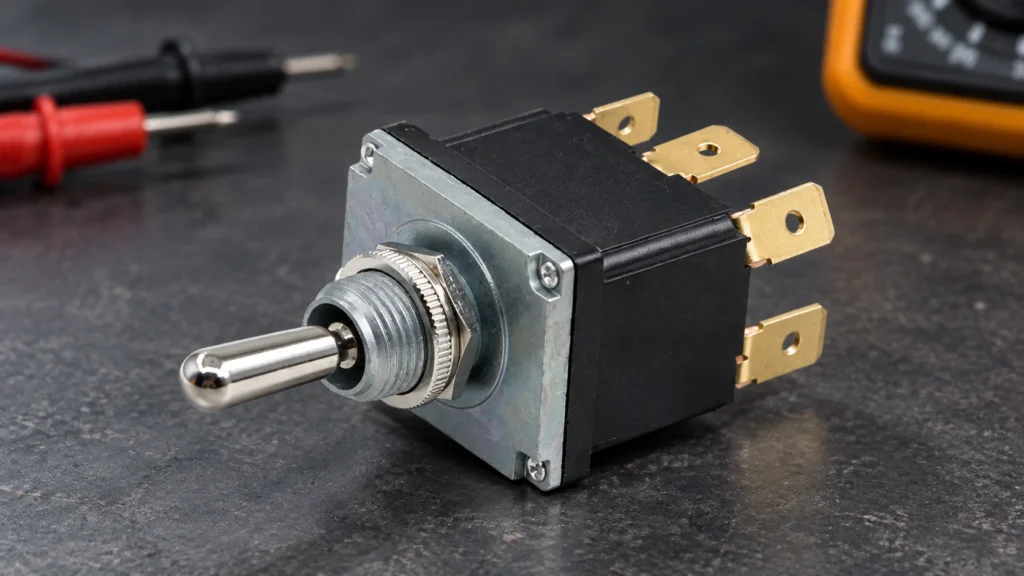
An ON-ON-ON toggle switch is a three-position selector with an active contact combination in all three lever positions. In the common DPDT six-terminal version, the two poles do not necessarily transfer in the same way at the center position: one pole may connect toward one end while the other connects toward the opposite end. That staggered center logic is what makes series/split/parallel and other three-mode circuits possible. Never wire it from an ON-OFF-ON diagram; identify every continuity pair on the exact switch first. This guide explains ON-ON-ON toggle switch logic, terminal mapping, bench testing and OEM selection. LEMA product photos illustrate the physical DPDT toggle form and six-terminal layout. The referenced LT3230C listing is ON-OFF-ON, so its exterior photograph must not be treated as proof of ON-ON-ON internal contacts. ON-ON-ON is a contact sequence, not an appearance Three-position toggles can share the same lever, bushing and terminal footprint while having different internal sequences. ON-OFF-ON opens both poles in the center. ON-ON uses two maintained positions. Momentary functions are shown with parentheses, such as (ON)-OFF-(ON). ON-ON-ON maintains a defined connection in every position. The ordering code and contact table, not the number of detents or terminals, distinguish them. MarkingLever positionsCenter behaviorDo not assumeON-ONTwo maintainedNo center detentNot a three-mode selectorON-OFF-ONThree maintained or mixedBoth poles normally openCenter is not an active routeON-ON-ONThree maintainedStaggered or defined active contactsCenter pattern is not universal(ON)-OFF-(ON)Momentary endsOpen centerLever does not stay at the ends Some suppliers publish more than one ON-ON-ON center-contact pattern. A guitar-wiring source may call them Type I and Type II; industrial datasheets may use a contact truth table. Both descriptions mean the assembler must verify the exact variant. A familiar six-lug drawing from another...
Leggi di più