
Micro switches and reed switches solve different sensing problems: one changes state from controlled mechanical movement, while the other changes state from a correctly positioned magnetic field. Select from the installed mechanism, contact/load requirements, mounting tolerance, environmental exposure, and validation plan—not from a generic “non-contact” label.
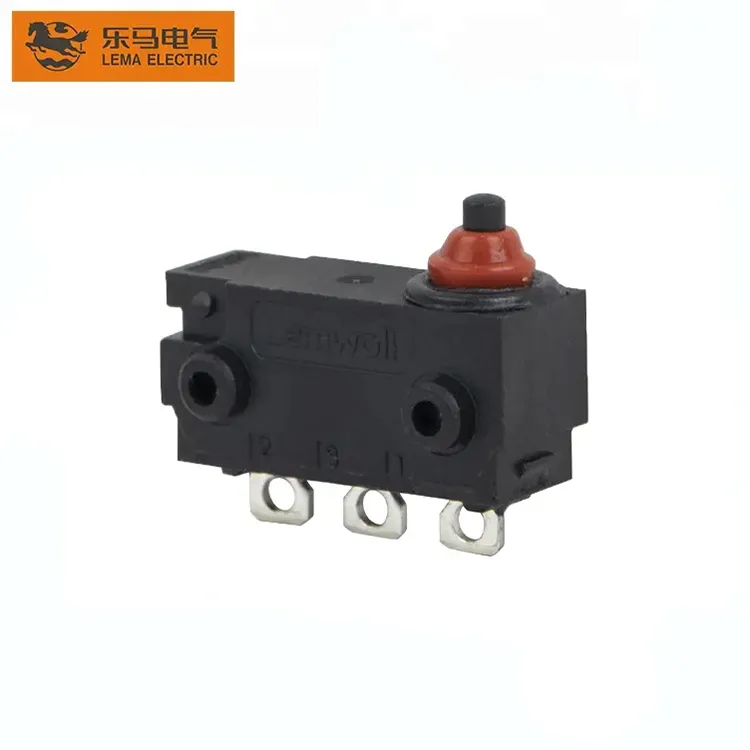
Part 1. What is the functional difference between micro and reed switches?
A micro switch uses a plunger, lever, roller, or button to produce a snap action at a defined mechanical travel. A reed switch is actuated by a magnetic field; its result depends on magnet strength, position, orientation, and the installed gap.
| Decision field | Micro switch | Reed switch |
|---|---|---|
| Actuation input | Mechanical travel | Magnetic field and gap |
| Primary integration question | Actuator path and overtravel | Magnet geometry and repeatability |
| Selection evidence | Model drawing and circuit duty | Sensor/magnet assembly data and circuit duty |
Part 2. When does mechanical actuation favor a micro switch?
A micro switch fits when a moving feature can provide repeatable mechanical travel and the design can control force, side load, and overtravel. Cams, doors, levers, and mechanism end positions are typical examples.
For variants of the mechanical interface, compare the button actuator behavior and the long-arm mechanical actuation guides.
Part 3. When does a magnetically actuated reed switch fit better?
A reed switch can fit when a physical gap or enclosure boundary makes mechanical contact undesirable and the assembly can hold the magnet geometry within the required range. The magnet, housing, cable, and mounting tolerance must be reviewed together.
Neither magnetic actuation nor a sealed component label removes the need to validate the final enclosure and operating environment.
Part 4. How do contact behavior and load affect the choice?
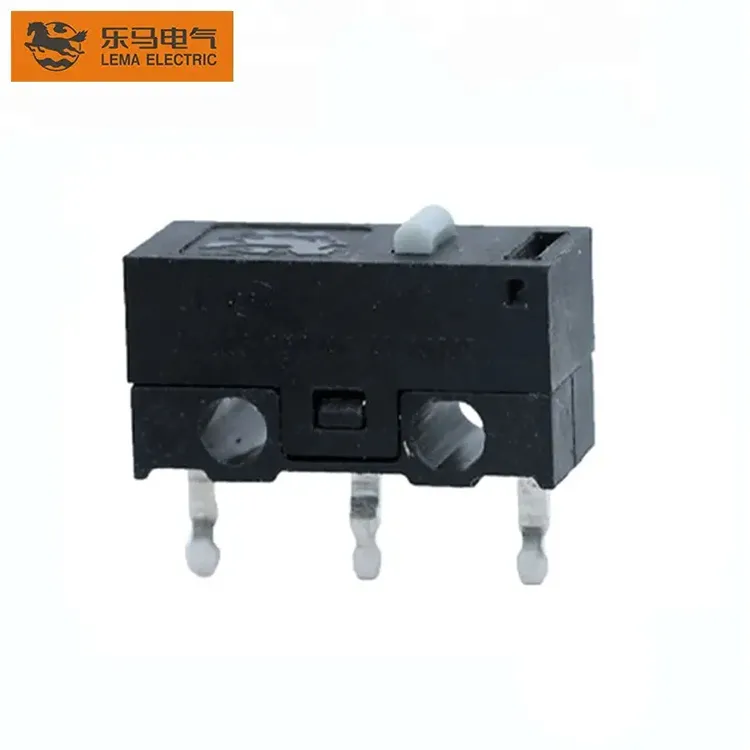
Contact load, inrush, switching frequency, and controller input all affect the choice. A change in actuation technology does not authorize a higher load or eliminate protection requirements.
| Review item | Question | Risk if ignored |
|---|---|---|
| Function | Required circuit or sensing state | Prevents the wrong control behavior |
| Mechanical interface | Actuator travel or sensing geometry | Prevents missed operation |
| Electrical interface | Voltage, current, load type, controller input | Prevents contact mismatch |
| Environment | Contamination, vibration, temperature, ingress target | Sets the validation scope |
Use model-specific documentation and run a complete-circuit test before production release.
Part 5. Which mounting and environmental checks matter?
Mechanical designs need controlled actuator travel, bracket stiffness, and clearance. Magnetic designs need stable magnet position, orientation, and air-gap control. Vibration, temperature, contamination, and cable routing can shift either system away from its intended operating point.
- Test tolerance extremes, not only nominal assembly.
- Check false-trigger behavior under vibration.
- Validate the final enclosure and cable exit.
- Record the component and mating-part revision together.
Part 6. What belongs in the selection RFQ and Fit Boundary?
RFQ input checklist
- Required function and safe contact state
- Mechanical path or magnet geometry and tolerance
- Load, voltage, current, and controller input
- Mounting drawing, environment, validation target, volume, and sample timing
Fit Boundary
This comparison helps establish a selection path. It does not prove that a component meets a safety function, ingress rating, or application approval without the required model and assembly evidence.
Part 7. How can LEMA support a mechanical-switch inquiry?
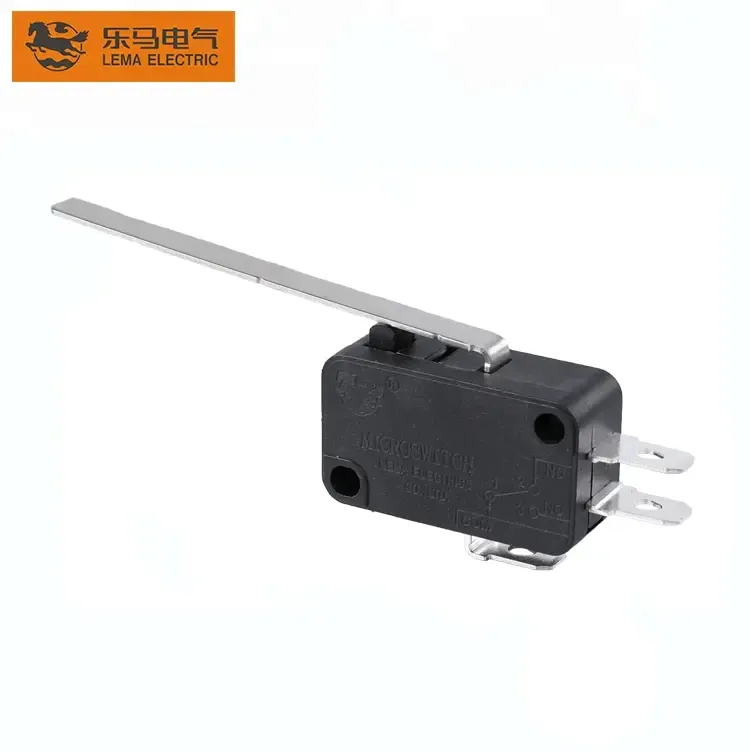
When the mechanism calls for a mechanical snap-action review, start with the LEMA Micro Switch product line. Provide the actuation drawing and electrical function so the inquiry can be matched to the actual assembly.
Product recommendation: ask LEMA to review the mechanical-switch option when controlled travel and a documented contact state are available. Do not substitute it for a reed-sensing system without evaluating the mechanism and circuit.
Send an OEM switch RFQ with the selection inputs.
FAQs
What is the main difference between a micro switch and a reed switch?
A micro switch changes state through a mechanical actuator, while a reed switch changes state when a correctly positioned magnetic field acts on the reed contacts.
Is a reed switch always better for sealed sensing?
No. A sealed sensing requirement still needs a complete assembly review that covers the enclosure, cable exit, magnet position, and test method.
Does a micro switch need direct contact?
Its actuator normally needs controlled mechanical travel from a cam, lever, plunger, or similar moving feature.
Which switch is better for high contact load?
Choose from model-specific electrical documentation and the load profile. The actuation technology alone does not establish the allowed load.
Can vibration cause a false signal?
Either technology can be affected if the mechanism, magnet gap, or actuator travel sits too close to its change point. Validate the complete assembly.
What should an OEM comparison RFQ include?
Provide function, safe state, actuation path or magnet geometry, circuit load, environment, mounting drawing, volume, and validation target.