Parallelschaltung von Mikroschaltern: Warum sich die Strombelastbarkeiten nicht addieren
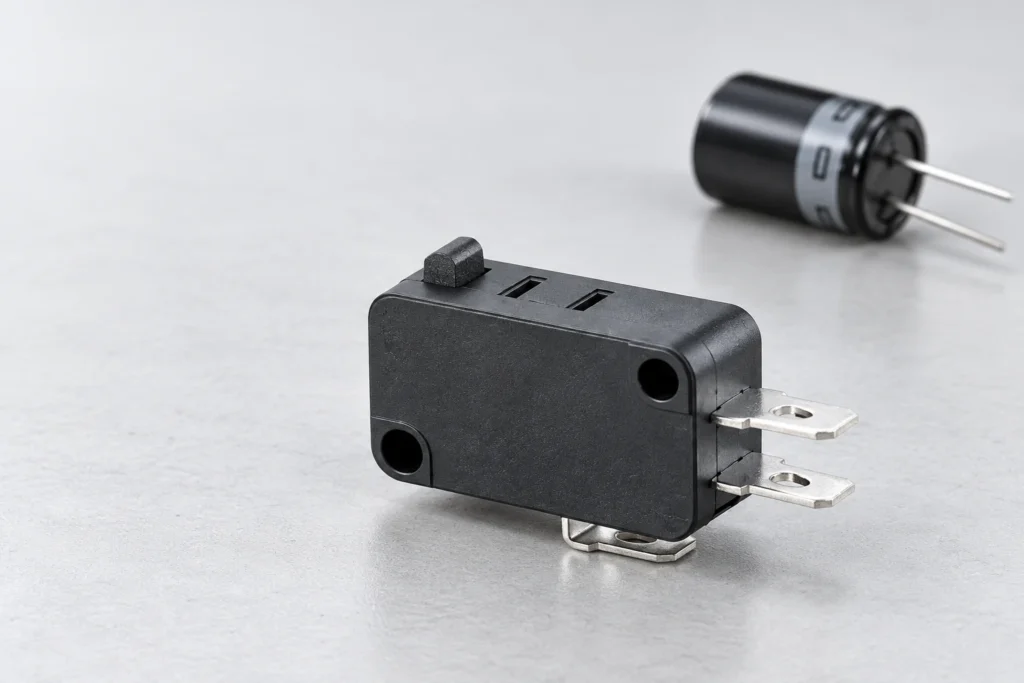
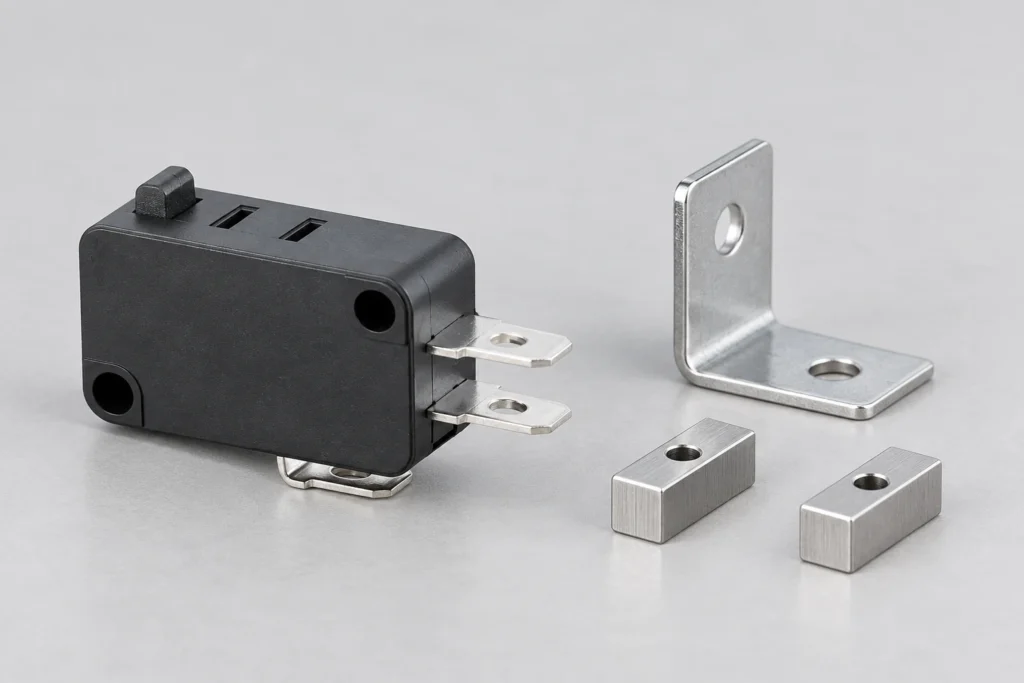
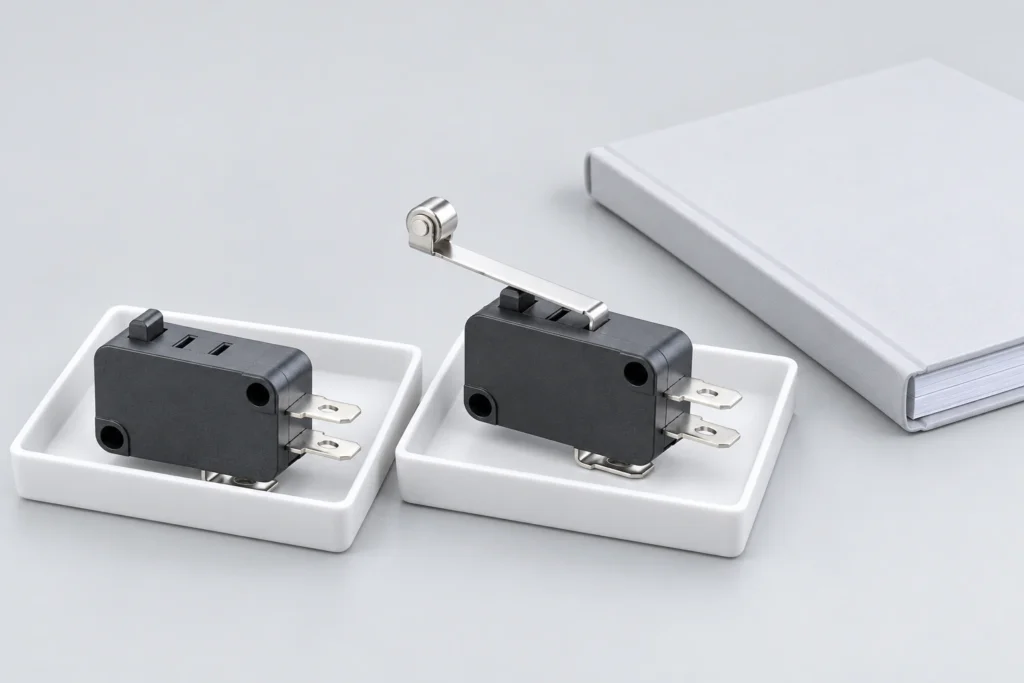
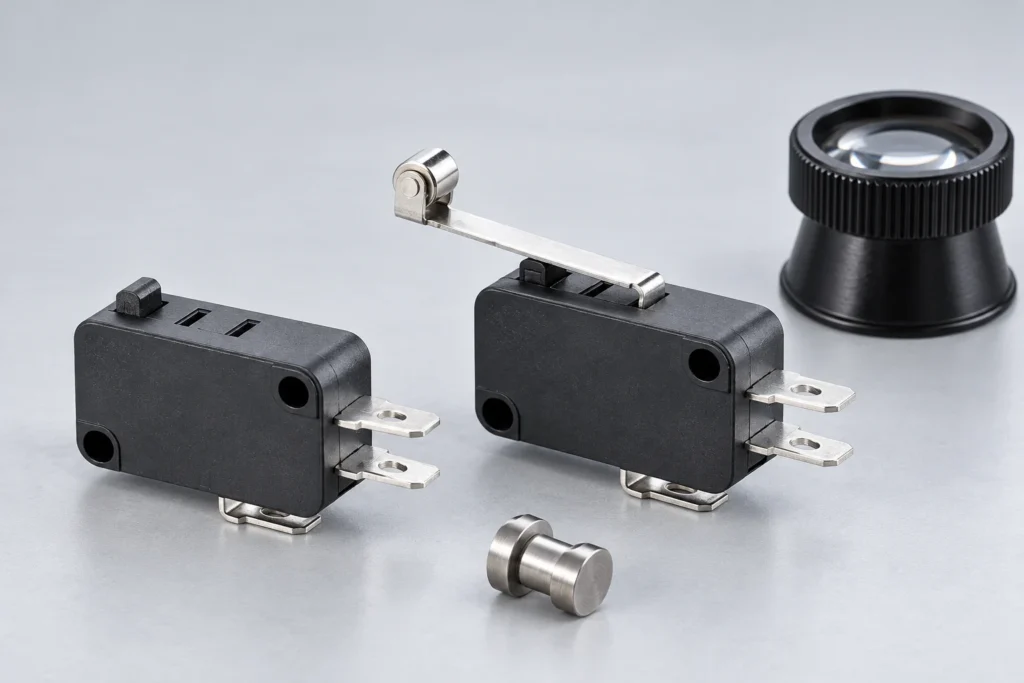
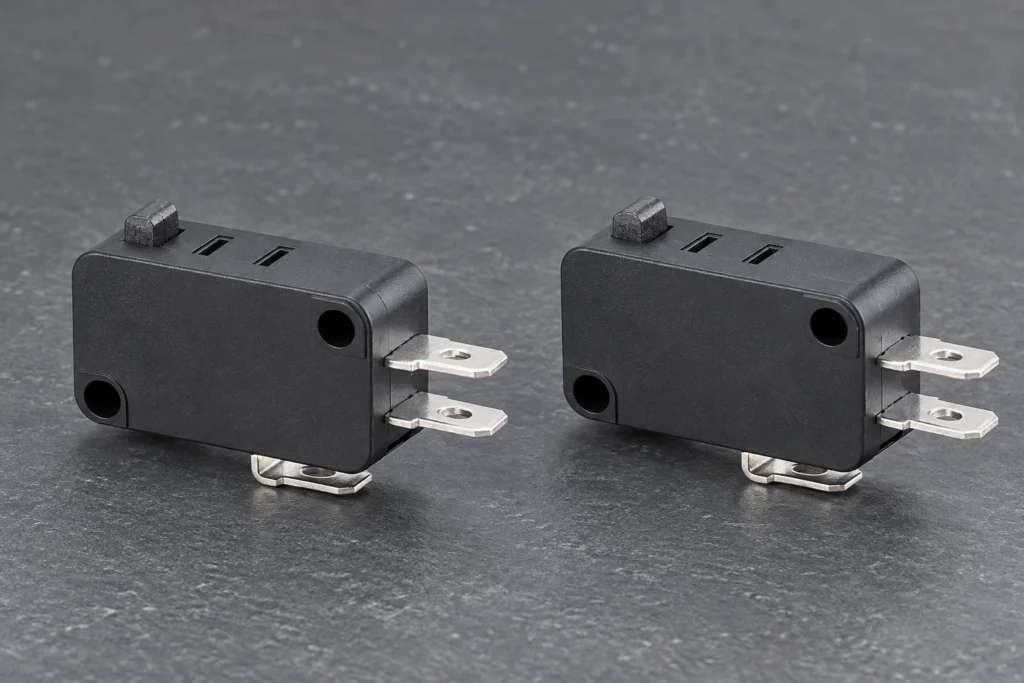
Micro switch parallel contacts should not be used to add current ratings unless the manufacturer explicitly supports the arrangement and its conditions. Two contacts do not necessarily close together, share current equally or open together. The first contact to close and the last to open may face a different duty from the steady parallel combination. For an OEM build, define the purpose of paralleling, examine each credible contact state and select a supported switching arrangement instead of treating two catalog ampere values as arithmetic capacity. Clarify the reason for a parallel path A proposal to connect contacts in parallel can start with several different problems: insufficient current capacity, a desire to keep a circuit available, or an attempt to reduce resistance. These are separate objectives. Write down the actual requirement before changing the harness. A circuit that remains energized after one contact sticks may satisfy an availability objective while violating the intended stop behavior. Draw every contact, common terminal and wire connection. Identify whether there are two separate switches, two independent poles in one device, or the NO and NC terminals of an SPDT mechanism. Those arrangements cannot be treated as equivalent. In particular, the two throws of an SPDT switch are alternate destinations; joining them does not create two independently specified simultaneous closed poles. Use the micro switch wiring guide to establish the normal terminal logic before discussing a changed topology. Confirm the actual variant and diagram from the supplier. The KW7 family provides a physical product reference, but its appearance does not establish pole independence, synchronized operation or permission to parallel contacts for a higher load. Close view of two separate KW7 specimens with unconnected terminals. Product-reference illustration;...
Mehr lesen