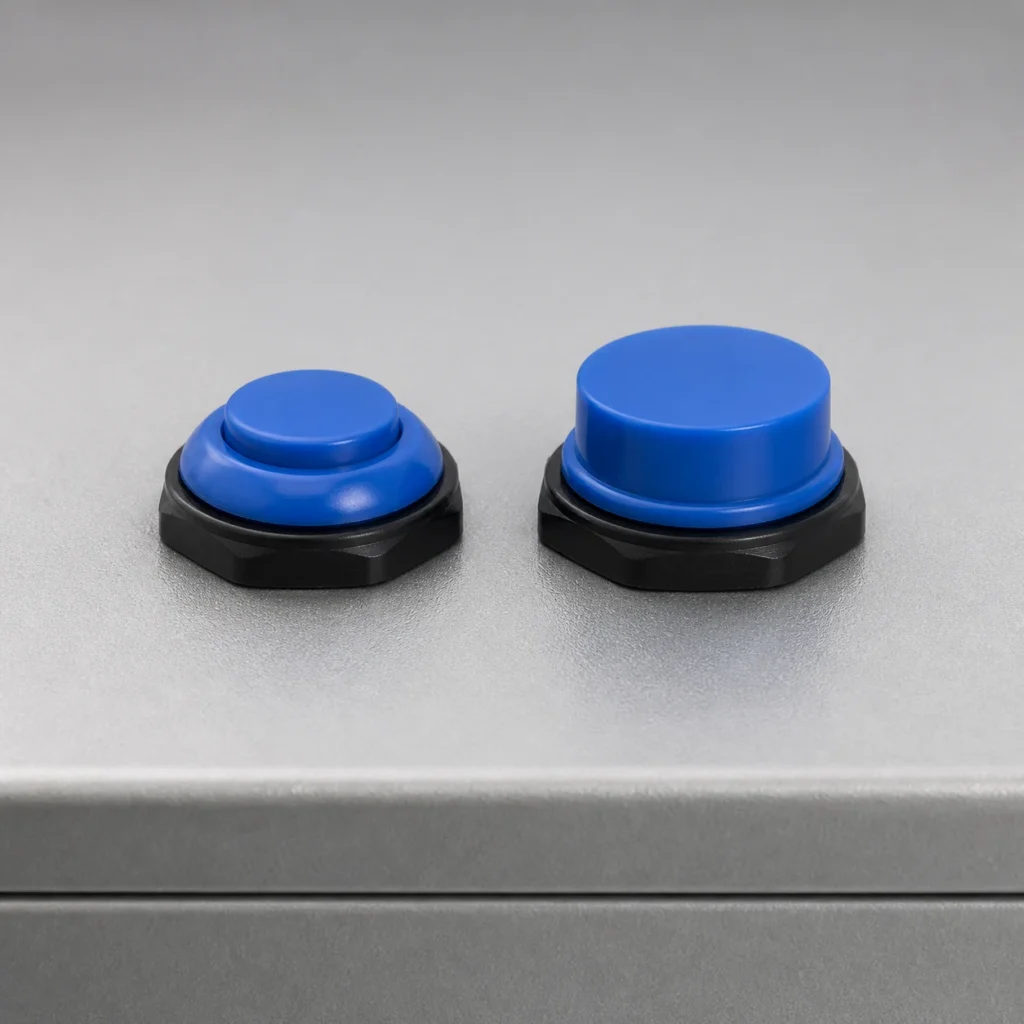
Bouton-poussoir à action momentanée ou maintenue : comment choisir
A momentary vs maintained push button decision comes down to what should happen after the operator releases the control: a momentary button acts only during the press, while a maintained button keeps its changed state until it is actuated again. That physical difference should be decided before contact form, control logic, indicator feedback, ratings, mounting, and the final model are selected. It is an easy distinction to blur because both choices may look like ordinary panel buttons. Start with the operator's required action, then confirm how the circuit and selected model turn that action into a usable command. ContentsMomentary vs. maintained push buttons: the direct answerWhat changes when the button is released?Do not confuse action type with NO/NC contactsChoose by the job of the commandWho should retain the state: the switch or the control system?Decide whether visible feedback is requiredWhat to verify on the final modelExplore the PBS Series after defining the requirementFAQs Momentary vs. maintained push buttons: the direct answer Momentary action exists only while the button is actuated; maintained action, also called latching action, holds its changed state until the next actuation. The question is not which style is generally better. It is whether the panel command needs a short, deliberate input or a state that remains at the switch. Decision pointMomentary push button switchMaintained push button switch During the pressThe command changes while the operator holds the button.The command changes when the operator actuates the button. After releaseThe button returns and the temporary command ends.The changed switch state remains until the next actuation. Useful first questionShould this command exist only while pressed?Should this control retain its state without a continued press? Different operator outcomes follow from that...
Lire la suite