
A momentary toggle is a hold-to-run control, not a maintained on switch with a spring slogan. Define which positions return, how long the operator holds, and what load flows during that hold before requesting samples.
Important: Do not substitute a maintained toggle for spring-return jog or test duty. Confirm return-to-center behavior against the model documentation before sampling. Source note: IEC 61058-1 publication scope and selected-model documentation.
– FAQs
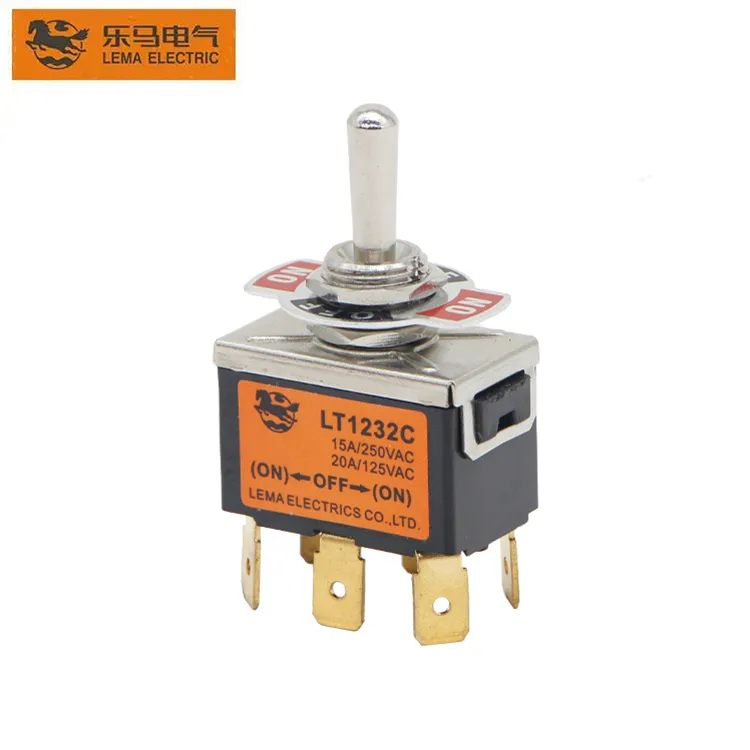
Part 1. When does a panel need momentary toggle action?
Momentary action fits jog, inch, test, reset, or start pulses where a maintained lever would leave a hazardous or unintended live path.
| Decision field | Input to document | Send with quote |
|---|---|---|
| Return map | Which positions spring back | Yes — state diagram |
| Hold duty | Typical hold time and rate | Yes — duty note |
| Load | Voltage, current, inrush while held | Yes — electrical summary |
| Panel | Cutout and guard needs | Yes — mounting drawing |
Index public families through the LEMA Toggle Switch product line after the return map is clear.
Part 2. How should spring-return positions be specified?
State whether one side, both sides, or only the outer positions are momentary. Mixed maintained/momentary forms exist in industry catalogs and must be called out explicitly.
If the panel actually needs a maintained path, stop and use the maintained logic comparison instead of ordering a spring-return part by habit.
Part 3. How do jog loads and hold time affect contact review?
Contact stress during a jog can exceed steady running current when motors or lamps start under the held position. Record inrush and how often the operator pulses the control.
| Duty note | Capture | Risk if missed |
|---|---|---|
| Inrush | Make current while held | Contact wear |
| Pulse rate | Operations per minute | Heat accumulation |
| Hold time | Seconds typical / max | Unexpected thermal rise |
Low-voltage panel context is expanded in the 12V OEM panel toggle planning guide.
Part 4. Which mounting and guard inputs matter?
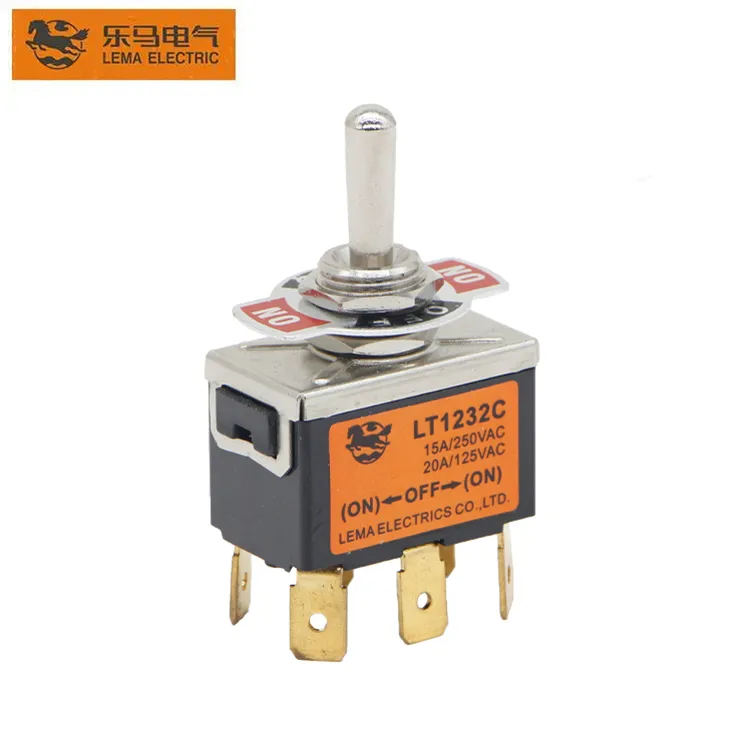
Spring-return levers still need full travel clearance. Accidental bumps matter more on jog controls, so consider a guard or cover when the panel sits in a high-traffic area.
- Confirm bushing and panel thickness from the model drawing.
- Reserve clearance for return travel.
- Note any safety cover requirement early.
- Three-position spring-to-center packages also need the 3-position center-off selection checklist.
Part 5. How should labeling prevent maintained substitutions?
BOM language must say “momentary” or “spring-return” with the state map. A generic “toggle” line invites substitution with a maintained ON-OFF that leaves equipment running after the operator releases the lever.
Part 6. How is momentary duty validated before release?
Validate return-to-rest on the production panel, confirm the load drops when released, and cycle representative jog pulses at temperature extremes if the application demands it.
Fit Boundary: this guide plans momentary OEM toggle selection. It does not certify return force, cycle life, or electrical ratings for any model.
Part 7. How can LEMA support a momentary toggle inquiry?
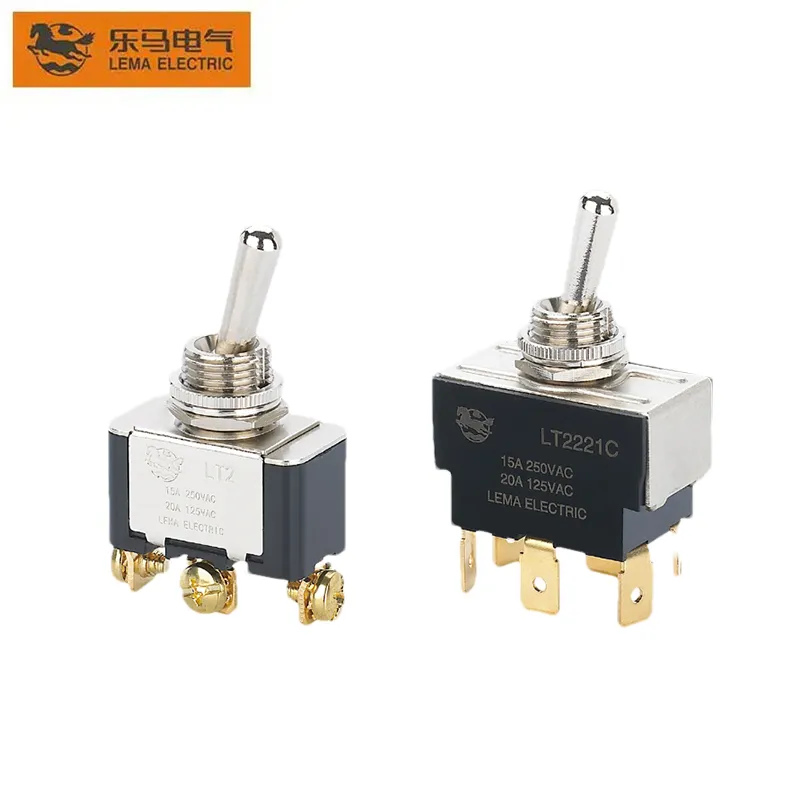
Use the LT1 series toggle switch page as a public starting point once the return map and duty notes are written.
Send with the inquiry:
- Momentary position map and hold-duty notes
- Voltage, current, inrush, and pulse rate
- Cutout, clearance, and any guard requirement
- Terminal style, volume, and sample timing
Product recommendation: request a documented LEMA review against the spring-return diagram. Do not approve a part from a “reset” nickname alone.
Send a toggle-switch RFQ with the duty package attached.
## FAQs
What is a momentary toggle switch?
It energizes a path only while the lever is held and springs back when released, suiting jog, test, or pulse duties.
Is momentary the same as center-off?
No. Center-off can be maintained; momentary refers to spring-return action that does not stay in the held position.
Can I use a momentary toggle for a continuous accessory?
Only if the design intentionally requires hold-to-run. Continuous accessories usually need maintained logic.
Do momentary toggles wear faster?
Duty depends on load, inrush, and pulse rate; confirm expectations against the selected model documentation rather than assuming a life number.
Should jog toggles use a safety cover?
High-traffic panels often need a guard to reduce accidental bumps; document the clearance impact early.
What should a momentary toggle RFQ include?
Include the return map, hold duty, load and inrush, cutout, terminals, volume, and sample timing.
## References