
A safety foot switch is not defined by a yellow hood or a warning symbol. A guarded foot control can reduce unintended pedal activation, but safe machine operation depends on the whole system: the machine’s hazards, point-of-operation safeguarding, control logic, fault response, mounting position, operator access, and validation. For a buyer comparing guarded pedals, first specify what accidental actuation the cover must resist and what intentional foot movement it must allow. Then confirm the exact pedal’s mechanical and electrical details and have the machine safety function assessed by a qualified person. This guide uses LEMA’s real guarded LF-series foot-switch construction as a selection example without claiming an unverified safety certification.
What a guarded foot switch does
A foot switch lets an operator initiate or control a machine function while keeping the hands free. A protective hood or shroud can make it harder for a falling object, another person’s step, or an unintended sideways movement to press the pedal. The shape, opening, side walls, and location matter: a cover that looks substantial in a catalog may still allow an object to enter from the front or a shoe to reach the pedal unintentionally. The real risk must be tested at the intended installation.
For mechanical power presses, the US OSHA foot-control guidance warns that foot controls leave the operator’s hands free and do not themselves separate hands from the point of operation. It also identifies inadvertent pedal activation as a hazard and calls for guarding and other safeguards in relevant press applications. That is a press-specific US regulatory context, not a universal certificate for every foot switch sold worldwide. The finished machine’s jurisdiction and applicable standards must be checked.
A pedal hood protects only its own actuation space. It cannot prevent reach-in at a die, control a hazardous motion after a fault, replace a properly designed emergency-stop function, or verify stopping time. Treat it as one risk-control element. If a proposed application involves a press, shear, cutting machine, or other high-consequence motion, the complete safeguarding arrangement must be designed before selecting the foot device.
Guarded pedal vs unguarded pedal
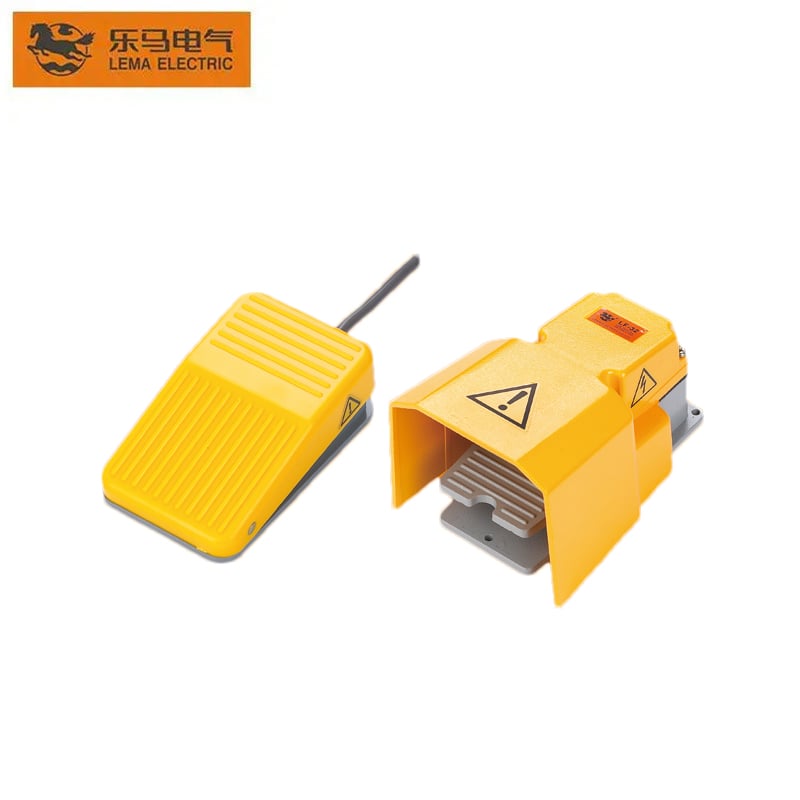
LEMA’s LF-series gallery includes both an exposed pedal and a covered pedal. The exposed style can be easier to access and clean, but it may be more vulnerable to unintended contact in a busy floor area. A covered design can reduce some accidental actuation paths, yet the hood can also change shoe clearance, approach angle, visibility, cleaning access, and how operators stand. The right choice is an application decision, not a visual preference.
Consider how a real shoe enters the opening while the operator wears required protective footwear. The operator should not have to twist the ankle or balance on the edge of the foot to actuate the control. At the same time, the opening should not be so exposed that a dropped tool, moving cart, or nearby worker can easily trigger the pedal. A fixed, repeatable mounting position is important: a loose pedal can slide under the machine or be pulled by its cable. Cable routing must avoid creating a trip hazard or a path that drags the device into a different position.
Selection table: questions the hood alone cannot answer
| Design issue | What to inspect on a guarded pedal | What still needs system validation |
|---|---|---|
| Unintended entry | Front opening, side-wall coverage, clearance above pedals, resistance to falling or sliding objects. | Credible accidental-contact scenarios in the actual work area. |
| Intentional access | Footwear fit, approach direction, foot rest, pedal force and travel. | Operator trials in the intended posture and shift conditions. |
| Pedal behavior | Momentary or maintained action, return movement, single or dual pedal layout. | Machine logic, anti-repeat behavior and restart after release or power loss. |
| Electrical interface | Exact contact form, rating, terminals, cable and connector. | Controller input, short/open faults, diagnostics and stopping response. |
| Environment | Housing, seal, cable exit, debris collection and cleaning access. | Actual fluid, dust, floor cleaning, temperature and maintenance conditions. |
| Machine safeguarding | The hood only covers the pedal. | Point-of-operation guards, interlocks, emergency stop and applicable safety performance. |
No universal numerical force, opening size, protection rating, or safe distance can be inferred from a photograph. These parameters belong to the exact product drawing and the machine risk assessment. Ask the supplier for model-specific data, then test the whole installation. A specification that says only “yellow safety foot pedal” leaves the critical requirements undefined.
Placement and mounting in the work area
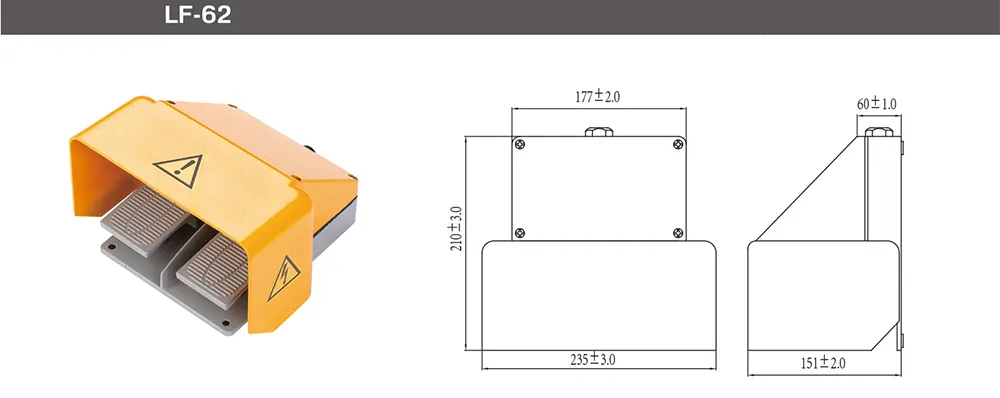
Place the control where the intended operator can actuate it while remaining in a stable posture and maintaining visibility of the work. Avoid locations where another worker can step on it, where stock or scrap can fall into it, or where a forklift, trolley, or cable can move it. Determine whether the foot switch will be floor-mounted, fixed to a machine stand, or held by a bracket. Evaluate the mounting hole pattern and fastening method; the illustrated LF-62 drawing shows geometry for one variant, but the exact dimensions and tolerances must be confirmed from the current controlled drawing before drilling or ordering a fixture.
Do not solve a point-of-operation hazard merely by placing the pedal farther away. A worker can still reach into a dangerous area while operating a foot control, especially when hands are needed to position material. The machine may require fixed or interlocked guards, presence sensing, two-hand controls, or other measures appropriate to its risk. The US mechanical-power-press rule includes specific foot-control and point-of-operation provisions for equipment in its scope. Other machine types and jurisdictions may have different requirements; never copy a regulatory checklist without confirming applicability.
Keep the floor around the pedal dry and clear. Provide enough cable length for the approved location but not loose loops that invite trips or accidental repositioning. Protect the cable at the housing exit, route it away from crush and cut points, and identify the connector so a replacement cannot be plugged into the wrong circuit. LEMA’s foot-switch connector guide covers connector matching, while the pedal-force and ergonomics guide helps evaluate the human side of repeated operation.
Single and dual pedals: confirm the control sequence
A dual-pedal enclosure does not automatically mean a two-channel safety function. It may provide two ordinary control inputs, two machine directions, or another arrangement specified by the OEM. Determine what each pedal commands, whether simultaneous actuation is possible, and what the controller must do if both are pressed, one sticks, or a wire breaks. Labels should describe the real action and remain visible after installation. If a safety function depends on independent channels, redundancy and diagnostics must be shown by the complete design, not guessed from the number of pedals.
For a maintained or latched pedal, a released foot may not return the contacts to their previous state. For a momentary pedal, return behavior must be tested under realistic footwear, debris, and wear. The difference matters for restart prevention and operating procedures. LEMA’s maintained-versus-momentary foot-switch guide addresses this contact-action choice. Select the action from the machine control requirement, not from habit.
Consider what happens after supply loss and restoration. A machine should not initiate hazardous movement simply because the pedal remains held or because the controller reads a stale signal. Also examine a cable short, open circuit, stuck contact, broken return mechanism, and a pedal physically jammed under the hood. Those faults must be handled by the machine’s approved safety architecture when they affect safety.
Safety certification is not a color or cover shape
Product pages sometimes use words such as “safety,” “guarded,” or “industrial.” They can describe an intended use or a physical feature, but they do not by themselves identify a certified safety component. For a machine safety function, request the exact model’s declaration, certificate where applicable, performance data, test report, and installation instructions. Confirm the certificate actually covers that model and intended use. Do not transfer a claim from a different pedal or a similar-looking supplier part.
ISO 13849-1:2023 provides principles for designing and integrating safety-related parts of control systems. Its public abstract makes clear that the required performance level is determined for the application; the standard does not assign one universal level to a foot switch. An LF-series product photo cannot establish a PL, category, diagnostic coverage, or probability of failure. A qualified machine-safety engineer must make and validate the risk-based decision for the complete input, logic and output path.
For available physical constructions, inspect the LEMA LF-series foot-switch product page and request the exact LF variant’s current data. The broader electric foot-switch selection guide covers ordinary functional selection. This article adds the guard and safety-system questions without implying that a guarded LEMA variant is certified for a particular hazardous machine.
Acceptance checks before release
- Define the hazard. Record the hazardous motion, who can reach it, and what an accidental pedal press could cause.
- Verify the exact product. Match model number, hood geometry, pedal count, contact action, cable, connector, ratings and drawing revision.
- Test physical access. Try intended footwear and credible accidental contacts at the proposed mounting point without energizing the hazardous machine.
- Inspect the installation. Fix the device in place, manage the cable, check floor conditions and confirm maintenance access.
- Validate logic. Exercise each pedal state, simultaneous actuation, release, power restoration, disconnected wire and relevant faults under an approved procedure.
- Validate safeguarding. Confirm point-of-operation protection and the required safety function independently of the pedal hood.
- Control substitutions. Treat a change in hood, switch mechanism, contacts or connector as a design change requiring review.
Inspection after installation is not optional. Check that the hood has not been removed or bent, debris has not lodged under it, the pedals return correctly, and the cable has not been crushed. Set inspection intervals from the machine risk assessment and observed service conditions. A machine that passes once in a clean lab may not stay safe on a production floor without maintenance and change control.
Video: guarding the machine, not only the pedal
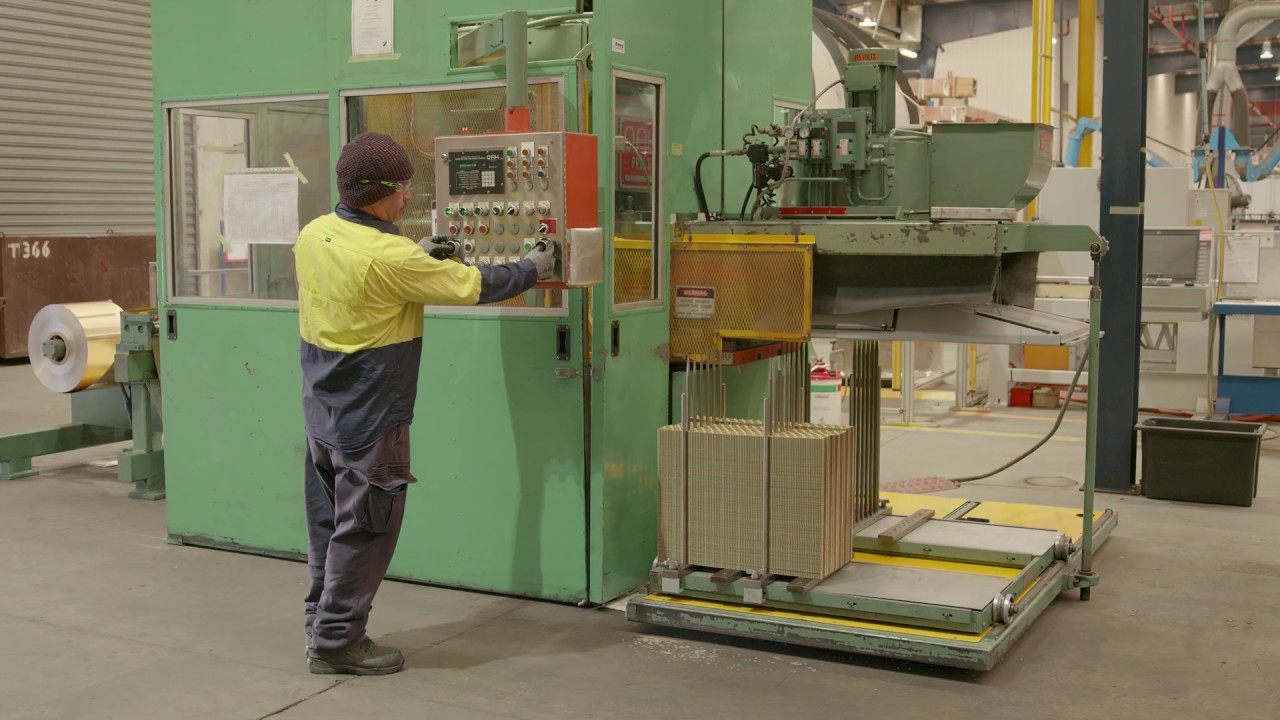
The following SafeWork NSW video on machine guarding explains guarding as a broader workplace control. It is included to reinforce the distinction between a hood over the foot control and protection at the machine’s danger point; it does not certify any LEMA product.
Frequently asked questions
Does a guarded foot switch make a press safe?
No. It can reduce some unintended pedal activation, but the press still needs appropriate point-of-operation safeguarding, control design, inspection and validation under the applicable rules.
Is a yellow hood proof of safety certification?
No. Verify the exact part’s documentation and the complete machine safety function. Color, warning symbols and marketing names are not certification evidence.
Can two pedals be used as two safety channels?
Not merely because two pedals are present. The contacts, wiring, logic, diagnostics and whole function must be designed and validated for that purpose.
Where should a guarded foot control be installed?
At a fixed, accessible position that supports stable operator posture and is protected from unintended steps, falling objects, moving equipment and cable damage, as determined by the machine risk assessment.
Conclusion
Choose a guarded foot switch by the actual ways a pedal might be actuated unintentionally, the operator’s intended foot movement, and the exact product construction. Then separately design and verify the machine’s point-of-operation safeguards and safety-related control system. The LF-series photos show real covered and exposed options, but only model-specific evidence and whole-machine validation can establish suitability.