
Actuator choice is a motion-matching exercise, not a styling decision. Lever, roller lever, plunger, and button actuators translate the same snap mechanism to different travel directions, forces, and tolerances. Start from how the moving part approaches the switch, then keep the operating point stable.
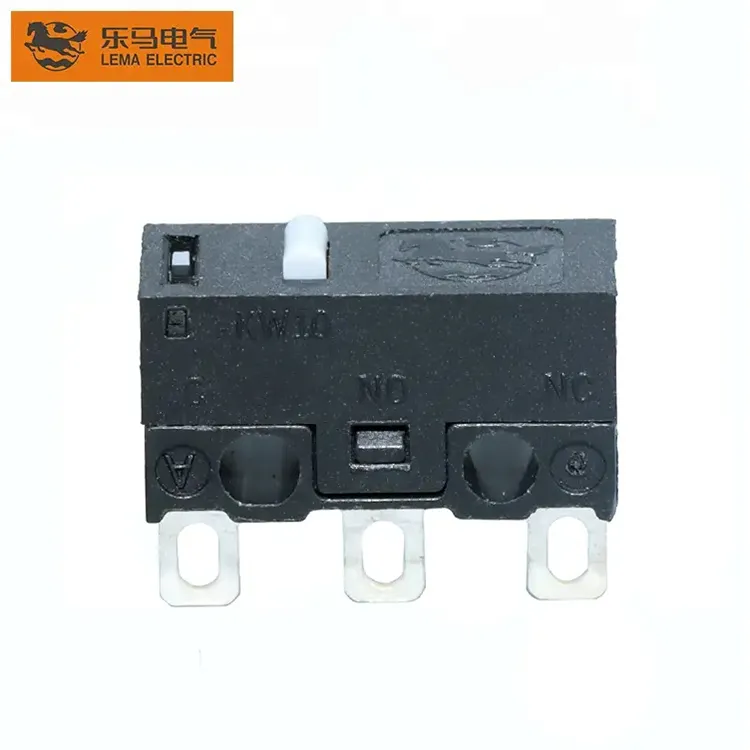
Part 1. How does an actuator change switch behavior?
The actuator converts mechanism motion into internal plunger travel. Each style changes three things at once: the force the mechanism must supply, the travel required to operate, and the sensitivity to misalignment.
| Actuator | Motion it suits | Watch-out |
|---|---|---|
| Pin plunger | Direct in-line press | Travel must be tightly controlled |
| Lever | Cams and rotating parts | Force capability drops as length grows |
| Roller lever | Sliding cam surfaces | Side load on rough profiles |
| Button | Panel or operator press | Needs overtravel protection |
Anchor the review in the LEMA Micro Switch product line so each candidate style maps to a documented series.
Part 2. When is a plain lever or long lever right?
Plain levers absorb approach-angle variation and reduce the force a mechanism must deliver. Longer arms trade operating force against a wider tolerance on the operating position, so the drawing must show where in the stroke the circuit changes state.
For extended-reach cases with cams or linkages, the long arm actuator selection guide covers arm length, force, and repeatability in detail.
Part 3. When do roller actuators earn their cost?
Rollers replace sliding friction with rolling contact, which protects both the cam surface and the actuator on frequent cycles. They earn their cost on sliding profiles, conveyor cams, and any surface that would abrade a plain lever tip.
Roller-specific geometry questions, including approach angle and cam design, are covered in the roller actuator selection guide.
Part 4. How do plunger and button styles behave?
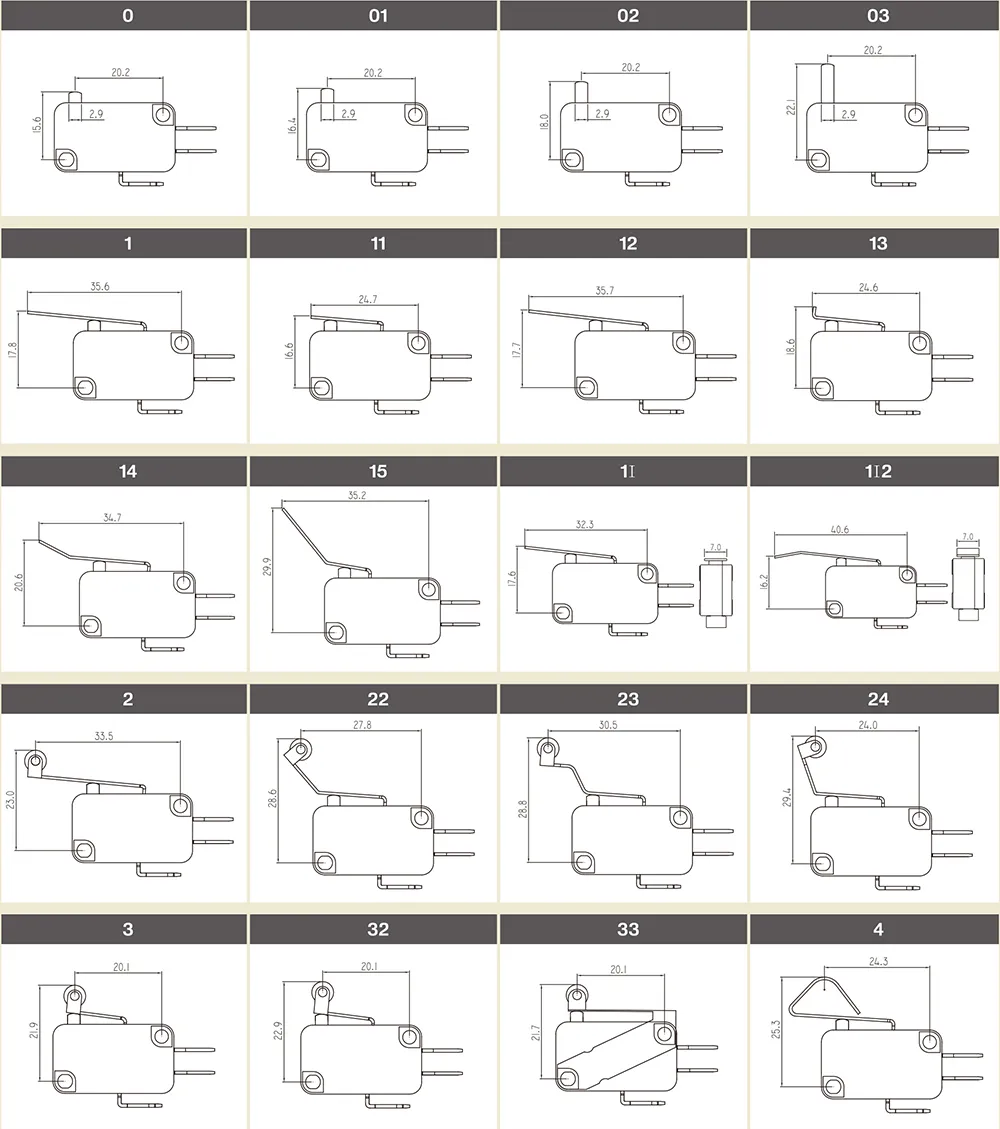
Plunger styles suit direct, in-line motion with well-controlled travel, and they usually give the tightest operating-position repeatability. Button styles put a wider, finger-friendly surface on the same idea for panel or operator use.
| Style | Travel character | Typical protection |
|---|---|---|
| Pin plunger | Short and precise | Mechanical stop in the bracket |
| Spring plunger | Extra overtravel absorption | Stroke-limiting design |
| Button | Operator-driven press | Bezel or guard against abuse |
Part 5. Which mounting and tolerance inputs decide repeatability?
Repeatability lives in the bracket, not just the switch. The mounting must hold the actuator in the documented operating window across every tolerance combination the assembly can produce.
- Show free position, operating position, release, and maximum travel on the drawing.
- Stack the tolerances of bracket, cam, and switch together.
- Control side load, since it shifts the operating point and wears the mechanism.
- Plan service access so replacement does not bend the actuator.
Part 6. What belongs in the RFQ and Fit Boundary?
RFQ input checklist
- Motion direction, stroke, and approach angle
- Force budget and the required state-change position
- Mounting drawing with the tolerance stack
- Contact state, electrical duty, and environment
- Volume and sample timing
Fit Boundary
This guide shortlists actuator styles from motion inputs. It does not establish force, travel, or endurance for a specific option; the model document and installed validation own those numbers.
Part 7. How can LEMA support an actuator inquiry?
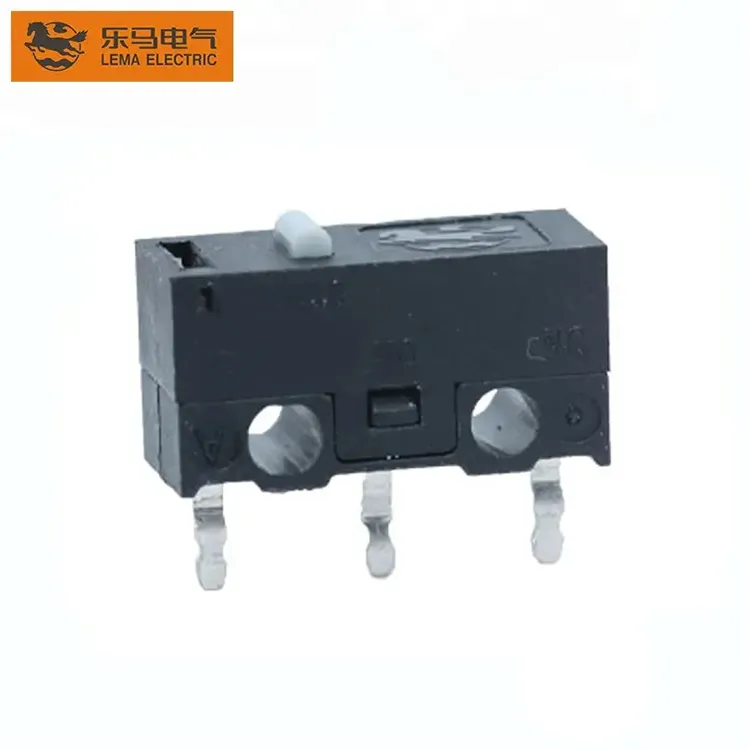
Compact mechanisms often land on miniature families where several actuator variants share one base. The KW10 series micro switch page is a public LEMA route for that review.
Product recommendation: submit the mechanism drawing and force budget, then let the series options be matched to the motion. Picking a style from a photo skips the tolerance work that decides repeatability.
Send an OEM switch RFQ with the motion and mounting inputs attached.
FAQs
What actuator types do micro switches offer?
Common families are pin plunger, spring plunger, plain lever, roller lever, simulated roller, and button styles, each suiting a different motion.
How do I choose between lever and roller lever?
Use a plain lever for rotating or cam-driven parts with smooth contact, and a roller when the actuator rides a sliding profile that would abrade a lever tip.
Why does lever length change operating force?
The lever is a moment arm: more length lowers the force needed from the mechanism but widens the tolerance on the operating position.
What is overtravel and why does it matter?
Overtravel is actuator movement beyond the operating point; the design must absorb it without stressing the mechanism or drifting the switch point.
Can I replace a plunger type with a lever type later?
Only after revalidating, because force, travel, and mounting geometry all change even when the electrical section stays the same.
What should an actuator RFQ describe?
Describe motion direction, stroke, force budget, tolerance stack, mounting, contact state, duty, environment, volume, and sample timing.