
An IP67 micro switch with cable keeps the ingress seal at the factory-potted lead joint, so OEM harnesses must specify wire type, exit direction, contact rating, and actuator type before approval. This guide helps appliance, industrial, and outdoor-equipment teams select pre-wired snap-action switches without treating “IP67” as a substitute for a complete harness drawing.
Part 1. What does IP67 mean for a pre-wired micro switch?
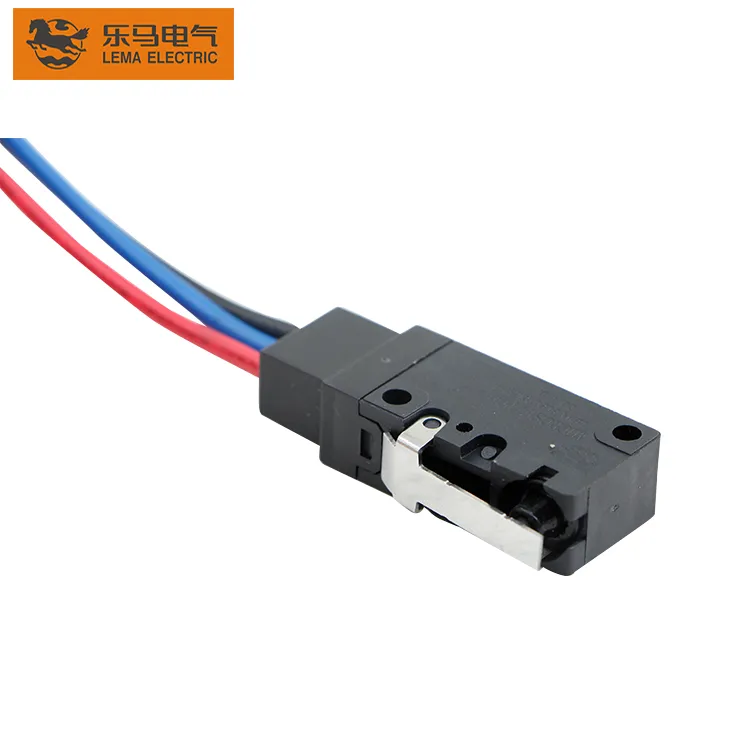
IP67 describes an ingress-protection class under IEC 60529 vocabulary: dust-tight enclosure and short-term immersion to a defined depth and duration in laboratory conditions. For micro switches, the rating applies to the assembled switch plus factory lead assembly, not to a switch body alone after field splicing.
Pre-wired catalog switches maintain the rated seal because potting or gasketing covers the transition where conductors enter the housing. Cutting, re-crimping, or heat-shrinking beyond the manufacturer’s allowed service zone typically voids the advertised protection unless the supplier re-validates the assembly.
Important: IP67 does not automatically mean continuous underwater service or high-pressure washdown without confirming the supplier’s test method and your mounting orientation ([IEC IP rating overview](https://www.iec.ch/ip-ratings)).
Part 2. Why specify a micro switch with integral cable instead of field wiring?
Integral cables reduce assembly steps and eliminate open terminals in wet zones. Panel builders often choose pre-wired IP67 micro switches when:
- The switch mounts inside a splash zone or outdoor enclosure vent path.
- Terminal access for screw or quick-connect fields is impractical after final assembly.
- High-volume lines need color-coded leads to prevent NO/NC wiring errors.
- Quality audits require a single sealed component rather than multiple junctions.
Field-wired switches can work in dry cabinets, but they shift sealing responsibility to your harness shop. For general sealing concepts, see the site’s general waterproof micro switch design context—this article focuses on harness engineering details that page does not cover.
Part 3. Which cable and exit options belong in the RFQ?
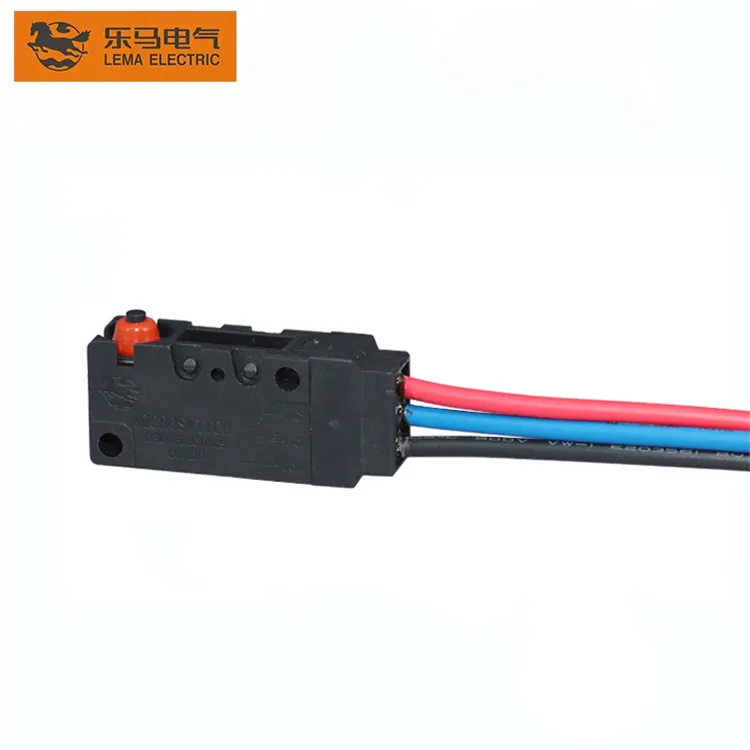
Industry datasheets for sealed snap-action switches commonly offer bottom, side, or straight cable exits with defined lead lengths. Treat those listings as examples of the specification fields you must capture, not as universal defaults.
| RFQ field | Why it matters | Typical mistake |
|---|---|---|
| Wire gauge and insulation | Must carry load current and meet your insulation system | Specifying “20 AWG” without temperature or oil resistance |
| Lead length and tolerance | Routing, strain relief, and connector placement | Ordering shortest length to save cost, then bending sharply at potting |
| Exit orientation | Clearance to walls, brackets, and grommets | Choosing bottom exit when side routing is required |
| Conductor colors / functions | Assembly error proofing on high-speed lines | Assuming supplier default colors match your schematic |
| Connector or bare leads | Factory crimp vs customer-side termination | Adding connector after potting without revalidation |
When comparing families, cross-check actuator options in the roller actuator options for micro switches guide if your fixture uses a roller lever rather than a pin plunger.
Part 4. How do actuator type and contact rating affect harness selection?
Wire gauge follows contact and load class, not IP rating alone. Logic-level gold contacts use lighter conductors; power-duty silver contacts need heavier wire and insulation suited to heat at the rated current.
| Load class | Harness consideration | Design note |
|---|---|---|
| Logic / signal | Lower current; flexible routing | Verify inrush if driving relay coils |
| Resistive AC loads | Match supplier ampere/voltage table | Confirm temperature rise at rated load |
| Inductive loads | May need heavier insulation or arc mitigation upstream | Do not upsize switch without supplier confirmation |
Actuator choice changes operating force and overtravel, which affects how the cable flexes during cycling. A roller lever that over-rotates can fatigue conductors near the potting if bend radius is too tight—document minimum bend radius on the drawing.
Part 5. Where do IP67 cable micro switches fit in OEM equipment?
Typical OEM placements include:
- Appliance door or lid interlocks in humid environments (dishwashers, outdoor kitchen modules).
- Industrial washdown zones near conveyors or food equipment frames.
- Automotive-adjacent modules exposed to splash and dust.
- Outdoor security or lighting enclosures with vented moisture paths.
Each placement still requires mechanical protection for the cable jacket—IP67 on the switch does not replace conduit, grommets, or tie-point strain relief in your assembly.
Part 6. What should buyers verify before approving a harness drawing?
RFQ input checklist
- Rated voltage, current, and load type (resistive/inductive)
- Contact configuration (SPST, SPDT, NO/NC logic)
- Actuator type, operating force, and travel
- Target IP code and mounting orientation in your enclosure
- Cable exit, length, gauge, insulation, and connector specification
- Expected mechanical life and environmental temperature range
Fit Boundary
Pre-wired IP67 micro switches fit OEM programs that can accept a supplier-defined harness and validate bend radius in the final assembly. They are a poor fit when field technicians must routinely re-terminate conductors in the wetted zone, or when the required load exceeds the quoted contact rating without supplier approval.
Part 7. How do LEMA waterproof series support this selection path?
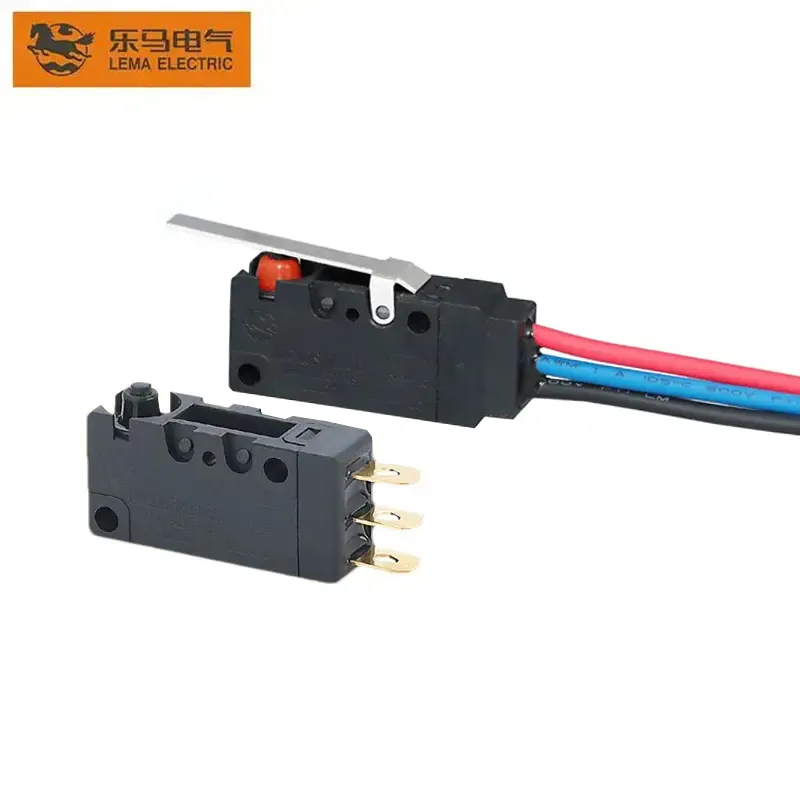
LEMA publishes waterproof micro switch families for OEM programs. Start with the KW7F waterproof micro switch series for compact sealed designs, or review the KW12F waterproof micro switch category when a slightly different envelope better matches your panel cutout.
For baseline KW7 parameters—operating force, terminal styles on non-cabled variants, and application notes—see the KW7 family specifications article, then confirm cable-specific SKUs on the RFQ.
Product recommendation: Request a KW7F or KW12F quotation with your harness drawing attached. LEMA is less suitable as a default choice when you need a published cable matrix and certification package before sharing application data—provide load, environment, and volume so the correct series can be confirmed.
Explore the full Micro Switch category or contact LEMA with actuator sketch, IP target, cable exit preference, and required lead specification.
FAQs
What does IP67 mean for a micro switch with cable?
It means the switch and factory-attached leads are rated as a dust-tight assembly that withstands temporary immersion under the supplier’s IEC 60529 test conditions. Field modifications to the potted lead area usually require revalidation.
Can you order a micro switch with pre-attached wires?
Yes. Many sealed snap-action lines offer factory-potted leads specifically to preserve the ingress rating. Specify length, gauge, exit direction, and connector needs on the RFQ.
What wire gauge is typical on sealed micro switches?
Industry examples often cite 20 AWG class conductors for subminiature sealed switches, but gauge must match your load, insulation system, and supplier rating table—not a generic default.
Does IP67 allow continuous submersion?
Not automatically. IP67 addresses defined temporary immersion; continuous or pressurized exposure may require IP68 or a supplier-specific washdown test. Confirm with the datasheet for your SKU.
How do you choose cable exit direction?
Model the installed orientation, bend radius, and grommet path in CAD first. Bottom exit saves panel height; side exit helps when the switch sits against a wall or bracket.
What is the difference between IP67 and IP68 for micro switches?
Both are dust-tight; IP68 adds deeper or longer immersion requirements per supplier test. Select the code that matches your actual fluid exposure, not the highest label available.
When should OEM teams reject a pre-wired switch?
When required load, temperature, or cable spec exceeds the quoted series, or when maintenance policy requires field termination inside the wet zone without supplier-approved service parts.