
Choosing a reliable snap action switch manufacturer affects product safety, field failure rates, and certification paths for OEM programs in the United States and Canada. Snap action (micro) switches use a spring-loaded mechanism to open or close contacts quickly when an actuator reaches a defined travel point—making them common in appliances, automotive controls, industrial equipment, and medical devices. This guide focuses on practical evaluation steps for U.S. and Canadian OEM buyers—specifications, sample qualification, and documentation—not generic marketing claims. Cross-check public specifications on lemaele.com and confirm project-specific ratings with your design engineer and LEMA Electric before production release. Section checklists can be reused as RFQ attachments and supplier audit outlines.
Part 1. What Buyers Should Expect from a Snap Action Switch Manufacturer
A qualified manufacturer documents electrical ratings (current, voltage, temperature), mechanical life cycles, and actuator options in datasheets—not marketing summaries alone.
Look for in-house production of core components, repeatable test routines, and traceability from batch to shipment for export programs.
For North American projects, confirm whether catalog ratings align with UL or CSA listings for the specific series you plan to source.
Industrial buyers should treat switch vendor selection as a lifecycle decision—catalog ratings must match your fixture, load, and environment.
Request in-house test capability or third-party type tests for the exact terminal and actuator variant, not generic company certificates.
Compare series within the LEMA Electric micro switch catalog against your mechanical envelope, sealing, and certification requirements before AVL approval.
Document warranty ownership (OEM, distributor, or integrator) and escalation paths before first production shipment.
Include actuator type, terminal style, and load profile in the RFQ package to reduce sample iteration cycles.
Align switch series selection with mechanical fixture design before tooling freeze on OEM programs.
Define acceptance tests—operating force, contact resistance, and release point—before approving a supplier lot.
Part 2. Key Specifications and Actuator Options
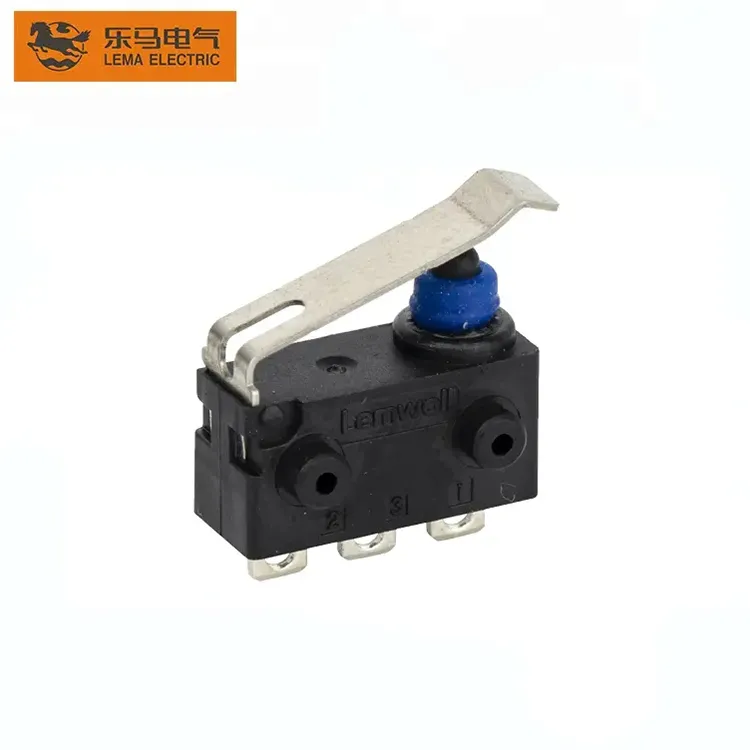
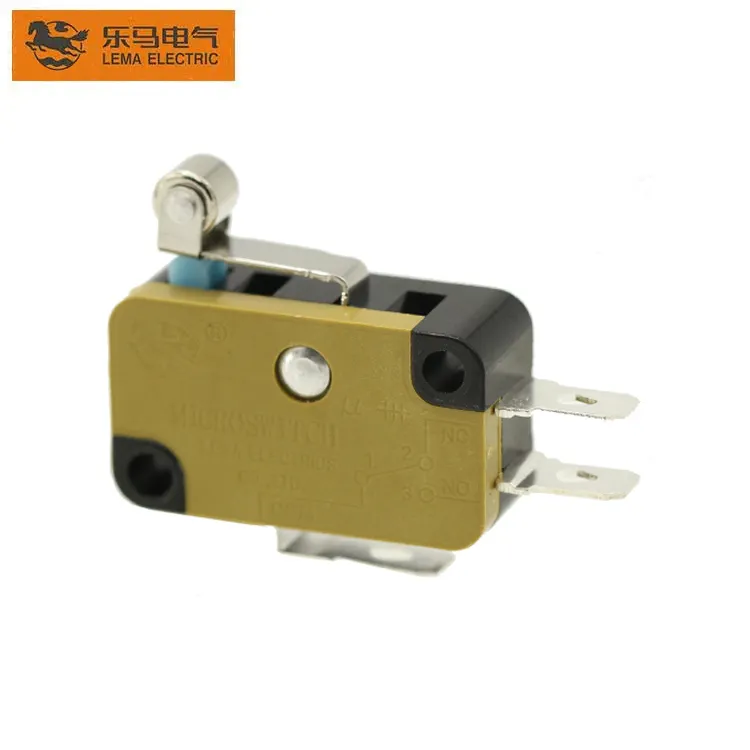
Snap action switches differ by actuator style (lever, roller, plunger, simulated roller), terminal type (PCB, solder lug, quick connect, wire lead), and sealing level (standard vs IP67/IP68).
Operating force and pre-travel affect user feel in consumer products and repeatability in industrial sensing.
Contact configuration (SPST, SPDT, DPDT) and material (silver, gold-plated) should match load type: resistive, inductive, or low-level signal circuits.
For U.S. and Canadian export programs, confirm UL or recognized component scope for the part number you plan to buy.
Panel and equipment builders benefit from CAD footprints, cutout dimensions, and wire exit orientation early in design freeze.
OEM programs may require custom leads, terminals, or labeling—clarify MOQ, tooling, and sample lead time in the RFQ.
Align incoming inspection criteria with operating force, contact resistance, and insulation tests your QA team can run at receipt.
Include actuator type, terminal style, and load profile in the RFQ package to reduce sample iteration cycles.
Align switch series selection with mechanical fixture design before tooling freeze on OEM programs.
Define acceptance tests—operating force, contact resistance, and release point—before approving a supplier lot.
| Parameter | Why it matters | Typical buyer question |
|---|---|---|
| Rated current / voltage | Safety margin under real load | Is 16A at 250VAC continuous or inrush only? |
| Mechanical life | Maintenance interval | Cycles at rated load vs no-load? |
| Operating temperature | Outdoor / engine bay use | Derating above 85°C? |
| IP rating | Wash-down or dust exposure | IP67 on actuator only or full switch? |
| Actuator type | Mounting and force | Roller lever vs plunger for door sense? |
Part 3. Applications and Sourcing Strategy
Home appliances, HVAC, vending machines, elevator door limits, and automotive door latches represent common snap action switch applications.
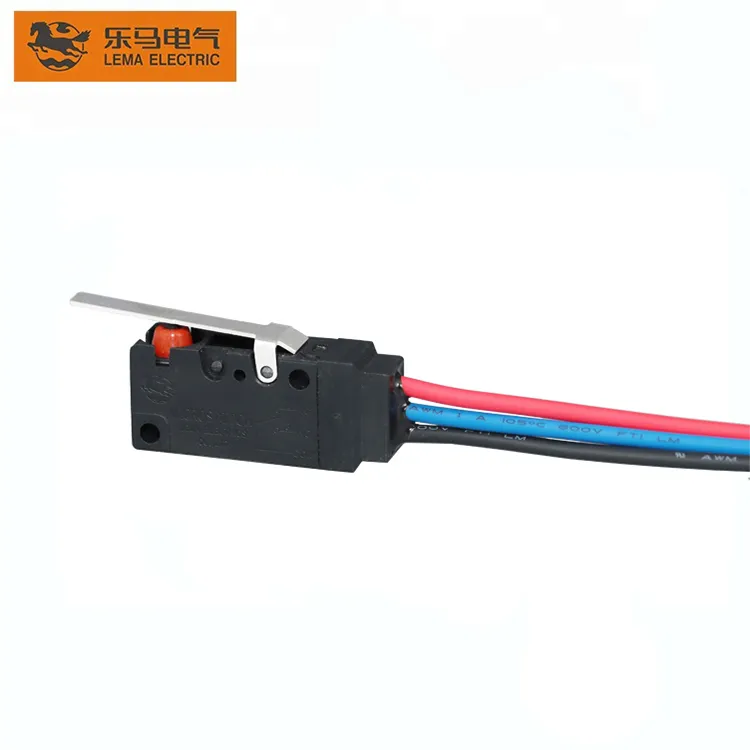
Waterproof series (IP67) use sealed housings and may offer pre-wired leads for wet environments—verify cable rating and strain relief separately.
OEM buyers often maintain an approved vendor list (AVL); new suppliers should provide samples, PPAP-style documentation where applicable, and clear MOQ/lead time for each series.
After-sales support should include spare actuator options, lead-time transparency, and field failure analysis when safety interlocks are involved.
Compare quotations on equal terms: Incoterms, included samples, and whether compliance documents cover your exact configuration.
Use LEMA Electric engineering contact when voltage, temperature, or IP requirements fall outside published catalog tables.
For multi-site OEMs, maintain an approved series list with revision-controlled datasheets to avoid silent supplier spec changes.
Include actuator type, terminal style, and load profile in the RFQ package to reduce sample iteration cycles.
Align switch series selection with mechanical fixture design before tooling freeze on OEM programs.
Define acceptance tests—operating force, contact resistance, and release point—before approving a supplier lot.
Part 4. Documentation and Handover Checklist
OEM acceptance should not rely on visual inspection alone—documentation proves ratings, actuator variant, and compliance scope for each lot.
Use the tables below as a starting RFQ checklist; your quality system may require additional PPAP or inspection items.
For product-specific datasheets, cross-check related LEMA Electric product pages and request missing type test excerpts.
When comparing quotations, normalize currency, Incoterms, sample charges, and included compliance documents before ranking suppliers.
Align incoming inspection with tests your QA team can repeat—operating force, contact resistance, and dielectric checks where applicable.
| Document / item | Purpose | When to request |
|---|---|---|
| Factory type test report | Verify rated current/voltage and mechanical life | Before purchase order |
| Dimensional drawing / CAD | Panel cutout, mounting, and wire exit | Design phase |
| Compliance certificates | UL/CE scope for the exact series | Before AVL approval |
| Sample inspection criteria | Operating force, contact resistance, sealing | Before first production lot |
| Spare parts list | Field service and critical replacements | Contract negotiation |
| Application | Typical actuator | Selection note |
|---|---|---|
| Home appliances | Lever / roller lever | Confirm temperature and life at rated load |
| Industrial sensing | Plunger / roller | Match operating force to fixture travel |
| Automotive aftermarket | Sealed lever | Validate vibration and temperature range |
| Door / latch interlocks | Roller or simulated roller | Check release point and over-travel margin |
Part 5. Sample Qualification, Field Service, and Lifecycle Support
Qualify switch samples on the production fixture at minimum and maximum expected ambient temperature when applications are sensitive to operating force drift.
Functional checks should include contact resistance, insulation if applicable, and correct NC/NO behavior under simulated fault conditions.
Field service teams need replacement part numbers tied to actuator geometry—document equivalents to reduce machine downtime.
Track early-life failures by lot code; recurring contact wear may indicate load or actuator misalignment rather than switch quality alone.
Schedule a design review with LEMA Electric when upgrading equipment platforms or changing harness suppliers.
Maintain a critical spares list for safety interlocks and high-cycle stations based on lead time, not only unit cost.
Revision-control datasheets when suppliers update materials or factory locations—re-qualify if actuator force or terminal plating changes.
Recommended LEMA Electric Products
For project support, explore our related product line, full product catalog, and OEM/ODM capabilities on lemaele.com.
FAQ
What is a snap action switch?
A snap action switch uses a spring mechanism to move contacts quickly when an actuator reaches a tipping point, providing fast and repeatable make/break action.
How is a snap action switch different from a standard push button?
Snap action refers to the contact mechanism (rapid transition at a defined travel point), while push button describes the operator interface; many micro switches are snap action internally.
What should I verify in a factory audit of a switch manufacturer?
Production traceability, calibration of test equipment, sample life-cycle tests, and quality records for the exact series and terminal type you plan to buy.
Do snap action switches need UL listing?
For North American end equipment, buyers often require UL or recognized component listings for the switch series used—confirm the exact part number and listing scope with the manufacturer.
When should I specify IP67 sealing?
Specify IP67 or higher when the switch face or body may be exposed to dust, wash-down, or intermittent water—verify whether the rating covers the actuator only or the entire switch assembly.
How do actuator types affect selection?
Lever and roller actuators suit rotating or sliding mechanisms; plunger types suit direct linear actuation; choice affects operating force, travel, and mounting envelope.
What documentation should I request before placing an OEM order?
Datasheets, drawings, compliance certificates for the series, PPAP or inspection criteria if applicable, and agreed MOQ/lead time in writing.
Can a manufacturer provide custom wire leads or terminals?
Many switch manufacturers offer wire length, connector, and terminal customization—confirm tooling, MOQ, and sample approval workflow early.
References
- Wikipedia — Snap-action switch
- GlobalSpec — Snap Action Switches
- UL Standards resources
- LEMA Electric — Micro Switch category
Ready to discuss your project? Contact LEMA Electric engineering support with your project parameters and technical requirements.