
A long arm micro switch uses an extended lever or arm so a remote cam, door, or linkage can actuate a snap-action contact. OEM teams should define required reach, tip operating force, overtravel limit, mounting clearance, and circuit load before approving a sample. An “extra long lever” label is not a substitute for the mechanism drawing.
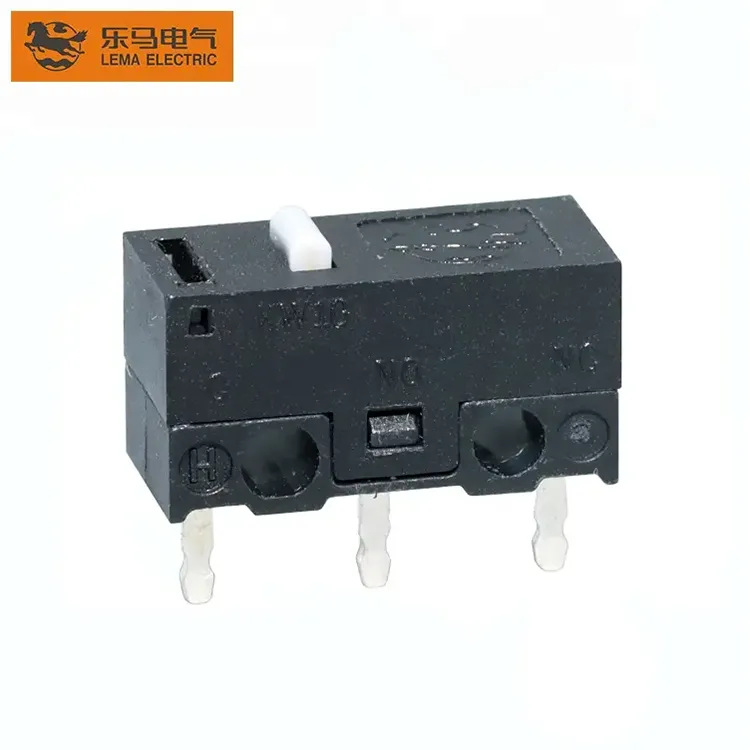
Part 1. What is a long arm micro switch?
A long arm micro switch is a snap-action switch fitted with an extended lever or arm. The tip moves farther from the switch body so a distant cam, panel edge, or linkage can still reach the operating point. The electrical contact still transfers at a defined travel and force; the arm only relocates where that travel is applied.
Treat the arm as a mechanical adapter. Longer reach can reduce the force needed at the tip for the same contact transfer, but it also increases bending, side load, and sensitivity to overtravel. Define the tip path first, then select the arm package that matches the drawing.
| Design item | What to define | Why it matters |
|---|---|---|
| Reach | Distance from mounting datum to tip contact | Determines whether the cam can actuate the switch |
| Tip force | Force available at the operating point | Controls false trips and hard-to-actuate states |
| Travel window | Pretravel, operating point, release, overtravel | Prevents incomplete or damaging actuation |
| Load class | Signal versus power contact duty | Arm geometry does not replace electrical rating |
Browse the LEMA Micro Switch product line for category routing, then keep the selected series tied to the mechanism drawing.
Part 2. When does a long arm fit better than a short lever?
A long arm fits when the moving part cannot approach the switch body closely enough for a short lever or plunger. Typical cases include thick doors, remote cams, appliance lids with gasket stack-up, and machine covers where the switch must sit outside the motion path.
A short lever or button actuator is usually better when space is tight, the cam can press near the switch body, or tip deflection would create side load. Do not lengthen the arm only to compensate for a poorly located mounting hole—relocate the bracket when possible.
- Use a long arm: remote cam, door edge, or linkage that needs reach.
- Prefer a short lever: local cam with controlled travel near the body.
- Prefer a plunger/button: axial motion aligned with the switch axis—see button actuator behavior.
- Prefer roller geometry: sliding cams that would wear a plain tip—see roller actuator selection.
Part 3. How do reach and force interact?
Industry basic-switch datasheets treat actuator length and operating force as linked fields. Extending the arm changes the force at the tip and the stiffness of the lever under side load. A tip that feels “light” can also chatter if vibration moves the arm near the operating point.
Document the force available from the mechanism at the tip, not only the catalog force at the switch. Include spring return of the door or cam, friction, and the worst-case temperature condition if the plastic or metal arm softens or stiffens.
| Interface check | Question | Risk if ignored |
|---|---|---|
| Tip force margin | Does every unit exceed the minimum operating force? | No contact transfer |
| Maximum tip force | Is force limited after transfer? | Permanent arm set or switch damage |
| Side load | Does the cam push in the intended plane? | Wear and force drift |
| Vibration | Is the tip held away from the operating point when idle? | False signals |
For compact envelopes where reach is short, compare the compact micro switch selection guide before defaulting to a long arm.
Part 4. Which overtravel and mounting checks matter?
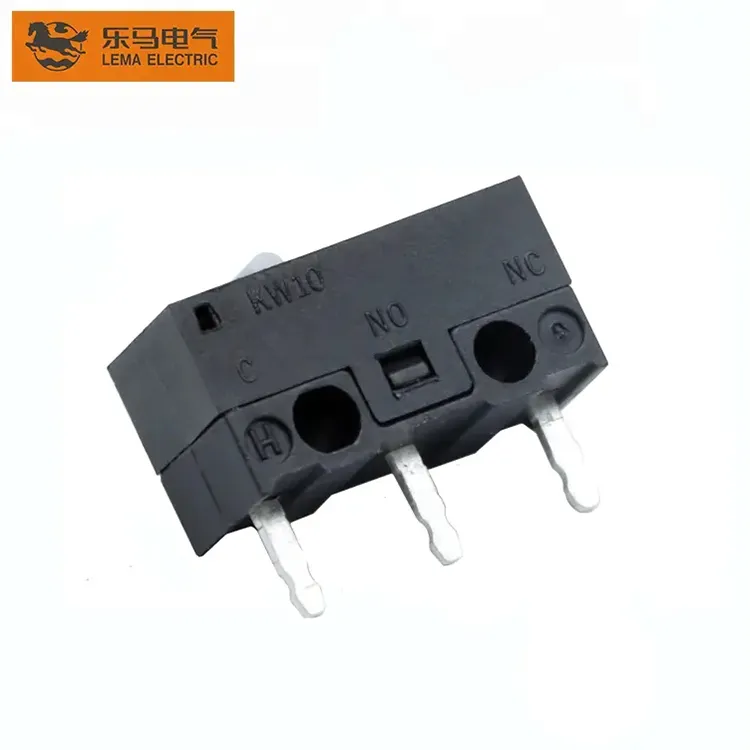
Overtravel after contact transfer must stay inside the selected model’s allowed window. A long arm amplifies small mounting errors, so the same bracket shift creates more tip travel than a short lever. Set a hard stop in the mechanism when needed, and validate high and low tolerance stacks.
Mount the switch from controlled datums. Record fastener torque, bracket stiffness, arm free position, and clearance to covers. Confirm the tip cannot hit an unintended surface during full door or cam travel.
- Define free, operating, release, and maximum overtravel positions on the drawing.
- Check arm clearance through the full motion envelope.
- Support the harness so cable force does not bend the arm.
- Retest after service access that may loosen the bracket.
Part 5. When should a roller tip be added?
A roller tip helps when the actuating surface slides across the lever rather than pressing and leaving. Sliding on a plain tip can wear the arm and change the operating point. A roller does not remove the need to control direction, force, and overtravel.
If the cam only approaches and retreats along a short path, a plain long arm may be enough. If the cam wipes along the tip, evaluate a roller lever package and confirm the roller diameter and pin retention against the mechanism material.
Part 6. What belongs in the RFQ and Fit Boundary?
RFQ input checklist
- Reach target from mounting datum to tip contact
- Tip operating force and maximum allowable force
- Travel window, overtravel limit, and hard-stop method
- Mounting drawing, arm material preference, and roller need
- Contact form, voltage, current, load type, and environment
- Annual volume, sample timing, and required documents
Fit Boundary
Long-arm selection suits mechanisms that need extended reach and can control tip force and overtravel. It is a poor fit when a short plunger can do the job, when side load cannot be controlled, or when a buyer needs an undocumented arm length and force claim without a drawing review.
Part 7. How can LEMA support the inquiry?
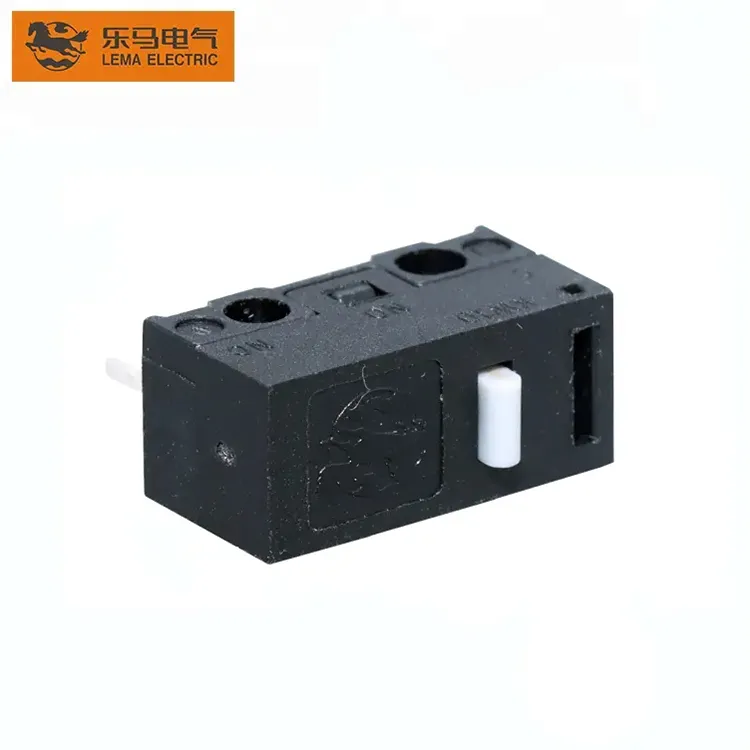
LEMA publishes compact micro-switch families for OEM inquiry. Start with the KW10 series micro switch when the envelope and lever options match the mechanism concept. Confirm the actual arm geometry only against a quoted model document.
Product recommendation: send the reach, force, overtravel, mounting, and load package to LEMA. Do not select a series solely because a listing mentions a long lever. Share the mechanism drawing so the correct option can be reviewed.
Explore the Micro Switch category or send a long-arm RFQ.
FAQs
What is a long arm micro switch?
It is a snap-action micro switch fitted with an extended lever so a remote cam or linkage can operate the switch with additional reach.
When should OEM teams choose a long arm instead of a short lever?
Choose a long arm when the moving feature cannot approach a short lever cleanly, or when the mechanism needs a lower operating force at the contact point.
How does arm length affect operating force?
Longer arms reduce the force required at the tip but also reduce available force margin and increase sensitivity to bend, vibration, and side load.
What overtravel is required?
Provide enough free, operate, release, and overtravel on the drawing so the tip cannot bottom out or leave the operating window under tolerance stack-up.
Can a long arm be used with a roller tip?
Yes, when the cam surface slides across the tip; confirm roller width, cam profile, and side-load limits on the selected model.
What belongs in a long-arm RFQ?
Include mechanism travel, preferred arm length and tip style, force budget, mounting drawing, circuit duty, environment, volume, and sample timing.