
Gold plated contacts and silver contacts solve different micro switch problems. Gold plating protects low-energy signal circuits from oxide and film buildup, while silver alloys carry higher currents and tolerate arcing. Match the contact system to the real circuit before locking a series code.
Part 1. Why does contact material matter in a micro switch?
Contact material sits at the center of switching reliability. A snap-action mechanism can be mechanically perfect and still fail its circuit when the contact surface no longer conducts predictably at the applied signal level.
| Decision field | What to record | Effect on material choice |
|---|---|---|
| Signal level | Open-circuit voltage and switched current | Determines whether film resistance matters |
| Load type | Resistive, inductive, or lamp behavior | Changes arc energy at the contact |
| Switching rate | Operations per hour and per life | Affects heating and material transfer |
| Atmosphere | Sulfur sources, humidity, sealing | Drives tarnish and film growth |
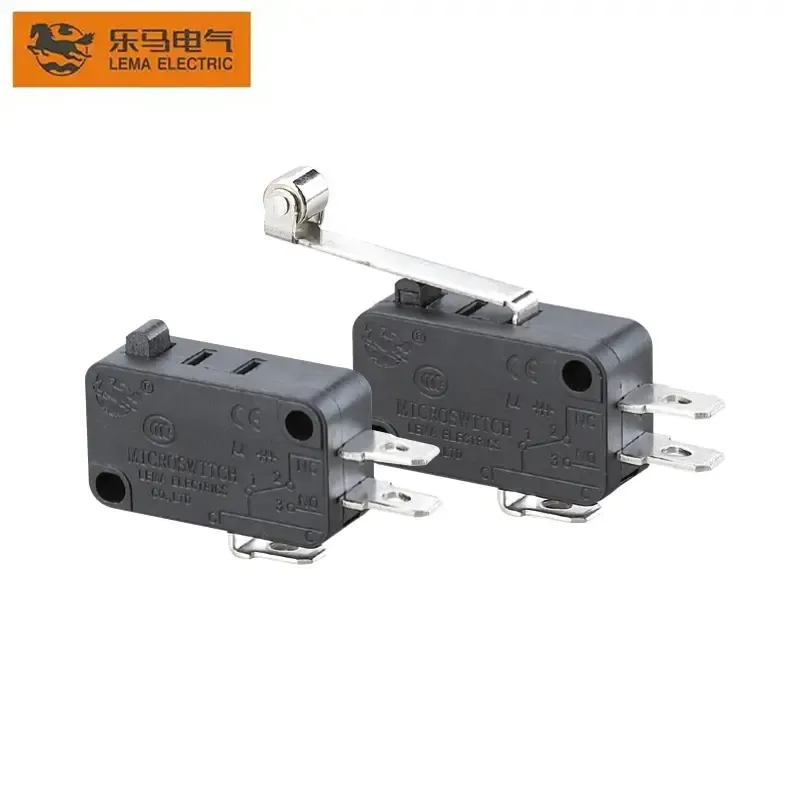
Route early browsing through the LEMA Micro Switch product line, and treat catalog material notes as a starting point rather than a project rating.
Part 2. Where do gold plated contacts fit best?
Gold resists oxidation and sulfide films, which keeps contact resistance stable when the circuit cannot generate enough energy to break through a film. That behavior makes gold plating the usual candidate for logic inputs, controller sensing lines, and low milliamp loads.
Signal-side thinking also applies when a switch replaces a sensor. The micro switch and reed switch comparison walks through that decision from the sensing direction.
Part 3. Where do silver contacts fit best?
Silver alloys offer low bulk resistance and hold up under the arcing that accompanies real power loads. Frequent switching of motors, heaters, or solenoids tends to clean silver surfaces through normal arc action, so films matter less than they do in dry circuits.
The trade-off appears in storage and standby. Unsealed silver tarnishes in sulfur-bearing air, and a rarely operated contact may never self-clean.
Part 4. How do load level and inrush drive the choice?

A material label alone cannot confirm a rating. Work from the actual circuit: steady-state current, inrush multiple, voltage class, and the smallest load the contact must still switch after years in service.
| Circuit case | Risk with the wrong material | Verification input |
|---|---|---|
| Dry circuit below the wetting level | Rising contact resistance on silver | Minimum applicable load from the model sheet |
| Motor or lamp inrush | Material transfer and sticking on gold plating | Documented inrush multiple and duty |
| Mixed duty in one product | One contact serving two regimes poorly | Split the function or select per circuit |
Cycle expectations belong in the same review; the long life micro switch planning guide shows how duty definitions feed a test plan.
Part 5. Which environmental factors change contact behavior?
Sealing, temperature, and atmosphere shift contact behavior over a product’s life.
- Sulfur sources such as nearby rubber parts accelerate silver tarnish.
- Condensation cycles move contamination onto open contact gaps.
- Elevated temperature raises film growth rates around the mechanism.
- Sealed housings slow contamination but change heat dissipation.
Record these exposures in the application file so the supplier review covers them explicitly.
Part 6. What belongs in the RFQ and Fit Boundary?
RFQ input checklist
- Voltage, steady current, inrush, and the minimum load to switch
- Load type, switching frequency, and expected total operations
- Atmosphere notes covering sulfur, humidity, salt, and sealing
- Required contact material expectation, if the OEM has one
- Annual volume, target band, and sample timing
Fit Boundary
This comparison supports material shortlisting for OEM circuits. It does not certify a LEMA model for a load, prove a plating thickness, or replace the selected model’s documentation.
Part 7. How can LEMA support a contact material inquiry?
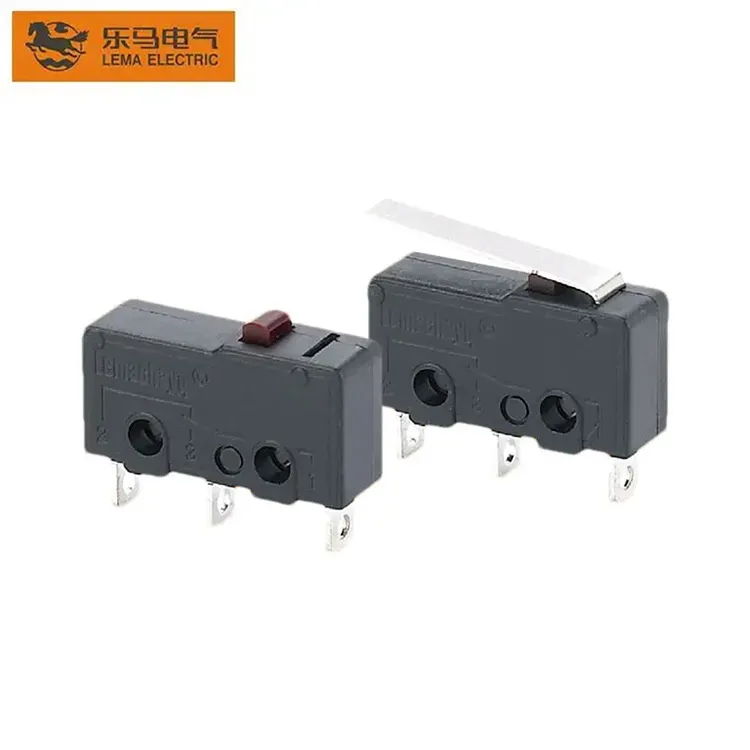
Share the circuit profile with the supplier rather than requesting a material in isolation. The KW7 series micro switch page is a public route for describing a contact-level requirement to LEMA.
Product recommendation: ask for a model review once the RFQ fields above are complete. Ordering by material name with an undocumented load profile is the failure mode to avoid.
Send an OEM switch RFQ with the circuit and environment records attached.
FAQs
Are gold plated micro switch contacts better than silver?
Neither is universally better. Gold suits low-energy signal circuits, silver handles power loads, and the documented circuit decides which one applies.
What is a dry circuit in switch selection?
A dry circuit switches so little energy that no arc cleans the contact surface, so film resistance controls reliability and gold plating becomes attractive.
Can a silver contact switch a logic-level signal?
Sometimes, but only inside the minimum applicable load stated for the model; below that level the contact may show unstable resistance.
Does gold plating wear off?
Plating is thin and can degrade under arcing or heavy current, which is why gold options target low-energy duty rather than power switching.
How does atmosphere affect contact material choice?
Sulfur compounds, humidity, and condensation build films on silver much faster than on gold, so sealing and storage conditions belong in the RFQ.
What should an OEM record before choosing contact material?
Record voltage, steady current, inrush, minimum load, switching frequency, atmosphere, and expected operations, then confirm against the model document.