
An industrial push button switch matches the panel zone first: dust, moisture, temperature swings, and vibration set the sealing and mounting stress before you compare actuators on a control panel. This article walks environment classification, mechanical cycle duty, electrical contact logic, LED illumination options, colour codes, and RFQ fields that keep procurement aligned with real machine conditions.
How Dust and Moisture Change Push Button Selection
Dust and moisture decide whether a panel mount push button switch survives at the cutout, not just behind the bezel. Every hole is an ingress path, and IP rating thinking should follow the wettest zone on the control panel. Community builders note that adding buttons to a certified enclosure can change how the whole door performs against dust and spray.
Important: Forum makers report that splashing water can press a tact switch unintentionally — wet zones need an actuator sealing plan, not only a higher IP label on a catalog line.
| Panel zone signal | What to document in RFQ | Why it matters for selection |
|---|---|---|
| Dry indoor cabinet | Dust class, occasional wipe-down | Sealing focus on bezel gap and cable entry |
| Humid or wash-adjacent | Spray direction, chemical exposure | Panel hole and actuator seal become primary |
| Mixed door (display + buttons) | Which functions sit in wettest area | Example industrial operator families cite IP65 for dust and water exposure on cited lines — use as comparison, not automatic PBS proof |
| Outdoor or uncooled shelter | Condensation cycles | Temperature swing plus moisture at the gasket |
Membrane or boot strategies appear in maker projects when space is tight. A thin flexible layer under the front panel can block spray while still letting the plunger move. That approach scales down to tact switches; panel-mount industrial buttons still need you to name the zone and accept sample checks when the public product page does not list an IP table.
When the main risk is front-face scratch or public abuse rather than ingress class, compare the metal push button switch OEM guide for bezel durability proof before you fold metal marketing into the same RFQ as cycle duty.
Temperature Swings and Vibration at the Panel Edge
Temperature swings and vibration hit the nut, thread, and contact stack before they show up in electrical tests. IEC 60947-5-1:2024 updates normal service conditions including shock and vibration for control-circuit devices such as panel push buttons.
Lock the panel material, expected temperature range, and whether the operator leans on the actuator during vibration. A start button beside a vibrating conveyor sees different shock than a maintenance reset inside a closed cabinet.
Mushroom heads on stop functions also help gloved operators hit the target when the panel shakes.
Mechanical Cycle Duty: Matching Press Frequency to Switch Life
Mechanical cycle duty is the press count your industrial push button switch must survive at the expected load. Estimate presses per cycle, cycles per hour, and annual operating hours before you treat any mechanical life figure as valid.
Example industrial operator device families in independent technical guides cite one million mechanical operations on the actuator and contact block — useful as a benchmark when your duty math stays below that class. If operators jam the start button during every pallet cycle, multiply that frequency across a three-shift year and compare it to the supplier curve.
| Duty profile | Example machine context | Selection implication |
|---|---|---|
| Low | Maintenance reset a few times per day | Standard mechanical life targets often sufficient |
| Medium | Manual start each production lot | Ask for mechanical life at stated electrical load |
| High | Jog or cycle start every few seconds | Prioritize high-cycle contact blocks; confirm with sample wear test |
| Mixed | Start high, stop rare | Size life on the highest-frequency function |
When the duty is high, pair the duty table with electrical load. Contacts wear faster at full resistive load than at signaling current — request the curve for the actual circuit, not a generic brochure line.
Electrical Interface Questions Before You Lock a Part Number
Electrical interface questions keep a push button switch for industrial control from opening the wrong circuit under load. IEC 60947-5-1 covers electromechanical control-circuit devices including manual push buttons, with scope for rated voltage not exceeding 1000 V AC or 600 V DC in the standard abstract.
Momentary push button switch inputs usually return when the operator releases the head. Start and other energize-on-press functions often use normally open contacts, while stop and other fail-safe paths often use normally closed contacts that open when pressed. Match that logic to the PLC or relay input card before you freeze colour codes.
List control voltage, expected inrush, and whether the input is PLC low-voltage DC signaling or mains-interlocked power. The PBS public page does not publish amp or volt tables for this article — carry those values from your schematic and ask the supplier to confirm the backend switch or contact block on samples.
Colour Codes and LED Options for Operator Clarity
Colour codes and lamps turn a panel-mount push button switch into a readable control surface. Red is widely associated with stop and green with start on industrial panels, and integrated pilot lights show whether a command registered without opening the HMI.
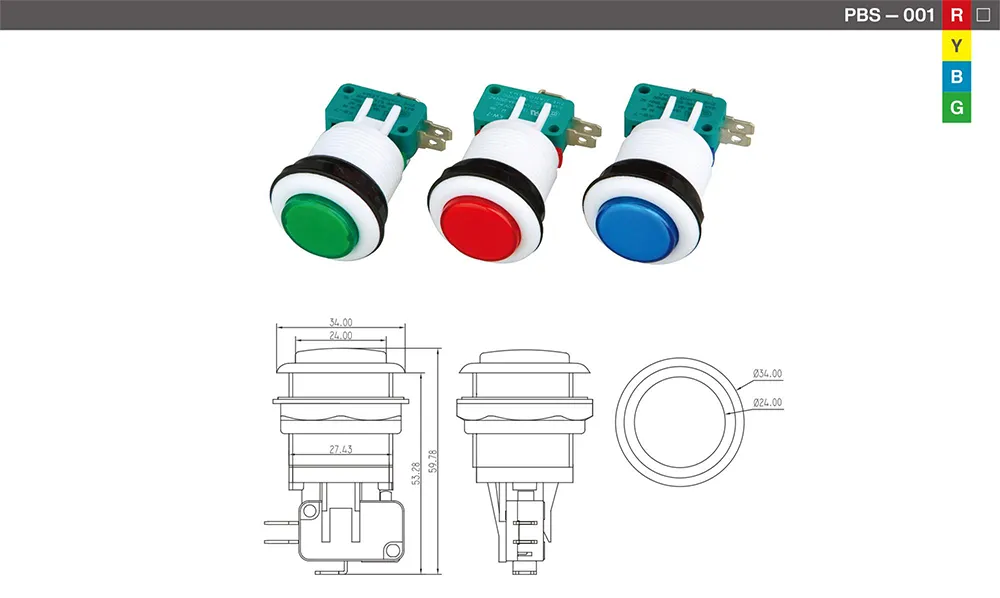
The PBS Series public order table lists colour codes R, Y, B, G, P, and W plus an LED field for With LED or L With LED. Map those codes to functions in your legend — reset in blue, warning acknowledge in yellow — so procurement does not swap hues between builds.
Illuminated push buttons help when operators work from a distance or under dim light. Specify lamp supply only when the LED option is selected and your panel drawing shows the lamp voltage source. Colour carries meaning; the lamp carries visibility.
OEM RFQ Fields That Prevent Wrong-Spec Deliveries
OEM RFQ fields should capture environment, cycle duty, electrical interface, and marking expectations in one table procurement can forward. Many industrial operator lines use a 22 mm panel cutout in independent technical examples — record your measured cutout and bezel thickness even when the PBS page does not publish a dimension chart.
| RFQ field | Example entry | Notes |
|---|---|---|
| Panel zone | Wash-adjacent door, fan exhaust side | Drives sealing discussion |
| Press frequency | 1,200 starts per 8-hour shift | Feeds cycle duty |
| Contact logic | Stop NC, start NO | Matches fail-safe wiring |
| Control voltage | Low-voltage DC PLC input | Not inferred from PBS page |
| Colour / LED codes | Red stop, green start, LED on start | Maps to PBS R/Y/G and L With LED |
| Backend switch | KW7 requested on applicable types | Only where PBS page allows some types |
| Marking | Environmental information per IEC scope | Aligns with IEC 60947-5-1 marking themes |
IEC 60947-5-1 marking updates reference environmental information requirements — ask suppliers how they document operating conditions on the label or datasheet you will store in the machine file.
Select a PBS Industrial Push Button for Your Panel Job
Select a PBS industrial push button when your RFQ answers point to snap action, documented colour codes, optional LED illumination, and KW7 micro switch options on applicable types rather than unpublished IP or rating guesses. The PBS Series Push Button Switch page lists snap action, long operating life, colour codes R/Y/B/G/P/W, LED options, and KW7 on some types for automation and equipment panels.
Use the PBS line when environment and duty fit the qualitative “harsh conditions” positioning on the page and you will verify sealing and electrical load on samples. If your zone needs a published IP or amp table today, keep those numbers in the RFQ as requirements to be confirmed rather than assuming they appear on the public PBS listing.
Pair this environment-and-duty path with the metal push button switch OEM guide when procurement still needs IK, gasket, or bezel wear proof on the same panel job.
Review the PBS Series Push Button Switch ordering fields against your RFQ table, then request samples for the wettest zone and the highest-cycle button on the panel.
Related LEMA push button resources
Review the LEMA push button switch range and the PBS Series push button product example. Continue with the push button colour standards guide, momentary versus maintained action guide, and control box indicator-light OEM guide.
Video: push button colour and control context
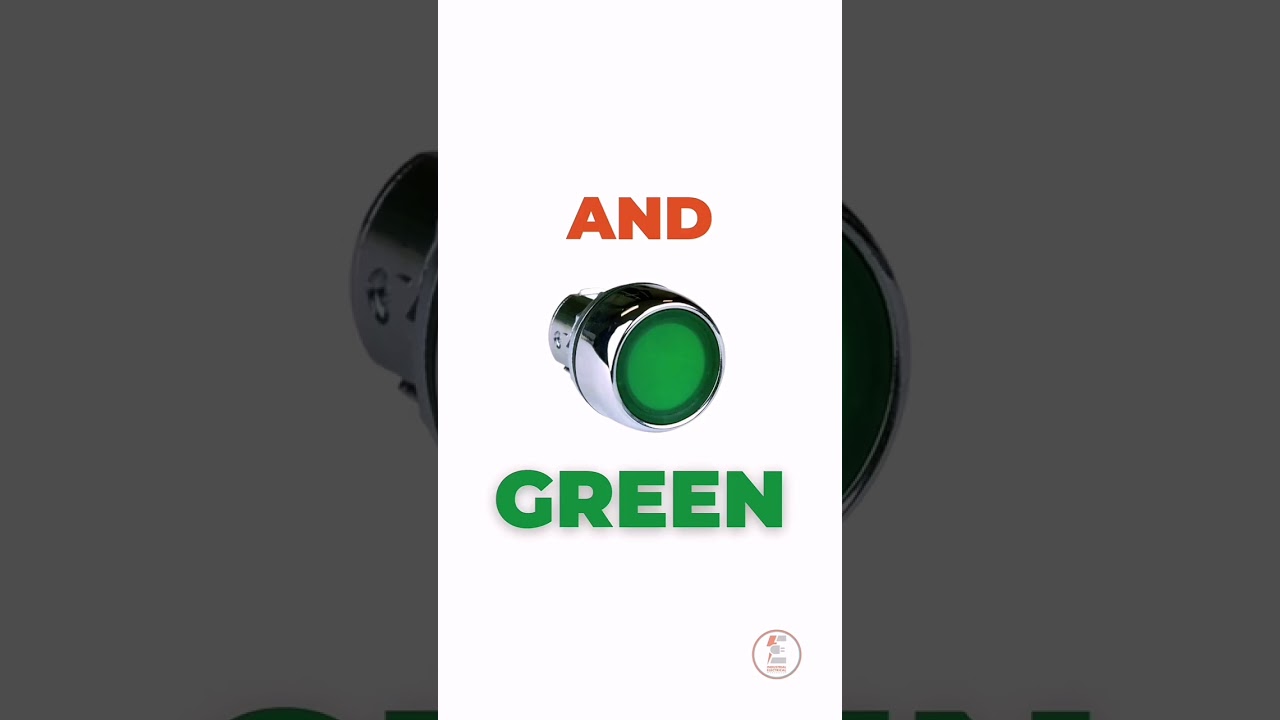
This educational overview from Industrial Electrical Warehouse explains common push-button colour conventions. It is supplementary context; the machine design, applicable standards and approved operating narrative govern the final assignment.
FAQ
How does an industrial push button switch differ from a consumer button?
Industrial units are built for panel mounting, repeated daily cycles, and machine-control wiring conventions such as red stop and green start. Consumer tact switches on a PCB focus on cost and density in benign indoor boxes.
What environmental factors matter most for panel-mount push buttons?
Dust class, moisture exposure at the cutout, temperature swing, and vibration at the operator station drive sealing and mechanical retention. Treat the hole in the door as part of the environment story, not only the switch head.
How do I estimate cycle duty for a push button switch?
Multiply presses per cycle by cycles per hour and operating hours per year. Compare that total to the mechanical life figure quoted at your electrical load, not at a generic test current.
Can one push button family cover wet and dry zones on the same machine?
One family can cover both only when each zone’s sealing need is validated on samples. Wet zones may need different actuator protection even if the same colour codes appear on the order form.
When should I specify an illuminated push button on an industrial panel?
Specify illumination when operators must see state from a distance or in low light. Pair the LED option with a defined lamp supply on the drawing so the panel shop wires the correct source.
What should I send in an RFQ for industrial push button switches?
Send zone description, press frequency, contact logic, control voltage, colour and LED codes, cutout measurement, and any required marking or environmental documentation. Include a sketch showing which buttons sit in the wettest area.
Does the control-circuit device standard apply to panel push buttons?
Yes—within its voltage scope it covers electromechanical manual push buttons on control circuits. Use it for service-condition and marking context.
Confirm your exact model on the supplier datasheet before you file the machine record.
Authoritative references
- OSHA: Control of Hazardous Energy — safety context for servicing and isolation.
- OSHA: Machine Guarding Introduction — context for operator controls near moving machinery.
- NIST: SI Unit of Electric Current — reference for current measurement terminology.