LEMA NACHRICHTENZENTRUM

Nachrichten & Blog

Nachrichtenzentrum

Beständigkeit von Drucktastenbeschriftungen: Eine Prüf- und Beschaffungscheckliste
Blog LEMA Electric

Beständigkeit von Drucktastenbeschriftungen: Eine Prüf- und Beschaffungscheckliste

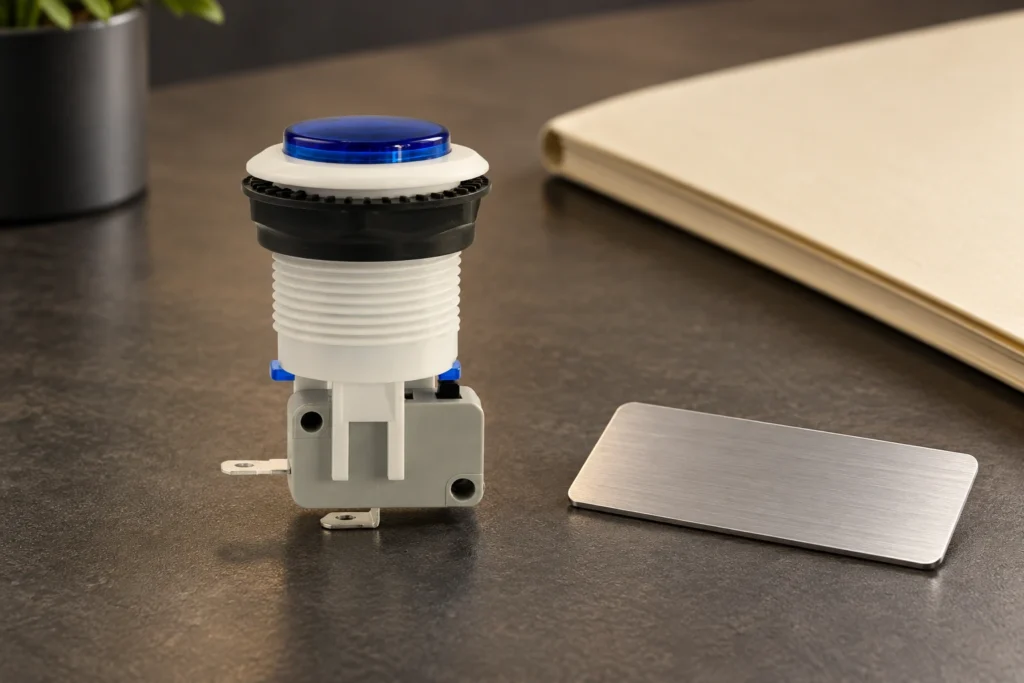
Die Beständigkeit von Drucktastenbeschriftungen bedeutet, dass die Kennzeichnung eines Bedienelements lesbar bleibt, weiterhin eindeutig der richtigen Taste zugeordnet ist und auch nach den zu erwartenden Belastungen durch Handhabung und Reinigung verwendet werden kann. Ein bei der Lieferung einwandfrei aussehendes Etikett kann sich im Betrieb dennoch als ungeeignet erweisen, wenn es sich ablöst, an Kontrast verliert oder mehrdeutig wird. Legen Sie vor der Bestellung die genaue Kennzeichnungskonstruktion, die Schalttafeloberfläche, das Reinigungsverfahren und die Prüfkriterien fest. Dieser Leitfaden schlägt einen Prüfablauf für Anlagenkäufer und Konstrukteure vor. Er macht keine Angaben zu einer bestimmten Lebensdauer der Beschriftung, einem standardisierten Abriebprüfergebnis oder einer Kennzeichnungsoption für jede Variante der LEMA PBS-Serie. Trennen Sie die Bedeutung von der Beständigkeit. Die erste Frage lautet, was die Beschriftung aussagt. Die zweite Frage ist, ob sie diese Information auch nach der Nutzung weiterhin eindeutig vermittelt. Die Freigabe des Wortlauts bedeutet nicht automatisch die Freigabe des Klebstoffs, des Trägermaterials oder des Druckverfahrens. Ebenso kann ein unbeschädigtes Etikett nach einer Änderung der Steuerungsfunktion weiterhin die falsche Funktion kennzeichnen. Halten Sie die inhaltliche Freigabe und die physische Beständigkeitsfreigabe miteinander verknüpft, aber im Projektprotokoll getrennt nachvollziehbar. Zur Interpretation von Symbolen verwenden Sie den Leitfaden zu Drucktastensymbolen. Bestimmen Sie für die vorliegende Bewertung die genaue Position des Etiketts, den Revisionsstand der Beschriftung und die vorgesehene Zuordnung zum physischen Bedienelement. Eine Entscheidung über ein elektrisches Schaltplansymbol belegt nicht die Eignung einer externen Schalttafelbeschriftung. Ein Ersatzetikett muss sowohl der freigegebenen Funktion als auch der erforderlichen physischen Ausführung entsprechen. Legen Sie fest, wo die Kennzeichnung angebracht ist. Eine Beschriftung kann sich auf der Tastenkappe, einer separaten Beschriftungsplatte, der umgebenden Schalttafel oder einer anderen freigegebenen Oberfläche befinden. Diese Anordnungen unterliegen unterschiedlichen Belastungen bei der Handhabung und beim Austausch. Eine Tastenkappe kann direkten Fingerkontakt ausgesetzt sein. Eine umliegende Beschriftungsplatte kann wiederholt gereinigt werden, ohne direkt betätigt zu werden. Eine Schalttafelbeschriftung kann an ihrem Platz bleiben, wenn die Taste...

Mehr lesen
Bedienung per Knopfdruck mit Handschuhen: Den vollständigen Arbeitsablauf des Bedieners validieren
Blog LEMA Electric

Bedienung per Knopfdruck mit Handschuhen: Den vollständigen Arbeitsablauf des Bedieners validieren

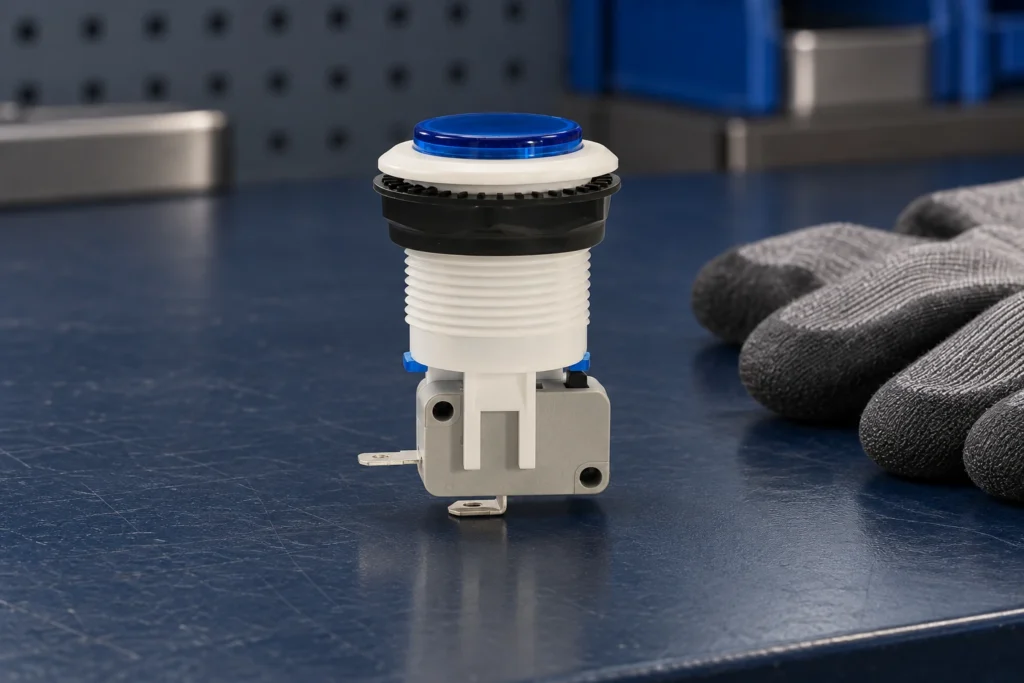
Die Bedienung von Drucktastern mit Handschuhen sollte mit dem tatsächlich verwendeten Handschuh, der konkreten Bedienaufgabe und der vollständig montierten Schalttafel überprüft werden. Ein größerer Taster allein ist kein Nachweis für eine zuverlässige Bedienbarkeit. Prüfen Sie, ob der Bediener das Bedienelement eindeutig erkennen, ohne körperliche Anstrengung erreichen, gezielt betätigen, die Reaktion wahrnehmen und den Taster wieder loslassen kann, ohne dabei ein benachbartes Bedienelement zu berühren. Während der gesamten Bewertung muss der am Arbeitsplatz gemäß der Gefährdungsbeurteilung vorgeschriebene Schutzhandschuh getragen werden. Dieser Leitfaden bietet eine praktische Checkliste für Beschaffung und Praxistests. Er weist einem Schalter keine allgemeine Eignungsbewertung für die Verwendung mit Handschuhen zu und schreibt weder einen universellen Tastendurchmesser noch einen bestimmten Abstand oder eine einheitliche Betätigungskraft vor. **Definieren Sie die Aufgabe, bevor Sie den Taster auswählen** Beginnen Sie mit einer kurzen Beschreibung der Tätigkeit des Bedieners. Ein einmaliges kurzes Zurücksetzen pro Schicht unterscheidet sich von wiederholten Aktionen mit gedrückt zu haltendem Taster, einer schrittweisen Einrichtbewegung oder einer gelegentlichen Änderung der Auswahl. Dokumentieren Sie die normale Ausgangsposition, die beabsichtigte Reaktion sowie die Folgen einer unterlassenen oder unbeabsichtigten Betätigung. Halten Sie außerdem fest, ob der Bediener während der Betätigung auf den Taster, das Werkstück oder eine andere Anzeige blickt. Diese Einzelheiten bestimmen, was beim Praxistest beobachtet werden muss, anstatt lediglich zu prüfen, ob eine Testperson ein Muster einmal betätigen kann. Betrachten Sie den Taster, die Beschriftung, die Anzeige und die angesteuerte Steuerung als zusammenhängende Schnittstelle. Selbst wenn ein Tastendruck die Kontakte schließt, kann die Bedienung erfolglos sein, wenn die Person nicht erkennen kann, ob der Befehl angenommen wurde. Umgekehrt kann eine sichtbare Anzeige die Annahme eines Befehls bestätigen, ohne nachzuweisen, dass die Maschine tatsächlich den angeforderten Zustand erreicht hat. Dokumentieren Sie, welche Bedeutung jedes Rückmeldesignal hat. Der Geräteentwickler muss die erforderlichen Schutzfunktionen unabhängig davon festlegen. Ein gewöhnlicher Drucktaster und ein positives Ergebnis bei einer Gebrauchstauglichkeitsprüfung begründen noch keine sicherheitsbezogene Steuerungsfunktion. **Verwenden Sie beim Praxistest genau den vorgesehenen Schutzhandschuh** Geben Sie Hersteller, Modell, Größe, Material, Innenfutter und Zustand des Handschuhs an. Berücksichtigen Sie auch einen gegebenenfalls üblicherweise darunter getragenen Unterhandschuh ...

Mehr lesen
Gefahrenbereichs-Endschalter: Prüfung und Freigabe vor der Auswahl
Blog LEMA Electric

Gefahrenbereichs-Endschalter: Prüfung und Freigabe vor der Auswahl

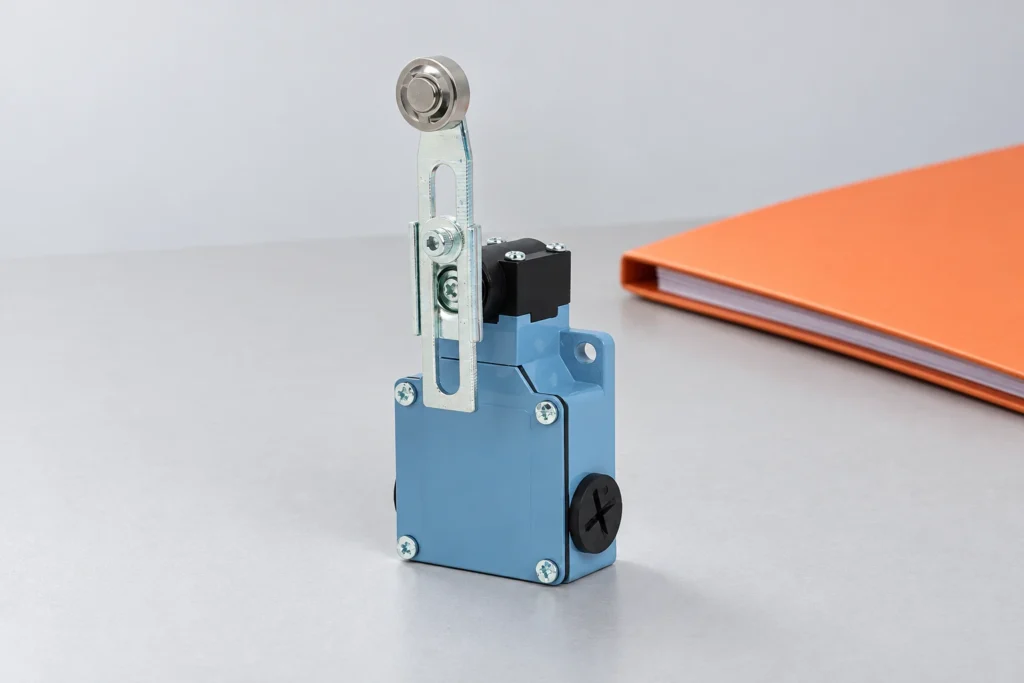
Hazardous location limit switches must be selected against the area's classification, the substances present and the equipment's applicable approval conditions. A metal housing, an IP rating or a familiar roller lever does not establish explosion protection. Start with a competent site classification and verify the exact device and installation evidence before purchasing. The LEMA LZ1 product family is referenced here to explain ordinary mechanical-switch interfaces. This article does not claim that an LZ1 variant is approved for a hazardous location. Without exact applicable evidence, do not substitute an ordinary industrial switch into a classified installation. Establish the area classification before comparing switches “Hazardous” is sometimes used informally to describe any dangerous machine. Electrical hazardous-location selection has a more specific context: potentially explosive atmospheres and the requirements for equipment installed there. Mechanical trapping hazards, electrical shock and explosion risks can coexist, but they are different assessment questions. A switch suited to ordinary machine travel detection is not automatically appropriate for every environment around that machine. The HSE overview of ATEX and explosive atmospheres explains the relationship between potentially explosive atmospheres, workplace responsibilities and equipment requirements in its jurisdiction. Use the classification and rules applicable to the installation location. Do not translate an informal description such as “chemical factory” into an equipment approval requirement without the responsible site's documented assessment. Obtain the classification drawing and the substance information relevant to the switch location. The conditions at a loading point may differ from those in a nearby control room. The position of the enclosure, actuator and wiring route all matter. Purchasing should receive the approved requirements rather than being expected to infer a classification from a process photograph or the name of the...

Mehr lesen
Verschmutzungsgrad des Netzanschlusses: Definition der Isolationsumgebung
Blog LEMA Electric

Verschmutzungsgrad des Netzanschlusses: Definition der Isolationsumgebung

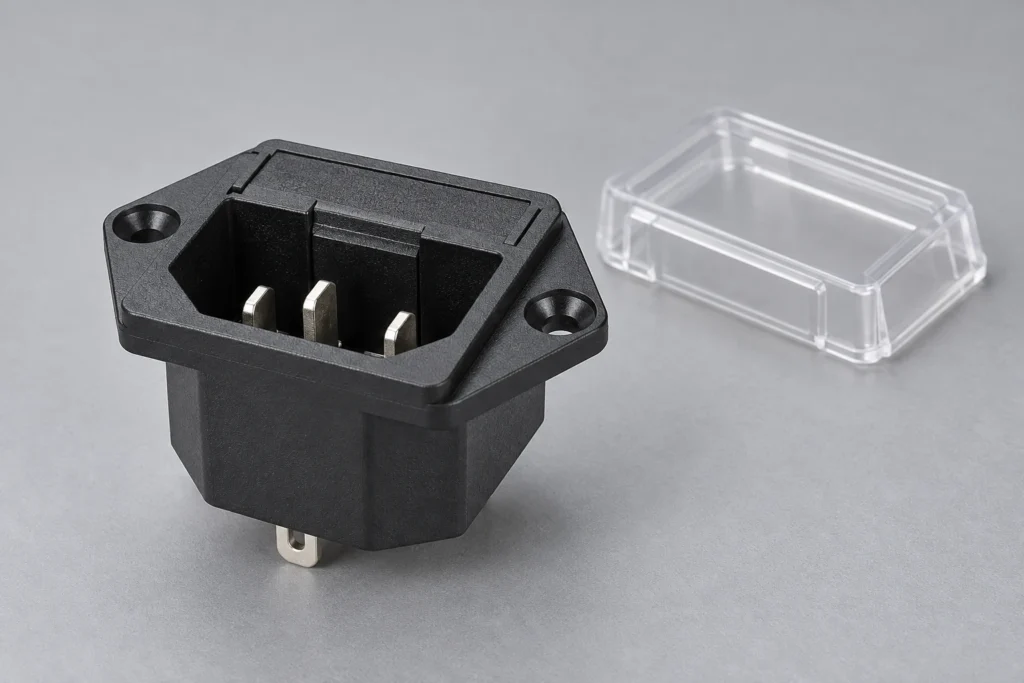
Power inlet pollution degree describes the expected contamination conditions affecting insulation in the relevant equipment environment. It is not a measure of outdoor air quality, a waterproof rating or a shortcut to selecting an inlet by current alone. Define the microenvironment around the insulating paths, including dust, moisture and possible condensation, then review the component and finished assembly under the applicable equipment requirements. For the LEMA IPZ inlet family, request evidence for the exact ordered version and intended installation. This guide does not assign a pollution degree, approval or permissible spacing to an unidentified IPZ variant. Define the environment at the insulation A factory can have dusty production areas while a protected compartment remains comparatively clean. Conversely, a cabinet installed in an ordinary room can draw contaminated air through a fan or collect condensation during temperature changes. The relevant question is what reaches the insulation being assessed over the equipment's intended use, not simply whether the building is described as indoor or outdoor. The IEC insulation coordination publication covers clearances, creepage distances and criteria for solid insulation within its stated scope. NI's explanation of pollution degree describes how contamination categories relate to electrical equipment and insulation distances. Use these sources to frame the review; obtain the applicable requirements and full component evidence before choosing actual limits. Map the inlet region separately from other parts of the machine. The accessible mating side, the internal terminals and nearby insulating surfaces may experience different conditions. An external panel gasket may protect one interface while leaving internal wiring exposed to cabinet contamination. A useful drawing identifies the path being assessed, the boundary relied on and the environmental assumption behind it. IPZ-4 flange and three...

Mehr lesen
Micro Switch Altitude Derating: Separate Electrical and Thermal Limits
Blog LEMA Electric

Micro Switch Altitude Derating: Separate Electrical and Thermal Limits

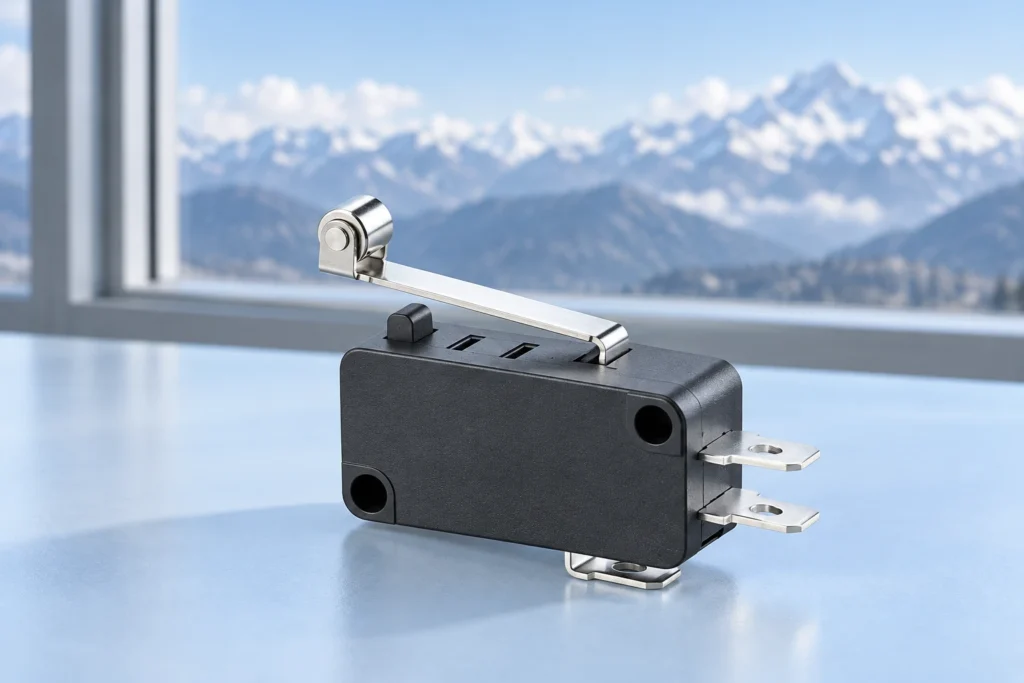
Micro switch altitude derating requires separate reviews of insulation, contact switching and heat in the installed equipment. A current and voltage marking alone does not establish suitability at a mountain site or in a reduced-pressure enclosure. Ask the supplier for the exact variant's environmental limits, then assess the assembly under its applicable equipment standard. Do not borrow a correction factor from a motor, breaker or unrelated switch. For the LEMA KW7 series, this article provides an application-review workflow; it does not assign a new altitude rating or establish that any particular version has passed reduced-pressure testing. Why altitude belongs in the equipment specification A machine originally built for a low-elevation factory may later be ordered for a mountain installation. Its drawing can remain identical while the environment changes. Altitude affects atmospheric conditions, and pressure matters when reviewing electrical paths through air. The local air temperature, enclosure ventilation and operating load also deserve attention. These influences must be described together rather than compressed into a single unexplained percentage. The NASA atmosphere model illustrates how pressure, temperature and density vary with height in a simplified atmosphere. It explains the physical background, not the rating of an electrical component. Actual equipment can have a different internal temperature or pressure from the surrounding weather. Record whether the switch is inside an unpressurized cabinet, a controlled enclosure or another defined environment before choosing the assessment conditions. An altitude requirement should travel with the purchase specification. If it appears only in a late installation email, the component supplier may never have considered it. The practical first step is to add the maximum intended operating elevation, the relevant pressure conditions where known, and the enclosure arrangement to...

Mehr lesen
Materialdeklarationen für Schalter: Anforderung nutzbarer IEC-62474-Daten
Blog LEMA Electric

Materialdeklarationen für Schalter: Anforderung nutzbarer IEC-62474-Daten

A switch material declaration prepared for an IEC 62474 request needs a defined product identity, an agreed reporting scope and usable substance information. A generic statement that a switch is environmentally compliant may not contain the data a customer needs to process. Before asking the supplier to complete a file, specify the required format and edition, the reference-list version, the ordered configuration and the expected declaration type. Then check both the file's structure and the meaning of its contents. Passing a format check does not establish that the material information is complete or correct. The LEMA KW7 micro switch is the product example for this purchasing workflow. The article does not claim that an IEC 62474 XML declaration already exists for every KW7 option. Request the available data for the exact part, identify any missing fields and agree how they will be resolved. Product photographs help identify the item but cannot establish its substance composition. Define the receiving system before creating another spreadsheet Begin with the customer's actual request. Ask whether it needs an IEC 62474 declaration, an IPC-1752 format or a customer-specific worksheet. Record the accepted revision or schema version and the validation method. Sending a large amount of information in an incompatible format can leave both parties repeating work while the original request remains unanswered. IEC's material-declaration overview describes a common format for reporting and exchanging material and substance information. It distinguishes compliance and composition declarations within its described framework. Use the edition and requirements agreed for your request rather than assuming that the title of a standard alone defines every field, reporting depth or customer acceptance rule. Separate a statement from a structured declaration A short supplier...

Mehr lesen
Abschirmung des Endschalterkabels: SPS-Störungen diagnostizieren, bevor die Neuverkabelung erfolgt
Blog LEMA Electric

Abschirmung des Endschalterkabels: SPS-Störungen diagnostizieren, bevor die Neuverkabelung erfolgt

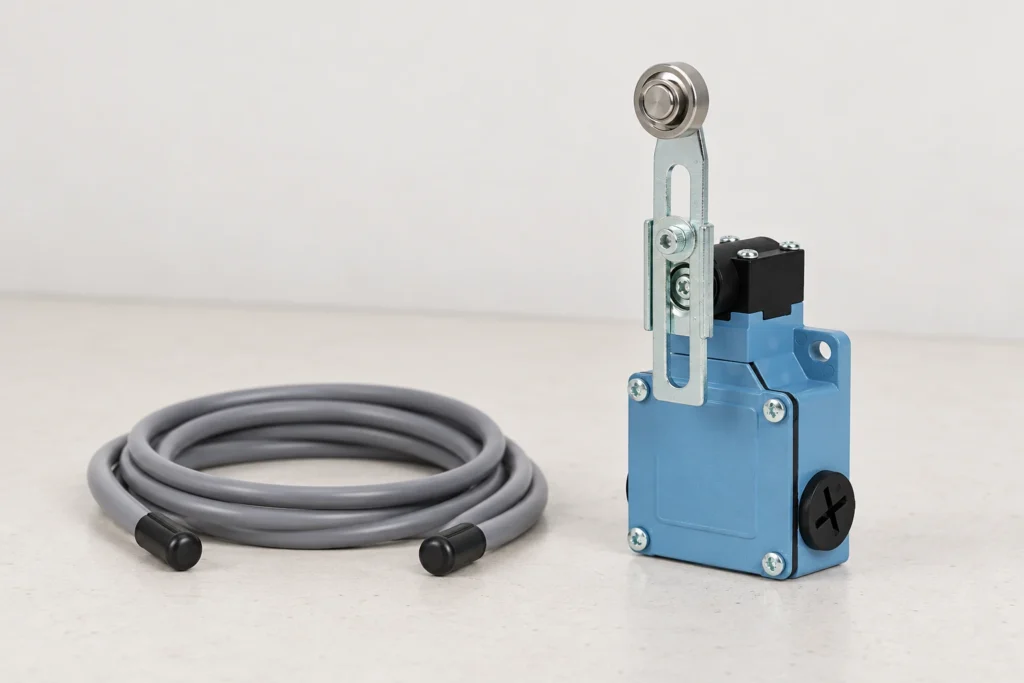
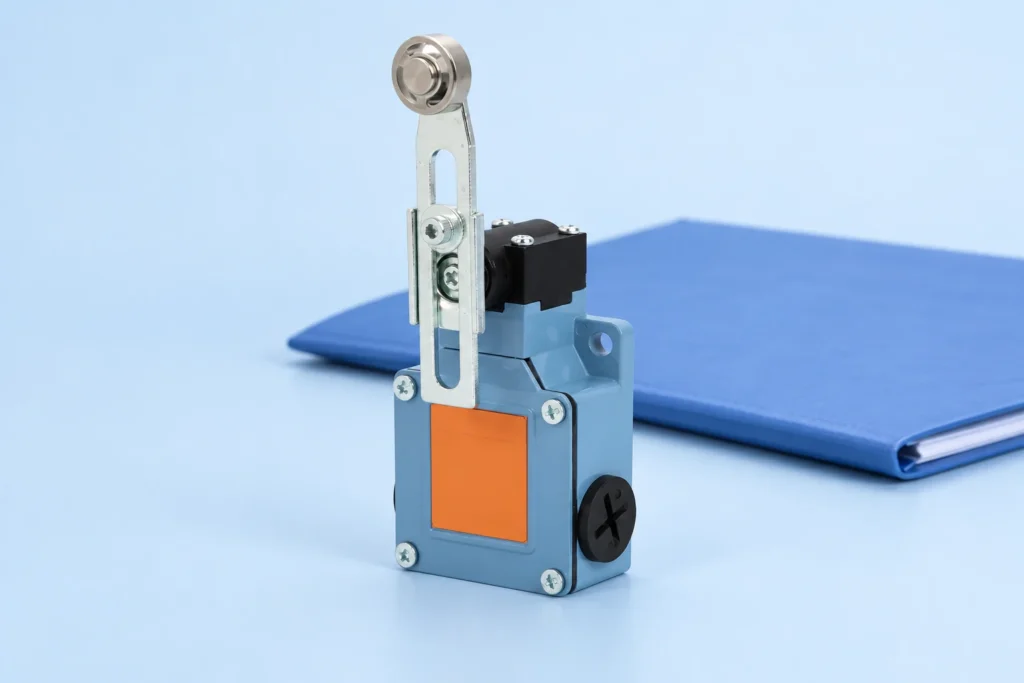
Limit switch cable shielding can help control interference, but it should follow a diagnosis of the complete switch-to-controller circuit. A false PLC transition may come from contact bounce, unstable actuation, a loose connection, incorrect input logic or electrical noise coupled into the cable. Identify the actual cause before changing shield connections. The correct cable route and termination depend on the controller instructions, the installation's bonding arrangement and the interference being addressed. There is no universal rule that every limit-switch shield must be connected at exactly one end. The LEMA LZ1 mechanical limit switch is the product example here. Its enclosure and actuator do not define the shield arrangement of an external cable or prove immunity of a complete PLC installation. The photographs show the intact switch beside separate cable-planning items, with no approved wiring arrangement implied. Use the exact switch terminal record and controller manual when preparing the circuit. Establish what the PLC is actually seeing Write down the unwanted event precisely. Note whether it occurs during switch actuation, while the mechanism is stationary, when a motor starts or during another machine action. Distinguish the PLC's raw input indication from a program condition or a displayed alarm. These observations help determine whether the problem belongs to the physical signal path or to the way the signal is interpreted. Start with the limit switch PLC wiring guide to confirm the intended contact path and input arrangement. Check the actual terminal identities, supply reference and selected input channel against the drawing. A wiring error should not be hidden by adding shielding or software delays. Record the original configuration so any later change can be assessed against a known starting point. Separate mechanical...

Mehr lesen
UL 94 für Netzeingänge: Überprüfen Sie die Kunststoffklassifizierung und ihre Grenzen
Blog LEMA Electric

UL 94 für Netzeingänge: Überprüfen Sie die Kunststoffklassifizierung und ihre Grenzen

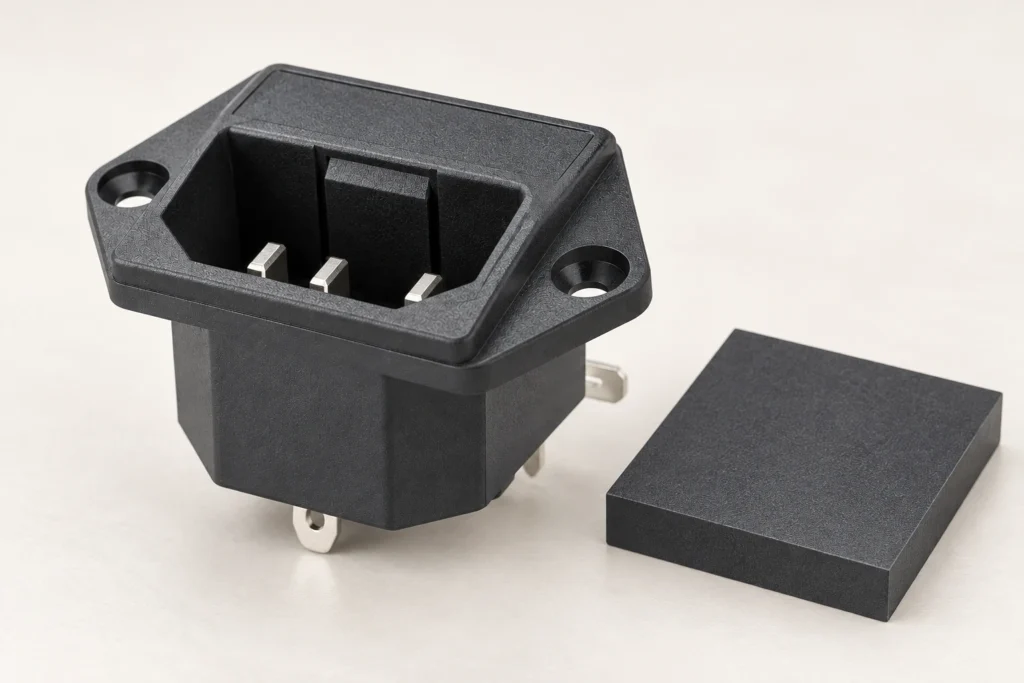
UL 94 flammability evidence for a power inlet describes the behavior of a specified plastic material under defined test conditions. It does not, by itself, establish the inlet's current rating, operating temperature, insulation performance or approval of the finished equipment. When an OEM specification calls for a particular flame classification, connect that requirement to the actual resin grade, color, thickness and component configuration being supplied. A generic claim that the inlet uses flame-retardant plastic leaves important questions unanswered. This guide uses the LEMA IPZ power socket series as a product example. Its visible black housing establishes neither a resin identity nor a UL 94 classification. The illustrations follow the screw-mount IPZ-4 form shown in the product reference; they are not photographs of a flammability test. Ask LEMA for the material and approval records applicable to the exact ordered configuration before adding a flame-class claim to an equipment specification. Define which part needs the material evidence A power inlet can contain several nonmetallic parts with different functions. Identify the housing, any separate carrier and other relevant insulating parts on the actual construction record. Ask which material specification applies to each part being reviewed. Do not assume that one resin statement covers every plastic item in a wider family or an attached accessory. This identification step also prevents a common document mix-up: a supplier may provide a valid material record for a nearby component rather than the part actually ordered. Tie the response to the manufacturer's complete part number and drawing revision. If the construction is not documented at the level you need, make that a focused supplier question instead of filling the gap with an assumption about appearance. Read UL 94...

Mehr lesen
IP67- vs. NEMA-4-Endschalter: Vergleichen Sie die Nachweise vor dem Austausch
Blog LEMA Electric

IP67- vs. NEMA-4-Endschalter: Vergleichen Sie die Nachweise vor dem Austausch

IP67 vs NEMA 4 limit switch specifications cannot be resolved by treating the two labels as equivalent. They belong to different enclosure classification systems and address different sets of conditions. Identify the actual exposure, check the scope of the rating for the ordered switch, and review the complete installed arrangement. If a purchase specification requires NEMA Type 4, an IP67 statement alone is not enough to approve a substitution. Ask for evidence that answers the original requirement, or obtain a documented engineering decision to revise the requirement. The LEMA LZ1 limit switch is the mechanical product illustrated here. Its current product page states IP66; this article does not relabel it IP67, NEMA Type 4 or Type 4X. The example shows why a buyer needs to read the actual model record instead of transferring a rating from a related family or a similar-looking enclosure. Identify which protection question you are asking Start with the machine location and operating process. Describe dust, rain, spray, cleaning, occasional immersion and any chemical exposure separately. Also record where the switch is mounted and whether its cable entry faces a likely water path. A single word such as waterproof does not communicate these conditions well enough for a supplier to assess the correct configuration. IEC 60529 defines the IP classification framework for enclosure protection. Use the applicable standard and product evidence to interpret a claimed code. An immersion-related designation does not automatically answer every question about water jets, cleaning chemicals, corrosion or a machine's maintenance procedure. Those need their own relevant requirements and evidence. Understand why a conversion chart is only a starting point NEMA's enclosure-type guide expressly limits the direction in which its comparison table...

Mehr lesen
RoHS and REACH for Switches: Check Supplier Compliance Evidence
Blog LEMA Electric

RoHS and REACH for Switches: Check Supplier Compliance Evidence

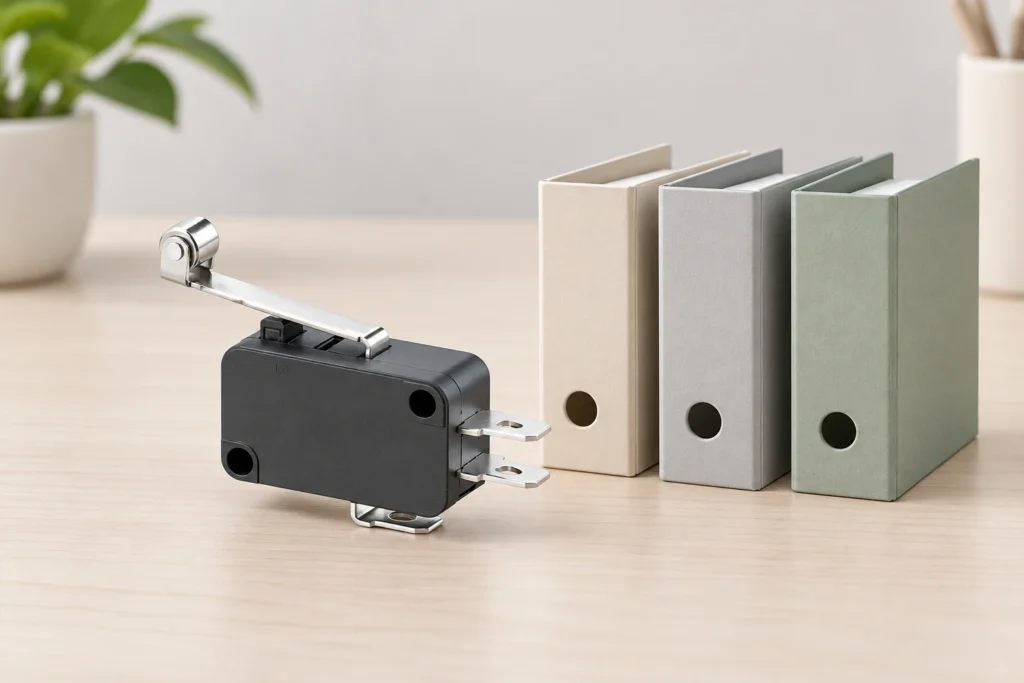
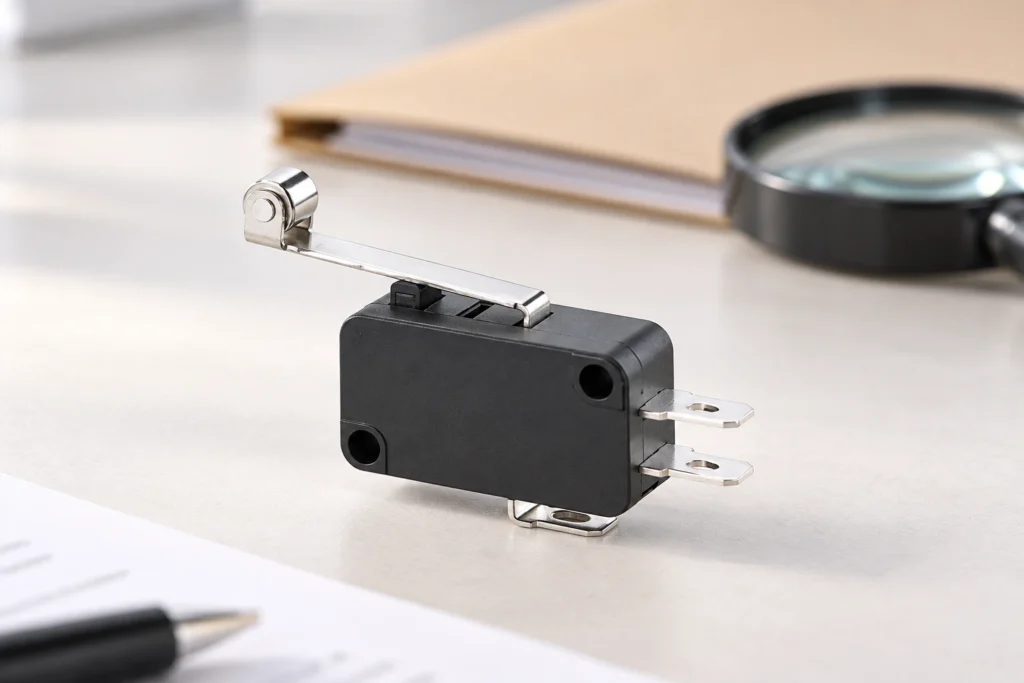
RoHS and REACH compliance for switches should be reviewed as two separate substance-management questions. A RoHS statement does not automatically answer every REACH question, and an electrical safety approval does not replace either review. For an OEM purchase, define the destination market, the equipment application, the exact switch configuration and the evidence date. Then ask the supplier for statements that identify their scope and supporting basis. A useful response explains which ordered parts are covered and which questions still require assessment by the equipment manufacturer or importer. The LEMA KW7 micro switch is the product example in this guide. The housing, metal terminals and actuator can help identify a sample, but appearance cannot reveal its material composition or establish regulatory compliance. Request current evidence for the exact order code. This article does not declare a particular KW7 configuration RoHS compliant, REACH compliant or free of any named substance without the relevant supplier documentation. Begin with the question the document must answer A buyer often receives a single green-compliance file during quotation. Before accepting it, write down what your organization needs to decide. Is the request about restricted substances in equipment, information on substances present in supplied articles, a customer declaration format, or all of these? Assign the review to someone who understands the applicable market and product scope. The European Commission's RoHS overview describes restrictions on hazardous substances in electrical and electronic equipment. Its scope and exemptions need to be considered for the actual application. A component supplier's response supports the equipment assessment; it should not be presented as a universal approval for every finished product into which the switch might be installed. Keep RoHS and REACH evidence separate The...

Mehr lesen
UL-gelistete vs. UL-anerkannte Schalter: Überprüfen Sie die richtige Zulassung
Blog LEMA Electric

UL-gelistete vs. UL-anerkannte Schalter: Überprüfen Sie die richtige Zulassung

UL Listed vs UL Recognized switches is a question about the scope of the approval, not simply which logo looks more reassuring. For an OEM buying a switch to build into equipment, confirm the exact component identity, the certification category, the covered electrical duty and any conditions attached to its use. A recognized component can be appropriate for an evaluated assembly, while a listing on another product does not approve every possible installation. Start with the evidence for the ordered variant, then have the equipment approval reviewed against the intended application. This guide addresses purchasing and engineering document review. The LEMA KW7 micro switch is the physical product example. Its catalogue mentions several approvals across the series; that statement is a reason to request the applicable records, rather than proof that every combination of terminals, lever, rating and operating force has identical coverage. No certification file number or unrestricted approval is inferred from the illustrations in this article. Separate the component decision from the equipment decision A switch supplier and an equipment manufacturer answer related but different questions. The supplier identifies what was manufactured and provides the documentation that applies to it. The equipment manufacturer checks whether that part fits the design, the environment and the applicable equipment evaluation. A purchasing release should connect those two decisions without treating one as a substitute for the other. UL Solutions explains component recognition as a program for parts and subassemblies used in larger certified products. Such parts have conditions of acceptability. In practical review, ask what those conditions require for the particular switch and how the equipment drawing satisfies them. Keep this evidence with the component record so a later engineer can...

Mehr lesen
Micro Switch Temperature Rise Test: Validate the Loaded Assembly
Blog LEMA Electric

Micro Switch Temperature Rise Test: Validate the Loaded Assembly

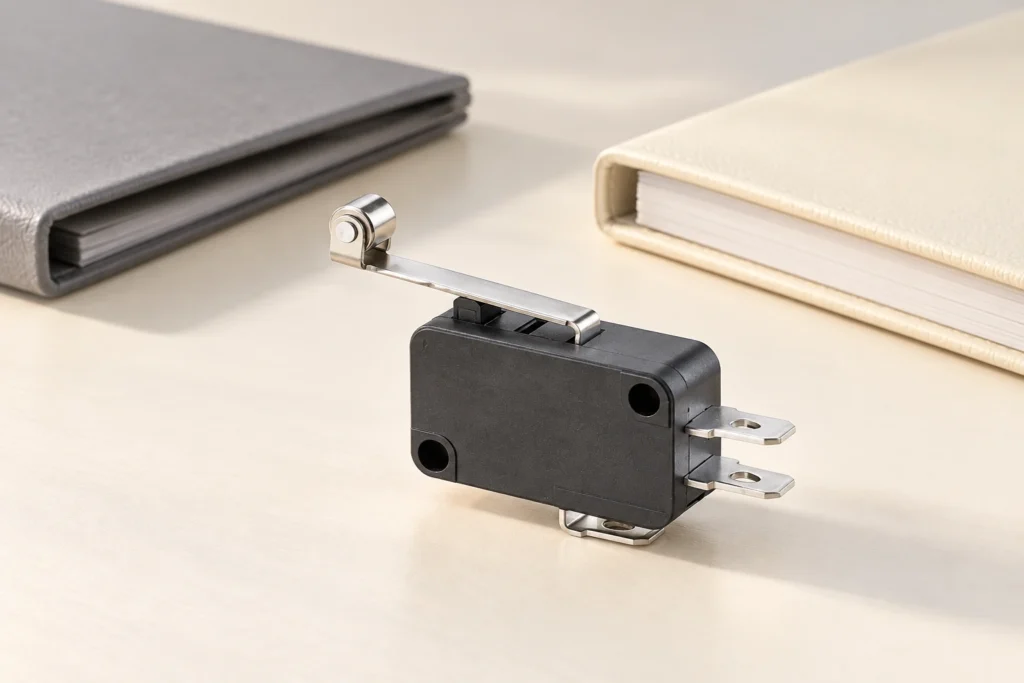
A micro switch temperature rise test evaluates heating in a defined loaded assembly relative to a defined ambient reference. It needs more than a warm-to-the-touch judgment or a single resistance reading. Establish the exact switch, terminal connection, conductor, enclosure, current duty and acceptance basis before testing. Record temperature over time until the method's stabilization requirement is met, then compare both temperature rise and absolute temperature with the applicable limits. This guide helps OEM buyers prepare a representative test request without inventing a universal temperature limit for every micro switch. Start with the decision the test must support State whether the work is a development comparison, investigation of a field complaint, supplier qualification or a formal compliance evaluation. These purposes can require different specimens, methods and reports. A quick bench comparison can identify a suspicious connection, but it cannot automatically replace a prescribed product or equipment test. Agree who owns the test specification and who will approve the result. Identify the full switch code and drawing revision. Add terminal type, mating connector, conductor material and size, connection process and any mounting hardware that influences the installation. A result obtained with one connection cannot simply be assigned to another arrangement. The heat source might be a contact path, a loose connector, a conductor or an external component near the switch. The KW7 series page is a starting point for an inquiry about a physical switch family. The KW7 selection guide organizes the wider component review. Request the exact supported variant data and any applicable test conditions from Lemaele. Do not turn a family-level current marking or operating ambient statement into an assumed temperature-rise limit. The complete application must remain within the relevant...

Mehr lesen