Como escolher a espessura do alavão do microinterruptor
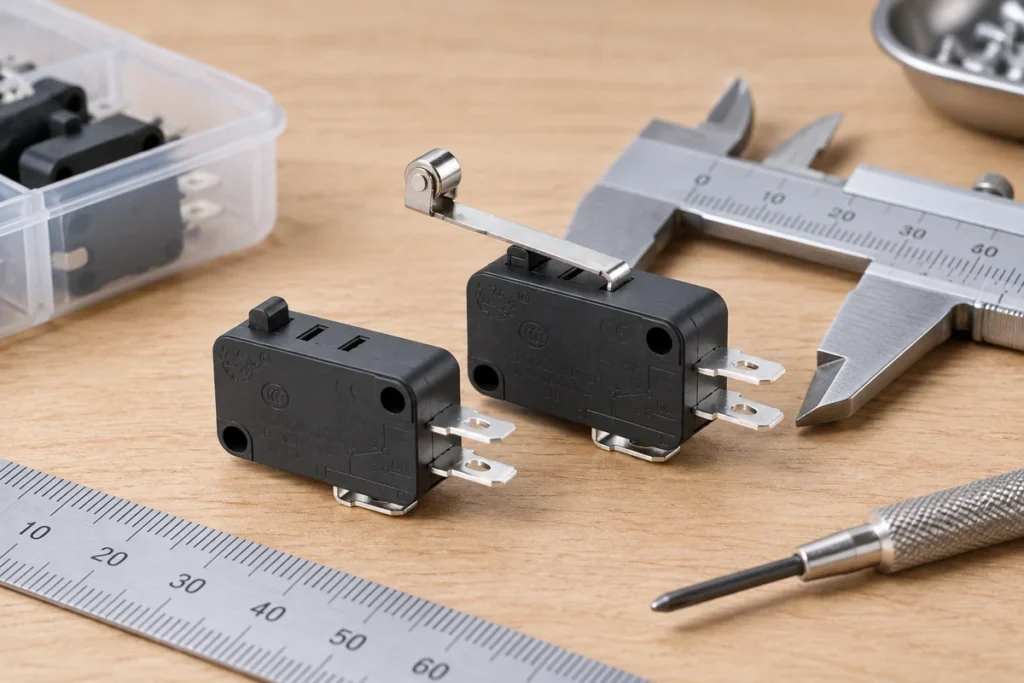
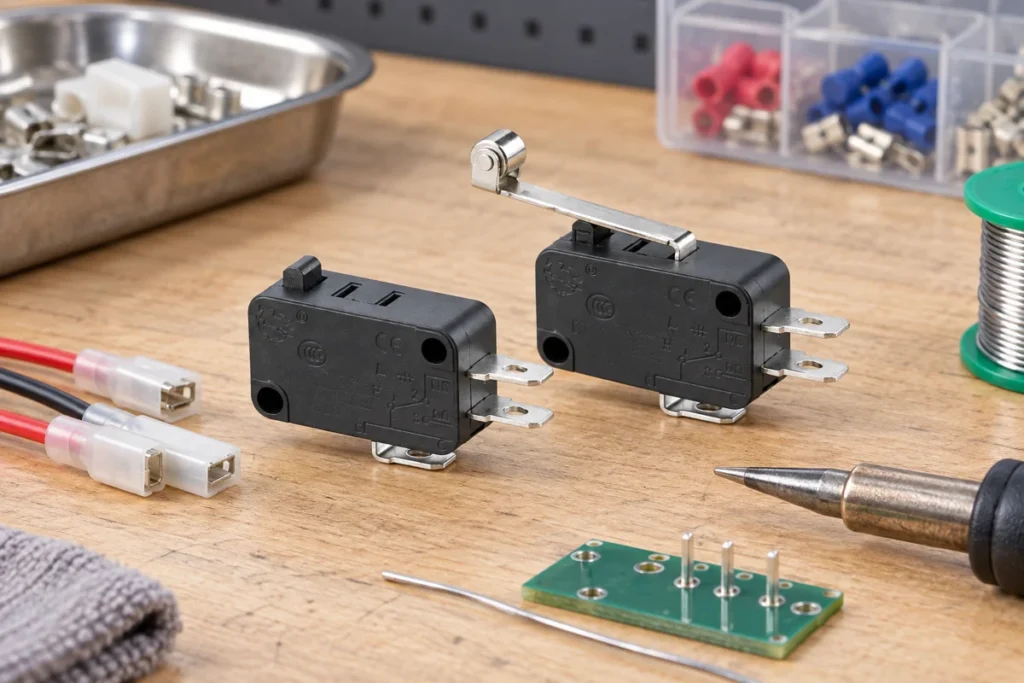
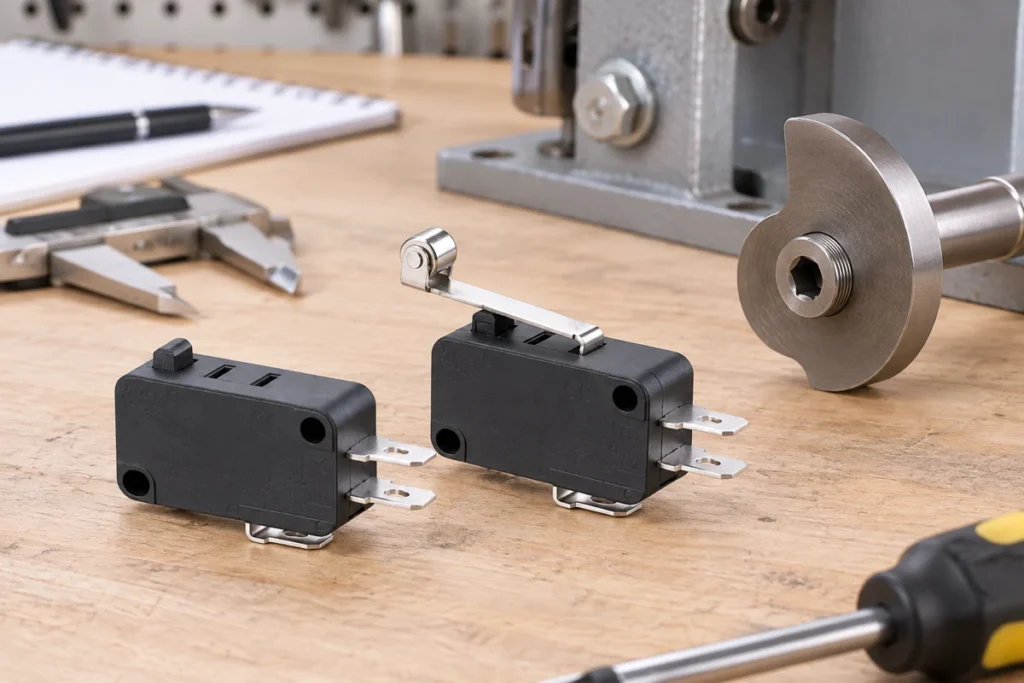
O comprimento da alavanca do microinterruptor deve ser escolhido com base no movimento do mecanismo, no ponto de contato, na força de operação necessária e na distância permitida de deslocamento. Uma alavanca mais longa pode alterar a vantagem mecânica, mas também altera o deslocamento e o envelope de movimento. Medir a distância a partir do ponto de pivô relevante ou da referência definida no desenho do interruptor, não apenas a faixa metálica exposta. Escolha uma variante de atuador completa e verifique o funcionamento e a liberação no mecanismo real, em vez de dobrar uma alavanca pronta para funcionar. Este guia concentra-se na escolha da geometria da alavanca para a detecção repetível da posição do OEM. Complementa os guias mais amplos sobre tipos de atuadores e seleção de força. Os microinterruptores de alavanca LEMA KW7 são o produto-referência; as ilustrações não são desenhos dimensionados nem autorizam a modificação do atuador. Defina o que o mecanismo precisa para detectar: um evento inicial: uma peça atinge uma posição, uma alavanca gira em um ponto, uma porta fecha-se ou um item passa por uma estação de detecção. Registre tanto o estado operacional necessário quanto o estado de liberação. Decida se o controlador precisa de uma condição de retenção, um pulso ou uma mudança de estado. A seleção do alavanca deve suportar essa função ao longo do movimento esperado. Identifique o movimento disponível no local pretendido da comutação. Inclua a direção de aproximação, o deslocamento, a velocidade e a precisão com que o alvo é guiado. Uma alavanca que atinge um alvo distante pode resolver o problema de embalagem, mas introduzirá sensibilidade ao movimento lateral. Quando a localização do alvo for incerta, compare uma posição de montagem diferente antes de assumir que uma alavanca mais longa é a melhor correção. Leia o desenho específico do atuador. Obtenha o código completo do desenho da comutação e do alavanca ou rolo reais. Identifique o pivô, a região de contato permitida, a posição de operação, o comportamento de liberação e a distância máxima permitida. Um desenho da família de corpos sem...
Ler mais