LEMA NEWS CENTER

News & Blog

News Center

Micro Switch Manufacturer China: OEM Sourcing Guide for U.S. Buyers
Blog LEMA Electric

Micro Switch Manufacturer China: OEM Sourcing Guide for U.S. Buyers

Understanding micro switch manufacturer china helps OEM buyers, integrators, and procurement teams specify reliable components for U.S. and Canadian equipment programs. This guide explains selection criteria, typical applications, and documentation you should request before approving a supplier or series. This guide focuses on practical evaluation steps for U.S. and Canadian OEM buyers—specifications, sample qualification, and documentation—not generic marketing claims. Cross-check public specifications on lemaele.com and confirm project-specific ratings with your design engineer and LEMA Electric before production release. Section checklists can be reused as RFQ attachments and supplier audit outlines. On this pagePart 1. What Buyers Should Know About Micro Switch Manufacturer ChinaPart 2. Key Specifications and Comparison PointsPart 3. Applications and Supplier QualificationPart 4. Documentation and Handover ChecklistPart 5. Sample Qualification, Field Service, and Lifecycle Support Part 1. What Buyers Should Know About Micro Switch Manufacturer China Catalog ratings for micro switch manufacturer china must match real load, temperature, and environmental conditions—not marketing summaries alone. Compare actuator style, terminal type, and sealing level against your mechanical fixture and service access requirements. For export programs, confirm which certifications apply to the exact series and part configuration you plan to buy. Industrial buyers should treat switch vendor selection as a lifecycle decision—catalog ratings must match your fixture, load, and environment. Request in-house test capability or third-party type tests for the exact terminal and actuator variant, not generic company certificates. Compare series within the LEMA Electric micro switch catalog against your mechanical envelope, sealing, and certification requirements before AVL approval. Document warranty ownership (OEM, distributor, or integrator) and escalation paths before first production shipment. Include actuator type, terminal style, and load profile in the RFQ package to reduce sample iteration cycles. Align...

Read More
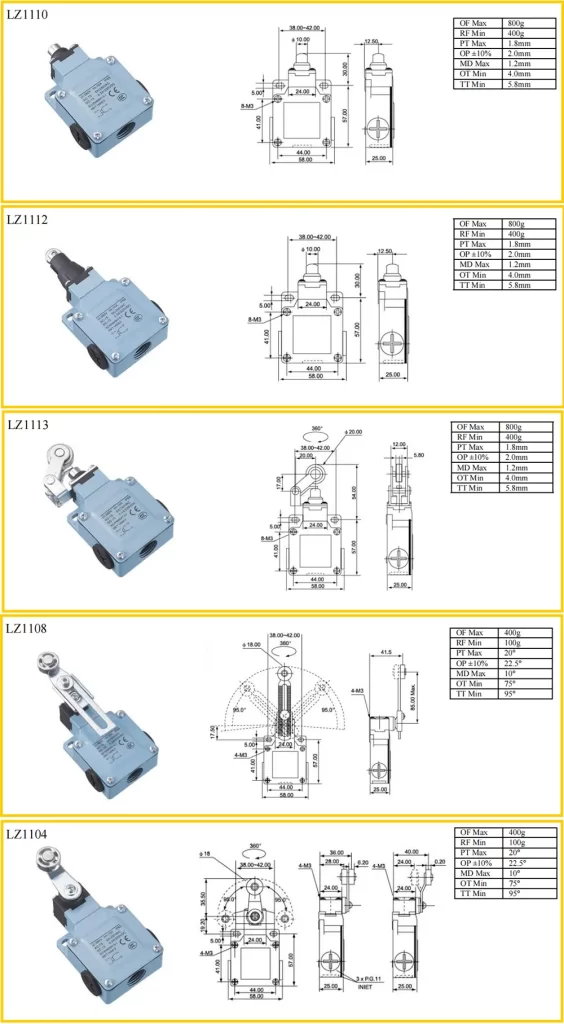
Roller Limit Switch: Types, Selection and Industrial Applications
Blog LEMA Electric

Roller Limit Switch: Types, Selection and Industrial Applications

Understanding roller limit switch helps OEM buyers, integrators, and procurement teams specify reliable components for U.S. and Canadian equipment programs. This guide explains selection criteria, typical applications, and documentation you should request before approving a supplier or series. This guide focuses on practical evaluation steps for U.S. and Canadian OEM buyers—specifications, sample qualification, and documentation—not generic marketing claims. Cross-check public specifications on lemaele.com and confirm project-specific ratings with your design engineer and LEMA Electric before production release. Section checklists can be reused as RFQ attachments and supplier audit outlines. On this pagePart 1. What Buyers Should Know About Roller Limit SwitchPart 2. Key Specifications and Comparison PointsPart 3. Applications and Supplier QualificationPart 4. Documentation and Handover ChecklistPart 5. Sample Qualification, Field Service, and Lifecycle Support Part 1. What Buyers Should Know About Roller Limit Switch Catalog ratings for roller limit switch must match real load, temperature, and environmental conditions—not marketing summaries alone. Compare actuator style, terminal type, and sealing level against your mechanical fixture and service access requirements. For export programs, confirm which certifications apply to the exact series and part configuration you plan to buy. Map the switch series to equipment category—appliance, industrial machine, automotive aftermarket, or control panel—before finalizing AVL. Environmental exposure (dust, wash-down, outdoor) should drive IP class and material choices as early as actuator selection. Browse related series on LEMA Electric limit switch catalog when multiple switch types appear in one BOM. Include actuator type, terminal style, and load profile in the RFQ package to reduce sample iteration cycles. Align switch series selection with mechanical fixture design before tooling freeze on OEM programs. Define acceptance tests—operating force, contact resistance, and release point—before approving a supplier lot....

Read More
Kw12 Micro Switch: Specifications, Features and Applications
Blog LEMA Electric

Kw12 Micro Switch: Specifications, Features and Applications

Understanding kw12 micro switch helps OEM buyers, integrators, and procurement teams specify reliable components for U.S. and Canadian equipment programs. This guide explains selection criteria, typical applications, and documentation you should request before approving a supplier or series. This guide focuses on practical evaluation steps for U.S. and Canadian OEM buyers—specifications, sample qualification, and documentation—not generic marketing claims. Cross-check public specifications on lemaele.com and confirm project-specific ratings with your design engineer and LEMA Electric before production release. Section checklists can be reused as RFQ attachments and supplier audit outlines. On this pagePart 1. What Buyers Should Know About Kw12 Micro SwitchPart 2. Key Specifications and Comparison PointsPart 3. Applications and Supplier QualificationPart 4. Documentation and Handover ChecklistPart 5. Sample Qualification, Field Service, and Lifecycle Support Part 1. What Buyers Should Know About Kw12 Micro Switch Catalog ratings for kw12 micro switch must match real load, temperature, and environmental conditions—not marketing summaries alone. Compare actuator style, terminal type, and sealing level against your mechanical fixture and service access requirements. For export programs, confirm which certifications apply to the exact series and part configuration you plan to buy. Map the switch series to equipment category—appliance, industrial machine, automotive aftermarket, or control panel—before finalizing AVL. Environmental exposure (dust, wash-down, outdoor) should drive IP class and material choices as early as actuator selection. Browse related series on LEMA Electric micro switch catalog when multiple switch types appear in one BOM. Include actuator type, terminal style, and load profile in the RFQ package to reduce sample iteration cycles. Align switch series selection with mechanical fixture design before tooling freeze on OEM programs. Define acceptance tests—operating force, contact resistance, and release point—before approving a supplier lot....

Read More
Foot Switch Manufacturer China: OEM Evaluation Guide
Blog LEMA Electric

Foot Switch Manufacturer China: OEM Evaluation Guide

Sourcing from a foot switch manufacturer in China supports cost-competitive industrial equipment programs while requiring the same diligence as domestic AVL onboarding. Foot switches control punch presses, sewing machines, medical beds, and test fixtures where hands-free operation improves safety. This guide explains pedal configurations, enclosure ratings, and verification steps U.S. and Canadian buyers use before adding a new supplier. This guide focuses on practical evaluation steps for U.S. and Canadian OEM buyers—specifications, sample qualification, and documentation—not generic marketing claims. Cross-check public specifications on lemaele.com and confirm project-specific ratings with your design engineer and LEMA Electric before production release. Section checklists can be reused as RFQ attachments and supplier audit outlines. On this pagePart 1. Product Types and Application ExpectationsPart 2. Specifications Buyers Should ComparePart 3. Factory Audit and Sample ApprovalPart 4. Documentation and Handover ChecklistPart 5. Sample Qualification, Field Service, and Lifecycle Support Part 1. Product Types and Application Expectations Momentary foot switches return to off when pressure releases; maintained types latch until pressed again—confirm logic matches your machine safety category. Single-pedal, dual-pedal (forward/reverse), and guarded models with metal shields address different ergonomics and accidental actuation risks. Cable entry, strain relief, and internal contact blocks should be rated for your supply voltage, inrush, and expected step cycles per shift. Industrial buyers should treat switch vendor selection as a lifecycle decision—catalog ratings must match your fixture, load, and environment. Request in-house test capability or third-party type tests for the exact terminal and actuator variant, not generic company certificates. Compare series within the LEMA Electric foot switch catalog against your mechanical envelope, sealing, and certification requirements before AVL approval. Document warranty ownership (OEM, distributor, or integrator) and escalation paths before first production...

Read More
Roller Micro Switch: Selection Guide for OEM Integrators
Blog LEMA Electric

Roller Micro Switch: Selection Guide for OEM Integrators

A roller micro switch uses a rolling actuator on the lever arm to reduce friction and wear when the switch contacts a moving cam, door edge, or conveyor guide. OEM integrators in the United States and Canada specify roller micro switches for position sensing where plunger-style actuators would bind or wear quickly. This guide covers actuator geometry, force/travel trade-offs, and documentation you should request before approving a series for production. This guide focuses on practical evaluation steps for U.S. and Canadian OEM buyers—specifications, sample qualification, and documentation—not generic marketing claims. Cross-check public specifications on lemaele.com and confirm project-specific ratings with your design engineer and LEMA Electric before production release. Section checklists can be reused as RFQ attachments and supplier audit outlines. On this pagePart 1. Roller Actuator Basics and When to Use ThemPart 2. Key Specifications and Comparison PointsPart 3. Qualification and Sourcing for OEM ProgramsPart 4. Documentation and Handover ChecklistPart 5. Sample Qualification, Field Service, and Lifecycle Support Part 1. Roller Actuator Basics and When to Use Them Roller levers translate linear or rotary motion into snap-action contact change with lower scrubbing force than flat levers on sliding surfaces. Typical uses include elevator door zones, vending machine delivery paths, industrial gate interlocks, and appliance door latches where the switch sees repeated partial travel. Match roller diameter and lever length to the cam profile—too small a roller increases point loading; too long a lever may over-travel and stress the internal spring. Map the switch series to equipment category—appliance, industrial machine, automotive aftermarket, or control panel—before finalizing AVL. Environmental exposure (dust, wash-down, outdoor) should drive IP class and material choices as early as actuator selection. Browse related series on LEMA Electric...

Read More
Snap Action Switch Manufacturer: Selection Guide for OEM Buyers
Blog LEMA Electric

Snap Action Switch Manufacturer: Selection Guide for OEM Buyers

Choosing a reliable snap action switch manufacturer affects product safety, field failure rates, and certification paths for OEM programs in the United States and Canada. Snap action (micro) switches use a spring-loaded mechanism to open or close contacts quickly when an actuator reaches a defined travel point—making them common in appliances, automotive controls, industrial equipment, and medical devices. This guide focuses on practical evaluation steps for U.S. and Canadian OEM buyers—specifications, sample qualification, and documentation—not generic marketing claims. Cross-check public specifications on lemaele.com and confirm project-specific ratings with your design engineer and LEMA Electric before production release. Section checklists can be reused as RFQ attachments and supplier audit outlines. On this pagePart 1. What Buyers Should Expect from a Snap Action Switch ManufacturerPart 2. Key Specifications and Actuator OptionsPart 3. Applications and Sourcing StrategyPart 4. Documentation and Handover ChecklistPart 5. Sample Qualification, Field Service, and Lifecycle Support Part 1. What Buyers Should Expect from a Snap Action Switch Manufacturer A qualified manufacturer documents electrical ratings (current, voltage, temperature), mechanical life cycles, and actuator options in datasheets—not marketing summaries alone. Look for in-house production of core components, repeatable test routines, and traceability from batch to shipment for export programs. For North American projects, confirm whether catalog ratings align with UL or CSA listings for the specific series you plan to source. Industrial buyers should treat switch vendor selection as a lifecycle decision—catalog ratings must match your fixture, load, and environment. Request in-house test capability or third-party type tests for the exact terminal and actuator variant, not generic company certificates. Compare series within the LEMA Electric micro switch catalog against your mechanical envelope, sealing, and certification requirements before AVL approval. Document warranty...

Read More
AC Power Socket Types: Global OEM Sourcing & Manufacturing Guide
Blog LEMA Electric

AC Power Socket Types: Global OEM Sourcing & Manufacturing Guide

Compliance considerations increasingly dominate the global market for electrical accessory evolution and development, with type of AC Power Socket as primary focus as opposed to type of connection being used to support product sourcing decisions. During my 20 year experience producing sockets using NEMA, Schuko and BS standards, I have experienced an un-certified bench causing far greater disruptions at companies than any individual component cost savings realized by utilizing un-certified bench. With World wide tightening of safety standards, there has been an increase in demand for multi-certified modular socket systems, with estimates of more than 5% growth per year thru Grand View Research 2025 Forecast. It is important that OEMs and Brand Owners develop a unified system to reduce time-to-market while not holding regional inventory by integrating country-specific socket options into one system. Procurement teams continuously encounter challenges due to untraceable certificates, inconsistent contact force and thermal performance among different lots of the same Ac power socket item and obscured manufacturing data. These gaps result in redoing work, delayed shipments, and potential compliance violations. This guide provides a complete look at the production process from initial material to final finished product, including an auditable framework for evaluating suppliers based on information obtained directly from shop floors. Understanding Core Socket Standards and Raw Material Selection To determine the correct ac power socket, you must understand what the standard and materials will be used for to achieve an acceptable level of performance over a long term basis. Globally, the following types of sockets are most commonly specified for OEM equipment: North America: NEMA 5-15R, 125V AC / 15A, governed by UL 498. Europe: Schuko CEE 7/3, 250V AC / 16A, under VDE...

Read More
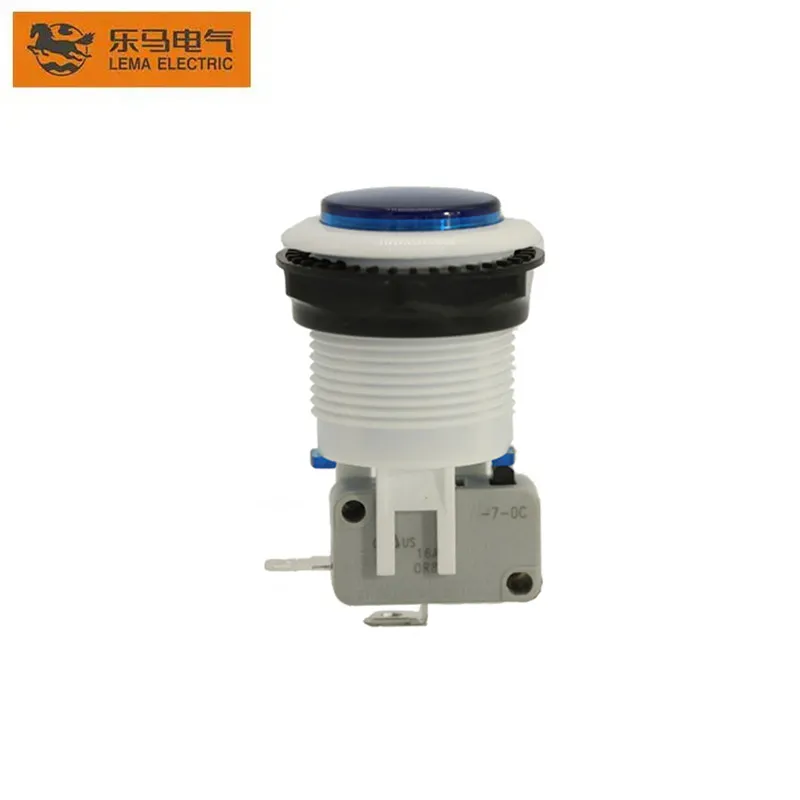
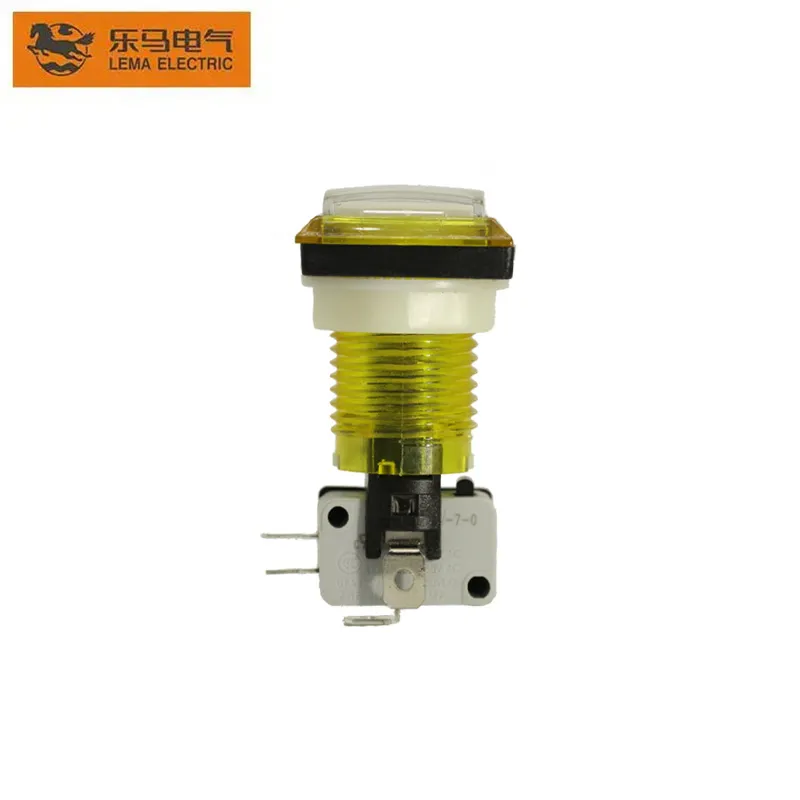
Microswitch Button: Definition, Working Principle, and Applications
Blog LEMA Electric

Microswitch Button: Definition, Working Principle, and Applications

Every electronic device or appliance requires a compact yet strong switch for operation; thus the microswitch button is used in many applications across multiple industries. The microswitch button's speed, accuracy, and reliability are what make it an essential element of both automated and controlled systems. In this article, we'll discuss what the microswitch button is, how it works, its major components, and the many ways it can be used. We'll also give you tips on selecting a correctly sized microswitch button for your application. What is a Microswitch Button? Key Components of a Microswitch Button The microswitch button is made up of many essential mechanisms which interact with one another to provide effective operation. The actuator of a microswitch is the component that is activated or pushed physically. There are several different actuator designs (e.g., levers, rollers, etc.) based on specific applications. casing: An outer layer of an item that houses its working components including the switch. The casing serves to protect the switch from damage caused by weather and other elements. Electrical contacts are used to complete the circuit of an electrical device by the switching action of the microswitch. They provide the path for electrical current to flow and are available in many different types, including normally open (NO) and normally closed (NC) circuits. Spring Mechanism: This component generates the required push-back and hold against the force of gravity to enable the switch to be returned back into its default position after it is taken from that position. Working Principle of a Microswitch Button A microswitch button operates based on mechanical movement. Pressing down (activating) the actuator applies mechanical force against the internal mechanism (which is spring loaded)...

Read More
Waterproof Micro Switch: Characteristics, Principles and Applications
Blog LEMA Electric

Waterproof Micro Switch: Characteristics, Principles and Applications

Waterproof micro switches are very popular components for many different applications, but they are particularly important because of their ability to continue working through various environmental conditions. This article will help you understand what a waterproof micro switch is by explaining its functions, how it works, and the many different uses that exist for it. In addition to covering these topics, many people ask the same question about waterproof micro switches; therefore, we will include answers to those frequently asked questions as well. Waterproof Micro Switch Features The Waterproof Micro Switch has been built with unique design specifications and is equipped with many unique features making it suitable for use under moist or dirty environmental conditions or conditions that are likely to change unpredictably. The following are some of its most important features: 1. Sealed Design: Waterproof Micro Switches have a hermetically sealed construction, making them resistant to dust, moisture and in some cases complete immersion in water which protects the internals. Because of this protection they are ideal for use in both outdoor and industrial environments. 2. High Durability: Micro-switches that are water resistant are made up of high-strength materials designed for intense long life and durability. They can withstand many million cycles and will maintain their performance for many years through use and abuse. 3. Compact Form Factor: These small size and weight give the engineer a large degree of flexibility in terms of designing compact devices without taking away space. 4. Wide Range of Actuation Forces: Waterproof micro switches are available in both a high-resistance tactile feel or ultra-light touch sensitivity, providing infinite force options for customization based on your specific application needs. 5. Temperature Resistance: Switches,...

Read More
Kw7 Micro Switch: The Complete Guide to Specifications & Applications
Blog LEMA Electric

Kw7 Micro Switch: The Complete Guide to Specifications & Applications

The Kw7 Micro Switch is very important because it is a reliable and precise way to activate electrical/electronic circuits. If you are researching micro switches as part of your design or product, knowing about the technical specifications and applications of the Kw7 will help make better decisions. The following comprehensive guide will cover some basic aspects of Micro Switches that you need to be aware of. What is a Kw7 Micro Switch? A Kw7 MICROSWITCH is an electromechanical switch with high efficiency. They are designed to change the state of an electrical circuit when it reaches a defined mechanical actuation force, using a physical mechanism. Because of their small size, they can easily be integrated into different applications including kitchen products, automotive applications and industrial machinery. Key Specifications of the Kw7 Micro Switch When selecting a micro switch, it is important to keep in mind your application and all of the specifications that will allow it to be valid for the application. These are just some of the important specifications for the Kw7 Micro Switch: Contact Rating: The contact or current rating of most Kw7 micro switches will be between 5 and 15 amps at 250 volts AC. They can be used in applications that operate using a moderate to a high amount of power. Operating Temperature: This device operates under extreme temperature conditions. The temperature ranges from -25 degrees Celsius to +85 degrees Celsius. As a result, the switch can be used in many different places with confidence. Life Cycle: The Kw7 Micro Switch is expected to last more than 1 million mechanical cycles, which shows it has high durability and will not require as many replacements as other...

Read More
Micro Switch 12V: A Comprehensive Overview
Blog LEMA Electric

Micro Switch 12V: A Comprehensive Overview

The Micro Switch 12V is known for being both reliable and versatile in terms of its use within electrical components. These small but powerful switches act as an integral part of many different types of electronic devices and machines; they ensure the proper functioning of the items they control. In this article we will discuss how Micro Switch 12V operates, as well as what type is best suited for specific applications. You’ll be able to see first-hand why Micro Switch 12Vs are important in so many different situations. How Do Micro Switch 12V Work? Micro Switches enable you to control electric current with the help of another mechanical mechanism, which in most cases could be a button or lever. When that actuator is depressed and the switch is activated, the power will flow through that circuit and into whatever device you are controlling. This will usually occur in less than one millisecond; therefore, Micro Switches provide a quick response time for your application. Types of Micro Switches Many Micro Switches 12V exist that are made for various uses. Here are some typical Micro Switches 12V examples: Micro Switch 12V DC: These switches work with direct current (DC), making them suitable for battery-powered devices. Waterproof Micro Switch 12V: Designed for humid or outdoor usage, these switches have been manufactured to withstand moisture and maintain functionality over time. Momentary Micro Switch 12V: A momentary switch is activated only while pressed; therefore, it is appropriate for use in applications requiring an immediate and short-term activation. How to Activate a Micro Switch? A Micro Switch 12V can be activated easily. It can be activated mechanically by pushing on the lever or button, closing the...

Read More
Common Applications of Micro Limit Switch
Blog LEMA Electric

Common Applications of Micro Limit Switch

The role of Micro Limit Switch are very important in providing efficient automation/control systems. Micro Limit Switches are usually tiny, compact, and versatile enough to be easily incorporated into many applications. You will learn about the different applications of Micro Limit Switch, how they function and additional information about their significance in current machinery. Understanding Miniature Limit Switches Mini limit switches are also called micro limit switches; they are used for detecting the location of moving objects. Mini limit switches have a small actuator, which activates an electrical switch when it contacts the actuator. This allows mini limit switches the ability to work in places that would not allow regular sized limit switches. Common places to find mini limit switches include: elevators, conveyor systems, and many home appliances. Typical Scenarios for Micro Limit Switch Micro limit switches are widely used in different industries as they are reliable and accurate. Typical locations in which you might find micro-limit switches include: 1. Industrial Automation: Micro limit switches have many applications including, but not limited to: controlling the position of machine parts and verifying the functioning of machinery, re ultimately creating a safe and efficient workplace by preventing accidents before they happen while allowing for efficient work flows to occur. 2. Elevator Systems: Micro-limit switches provide an essential function within elevators as they determine the positioning of the elevator's cab. The use of micro-limit switches allows for proper operation of the doors, as well as determining where the cab stops on a given floor, which helps to improve both the safety and comfort of the user. 3. Home Appliances: Microwave ovens and other household appliances utilize micro limit switches. For example, a microwaves’...

Read More