LEMA NEWS CENTER

News & Blog

News Center

Selecting a Micro Switch for Refrigerator Door Sensing
Blog LEMA Electric

Selecting a Micro Switch for Refrigerator Door Sensing

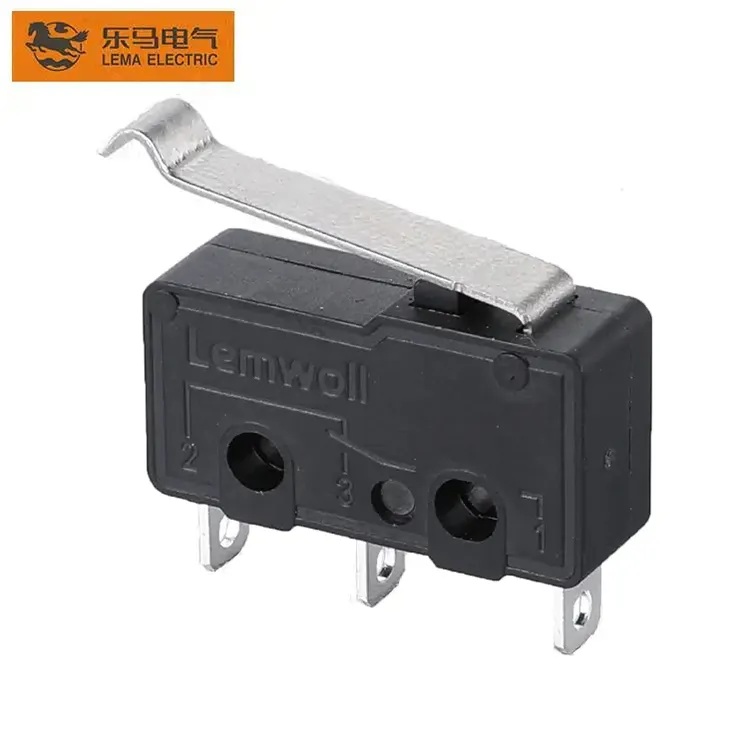
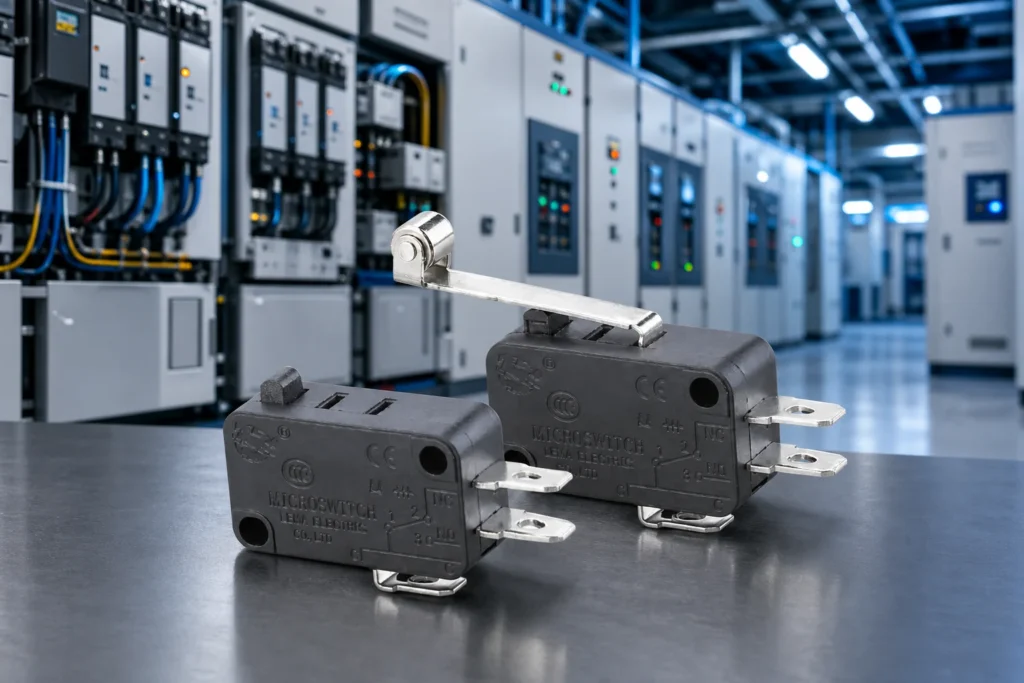
A micro switch for refrigerator equipment normally reports a door or mechanism state to lighting, fan, alarm, or controller logic. It is not automatically a thermostat or defrost controller. OEM teams should define contact logic, actuator travel, mounting, condensation exposure, terminal routing, and the appliance validation plan before approving a switch. ContentsPart 1. What does a refrigerator micro switch do?Part 2. How is a door switch different from a thermostat or defrost control?Part 3. Which circuits use the door-state input?Part 4. What mechanical and electrical fields define the switch?Part 5. How should condensation and service access be handled?Part 6. What should OEM teams validate before release?Part 7. How can LEMA support an appliance inquiry?Part 1. What does a refrigerator micro switch do? A refrigerator door switch converts door motion into a discrete electrical state. Depending on the appliance architecture, that state can turn an interior light on or off, report an open door to a controller, influence a circulation fan sequence, or trigger a door-open alarm. The micro switch supplies the mechanical state; the appliance controller decides the sequence. Begin with the exact function. A light-control contact, a low-voltage controller input, and a motor-related circuit can require different contact forms, loads, terminals, and validation. The original schematic is more important than a generic replacement description. FunctionSwitch roleDesign boundary Interior lightDoor-state contactConfirm actual lamp or driver load Door-open alarmInput to controllerController owns timing and alarm logic Fan sequenceState input or defined circuit contactConfirm motor/relay interface Defrost controlPossible related input onlyThermostat, sensor, or board may own control Use the LEMA Micro Switch product line as the category starting point, then connect the chosen series to a complete appliance drawing. Part 2. How...

Read More
Selecting a Micro Switch for Elevator Door Position Sensing
Blog LEMA Electric

Selecting a Micro Switch for Elevator Door Position Sensing

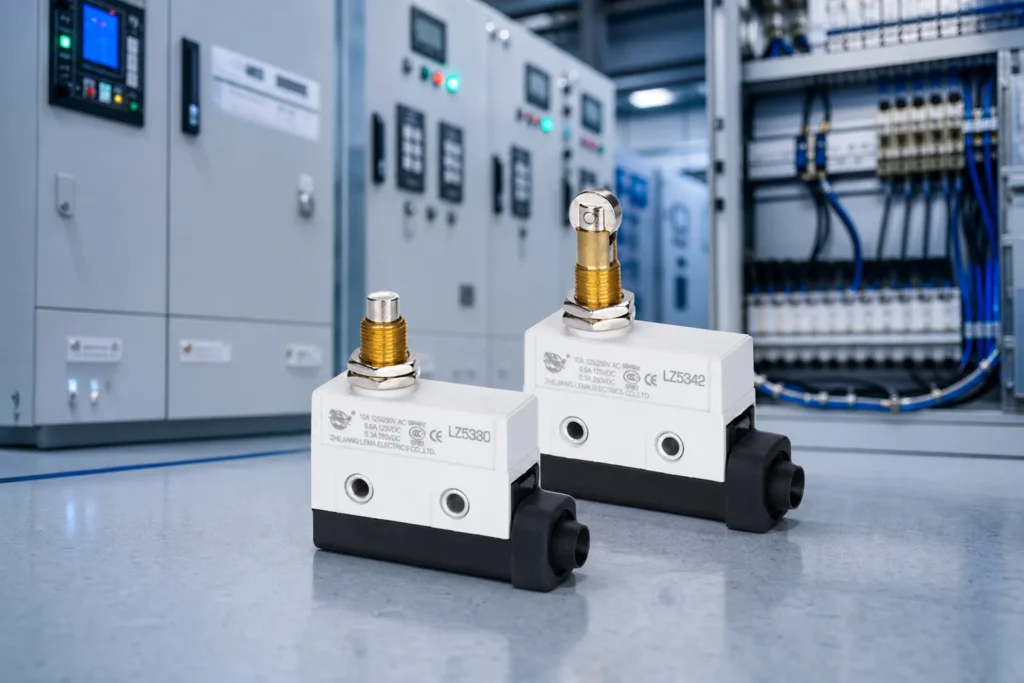
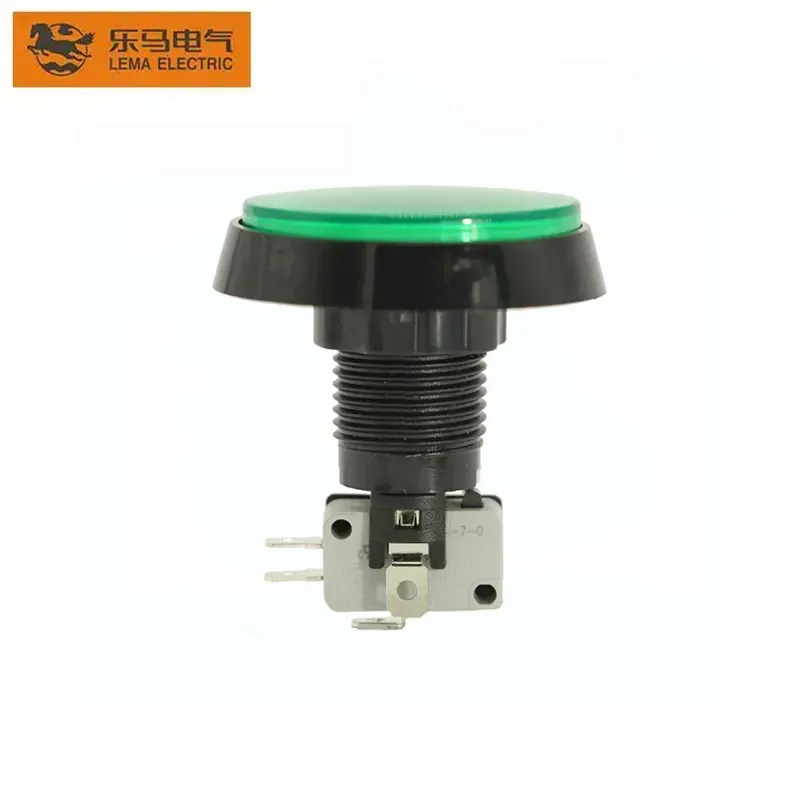
A micro switch for elevator-door equipment can report a defined mechanical state to the door or lift controller. It is not automatically a complete door lock and cannot replace the applicable elevator safety design. Select it from the mechanism travel, safe contact logic, mounting, electrical interface, and system validation plan. ContentsPart 1. What does a micro switch do in elevator-door equipment?Part 2. How is a position switch different from a complete door lock?Part 3. Which travel and actuator inputs matter?Part 4. How do teams prevent false door-open states?Part 5. Which electrical interface belongs in the control plan?Part 6. What must be validated before release?Part 7. How can LEMA support an inquiry?Part 1. What does a micro switch do in elevator-door equipment? A micro switch changes its contact state when a lever, cam, key, roller, or plunger reaches a defined position. In elevator-door equipment, that state can be used as one input that indicates a door, panel, linkage, or lock-related mechanism has reached its intended mechanical position. The controller and complete door system determine what action follows from that state. Start with the function, not the phrase “elevator switch.” Record the state to be detected, the required state if the actuator is released, the downstream controller response, and what fault must be detected. A position report, a door-closed indication, and a complete locking function have different responsibilities. QuestionDesign inputRisk if omitted What moved?Door, latch, cam, roller, or linkageWrong actuator or mounting choice Which state is safe?NO, NC, or changeover logicIncorrect fault behavior Who acts on the state?Door controller or approved interlock systemUnclear circuit ownership How is it proven?Installed-module validationNuisance stops or missed states The LEMA Limit Switch product line is a...

Read More
Selecting Micro Switches for Vending Machine Functions
Blog LEMA Electric

Selecting Micro Switches for Vending Machine Functions

A micro switch for vending machine equipment is usually a discrete position or interlock input: it can report a service-door state, confirm a vend-mechanism position, or provide a mechanical signal to the controller. It does not independently authorize a payment or replace the machine controller and safety design. Select the switch from its circuit role, actuator geometry, mounting, environment, and service procedure. ContentsPart 1. What does a micro switch do in a vending machine?Part 2. Which functions need a door interlock versus a controller input?Part 3. Where does the switch fit in payment and vend-mechanism logic?Part 4. Which mechanical and electrical fields define the correct switch?Part 5. How can teams prevent false door-open and vend-position signals?Part 6. What should buyers send before ordering samples or replacements?Part 7. How can LEMA support a vending-machine micro-switch inquiry?Part 1. What does a micro switch do in a vending machine? A vending machine contains moving panels, access doors, vend motors, trays, and control electronics. A micro switch can turn one of those physical states into a clear electrical signal. For example, the switch may report that the main door is closed, that a service mechanism reached its home position, or that a mechanical button has been actuated. Write down the function before selecting a component. “Vending switch” is too broad for an RFQ because a door interlock, a low-voltage controller input, and a vend-mechanism position signal can have different contact states, loads, mounting brackets, and service rules. The original machine schematic remains the source of truth. FunctionWhat the switch communicatesDesign caution Service-door stateDoor or panel open/closed conditionKeep service access and safety behavior defined by the machine design Controller inputMechanism reached/not reached stateMatch the controller...

Read More
How to Integrate a Micro Switch Into an Automotive Module
Blog LEMA Electric

How to Integrate a Micro Switch Into an Automotive Module

An automotive micro switch is a compact snap-action component that reports a defined mechanical state inside a vehicle-adjacent module. The right choice comes from the module drawing and validation plan: actuator travel, contact load, mounting tolerance, vibration, sealing, wiring, and service access must agree before prototype approval. A generic “automotive” label or an IP code is not a substitute for that work. ContentsPart 1. What does an automotive micro switch do in a module?Part 2. Which vehicle-adjacent functions can use snap action?Part 3. How do actuator travel and tolerance stack-up affect reliability?Part 4. What environmental checks belong in the module plan?Part 5. How should teams define the electrical interface and harness?Part 6. What should OEM teams validate before release?Part 7. How can LEMA support the inquiry path?Part 1. What does an automotive micro switch do in a module? A micro switch changes contact state at a defined actuator position. In a vehicle-adjacent assembly, that change can tell a controller that a latch, cover, lever, seat, pedal mechanism, charging flap, or service panel has reached an intended position. The component is a state input; the module controller and system design decide what should happen next. Start with the function rather than the package size. Write the condition to detect, the safe state if the actuator is released, the action expected from the downstream circuit, and the consequence of a false signal. That separates a simple position report from a function that needs a redundant sensor, diagnostic path, or a different technology. Module questionWhat the switch must proveTypical design owner What moved?Door, latch, lever, cover, or mechanical linkage reached its target positionMechanical design What state is safe?NO, NC, or changeover contact behavior...

Read More
Water Heater Micro Switch: Safety Interlock Selection Guide — Engineering Guide
Blog LEMA Electric

Water Heater Micro Switch: Safety Interlock Selection Guide — Engineering Guide

A water heater micro switch is typically a snap-action safety interlock that confirms a mechanical or logical safety condition before heating is enabled—not a replacement for a bimetal thermostat or thermal cutoff. OEM teams should define the safety chain, contact rating, actuator interface, and reset behavior before selecting a micro switch for electric water heater programs. ContentsPart 1. What role does a micro switch play in an electric water heater?Part 2. How is a micro switch different from a thermostat or thermal cutoff?Part 3. Which safety functions commonly use micro interlocks?Part 4. What electrical and mechanical inputs belong in the spec sheet?Part 5. How should OEM teams validate interlock logic on the bench?Part 6. Which projects fit a micro interlock versus other switch types?Part 7. Where do LEMA micro switch series fit appliance OEM programs?Part 1. What role does a micro switch play in an electric water heater? In many electric water heater designs, a micro switch provides fast make/break action in the control chain. A lever, button, or plunger actuator responds to a mechanical input—door/lid position, linkage travel, or an assembly probe—and toggles contacts that allow or block control signals to the heating circuit. The switch itself does not measure water temperature. Instead, it answers a binary question: “Is the safety/mechanical condition satisfied?” When combined with thermostats, level sensors, or electronic control boards, micro interlocks help prevent unsafe states such as energizing heating elements when a service panel is open or when a required interlock is not closed. Part 2. How is a micro switch different from a thermostat or thermal cutoff? SERP results often mix three part classes. Keeping them separate avoids warranty and safety documentation errors. ComponentPrimary...

Read More
IP67 Micro Switch With Cable: OEM Harness Selection Guide
Blog LEMA Electric

IP67 Micro Switch With Cable: OEM Harness Selection Guide

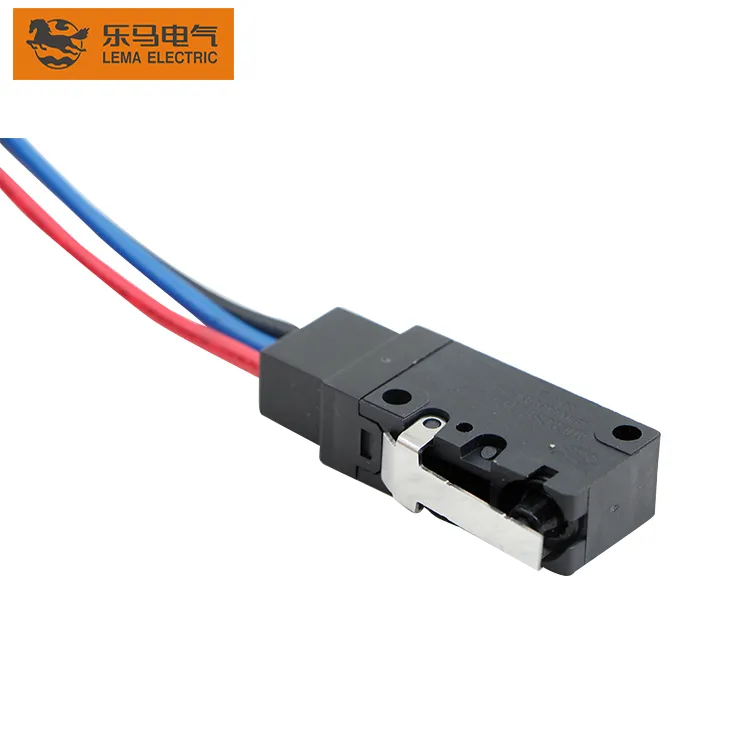
An IP67 micro switch with cable keeps the ingress seal at the factory-potted lead joint, so OEM harnesses must specify wire type, exit direction, contact rating, and actuator type before approval. This guide helps appliance, industrial, and outdoor-equipment teams select pre-wired snap-action switches without treating “IP67” as a substitute for a complete harness drawing. ContentsPart 1. What does IP67 mean for a pre-wired micro switch?Part 2. Why specify a micro switch with integral cable instead of field wiring?Part 3. Which cable and exit options belong in the RFQ?Part 4. How do actuator type and contact rating affect harness selection?Part 5. Where do IP67 cable micro switches fit in OEM equipment?Part 6. What should buyers verify before approving a harness drawing?Part 7. How do LEMA waterproof series support this selection path?Part 1. What does IP67 mean for a pre-wired micro switch? IP67 describes an ingress-protection class under IEC 60529 vocabulary: dust-tight enclosure and short-term immersion to a defined depth and duration in laboratory conditions. For micro switches, the rating applies to the assembled switch plus factory lead assembly, not to a switch body alone after field splicing. Pre-wired catalog switches maintain the rated seal because potting or gasketing covers the transition where conductors enter the housing. Cutting, re-crimping, or heat-shrinking beyond the manufacturer’s allowed service zone typically voids the advertised protection unless the supplier re-validates the assembly. Important: IP67 does not automatically mean continuous underwater service or high-pressure washdown without confirming the supplier’s test method and your mounting orientation ([IEC IP rating overview](https://www.iec.ch/ip-ratings)). Part 2. Why specify a micro switch with integral cable instead of field wiring? Integral cables reduce assembly steps and eliminate open terminals in wet zones. Panel builders...

Read More
Miniature Electric Micro Switch: Compact OEM Selection Guide
Blog LEMA Electric

Miniature Electric Micro Switch: Compact OEM Selection Guide

A miniature electric micro switch fits tight envelopes in appliances, medical devices, vending equipment, and automotive modules where standard lever switches are too large. Compact series trade panel space for careful attention to operating force, terminal type, and thermal rise at rated load. This guide helps U.S. and Canadian OEM teams compare subminiature and compact micro switch families and document acceptance tests before production release. This guide focuses on practical evaluation steps for U.S. and Canadian OEM buyers—specifications, sample qualification, and documentation—not generic marketing claims. Cross-check public specifications on lemaele.com and confirm project-specific ratings with your design engineer and LEMA Electric before production release. Section checklists can be reused as RFQ attachments and supplier audit outlines. On this pagePart 1. When Miniature Switches Beat Standard SeriesPart 2. Key Specifications and Terminal OptionsPart 3. Sample Testing and AVL ApprovalPart 4. Documentation and Handover ChecklistPart 5. Sample Qualification, Field Service, and Lifecycle Support Part 1. When Miniature Switches Beat Standard Series Miniature micro switches target PCB-mounted or wire-lead applications with envelope heights often under 20 mm depending on actuator. Operating force and pre-travel are smaller—fixture design must avoid over-travel that stresses the internal spring. Compact bodies may have lower current ratings than general-purpose series; derating may apply for inductive or inrush loads. Map the switch series to equipment category—appliance, industrial machine, automotive aftermarket, or control panel—before finalizing AVL. Environmental exposure (dust, wash-down, outdoor) should drive IP class and material choices as early as actuator selection. Browse related series on LEMA Electric micro switch catalog when multiple switch types appear in one BOM. Include actuator type, terminal style, and load profile in the RFQ package to reduce sample iteration cycles. Align switch series...

Read More
SPDT Limit Switch: Wiring, Selection and OEM Applications
Blog LEMA Electric

SPDT Limit Switch: Wiring, Selection and OEM Applications

An SPDT limit switch (single pole, double throw) routes one common terminal to either a normally open or normally closed contact, making it common in interlocks, position sensing, and dual-indicator control circuits. OEM engineers in the United States and Canada specify SPDT limit switches when one actuator must drive two logic paths or when maintenance teams need flexible wiring during retrofit. This guide explains contact behavior, wiring conventions, and documentation to request before AVL approval. This guide focuses on practical evaluation steps for U.S. and Canadian OEM buyers—specifications, sample qualification, and documentation—not generic marketing claims. Cross-check public specifications on lemaele.com and confirm project-specific ratings with your design engineer and LEMA Electric before production release. Section checklists can be reused as RFQ attachments and supplier audit outlines. On this pagePart 1. SPDT Contact Behavior and Typical CircuitsPart 2. Key Specifications and Comparison PointsPart 3. OEM Qualification and SourcingPart 4. Documentation and Handover ChecklistPart 5. Sample Qualification, Field Service, and Lifecycle Support Part 1. SPDT Contact Behavior and Typical Circuits In SPDT switches, the common (COM) terminal connects to NC when the actuator is released and transfers to NO at the tripped position—or the opposite depending on series design. Safety circuits often use NC contacts so an open circuit stops motion; signal circuits may use NO for PLC inputs—confirm logic before panel wiring. Some limit switches offer snap-action SPDT blocks with positive opening on NC contacts for certain safety categories—verify series documentation. Map the switch series to equipment category—appliance, industrial machine, automotive aftermarket, or control panel—before finalizing AVL. Environmental exposure (dust, wash-down, outdoor) should drive IP class and material choices as early as actuator selection. Browse related series on LEMA Electric limit...

Read More
Limit Switch Manufacturer China: Selection Guide for OEM Buyers
Blog LEMA Electric

Limit Switch Manufacturer China: Selection Guide for OEM Buyers

Understanding limit switch manufacturer china helps OEM buyers, integrators, and procurement teams specify reliable components for U.S. and Canadian equipment programs. This guide explains selection criteria, typical applications, and documentation you should request before approving a supplier or series. This guide focuses on practical evaluation steps for U.S. and Canadian OEM buyers—specifications, sample qualification, and documentation—not generic marketing claims. Cross-check public specifications on lemaele.com and confirm project-specific ratings with your design engineer and LEMA Electric before production release. Section checklists can be reused as RFQ attachments and supplier audit outlines. On this pagePart 1. What Buyers Should Know About Limit Switch Manufacturer ChinaPart 2. Key Specifications and Comparison PointsPart 3. Applications and Supplier QualificationPart 4. Documentation and Handover ChecklistPart 5. Sample Qualification, Field Service, and Lifecycle Support Part 1. What Buyers Should Know About Limit Switch Manufacturer China Catalog ratings for limit switch manufacturer china must match real load, temperature, and environmental conditions—not marketing summaries alone. Compare actuator style, terminal type, and sealing level against your mechanical fixture and service access requirements. For export programs, confirm which certifications apply to the exact series and part configuration you plan to buy. Industrial buyers should treat switch vendor selection as a lifecycle decision—catalog ratings must match your fixture, load, and environment. Request in-house test capability or third-party type tests for the exact terminal and actuator variant, not generic company certificates. Compare series within the LEMA Electric limit switch catalog against your mechanical envelope, sealing, and certification requirements before AVL approval. Document warranty ownership (OEM, distributor, or integrator) and escalation paths before first production shipment. Include actuator type, terminal style, and load profile in the RFQ package to reduce sample iteration cycles. Align...

Read More
Micro Switch Manufacturer China: OEM Sourcing Guide for U.S. Buyers
Blog LEMA Electric

Micro Switch Manufacturer China: OEM Sourcing Guide for U.S. Buyers

Understanding micro switch manufacturer china helps OEM buyers, integrators, and procurement teams specify reliable components for U.S. and Canadian equipment programs. This guide explains selection criteria, typical applications, and documentation you should request before approving a supplier or series. This guide focuses on practical evaluation steps for U.S. and Canadian OEM buyers—specifications, sample qualification, and documentation—not generic marketing claims. Cross-check public specifications on lemaele.com and confirm project-specific ratings with your design engineer and LEMA Electric before production release. Section checklists can be reused as RFQ attachments and supplier audit outlines. On this pagePart 1. What Buyers Should Know About Micro Switch Manufacturer ChinaPart 2. Key Specifications and Comparison PointsPart 3. Applications and Supplier QualificationPart 4. Documentation and Handover ChecklistPart 5. Sample Qualification, Field Service, and Lifecycle Support Part 1. What Buyers Should Know About Micro Switch Manufacturer China Catalog ratings for micro switch manufacturer china must match real load, temperature, and environmental conditions—not marketing summaries alone. Compare actuator style, terminal type, and sealing level against your mechanical fixture and service access requirements. For export programs, confirm which certifications apply to the exact series and part configuration you plan to buy. Industrial buyers should treat switch vendor selection as a lifecycle decision—catalog ratings must match your fixture, load, and environment. Request in-house test capability or third-party type tests for the exact terminal and actuator variant, not generic company certificates. Compare series within the LEMA Electric micro switch catalog against your mechanical envelope, sealing, and certification requirements before AVL approval. Document warranty ownership (OEM, distributor, or integrator) and escalation paths before first production shipment. Include actuator type, terminal style, and load profile in the RFQ package to reduce sample iteration cycles. Align...

Read More
Roller Limit Switch: Types, Selection and Industrial Applications
Blog LEMA Electric

Roller Limit Switch: Types, Selection and Industrial Applications

Understanding roller limit switch helps OEM buyers, integrators, and procurement teams specify reliable components for U.S. and Canadian equipment programs. This guide explains selection criteria, typical applications, and documentation you should request before approving a supplier or series. This guide focuses on practical evaluation steps for U.S. and Canadian OEM buyers—specifications, sample qualification, and documentation—not generic marketing claims. Cross-check public specifications on lemaele.com and confirm project-specific ratings with your design engineer and LEMA Electric before production release. Section checklists can be reused as RFQ attachments and supplier audit outlines. On this pagePart 1. What Buyers Should Know About Roller Limit SwitchPart 2. Key Specifications and Comparison PointsPart 3. Applications and Supplier QualificationPart 4. Documentation and Handover ChecklistPart 5. Sample Qualification, Field Service, and Lifecycle Support Part 1. What Buyers Should Know About Roller Limit Switch Catalog ratings for roller limit switch must match real load, temperature, and environmental conditions—not marketing summaries alone. Compare actuator style, terminal type, and sealing level against your mechanical fixture and service access requirements. For export programs, confirm which certifications apply to the exact series and part configuration you plan to buy. Map the switch series to equipment category—appliance, industrial machine, automotive aftermarket, or control panel—before finalizing AVL. Environmental exposure (dust, wash-down, outdoor) should drive IP class and material choices as early as actuator selection. Browse related series on LEMA Electric limit switch catalog when multiple switch types appear in one BOM. Include actuator type, terminal style, and load profile in the RFQ package to reduce sample iteration cycles. Align switch series selection with mechanical fixture design before tooling freeze on OEM programs. Define acceptance tests—operating force, contact resistance, and release point—before approving a supplier lot....

Read More
Kw12 Micro Switch: Specifications, Features and Applications
Blog LEMA Electric

Kw12 Micro Switch: Specifications, Features and Applications

Understanding kw12 micro switch helps OEM buyers, integrators, and procurement teams specify reliable components for U.S. and Canadian equipment programs. This guide explains selection criteria, typical applications, and documentation you should request before approving a supplier or series. This guide focuses on practical evaluation steps for U.S. and Canadian OEM buyers—specifications, sample qualification, and documentation—not generic marketing claims. Cross-check public specifications on lemaele.com and confirm project-specific ratings with your design engineer and LEMA Electric before production release. Section checklists can be reused as RFQ attachments and supplier audit outlines. On this pagePart 1. What Buyers Should Know About Kw12 Micro SwitchPart 2. Key Specifications and Comparison PointsPart 3. Applications and Supplier QualificationPart 4. Documentation and Handover ChecklistPart 5. Sample Qualification, Field Service, and Lifecycle Support Part 1. What Buyers Should Know About Kw12 Micro Switch Catalog ratings for kw12 micro switch must match real load, temperature, and environmental conditions—not marketing summaries alone. Compare actuator style, terminal type, and sealing level against your mechanical fixture and service access requirements. For export programs, confirm which certifications apply to the exact series and part configuration you plan to buy. Map the switch series to equipment category—appliance, industrial machine, automotive aftermarket, or control panel—before finalizing AVL. Environmental exposure (dust, wash-down, outdoor) should drive IP class and material choices as early as actuator selection. Browse related series on LEMA Electric micro switch catalog when multiple switch types appear in one BOM. Include actuator type, terminal style, and load profile in the RFQ package to reduce sample iteration cycles. Align switch series selection with mechanical fixture design before tooling freeze on OEM programs. Define acceptance tests—operating force, contact resistance, and release point—before approving a supplier lot....

Read More